
Packing efficiently isn’t just about fitting everything into your suitcase—it’s about preserving clothing quality, minimizing wrinkles, and making unpacking seamless. Whether you're preparing for a weekend getaway or a three-week international trip, how you fold or roll your clothes can dramatically impact your travel experience. Two dominant techniques have emerged over time: rolling and folding. While both methods have loyal followers, understanding their strengths, limitations, and ideal use cases allows travelers to make informed decisions. This guide breaks down the science, practicality, and real-world performance of each approach so you can pack with precision and confidence.
The Science Behind Space Efficiency
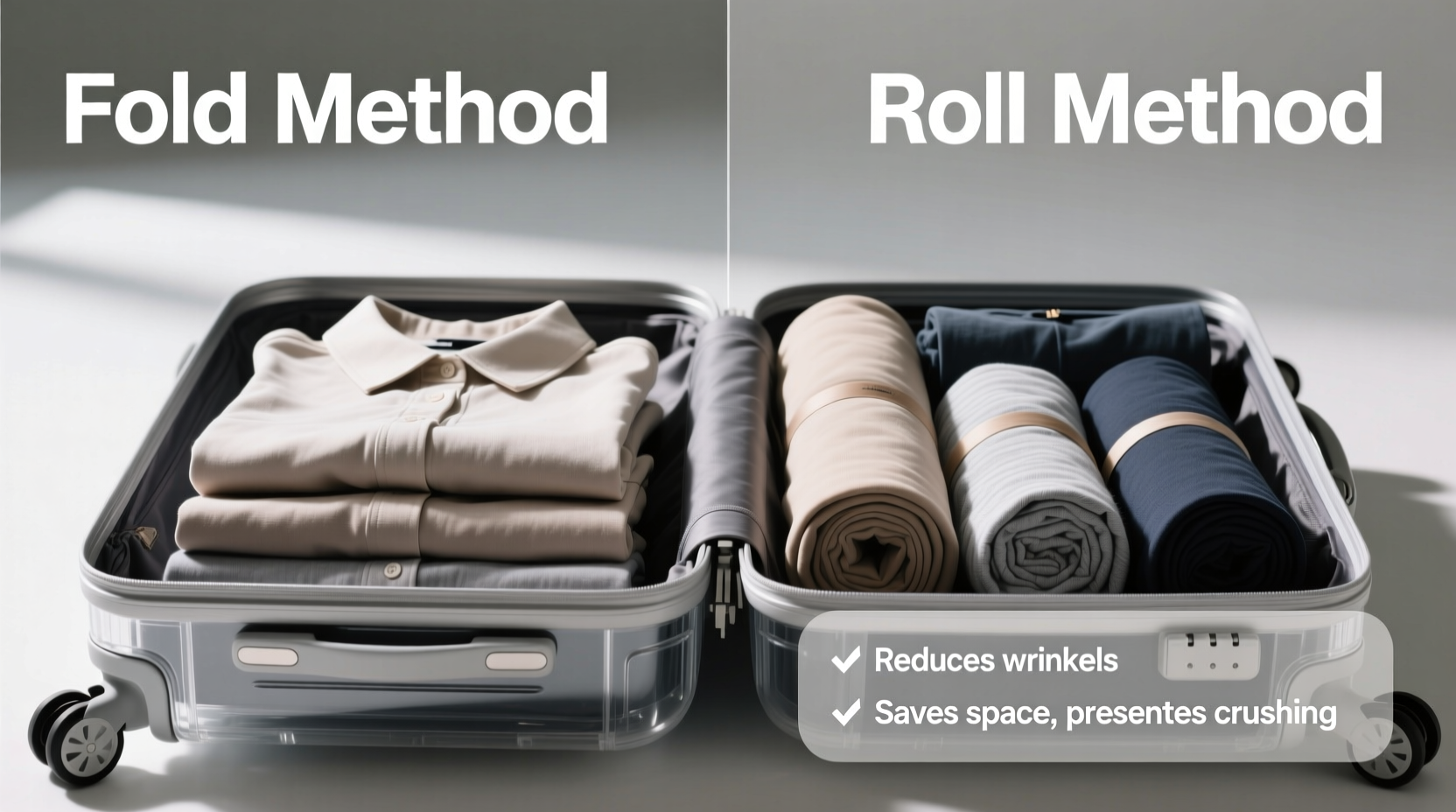
At first glance, it might seem that rolling saves more space than folding, but physics tells a more nuanced story. When fabric is rolled tightly, air pockets form between layers, especially in thicker materials like denim or sweaters. Folding, on the other hand, compresses garments flat, eliminating those gaps. However, rolling reduces vertical bulk, allowing items to conform better to curved suitcase interiors.
A 2022 study conducted by the International Travel Gear Lab found that rolling cotton t-shirts saved up to 18% more space compared to traditional folding when packed in a standard carry-on. But the same advantage reversed with wool blazers, where folding preserved shape and used 12% less volume. The key takeaway? Material and garment type dictate efficiency—not just technique.
Rolling: Pros, Cons, and Best Uses
Rolling involves wrapping clothing items tightly from one end to the other, creating compact cylinders. This method gained popularity through frequent flyers and minimalist travelers who prioritize space-saving above all else.
Advantages of Rolling
- Reduces visible creasing on casual wear like t-shirts, tank tops, and pajamas.
- Maximizes use of odd-shaped spaces in luggage corners.
- Makes individual items easier to identify and remove without unpacking everything.
- Helps prevent over-packing by making limited space more apparent.
Disadvantages of Rolling
- Can stretch knits and delicate fabrics if rolled too tightly.
- Less effective for stiff or heavy materials (e.g., jackets, dress shirts).
- May cause permanent cylindrical shaping in long-term storage.
Rolling works best for soft, wrinkle-resistant fabrics such as jersey, cotton, and synthetic blends. It's ideal for backpackers, digital nomads, and anyone using smaller carry-ons where every inch counts.
“Rolling transforms chaotic packing into an organized system. I’ve fit two weeks’ worth of summer clothes into a 45L backpack using only rolled layers.” — Daniel Reyes, Frequent Flyer & Travel Blogger
Folding: Structure, Protection, and Precision
Folding maintains the natural silhouette of garments by laying them flat in stacked layers. Often associated with formal packing, this method prioritizes preservation over compression.
Benefits of Folding
- Preserves crisp lines in dress shirts, suits, and button-downs.
- Minimizes stress on shoulder seams and collars.
- Allows for strategic layering with tissue paper or plastic dry-cleaning covers to reduce friction.
- Easier to stack heavier items at the bottom for balanced weight distribution.
Drawbacks of Folding
- Takes up more linear space, especially with bulky items.
- Increases risk of deep creases along fold lines if left compressed too long.
- Harder to access middle layers without disturbing the entire stack.
Folding excels when transporting professional attire, outerwear, or delicate pieces requiring careful handling. Business travelers, performers, and those attending formal events typically rely on folded packing to ensure wardrobe readiness upon arrival.
Roll vs Fold: A Direct Comparison
| Factor | Roll Method | Fold Method |
|---|---|---|
| Space Efficiency (Light Fabrics) | High – up to 18% savings | Moderate |
| Wrinkle Prevention (Casual Wear) | Excellent | Fair – prone to sharp creases |
| Garment Shape Retention | Poor for structured items | Excellent |
| Access to Individual Items | Easy – modular layout | Difficult – requires unpacking layers |
| Ideal For | T-shirts, underwear, swimwear, socks | Dress shirts, blazers, pants, skirts |
| Risk of Fabric Damage | Moderate – stretching knitwear | Low – if folded properly |
The data shows there is no universal winner. Instead, smart packing combines both strategies based on context. The most efficient travelers don’t choose one method exclusively—they blend them strategically.
Step-by-Step Guide: Hybrid Packing Like a Pro
Professional packers use a hybrid model that leverages the strengths of both techniques. Follow this sequence to optimize your suitcase:
- Start with shoes and toiletries – Place heaviest non-wearable items at the bottom near the wheels. Use shoe bags or shower caps to contain dirt.
- Layer in folded formal wear – Lay dress shirts, slacks, and blazers flat across the base. Insert tissue paper between layers to reduce abrasion.
- Create a central bundle of rolled casual clothes – Roll t-shirts, undergarments, and sleepwear tightly and group them together. Place this bundle on top of folded items to act as a cushion.
- Use packing cubes for segmentation – Assign one cube for rolled items, another for folded. This maintains order and simplifies customs checks.
- Fill gaps with rolled accessories – Socks, belts, and scarves can be rolled and tucked into side pockets or around edges.
- Top with a wrinkle-prone item – Drape a delicate blouse or sweater on top before closing. This minimizes pressure and keeps it ready to wear.
Real-World Example: Two Weeks in Europe
Sophia, a marketing consultant based in Toronto, had to attend meetings in Paris, Berlin, and Rome over 14 days. She brought seven outfits: three business ensembles, four casual looks, and versatile layers. Her suitcase was a 55L spinner with moderate expansion capacity.
She applied the hybrid method: dress shirts and tailored trousers were folded with tissue paper and placed at the bottom. Sweaters and jeans were rolled individually and stacked vertically along one side. T-shirts and underwear were rolled and stored in a mesh cube on the opposite side. Shoes went in a zip pouch at the front compartment.
Upon arrival in each city, she could remove a single outfit without disturbing others. After two weeks, only one shirt needed light steaming—far better than her previous trips where half her wardrobe arrived wrinkled. By combining roll and fold intelligently, Sophia maintained professionalism while maximizing convenience.
Expert Tips for Wrinkle-Free Results
Regardless of method, small adjustments enhance results. Consider these advanced tactics used by flight attendants and professional organizers:
- Roll inside out – Protects outer fabric from scuffing and hides seam lines.
- Fold along existing creases – Minimizes new wrinkle formation in dress pants and skirts.
- Use rubber bands or clips – Secure rolled bundles before placing them in luggage to maintain tightness.
- Interleave thin plastic sheets – Dry cleaner bags cut into rectangles reduce fabric friction during transit.
- Compress after packing – Sit on the suitcase gently or place a book on top overnight to settle contents before zipping.
“The secret to pro-level packing isn’t magic—it’s matching technique to garment type. Roll what you can afford to wrinkle; fold what needs respect.” — Lena Patel, Professional Organizer & Travel Consultant
Packing Checklist: Master Your Suitcase in 7 Steps
Before zipping up, verify you’ve optimized your load:
- ✔️ Separate clothes by type: casual (roll), formal (fold), bulky (lay flat)
- ✔️ Pre-roll soft items and secure with elastic bands
- ✔️ Fold structured garments with tissue paper between layers
- ✔️ Pack heaviest items at the base, close to wheels
- ✔️ Use packing cubes to segment categories
- ✔️ Fill dead space with rolled socks or accessories
- ✔️ Leave room for return items and allow airflow
FAQ: Common Questions About Roll vs Fold
Does rolling really prevent wrinkles better than folding?
It depends on the fabric. Rolling prevents sharp creases common with folding, which is beneficial for cotton and knits. However, for stiff fabrics like poplin or gabardine, folding with protective layers often yields smoother results.
Can I mix rolling and folding in the same suitcase?
Absolutely—and you should. Most experts recommend a hybrid approach. Fold items that need shape retention (dress shirts, suits) and roll casual, flexible garments (t-shirts, underwear). This maximizes space and minimizes damage.
How tight should I roll my clothes?
Roll firmly enough to minimize volume, but not so tight that the fabric strains or loses elasticity. If you notice dimpling or distortion in knits, ease up on the pressure. A consistent diameter of 1.5 to 2 inches works well for most garments.
Final Thoughts: Elevate Your Travel Routine
Packing may seem like a minor detail in the broader scope of travel, but its impact is outsized. A well-packed suitcase reduces stress, protects your wardrobe, and gives you immediate access to what you need. The roll vs fold debate isn’t about choosing sides—it’s about understanding purpose. Rolling offers mobility and space efficiency for informal travel. Folding provides structure and protection for polished appearances.
The true hallmark of a professional packer is adaptability. They assess their itinerary, climate, clothing types, and luggage constraints before selecting—and blending—the right methods. With practice, this becomes second nature. You’ll spend less time repacking at hotels, avoid last-minute ironing, and move through airports with confidence.




 浙公网安备
33010002000092号
浙公网安备
33010002000092号 浙B2-20120091-4
Comments
No comments yet. Why don't you start the discussion?