
Packing a suitcase efficiently is more than just fitting clothes into a bag—it’s about strategy, organization, and smart use of space. Whether you’re preparing for a weekend getaway or a three-week international trip, maximizing your luggage capacity without overpacking can reduce stress, avoid baggage fees, and keep your belongings wrinkle-free. Seasoned travelers don’t rely on luck; they use tested methods to pack light, stay organized, and access essentials quickly. The right approach transforms packing from a chore into a streamlined process that enhances the entire travel experience.
Choose the Right Luggage and Packing Tools
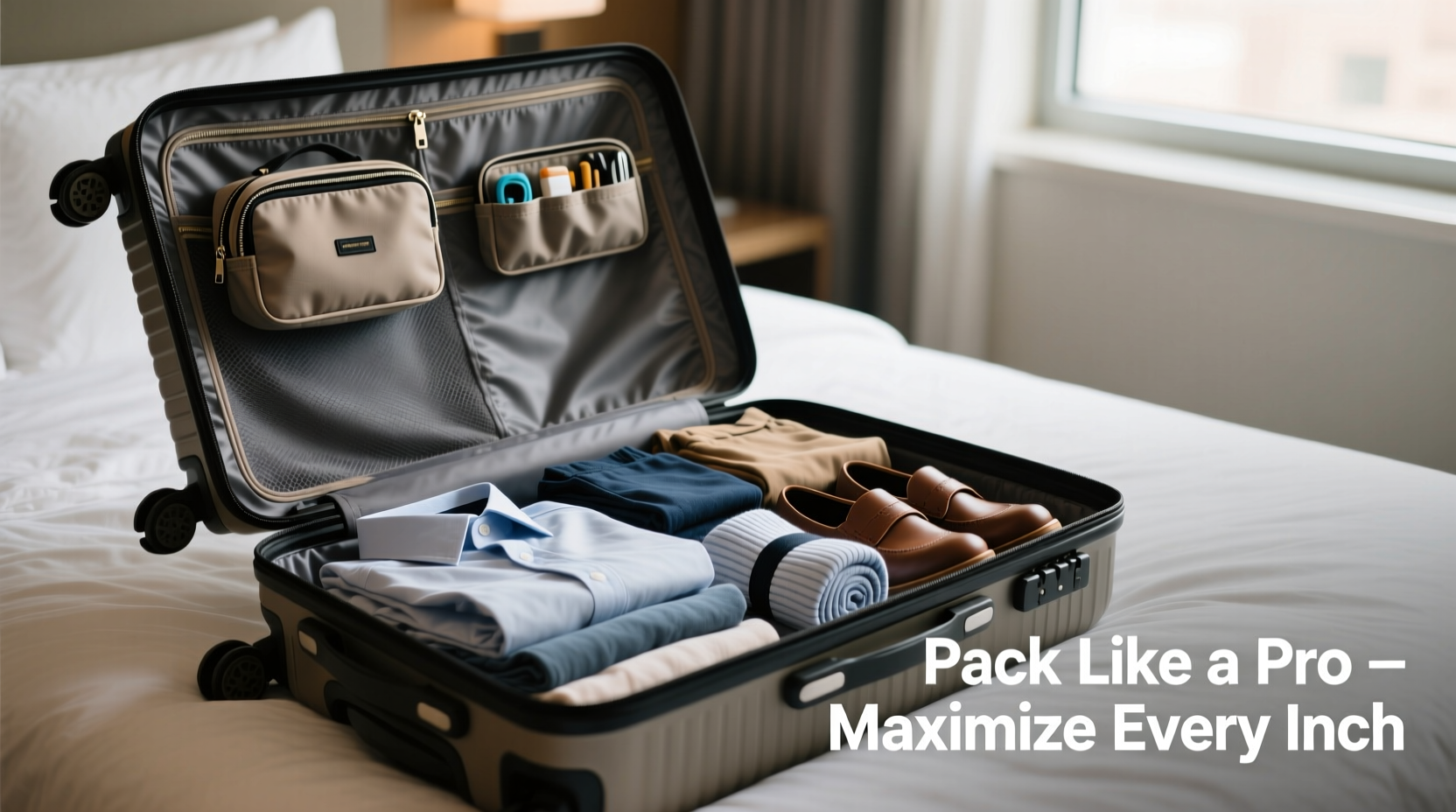
The foundation of efficient packing starts before you even open your closet. Selecting the right suitcase sets the stage for success. A carry-on sized bag with smooth-rolling wheels, durable zippers, and internal compression straps offers both mobility and structure. Hard-shell cases protect contents but offer less flexibility in expansion, while soft-sided bags often have extra pockets and can be compressed when full.
Equally important are packing accessories. Invest in lightweight packing cubes—zippered fabric organizers that compartmentalize clothing by category (tops, bottoms, underwear). These not only compress items but also make unpacking at your destination effortless. Compression bags, especially useful for bulky items like jackets or sweaters, remove excess air and can reduce volume by up to 50%. For delicate garments, consider foldable garment folders that keep suits or dresses neatly layered.
Plan and Prioritize: Pack with Purpose
Overpacking usually stems from indecision, not necessity. Begin by outlining your itinerary: note climate conditions, planned activities, and dress codes. This helps determine exactly what you need—not what you *might* wear. A common rule among frequent flyers is the “5-4-3-2-1” method: five tops, four bottoms, three layers, two pairs of shoes, and one set of sleepwear. Adjust based on trip length, but use it as a guiding principle.
Create a checklist tailored to your trip. Categorize items: clothing, toiletries, electronics, documents, accessories. Check off each item as you pack it. This prevents last-minute additions that eat up space. Limit footwear to two or three versatile pairs—one casual, one dressy, and one athletic if needed. Shoes take up disproportionate space and add weight, so choose styles that transition across multiple settings.
When selecting outfits, build around a color-coordinated palette. Neutral bases like black, navy, gray, or beige allow mix-and-match versatility. One jacket can pair with three different shirts, reducing redundancy. Lay out complete outfits before packing to ensure every piece has a purpose.
“Efficient packing isn’t about carrying less—it’s about carrying smarter. The pros focus on utility, not variety.” — Lena Torres, Travel Organizational Expert and author of *The Minimalist Traveler*
Master Space-Saving Packing Techniques
How you place items in your suitcase matters as much as what you bring. The goal is uniform compression, minimal air gaps, and protection against wrinkles. Below are proven folding and rolling methods used by professional travelers.
Rolling vs. Folding: What Works Best?
Rolling works exceptionally well for casual clothing like t-shirts, jeans, pajamas, and knits. It reduces creases, saves vertical space, and allows you to fit more items tightly. Rolled clothes also act like cylindrical cushions, preventing shifting during transit.
Folding is better suited for structured garments such as button-down shirts, blazers, or items prone to rolling-induced lines. Use the military roll or bundle wrap method for wrinkle reduction and compactness.
| Garment Type | Recommended Method | Why It Works |
|---|---|---|
| T-shirts, Underwear, Socks | Roll | Compact, wrinkle-resistant, easy to stack |
| Dress Shirts, Blouses | Fold flat or bundle wrap | Prevents shoulder and collar creases |
| Sweaters, Jackets | Compress with vacuum bags | Reduces bulk significantly |
| Pants | Fold lengthwise and roll or layer flat | Maintains crease line and shape |
The Bundle Wrapping Method
This advanced technique, popularized by flight attendants and digital nomads, involves layering clothes around a central core (like toiletries) to minimize folds and prevent movement. Start with flat, rigid items at the base—such as a notebook or tablet. Layer shirts and pants flat over them, then add softer items like underwear and socks in the center. Wrap everything inward from all four sides, securing with elastic bands if needed. The result is a compact, wrinkle-minimized bundle that fits snugly into your suitcase.
Use Every Nook and Cranny
Never leave empty spaces. Stuff socks inside shoes to save room and maintain their shape. Place small items like chargers, adapters, or jewelry rolls inside hat crowns or boot shafts. Use the interior lining pockets for belts, scarves, or rolled ties. Even the gap between the suitcase walls and packed clothes can be filled with slim items like sunglasses cases or folded belts.
Step-by-Step Guide to Packing Like a Pro
Follow this logical sequence to pack efficiently and systematically:
- Day 3–7 Before Travel: Confirm weather forecast and finalize outfit plan. Wash and dry all selected clothing.
- Day 2: Lay out all items on the bed. Use your checklist to verify each category.
- Day 1 – Morning: Pre-pack non-clothing essentials: toiletries in leak-proof containers, medications, electronics, travel documents.
- Evening Before Departure: Begin packing the suitcase:
- Line the bottom with packing cubes containing underwear and socks.
- Add shoes heel-to-toe along one side, stuffed with small items.
- Layer heavier clothing (jeans, sweaters) next, either folded or rolled.
- Place dressier garments flat on top, ideally between protective layers.
- Fill remaining gaps with rolled t-shirts, accessories, or compression pouches.
- Top with a lightweight jacket or sweater for immediate post-flight use.
- Final Check: Weigh your suitcase. If near the airline limit, transfer non-essentials to your carry-on.
Keep a separate carry-on with valuables, a change of clothes, medications, and work devices. This safeguards against lost luggage and ensures comfort during delays.
Real-World Example: A Two-Week European Trip
Consider Sarah, a business consultant traveling across five European cities in 12 days. Her suitcase: a 22-inch carry-on. Her challenge: attending client meetings, dinners, and casual sightseeing—all without checking a bag.
She followed a strict capsule wardrobe: two pairs of dark trousers, three blouses, one blazer, two knit tops, one dress, and a trench coat. All were neutral-toned and interchangeable. She rolled casual pieces, folded her blazer over the top layer, and used two packing cubes—one for work attire, one for leisure. Shoes: one pair of loafers, one pair of ankle boots, and foldable flats.
Toiletries were decanted into 3-ounce bottles. Electronics included a universal adapter and noise-canceling headphones. By using compression cubes and stuffing socks into shoes, she saved enough space to bring back souvenirs—without exceeding weight limits. Her total packed weight: 18 pounds.
Sarah’s success wasn’t luck. It was planning, discipline, and technique—all applied consistently.
Common Mistakes That Waste Space
Even experienced travelers fall into traps that compromise efficiency. Avoid these pitfalls:
- Over-packing “just in case” items: Extra shoes, duplicate accessories, or rarely worn outfits inflate volume without adding value.
- Poor layering order: Placing soft, compressible items at the base leads to instability and crushed garments.
- Ignoring compression tools: Skipping packing cubes or compression bags leaves up to 30% of space unused.
- Packing bulky bedding or pillows: These are available at most accommodations. Bring a travel-sized inflatable pillow instead.
- Forgetting laundry options: Most hotels offer same-day service, and self-service laundromats are common in cities. Plan to wash mid-trip and pack fewer clothes.
“The difference between amateur and pro packing? Pros assume they’ll do laundry. Amateurs pack for every possible scenario.” — Mark Rivera, Frequent Flyer & Lifestyle Blogger
FAQ: Common Packing Questions Answered
Can I really pack for a week in a carry-on?
Absolutely. With strategic selection, mix-and-match clothing, and proper folding techniques, a week-long trip can easily fit in a carry-on. Focus on lightweight fabrics, limit shoes, and use packing cubes to maximize every inch.
How do I prevent wrinkles without bringing a steamer?
Roll soft fabrics, fold structured garments carefully, and place them under lighter items. Upon arrival, hang clothes in the bathroom during a hot shower—the steam naturally de-wrinkles most materials. Alternatively, use a hotel iron or handheld steamer available for rent.
What should go in my carry-on versus checked luggage?
Always keep essentials in your carry-on: passport, wallet, medications, one change of clothes, electronics, chargers, and valuable items. Checked luggage can hold bulkier, non-critical items like extra shoes, souvenirs, or heavy books—but never irreplaceable belongings.
Final Checklist: Pack Like a Pro
Before closing your suitcase, run through this final checklist:
- ✅ Outfits planned and coordinated by color
- ✅ Packing cubes assigned by category (tops, bottoms, underwear)
- ✅ Toiletries in TSA-compliant containers
- ✅ Shoes stuffed with socks or small items
- ✅ Heavy items placed near wheels
- ✅ Fragile items wrapped and secured
- ✅ Carry-on packed with essentials and backup clothing
- ✅ Suitcase weighed and within airline limits
- ✅ Important documents duplicated and stored separately
Conclusion: Transform Your Travel Experience
Packing efficiently isn’t just about saving space—it’s about gaining freedom. When your suitcase is optimized, you move faster through airports, avoid extra fees, and spend less time unpacking and reorganizing. More importantly, you travel with clarity and confidence, knowing exactly where everything is and that you’ve brought only what you truly need.
The habits of travel pros aren’t secret—they’re systematic. By choosing the right luggage, planning deliberately, mastering folding techniques, and avoiding common mistakes, you can pack like someone who does this every week. Start applying these strategies on your next trip. Refine them over time. Soon, you won’t just pack better—you’ll travel better.




 浙公网安备
33010002000092号
浙公网安备
33010002000092号 浙B2-20120091-4
Comments
No comments yet. Why don't you start the discussion?