
Packing a suitcase for holiday travel is challenging enough—but when you're transporting delicate Christmas gifts, the stakes rise significantly. Whether it’s hand-blown ornaments, ceramic figurines, or glassware from a distant relative, one wrong move can turn thoughtful presents into shattered disappointments. The good news: with careful planning, strategic layering, and the right materials, fragile gifts can survive even the bumpiest journeys. This guide walks through proven techniques used by frequent travelers and professional shippers to keep delicate items intact inside checked or carry-on luggage.
Choose the Right Luggage and Packaging Materials
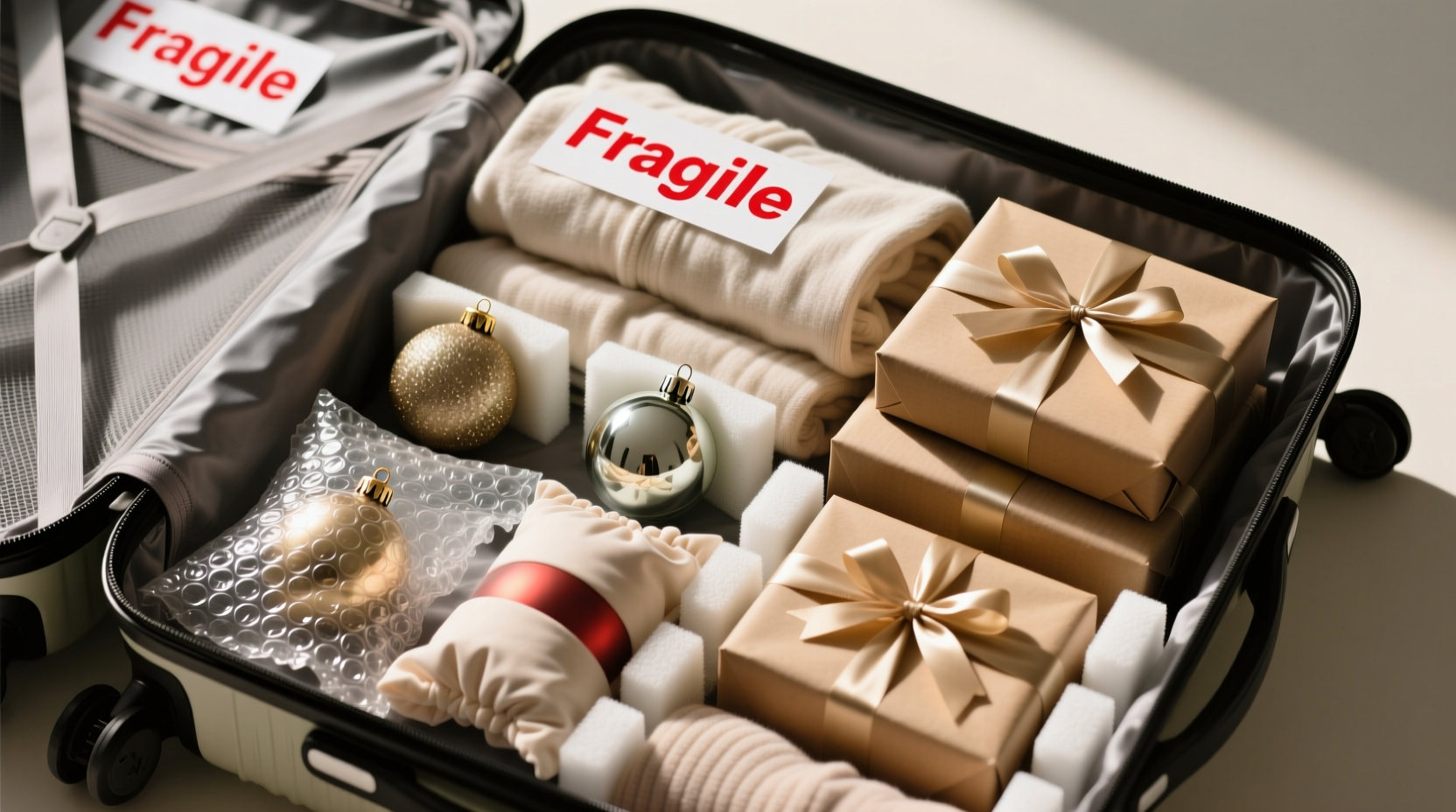
The foundation of successful gift transport starts before you even begin packing. Your choice of suitcase and internal protection plays a critical role in absorbing shocks and preventing direct impact on fragile contents.
Opt for a hard-shell suitcase with reinforced corners if checking luggage. These models offer superior crush resistance compared to soft-sided bags. For carry-ons, consider a hybrid case that combines flexibility with structural rigidity. Regardless of type, ensure your bag has sufficient interior space and compression straps to minimize shifting during transit.
Inside the suitcase, padding is non-negotiable. Use bubble wrap as the first line of defense—double-wrapping especially delicate items like blown-glass ornaments. Avoid relying solely on clothing, as fabrics compress under pressure and lose their protective qualities over time. Instead, combine soft layers with rigid inserts such as cardboard dividers or small plastic boxes to create buffer zones around high-risk items.
Step-by-Step: Packing Fragile Gifts Safely
Success lies not just in what you use but in how you layer and secure everything. Follow this sequence to maximize safety and stability:
- Prepare all gifts beforehand: Ensure each item is clean, dry, and wrapped in at least two layers of bubble wrap. Seal seams with tape but avoid covering decorative surfaces directly.
- Use small, rigid containers: Place individual wrapped items into small cardboard or plastic boxes (like shoeboxes). Fill empty spaces inside these boxes with crumpled tissue paper or foam peanuts to prevent movement.
- Position the sturdiest items at the base: Begin packing the suitcase with heavier, non-fragile items like shoes or toiletry kits. These form a stable foundation.
- Nestle protected gifts in the center: Arrange the boxed fragile items in the middle of the suitcase, surrounded on all sides by soft buffers—rolled sweaters, towels, or down jackets work well.
- Add upper cushioning: Layer soft garments over the top of the nested boxes. Use compression cubes if available to maintain consistent pressure without crushing.
- Secure with straps: Fasten the suitcase’s internal compression straps over the layered contents to reduce shifting during handling.
- Label clearly: Attach an “Fragile – Handle With Care” tag to the outside of the bag. While not always respected, it increases awareness among baggage handlers.
This method creates a “cocoon effect,” where fragile items are suspended within multiple layers of protection, minimizing exposure to sudden impacts or sustained pressure.
Do’s and Don’ts When Transporting Delicate Gifts
Mistakes in packing often stem from assumptions—like thinking “it’s only a short flight” or “they’re careful at airports.” Reality tells a different story: luggage goes through automated sorting systems, gets stacked under heavy loads, and may be dropped from heights exceeding three feet.
| Do’s | Don’ts |
|---|---|
| Double-wrap glass or ceramic items in bubble wrap | Wrap fragile gifts in flimsy tissue paper alone |
| Place gifts in the center of the suitcase, away from walls | Line fragile items along the edges or near zippers |
| Use compression straps to stabilize contents | Overpack the suitcase until items are tightly compressed |
| Carry extremely valuable or irreplaceable items onboard | Check luggage containing one-of-a-kind heirlooms |
| Fill voids with soft clothing or packing cubes | Leave empty spaces that allow items to shift |
Avoid using newspaper for wrapping—it can transfer ink and lacks cushioning strength. Similarly, don’t assume airport security will handle your bag gently during inspections; they may need to open it, increasing the risk of disorganization or damage.
Real-World Example: A Traveler’s Near-Miss
Sarah Thompson, a teacher from Portland, once flew cross-country with six handmade glass snow globes—one for each of her nieces and nephews. She packed them in her checked suitcase, wrapping each in a single layer of tissue and surrounding them with folded blouses.
Upon arrival, she discovered two had cracked due to shifting during transit. The remaining four survived only because they were nestled near the center. The lesson? Even soft buffers aren’t enough without structural containment.
The following year, Sarah changed her approach. She placed each snow globe in its own small box filled with foam scraps, then arranged the boxes in a larger container lined with pool noodles cut to size. That container went into the middle of her suitcase, sandwiched between layers of wool sweaters. All six arrived intact.
“I learned that structure matters more than softness,” she said. “Clothing helps, but it collapses. The rigid boxes made all the difference.”
“Fragile items fail not from lack of padding, but from lack of immobilization. Movement is the enemy.” — Marcus Lin, Aviation Logistics Specialist, Delta Ground Services
Expert Tips for Maximizing Protection
Professional shippers and experienced travelers rely on a few lesser-known strategies to enhance protection beyond standard wrapping.
- Use inflatable packaging sleeves: Compact and lightweight, these can be inflated after packing to fill excess space and add air-cushioned support.
- Invest in silicone gel wraps: Though pricier than bubble wrap, silicone sheets conform to shapes and absorb vibrations better, making them ideal for irregularly shaped ornaments.
- Create a false bottom: In checked luggage, glue a thin sheet of corrugated plastic to the inside base. This adds an extra barrier against floor impacts and punctures.
- Separate sharp objects: If packing other items like kitchen tools or toys with edges, ensure they are stored far from fragile gifts—even through layers—to prevent piercing.
When to Carry On vs. Check Luggage
The safest place for any fragile gift is in your carry-on bag, where you maintain control throughout the journey. However, space limitations and airline policies mean not everything can fit overhead.
As a rule, carry on anything that is:
- Irreplaceable (e.g., family heirlooms)
- Highly sentimental (e.g., a child’s first handmade ornament)
- Extremely delicate (e.g., thin glass baubles, porcelain miniatures)
If you must check the suitcase, consider shipping particularly vulnerable items ahead via courier services like USPS Flat Rate Boxes or UPS Guaranteed Handling. Many travelers find this trade-off—spending $20 to ship versus risking hundreds in lost value—well worth it.
Frequently Asked Questions
Can I use my clothes as sufficient padding?
Clothing provides moderate cushioning, especially bulky items like sweaters or jeans, but should never be the sole protection. Combine fabric layers with rigid containers and bubble wrap for reliable results. Compressed clothing loses volume and shock absorption under weight.
Is it safe to pack fragile gifts in carry-on luggage?
Yes—carry-ons are generally safer because they remain in the cabin and avoid automated sorting systems. However, overhead bin closures and turbulence can still cause movement. Secure items within padded pouches and avoid placing heavy bags on top.
What should I do if my fragile gift breaks during travel?
If damage occurs, document it immediately with photos and file a claim with the airline within 24 hours for checked baggage. Note that most carriers exclude fragile items from liability coverage, so insurance or personal claims may be necessary. For carry-ons, prevention is the only real safeguard.
Essential Checklist Before You Close the Suitcase
Before zipping up, run through this final verification list to ensure no step was missed:
- ✅ Each fragile gift is individually wrapped in bubble wrap (minimum two layers)
- ✅ Wrapped items are placed inside small, rigid boxes with no internal movement
- ✅ Boxes are positioned in the center of the suitcase, surrounded by soft buffers
- ✅ No empty spaces remain—voids are filled with rolled clothing or packing cubes
- ✅ Compression straps are fastened to minimize shifting
- ✅ The suitcase is labeled externally with “Fragile” and “This End Up” tags
- ✅ Irreplaceable items are carried onboard, not checked
Final Thoughts: Peace of Mind Through Preparation
Traveling with fragile Christmas gifts doesn’t have to be a gamble. By treating each item as both emotionally and physically valuable, you shift from hoping for the best to ensuring the best possible outcome. The effort invested in proper packing pays dividends in relieved smiles and joyful unwrapping moments.
Remember: airlines prioritize efficiency over delicacy. Your responsibility isn’t just to pack—but to protect. Use structure, immobilization, and layered defense to outsmart the realities of modern baggage handling. Whether you’re crossing state lines or continents, these methods have been tested by thousands of travelers who refused to let distance ruin their holiday spirit.




 浙公网安备
33010002000092号
浙公网安备
33010002000092号 浙B2-20120091-4
Comments
No comments yet. Why don't you start the discussion?