
The holiday season brings joy, generosity, and the tradition of gift-giving. But when those gifts include delicate ornaments, handmade ceramics, or glassware, the excitement can quickly turn to anxiety—especially when shipping across long distances. A single bump in transit can shatter months of sentiment. The solution lies not in avoiding fragile gifts, but in mastering the art of secure packaging. With the right materials, techniques, and attention to detail, you can ensure your presents arrive intact, just as intended.
Understanding the Risks of Shipping Fragile Items
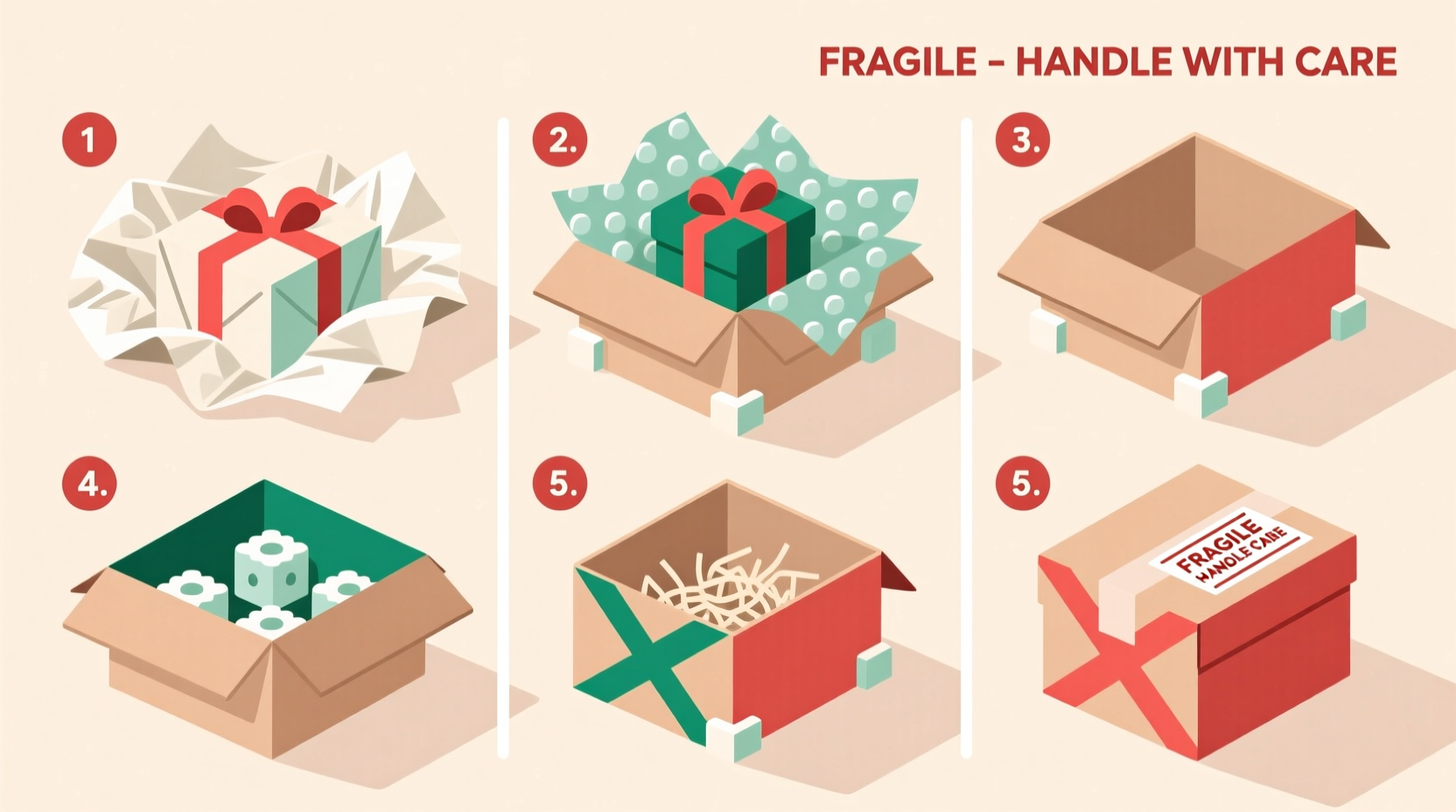
Fragile items face multiple hazards during shipping: rough handling, stacking pressure, temperature changes, and sudden drops. Carriers process millions of packages daily, and while automated sorting improves efficiency, it also increases the risk of impact. According to the International Safe Transit Association (ISTA), up to 60% of package damage occurs due to improper packaging rather than carrier mishandling.
Items like hand-blown glass, porcelain figurines, vintage decorations, or artisanal candles are especially vulnerable. Even seemingly sturdy containers like wine bottles or ceramic mugs can crack under compression or vibration. Understanding these risks is the first step toward prevention. It’s not enough to wrap something in tissue paper and hope for the best. Effective protection requires structure, cushioning, and strategic layering.
“Over 70% of damaged fragile shipments could have been avoided with proper internal cushioning and box selection.” — Logistics Safety Council, 2023 Annual Report
Essential Materials for Packing Fragile Gifts
Successful packaging starts with the right supplies. Using household scraps may seem economical, but they often lack consistency and durability. Invest in professional-grade materials that provide predictable protection.
| Material | Purpose | Recommended Use |
|---|---|---|
| Double-wall corrugated box | Structural integrity and crush resistance | All fragile items over 1 lb or irregular shapes |
| Bubble wrap (3/16” or 1/4”) | Shock absorption and surface protection | Wrap each item individually; use at least two layers |
| Packing peanuts or air pillows | Fill voids and prevent shifting | Use biodegradable peanuts to reduce environmental impact |
| Kraft paper or tissue paper | Light wrapping and aesthetic finish | Outer layer over bubble wrap for visual appeal |
| Foam inserts or molded pulp | Custom fit for high-value or oddly shaped items | Photography equipment, heirloom jewelry boxes |
Step-by-Step Guide to Packing Fragile Christmas Gifts
Packing isn’t just about stuffing a box. It’s a methodical process that ensures every point of potential failure is addressed. Follow this sequence to maximize protection.
- Choose the Right Box Size
Select a box that leaves 2–3 inches of clearance on all sides. Too much space leads to movement; too little prevents adequate cushioning. - Prepare the Base Layer
Add 1–2 inches of packing peanuts or crumpled kraft paper to the bottom. This absorbs initial impact if the box lands upright. - Wrap Each Item Individually
Start with bubble wrap, ensuring all edges and corners are covered. For extra-sensitive items, use two layers with the bubbles facing inward on the second wrap. Seal seams with clear tape—never stretch the wrap tightly, as this reduces its shock-absorbing capacity. - Separate Multiple Items
If sending more than one fragile gift, never let them touch. Wrap each separately and place them in individual compartments using cardboard dividers or foam sheets. Shifting during transit causes chipping and cracking. - Place Items in the Box
Set wrapped items in the center, avoiding contact with the box walls. Heavier items should rest at the bottom if stacking is unavoidable. - Fill All Voids
Pour packing material around and above the items until no movement occurs when the box is gently shaken. Air gaps allow momentum buildup, increasing breakage risk. - Seal and Reinforce
Close the box with H-taping: apply tape along all seams and edges in an “H” pattern. This reinforces weak points and prevents accidental opening. - Label Clearly
Mark “Fragile,” “This Side Up,” and “Handle with Care” on at least two adjacent sides. While carriers aren’t legally required to treat these differently, data shows labeled packages are handled more cautiously in terminal sorting areas.
Common Mistakes That Lead to Breakage
Even experienced shippers make errors that compromise their efforts. Avoid these frequent pitfalls:
- Using only newspaper or grocery bags for cushioning – These compress too easily and offer minimal shock absorption.
- Overpacking the box – Squeezing items in creates internal pressure, which can crack glass or deform structures during temperature shifts.
- Placing fragile items in oversized boxes without enough fill – This allows free movement, turning the contents into projectiles during transit.
- Ignoring temperature sensitivity – Some glues, resins, or chocolates degrade in extreme cold or heat. Consider insulated liners for climate-vulnerable gifts.
- Forgetting weight distribution – Uneven weight causes boxes to tilt or flip, increasing drop impact on one corner.
Real-World Example: A Handmade Ornament Rescue
Sarah from Portland ordered five custom-blown glass ornaments from a small studio in Vermont for her family’s annual tree. She planned to ship them directly to relatives across three states. Initially, she considered reusing old shoeboxes with shredded paper. After reading about transit risks, she upgraded her approach.
She used a double-wall box, wrapped each ornament in two layers of bubble wrap, and placed them in molded pulp trays separated by cardboard. She filled remaining space with biodegradable peanuts and sealed the box with reinforced tape. Every package arrived undamaged—even one that had traveled through a Midwest winter storm with subzero temperatures.
One recipient reported seeing the “Fragile” label being noticed by a delivery driver, who adjusted his grip and placed the box upright on the porch instead of tossing it. Sarah’s attention to detail didn’t just protect the ornaments—it influenced human behavior in the supply chain.
Do’s and Don’ts of Fragile Gift Packaging
| Do | Don’t |
|---|---|
| Use double-wall boxes for any item over 1 lb | Reuse worn or dented boxes |
| Wrap each item separately | Nest fragile items together without separation |
| Fill all empty space with cushioning | Leave air gaps larger than 1 inch |
| Label with “Fragile” and orientation arrows | Assume carriers will automatically handle gently |
| Test the box by shaking it lightly | Ship without checking for internal movement |
Expert Tips for Extra Protection
Seasoned packers and logistics professionals rely on advanced techniques to safeguard valuable shipments. Incorporate these pro-level strategies:
- Use inflatable air bags for large voids. These expand to fit the space perfectly and resist compression better than loose fill.
- Layer soft materials between rigid ones. For example, place a felt sheet between two stacked plates to prevent micro-scratches that weaken structural integrity.
- Consider insurance for high-value items. Most carriers offer coverage beyond $100, but you must declare value upfront.
- Ship early. Avoid last-minute deadlines that force expedited handling. Packages shipped earlier in the season move through less congested systems.
“Proper packaging doesn’t just protect the object—it protects the emotion behind the gift. A broken present can feel like a broken promise.” — Dana Ruiz, Packaging Consultant & Author of *The Art of Safe Delivery*
Checklist: Pre-Shipment Verification
Before sealing and sending, run through this final checklist to ensure nothing is overlooked:
- ☐ Selected a double-wall box with 2–3 inches of clearance around the item
- ☐ Wrapped each fragile piece in at least two layers of bubble wrap
- ☐ Used dividers or separators for multiple items
- ☐ Added 1–2 inches of cushioning to the bottom of the box
- ☐ Filled all voids—no movement when box is gently shaken
- ☐ Sealed with H-tape across all seams and flaps
- ☐ Marked “Fragile,” “This Side Up,” and orientation labels clearly
- ☐ Verified shipping address and return information
- ☐ Purchased shipping insurance (if applicable)
- ☐ Scheduled pickup or dropped off at a staffed location to avoid porch theft or weather exposure
Frequently Asked Questions
Can I use clothing or towels to pack fragile gifts?
You can in a pinch, but natural fibers compress under pressure and don’t provide consistent cushioning. They’re better suited for padding within a properly packed box than as the primary protective layer. For reliable results, stick to engineered materials like bubble wrap or foam.
Is it safe to ship wine or champagne as a Christmas gift?
Yes, but only with specialized wine shippers that include internal strapping and bottle collars. Standard boxing risks leakage or explosion due to pressure changes. Also, check carrier policies—some restrict alcohol shipping to licensed businesses only.
What should I do if the gift breaks despite careful packing?
File a claim with the carrier immediately. You’ll need proof of purchase, photos of the damaged item and packaging, and evidence that the box was properly sealed and labeled. If you purchased insurance, the process is typically faster. Always keep records for at least 90 days after shipment.
Final Thoughts: Delivering More Than a Gift
Packing a fragile Christmas gift is an act of care. It’s not merely about preventing physical damage—it’s about honoring the thought, time, and emotion invested in giving. When you take the extra minutes to wrap, cushion, and reinforce, you’re not just protecting glass or ceramic; you’re preserving memory, connection, and celebration.
In a world where convenience often trumps quality, choosing to pack with precision sends a message: this gift matters. And so does the person receiving it.




 浙公网安备
33010002000092号
浙公网安备
33010002000092号 浙B2-20120091-4
Comments
No comments yet. Why don't you start the discussion?