
Moving is stressful enough without the added anxiety of preserving delicate holiday memories. Christmas ornaments—especially heirloom or hand-blown glass pieces—can be among the most vulnerable items in your home. A single misstep during packing or transport can turn decades of tradition into shards at the bottom of a box. Yet with the right strategy, materials, and attention to detail, it’s entirely possible to move an entire ornament collection without a single crack or chip.
The key isn’t just wrapping things carefully; it’s creating a system that isolates each piece, absorbs shock, and prevents movement during transit. This guide walks through a comprehensive, field-tested method used by professional movers and preservation experts, combining practicality with precision. Whether you're relocating across town or across the country, these steps will ensure your tree shines just as brightly in your new home.
1. Gather the Right Supplies Before You Begin
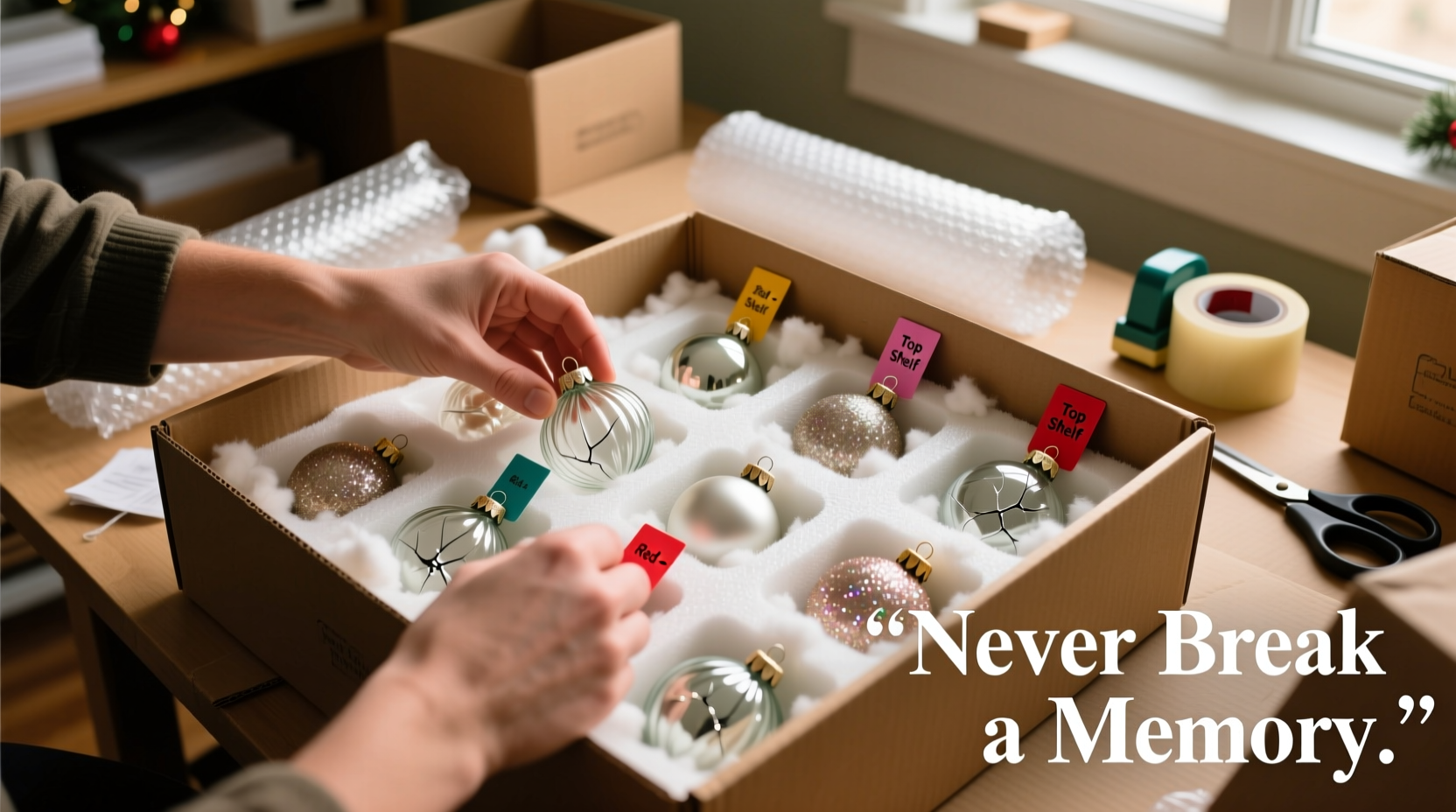
Packing fragile ornaments starts long before you touch the first bauble. The quality of your materials determines whether your efforts succeed or fail. Standard moving boxes and newspaper won’t cut it—ornaments need tailored protection. Invest in specialized supplies that offer cushioning, separation, and structural integrity.
Here’s what you’ll need:
- Small to medium double-walled cardboard boxes (12” x 12” x 12” ideal)
- Tissue paper (acid-free preferred for long-term storage)
- Bubble wrap (preferably with small bubbles for better conformity)
- Packing paper or crumpled kraft paper
- Foam inserts or compartmentalized dividers (optional but highly effective)
- Permanent marker for labeling
- Packing tape (heavy-duty)
- Ziplock bags (for attaching hooks, wires, or small parts)
2. Sort and Categorize Your Ornaments Strategically
Before packing, sort your ornaments by size, material, and fragility. This step streamlines the packing process and ensures appropriate handling for each type. Groupings might include:
- Glass ornaments – especially hand-blown or vintage
- Wooden or ceramic pieces – often heavier but prone to chipping
- Plastic or resin – less fragile but can scratch
- Handmade or sentimental items – require extra documentation and padding
Take inventory. Photograph each ornament and note its origin or story if relevant. Store this digital record separately from the physical move—ideally in cloud storage. This serves both sentimental and practical purposes: if damage occurs, you have a visual reference, and insurance claims become far easier to file.
“Proper categorization reduces decision fatigue during packing and ensures consistent protection. I’ve seen families lose entire collections because they treated all ornaments the same.” — Sarah Lin, Professional Art & Heirloom Mover, Atlantic Relocations
3. Step-by-Step Packing Process for Maximum Protection
Follow this timeline-based approach to pack ornaments efficiently and securely. Allow at least 2–3 hours for a full collection of 50–75 pieces, depending on complexity.
- Remove hooks and wires: Carefully detach metal hangers and place them in labeled Ziplock bags. Tape the bag to the outside of the box later so replacements aren’t lost.
- Wrap individually in tissue paper: Start with a soft layer of acid-free tissue. This prevents surface scratches and absorbs minor moisture.
- Add bubble wrap for high-risk items: Wrap glass and ceramic ornaments in at least two layers of bubble wrap, sealing seams with tape. For round ornaments, use the “twist-and-seal” method: wrap from top to base, twist the excess at the bottom, and secure with tape.
- Use compartmentalized boxes when possible: Insert foam trays or cardboard dividers to create individual cells. If unavailable, make your own using folded cardboard or egg cartons for smaller items.
- Place wrapped ornaments upright: Nestle each piece into the box with the hanging point facing up. This mimics natural weight distribution and minimizes pressure on delicate tips.
- Fill voids with crumpled packing paper: After placing all items, add loose paper around and between them to eliminate shifting. No ornament should move more than a quarter-inch when the box is gently shaken.
- Seal and label clearly: Tape all seams of the box. Label every side with “Fragile,” “This Side Up,” and “Christmas Ornaments – Do Not Stack.”
4. Best Practices vs. Common Mistakes: A Comparison
Even well-intentioned efforts can go wrong if based on outdated or incorrect assumptions. The table below outlines proven best practices versus common pitfalls.
| Best Practice | Common Mistake | Why It Matters |
|---|---|---|
| Use double-walled boxes | Re-use flimsy cereal or shipping boxes | Single walls collapse under light pressure; double walls resist stacking and impact. |
| Pack ornaments vertically | Lay ornaments flat or nestle them sideways | Vertical positioning reduces stress on thin glass necks and hanging loops. |
| Isolate each ornament | Bundle multiple in one wrap or let them touch | Contact causes micro-abrasions that lead to cracks during vibration. |
| Label boxes on all sides | Label only the top | Boxes get rotated; visibility from every angle prevents mishandling. |
| Store boxes in climate-controlled areas | Leave in hot trucks or damp basements | Temperature swings cause condensation and weaken adhesives or paint. |
5. Real-World Example: Moving a 40-Year Ornament Collection
In 2022, the Delgado family prepared to relocate from Chicago to Portland with a cherished collection of 87 Christmas ornaments, including a hand-painted glass dove from 1983 and a set of East German figurines passed down from a grandmother. Initially overwhelmed, they followed a structured plan based on museum conservation principles.
They began by sorting items into three risk tiers: high (glass, ceramic), medium (wood, fabric), and low (plastic). Each tier received different packaging intensity. High-risk items were double-wrapped and placed in custom-cut foam trays inside reinforced boxes. Medium items used single bubble wrap and compartment separators. Low-risk pieces were grouped in padded clusters.
The boxes were marked with QR codes linking to a private photo album. During transit, one box was accidentally dropped at a loading dock. Thanks to the internal cushioning and rigid structure, no ornament broke. Upon arrival, every piece was intact—a result the family called “nothing short of miraculous.”
“We didn’t think it was possible to move something so delicate across the country. But treating it like art, not just decor, made all the difference.” — Maria Delgado, homeowner
Essential Checklist: Packing Fragile Ornaments Safely
Use this checklist to ensure no critical step is missed during your packing process.
- ☐ Sort ornaments by material and fragility level
- ☐ Gather acid-free tissue, bubble wrap, and double-walled boxes
- ☐ Remove and bag all hooks, wires, and loose components
- ☐ Wrap each fragile ornament individually in tissue, then bubble wrap
- ☐ Use dividers or homemade compartments to prevent contact
- ☐ Place ornaments upright and fill gaps with packing paper
- ☐ Seal box completely with strong packing tape
- ☐ Label all six sides: “Fragile,” “This Side Up,” and contents
- ☐ Store boxes in climate-controlled environments only
- ☐ Take photos and back them up digitally
FAQ: Common Questions About Packing Holiday Ornaments
Can I use regular gift wrap instead of tissue paper?
No. Gift wrap is often too thick and abrasive, increasing friction during movement. It may also contain dyes that transfer onto delicate surfaces. Always use acid-free tissue paper for direct contact with ornaments.
Is it safe to pack ornaments in suitcases?
Suitcases are tempting but risky. Wheels, zippers, and uneven bases make them unstable in transit. They also lack the structural rigidity of cardboard boxes. If you must use a suitcase, line it with foam, wrap each ornament heavily, and only fill it halfway—then place it in a larger, sealed box for secondary protection.
How many ornaments should go in one box?
Aim for no more than 12–15 standard-sized (3–4 inch) ornaments per small box. Overpacking increases pressure and reduces shock absorption. For large or irregularly shaped pieces (like nutcrackers or wreaths), dedicate one box per item.
Final Tips for a Stress-Free Move
Your Christmas ornaments carry more than aesthetic value—they hold stories, traditions, and emotional resonance. Treating them with the care they deserve doesn’t require perfection, but consistency. By investing a few extra hours in proper packing, you safeguard decades of memories.
Never stack ornament boxes under heavier items. During the move, keep them in your personal vehicle if possible, where temperature and handling are more controlled. Once at your new home, unpack them first—before furniture or kitchenware—and store them in a closet with stable conditions until December.
Remember: a single broken ornament can feel like a loss. But with the right approach, that outcome is almost entirely preventable.




 浙公网安备
33010002000092号
浙公网安备
33010002000092号 浙B2-20120091-4
Comments
No comments yet. Why don't you start the discussion?