
Parallel parking is one of the most feared driving maneuvers, but it doesn’t have to be. With the right technique and a focus on mirror positioning and interpretation, anyone can master it. Unlike relying solely on glancing over the shoulder or guessing distances, using your side and rearview mirrors gives you consistent visual feedback, especially in low-visibility conditions or tight urban spots. This guide breaks down the entire process into clear, repeatable steps that leverage your mirrors to achieve precise alignment and avoid collisions. Whether you're preparing for a driving test or navigating city streets daily, mastering mirror-based parallel parking will boost your confidence and control.
Why Mirrors Are Essential for Accurate Parallel Parking
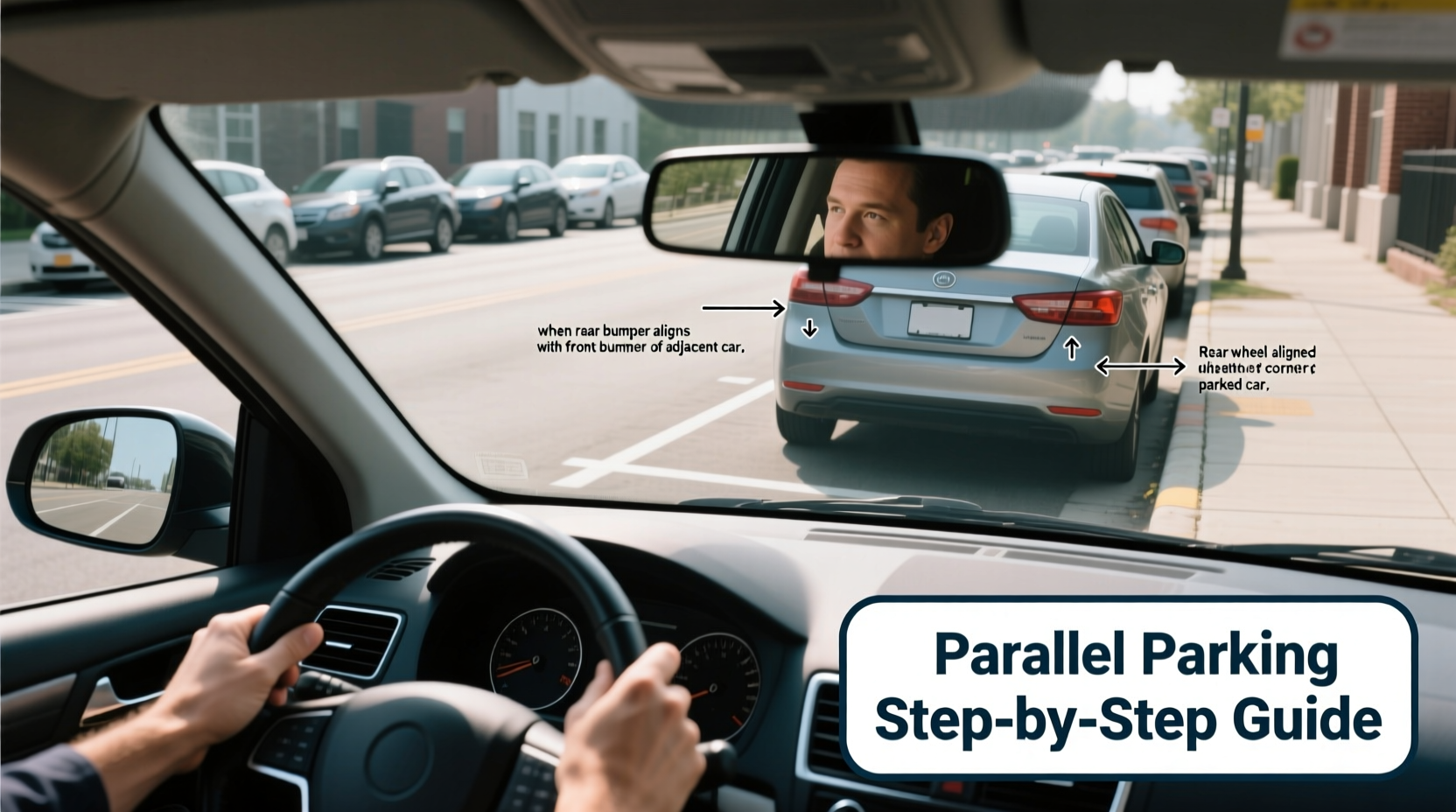
Many drivers rely too heavily on turning their head during parallel parking, which can create blind spots and inconsistent reference points. Mirrors, when properly adjusted, provide a stable and predictable view of your surroundings. The left side mirror shows the curb and rear wheel position, the right side mirror (if used) helps monitor trailing traffic, and the rearview mirror keeps the vehicle behind in sight. Together, they allow you to judge distance from the curb and adjacent vehicles without contorting your body or losing awareness of what’s behind you.
Properly adjusted mirrors eliminate guesswork. The key is setting them so you can see the edge of your car along the bottom third of the mirror—this allows you to track how close your wheels are to the curb. When executed correctly, mirror-based parking reduces scraping, improves alignment, and makes the process smoother and safer.
Step-by-Step Guide: Parallel Parking Using Your Mirrors
The following sequence assumes you’re parking on the right side of the road, between two vehicles. Perform these steps slowly, using gentle brake and accelerator control, and keep your foot ready to stop at any moment.
- Find a Suitable Space: Look for a space at least 1.5 times the length of your vehicle. Pull up alongside the car in front of the spot, aligning your rear bumper with theirs. Stop about 2–3 feet away from the vehicle.
- Check Surroundings: Use your rearview and side mirrors to confirm no vehicles, cyclists, or pedestrians are approaching. Signal your intention to turn right to indicate you’re parking.
- Begin Reversing: Shift into reverse. Begin backing up slowly while checking all mirrors. Keep your steering wheel straight until your rear seat reaches the midpoint of the car ahead.
- Turn the Wheel Sharply Right: Once aligned, turn the steering wheel fully to the right. Continue reversing slowly. Watch your left side mirror closely—it will show your rear left tire approaching the curb.
- Monitor Left Mirror for Curb Alignment: As you continue turning right, your car will angle into the space. The moment the curb disappears from view in your left mirror, it means your rear wheel is nearly touching the curb. This is your cue to stop turning and begin correcting.
- Straighten the Wheels: Turn the steering wheel fully to the left to straighten your car. Keep reversing slowly. Now use both side mirrors to gauge equal distance from the cars in front and behind. Adjust forward or backward as needed to center yourself.
- Final Position Check: Once stopped, check that your car is within 12 inches of the curb, wheels straight, and not overlapping either neighboring vehicle. If necessary, make small forward-and-backward adjustments while monitoring the mirrors.
This method relies on visual cues from the mirrors rather than body twisting or estimation, making it more reliable across different vehicles and parking conditions.
Common Mistakes and How to Avoid Them
Even experienced drivers make errors during parallel parking. Most stem from poor mirror use or misjudging spatial relationships. Recognizing these pitfalls helps refine your technique.
| Mistake | Why It Happens | How Mirrors Help Fix It |
|---|---|---|
| Hitting the curb | Driver fails to notice rear wheel proximity | Left mirror shows when wheel nears curb; stop turning when curb vanishes from view |
| Angling too sharply into the space | Over-turning before sufficient backward movement | Rearview mirror confirms vehicle alignment; correct early if angle seems excessive |
| Parking too far from the curb | No visual reference for lateral distance | Left mirror reveals gap between tire and curb; aim for 6–12 inches |
| Bumping the car behind | Failing to monitor trailing traffic | Rearview mirror tracks following vehicles; pause or stop if they approach |
| Uneven spacing front-to-back | Guessing instead of measuring visually | Side mirrors help compare gaps with adjacent bumpers; adjust accordingly |
Expert Insight: What Driving Instructors Recommend
Professional driving educators emphasize consistency and reliance on fixed reference points. One such expert, Mark Reynolds, a certified driver trainer with over 15 years of experience, explains:
“Most students panic because they feel like they’re flying blind. But when I teach them to trust their mirrors—especially the left side mirror for curb awareness—their success rate jumps dramatically. The mirror doesn’t lie. If you know where to look, it tells you exactly when to turn, when to stop, and when you’re perfectly parked.” — Mark Reynolds, National Driving Safety Instructor
Reynolds stresses that muscle memory develops faster when drivers anchor their actions to visual triggers in the mirrors rather than vague physical sensations. He also recommends practicing mirror adjustments regularly, as vibrations and door slams can shift them over time.
Mini Case Study: Sarah’s First Solo City Parking Success
Sarah, a 24-year-old new driver living in Boston, dreaded parallel parking. During her lessons, she relied on looking over her shoulder and often ended up too far from the curb or had to reposition multiple times. After failing her initial driving test due to poor parking alignment, she sought additional coaching focused on mirror usage.
Her instructor had her adjust her left mirror downward to clearly see the curb line. They practiced a simple rule: “When the curb drops out of the left mirror, stop turning and straighten the wheel.” After three practice sessions using only mirrors—no shoulder checks—Sarah successfully parked in a real downtown spot during rush hour without corrections. She passed her second test with full points on the parking maneuver.
“I realized I didn’t need to twist my neck anymore,” Sarah said. “The mirror showed me everything. It was like having eyes in the back of my car.”
Checklist: Mirror-Based Parallel Parking Readiness
Before attempting parallel parking, ensure you’re prepared. Use this checklist to set yourself up for success:
- ✅ Mirrors adjusted so you can see the curb and rear wheel in the left side mirror
- ✅ Vehicle signal activated to indicate parking intent
- ✅ Braking foot ready, speed under 5 mph
- ✅ Clearance confirmed behind and beside via rearview and side mirrors
- ✅ Steering wheel responsive and ready for smooth turns
- ✅ Mental readiness: calm, focused, no rushing
Going through this list becomes second nature with repetition and significantly reduces stress during actual parking attempts.
Frequently Asked Questions
Can I parallel park without looking over my shoulder?
Yes, provided your mirrors are correctly adjusted. While some jurisdictions require a shoulder check for licensing, you can rely primarily on mirrors for spatial judgment. The left side mirror, in particular, gives accurate feedback about wheel-to-curb distance, reducing the need for awkward turns.
What if my mirrors don’t show the curb clearly?
If your mirrors are too high or too inward, they won’t capture the curb. Adjust them so the horizon line runs through the middle of the mirror, and tilt the left mirror slightly downward. You should see both the side of your car and the road surface—including the curb—along the bottom edge.
How close should I be to the curb when finished?
Most DMVs consider a successful parallel park to be within 12 inches (1 foot) of the curb. Using your left mirror, you can estimate this distance: if you see a small strip of pavement between your rear tire and the curb, you’re likely within range. No visible gap may mean you’re touching or too close; too much space indicates you need to move closer.
Final Tips for Consistent Success
Perfecting parallel parking isn’t about innate talent—it’s about technique, patience, and repetition. Here are a few final tips to lock in your skills:
- Practice in low-risk environments: Empty parking lots or quiet residential streets offer safe spaces to build confidence.
- Use reference objects: Park near painted lines, curbside markings, or fixed poles to train your eye for alignment.
- Stay slow: Speed kills precision. Move at a crawl to give yourself time to react to mirror cues.
- Don’t fear corrections: Even experts make small adjustments. It’s better to fine-tune than to force a bad angle.
- Trust your mirrors: Over time, you’ll learn their exact field of view and what each visual change means for your position.
Conclusion: Take Control of Your Parking Confidence
Parallel parking doesn’t have to be a source of anxiety. By shifting your focus from instinctual guesses to deliberate mirror observation, you gain control, accuracy, and repeatability. The steps outlined here form a reliable system that works regardless of car size or street conditions. Mastery comes not from luck, but from applying the same proven method every time. Start practicing today—use the checklist, adjust your mirrors, and follow the cues. Soon, pulling into a tight spot will feel less like a challenge and more like a victory.




 浙公网安备
33010002000092号
浙公网安备
33010002000092号 浙B2-20120091-4
Comments
No comments yet. Why don't you start the discussion?