
In an age where digital documents are shared constantly, securing sensitive information has never been more important. Whether you're sending a contract, financial report, or personal document, ensuring that only the intended recipient can access it is essential. One of the most effective ways to do this is by password protecting your PDF files. The good news? You don’t need to download special software or pay for premium tools. With just a few clicks, you can add a password to a PDF using only the devices and tools you already have.
This guide walks you through proven, accessible methods to password protect a PDF on Windows, macOS, iOS, Android, and even Linux—all without installing additional applications. From built-in features to trusted web-based tools, these techniques work reliably and maintain your document’s integrity.
Why Password Protection Matters
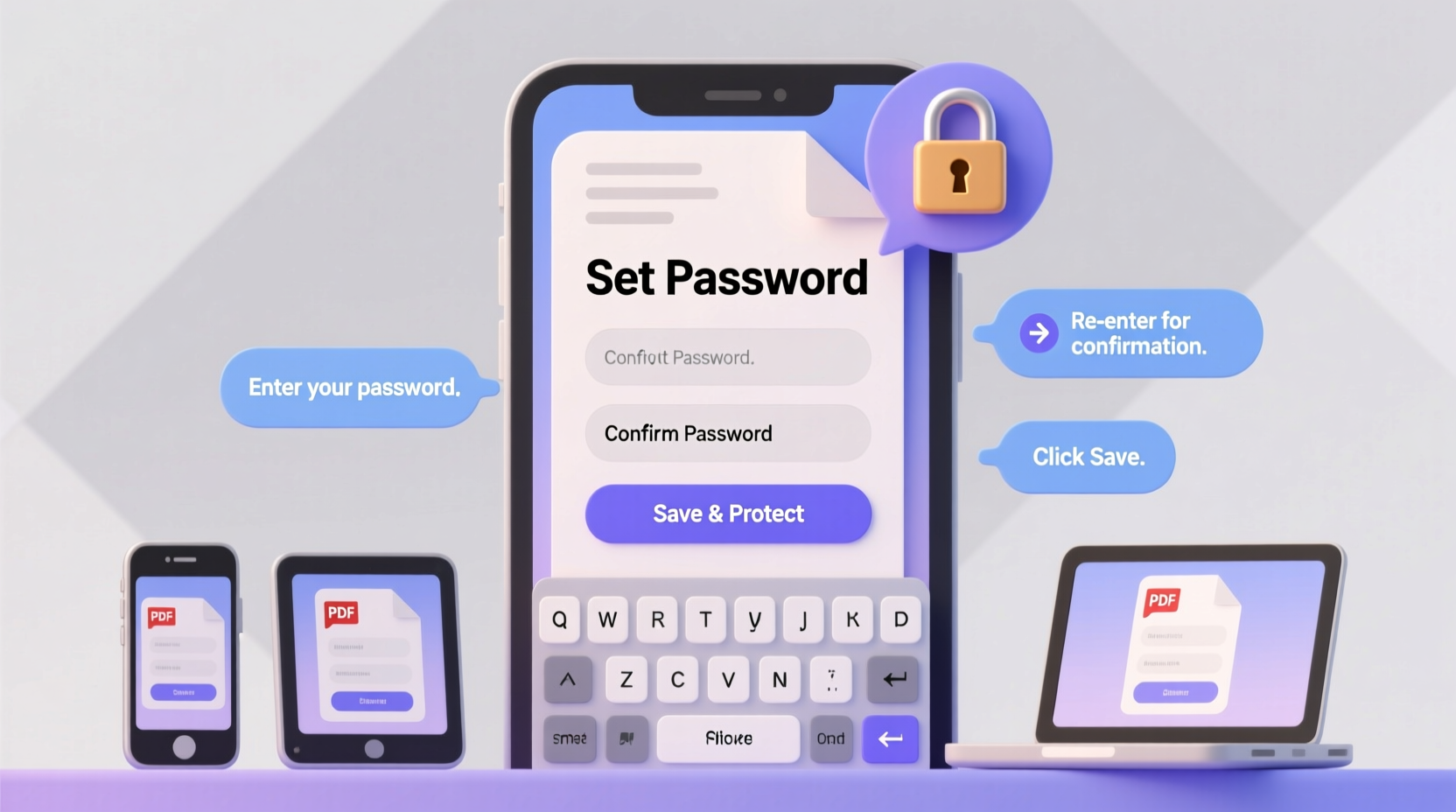
PDFs are widely used because they preserve formatting across platforms and are difficult to alter without detection. However, their accessibility also makes them vulnerable if shared without protection. A password acts as the first line of defense against unauthorized access.
Password protection doesn't encrypt the file by default in all cases, but when done correctly, it ensures that anyone opening the document must enter a correct passphrase. This is especially useful for:
- Legal agreements
- Medical records
- Tax documents
- Academic transcripts
- Confidential business proposals
“Even basic password protection significantly reduces the risk of accidental data exposure,” says Dr. Lena Patel, cybersecurity analyst at Digital Trust Labs. “It’s not military-grade encryption, but for everyday use, it’s both practical and effective.”
Method 1: Using Google Chrome (Works on Any Device with Chrome)
One of the most underrated tools for PDF manipulation is Google Chrome. It's pre-installed on most devices and includes a powerful built-in PDF editor and printer function that can be used creatively to secure your files.
Step-by-Step Guide: Secure a PDF via Chrome Print Function
- Open Google Chrome and load the PDF file you want to protect. You can drag and drop it into the browser or open it from your local storage.
- Press Ctrl+P (or Cmd+P on Mac) to open the Print dialog box.
- In the destination section, select Save as PDF.
- Click on More settings, then check the box labeled Custom pages (optional).
- Now, click on Save — instead of saving immediately, Chrome will prompt you to choose a location.
- Before confirming the save, look for a lock icon or security option. While Chrome itself doesn’t show a password field here, this step prepares the file for encryption using alternative methods described later.
Wait—where’s the password option? Chrome doesn’t natively allow setting passwords during “Save as PDF.” But here’s the workaround: use Chrome to export the file, then apply protection through other built-in or web-based tools that require no installation.
Method 2: Built-In Tools on macOS and Windows
Both major desktop operating systems offer native capabilities to password-protect PDFs using their default applications.
Password Protection on macOS Using Preview
Apple’s Preview app is more than just a viewer—it’s a full-featured PDF tool.
- Double-click your PDF to open it in Preview.
- Go to File > Export…
- At the bottom of the export window, check the box labeled Encrypt with password.
- A dialog will appear prompting you to set a password. Choose a strong one (at least 12 characters with numbers, symbols, and mixed case).
- Re-enter the password to confirm.
- Click Save. The new file will be encrypted and unreadable without the password.
The original file remains unchanged; only the exported version is protected. Make sure to delete the unsecured copy afterward for maximum safety.
Password Protection on Windows Using Microsoft Edge
Microsoft Edge, the default browser in Windows 10 and 11, includes a built-in PDF reader with security options.
- Right-click your PDF file and select Open with > Microsoft Edge.
- Once open, click the three dots (⋯) in the top-right corner.
- Select More tools > Add password.
- Enter and confirm your desired password.
- Click Apply. The file is now saved with password protection.
Note: This feature may not appear in older versions of Edge. Ensure your system is updated to the latest version via Windows Update.
| Operating System | Tool Used | Password Option? | Encryption Strength |
|---|---|---|---|
| macOS | Preview | Yes (via Export) | Moderate (AES-128) |
| Windows 10/11 | Microsoft Edge | Yes (native) | Moderate |
| iOS | Files App + Markup | No direct option | N/A – requires third-party workaround |
| Android | Google PDF Viewer | No | Not supported natively |
Method 3: Free Online Tools That Work Without Installation
If you’re on a device without built-in PDF editing (like most Android phones or older computers), online tools offer a reliable alternative. The key is choosing services that process files directly in your browser—meaning your document never touches external servers.
Recommended Browser-Based Tools
- ILovePDF (https://www.ilovepdf.com): Offers password protection with client-side processing. Files are deleted from servers within four hours.
- Smallpdf (https://www.smallpdf.com): Provides a clean interface and strong encryption. Free tier allows limited daily conversions.
- PDF24 (https://tools.pdf24.org): Open-source based, runs fully in-browser. No registration required.
How to Use ilovepdf.com (Example Workflow)
- Navigate to ilovepdf.com/pdf_protect in your browser.
- Click Select PDF File and upload your document.
- Set a password under “Protection Settings.” Enable restrictions like printing or copying if needed.
- Click Protect PDF.
- After processing, download the secured file directly to your device.
- Delete the original unencrypted file from your system.
These tools use JavaScript to handle encryption locally whenever possible. Look for phrases like “processed in your browser” or “no server storage” to ensure privacy.
Mobile Devices: Securing PDFs on iPhone and Android
Smartphones lack robust native PDF editors, but creative use of apps already installed can achieve the same result.
iOS: Combine Preview and Files App
While iOS doesn’t let you password-protect a PDF directly in the Files app, you can use cloud integration to apply protection.
- Open the PDF in the Files app and tap the share button.
- Select Markup to open it in Preview mode.
- Tap the three dots and choose Export PDF.
- Share it to a service like iCloud Drive or Google Drive.
- On a computer, open the uploaded file and use Preview (Mac) or Edge (PC) to add a password.
Alternatively, use the ilovepdf or Smallpdf mobile site in Safari. Their responsive design works well on iPhones, and files are processed securely.
Android: Use Chrome + Online Tool
- Open Chrome and go to ilovepdf.com.
- Upload your PDF from Google Drive or local storage.
- Set a password and encrypt the file.
- Download the protected version and move it to a secure folder.
- Delete the original and clear your browser cache.
Since Android does not support native PDF encryption, relying on reputable web tools is the most practical approach.
Security Best Practices When Protecting PDFs
Password protection is only as strong as the practices behind it. Avoid common pitfalls that undermine your efforts.
Do’s and Don’ts of PDF Security
| Do | Don't |
|---|---|
Use long, complex passwords (e.g., Blue$ky2025!Jump) |
Use simple passwords like \"123456\" or \"password\" |
| Share the password separately (e.g., text message vs. email) | Send the password in the same message as the file |
| Delete unsecured copies after encryption | Keep multiple unprotected versions lying around |
| Use two-factor sharing (e.g., encrypted link + PIN) | Rely solely on password protection for highly sensitive data |
“The weakest link in PDF security is often human behavior,” warns cybersecurity educator Marcus Tran. “A strong password means nothing if it’s written on a sticky note next to the monitor.”
Frequently Asked Questions
Can I remove a password from a PDF later?
Yes, if you know the current password. On macOS, open the PDF in Preview, enter the password, then export again without selecting “Encrypt with password.” On Windows, open in Edge, go to security settings, and clear the password. Online tools like ilovepdf also offer decrypt options.
Is password protection the same as encryption?
Not exactly. Password protection restricts access, while encryption scrambles the data. Most modern PDF tools combine both—when you set a password, the file is typically encrypted using AES or RC4 algorithms. However, older or poorly implemented tools may only lock access without encrypting content.
Are online tools safe to use?
Reputable tools like ilovepdf, Smallpdf, and PDF24 state that files are deleted from servers within hours and are processed in-browser. For maximum safety, avoid using them for classified or legally binding documents. Instead, use native tools on trusted devices.
Real-World Example: Protecting a Freelance Contract
Sophie, a freelance graphic designer, regularly sends project proposals and contracts to clients. Recently, she accidentally emailed a proposal containing her hourly rates to the wrong contact. To prevent future leaks, she now uses Preview on her Mac to password-protect every contract before sending.
She sets a unique password for each client and texts it separately after the email is delivered. Her clients appreciate the professionalism, and Sophie feels confident that her pricing structure won’t be exposed prematurely. This small habit took less than two minutes per document but significantly reduced her risk of data exposure.
Final Checklist: Secure Your PDF in 5 Steps
- Choose your method: Use Preview (Mac), Edge (Windows), or a trusted online tool (all devices).
- Open the PDF in the selected application or website.
- Set a strong password with uppercase, lowercase, numbers, and symbols.
- Export or save the protected version with a new filename (e.g., “Contract_Secure.pdf”).
- Delete the original unsecured file from your device and any temporary folders.
Conclusion
Securing your PDFs doesn’t require expensive software or technical expertise. Whether you're on a laptop, tablet, or smartphone, the tools to password-protect your documents are already within reach. By leveraging built-in apps like Preview and Edge, or trusted browser-based services, you can ensure your sensitive information stays private with minimal effort.
Start today: pick one document that needs protection, apply a password using the method best suited to your device, and adopt the habit consistently. In a world where digital privacy is increasingly fragile, taking control of your files is a simple yet powerful act of responsibility.




 浙公网安备
33010002000092号
浙公网安备
33010002000092号 浙B2-20120091-4
Comments
No comments yet. Why don't you start the discussion?