
iCloud storage is a finite resource, and many users quickly find themselves running out of space. While photos, messages, and backups consume the bulk of capacity, app data can also accumulate silently in the background. Unlike deleting an app from your iPhone or iPad, removing its footprint from iCloud isn’t always straightforward. Simply uninstalling an app doesn’t guarantee its data vanishes from the cloud. This guide explains how to fully disconnect apps from iCloud, reclaim storage, and prevent future clutter.
Understanding iCloud App Data: What Stays Behind?
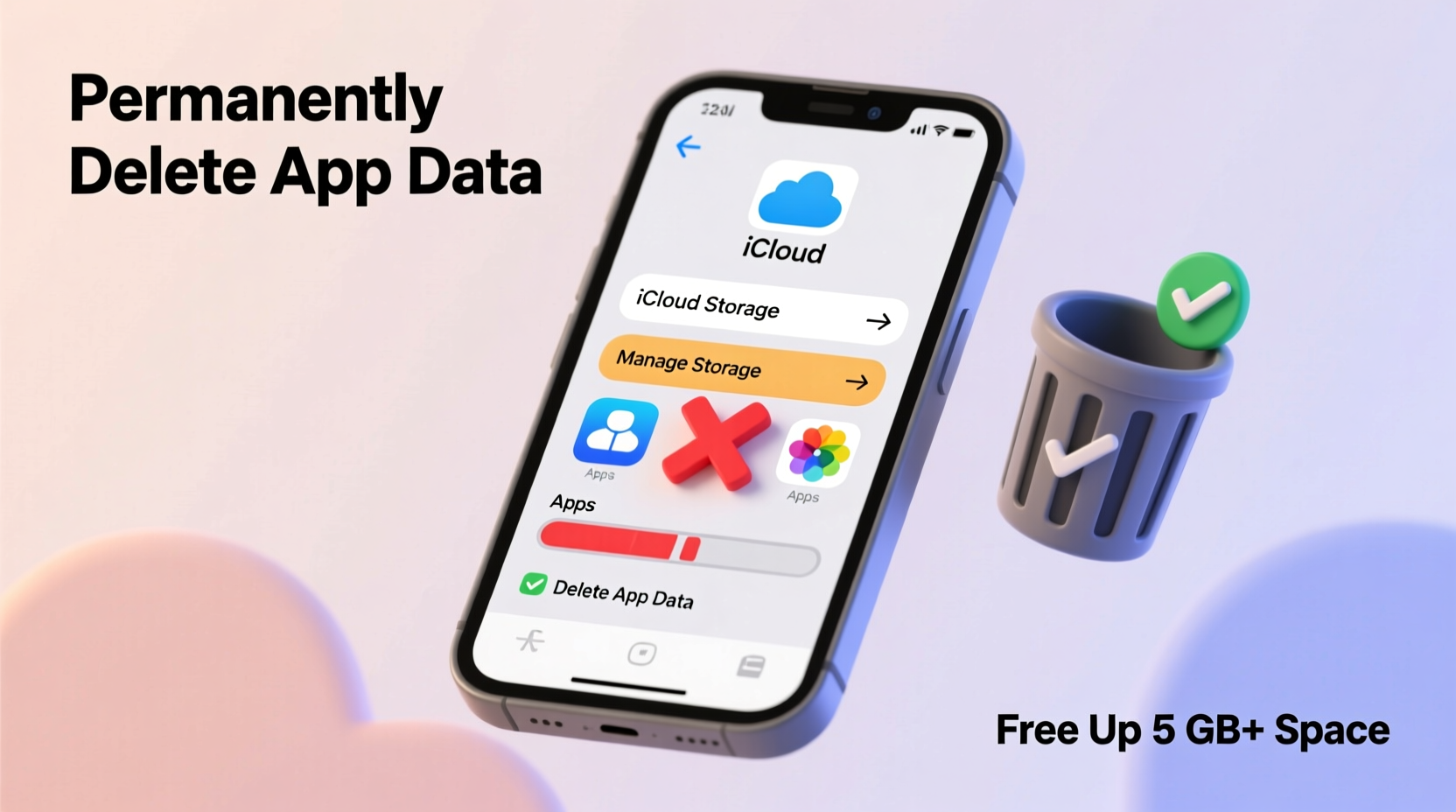
When you install an app that uses iCloud, it may automatically sync preferences, documents, cache files, or user-generated content to your iCloud account. Even after deleting the app from your device, this data often remains in iCloud unless manually removed. This residual data contributes to your storage usage without providing any benefit—especially if you don’t plan to reinstall the app.
Apple’s ecosystem is designed for continuity, but that same design can lead to inefficiency. For example, a game you played briefly might store saved levels, settings, and temporary files. A note-taking app could keep old drafts or offline copies. These fragments add up over time, especially across multiple devices.
“Many users assume deleting an app clears all associated data. In reality, iCloud retains app-specific information until explicitly removed.” — Lisa Tran, Cloud Systems Analyst at TechInsight Group
Step-by-Step: How to Permanently Remove Apps from iCloud
Removing an app's presence from iCloud requires more than just uninstalling it from your device. Follow these steps to ensure complete removal:
- Check iCloud Storage Usage: Go to Settings > [Your Name] > iCloud > Manage Storage. Review the list of apps using iCloud to identify candidates for removal.
- Delete the App from All Devices: Uninstall the app from every iPhone, iPad, and iPod Touch linked to your Apple ID. This prevents new data from syncing.
- Remove App Data from iCloud: Return to Manage Storage > Show All Apps. Tap the app in question and select “Turn Off & Delete.” This removes both the app’s sync permissions and stored data.
- Wait for Sync Completion: Allow 24 hours for changes to propagate across Apple’s servers. During this time, avoid reinstalling the app.
- Verify Deletion: Recheck iCloud storage usage. The app should no longer appear in the list, and your available space should increase accordingly.
Do’s and Don’ts When Removing Apps from iCloud
| Do | Don't |
|---|---|
| Review app data size before deletion to prioritize large offenders | Assume app data will auto-delete when the app is uninstalled |
| Use Wi-Fi when managing iCloud settings to avoid data interruptions | Delete critical apps (like health or finance tools) without local backup |
| Regularly audit iCloud apps every 3–6 months | Reinstall apps immediately after deletion without confirming cleanup |
| Enable iCloud Drive optimization on macOS and iOS | Ignore system warnings about data loss during removal |
Real Example: Clearing Out Old Games and Utilities
Sarah, a freelance designer in Portland, noticed her iCloud storage was nearly full despite having few photos backed up. She reviewed her iCloud usage and found three gaming apps—none of which she’d opened in over two years—collectively occupying 3.7 GB. After uninstalling the games from her devices and turning off their iCloud access via Settings, she reclaimed over 3 GB of space within 48 hours. This freed up room for automatic photo backups and improved her device’s overall sync performance.
Her experience highlights a common oversight: entertainment and utility apps often run silent data collection. Once removed properly, the impact on storage can be significant.
Expert Tips to Prevent Future iCloud Clutter
- Disable iCloud for Non-Essential Apps: Not every app needs cloud sync. Disable iCloud access for apps that don’t require cross-device continuity.
- Use On-Device Storage for Large Files: Store videos, audio recordings, or large documents locally when possible, especially if they’re infrequently accessed.
- Set Up Monthly Storage Alerts: Use Screen Time or third-party monitoring tools to receive notifications when iCloud usage exceeds 80%.
- Leverage Third-Party Cloud Services: Move files to Google Drive, Dropbox, or OneDrive to reduce reliance on iCloud.
Frequently Asked Questions
Does deleting an app from my iPhone automatically remove it from iCloud?
No. Deleting an app from your device only removes it locally. Its data remains in iCloud unless you manually disable the app’s iCloud access through Settings > [Your Name] > iCloud > Manage Storage.
Can I recover app data after turning off iCloud and deleting it?
Only if you have a separate backup. Once you select “Turn Off & Delete” for an app in iCloud settings, the data is permanently erased and cannot be restored through Apple’s systems.
Why does some app data reappear in iCloud after I deleted it?
This usually happens if the app is reinstalled on any device linked to your Apple ID. To prevent recurrence, either avoid reinstalling the app or immediately disable its iCloud access upon installation.
Final Checklist: Ensuring Complete App Removal from iCloud
- Uninstall the app from all Apple devices.
- Navigate to Settings > [Your Name] > iCloud > Manage Storage.
- Select the app and tap “Turn Off & Delete.”
- Confirm deletion when prompted.
- Wait 24–48 hours for iCloud to reflect updated storage usage.
- Double-check that the app no longer appears in the iCloud app list.
- Consider upgrading iCloud storage if recurring issues persist despite cleanup.
Take Control of Your Digital Space
Managing iCloud storage isn’t just about freeing up space—it’s about maintaining control over your digital environment. Apps that linger in the background drain resources and complicate backups. By proactively removing unused apps from iCloud, you improve sync speed, reduce subscription pressure (if paying for extra storage), and create a cleaner, more efficient ecosystem.
The process takes only minutes but delivers lasting benefits. Start today by auditing your top five largest iCloud users. Chances are, at least one can be safely removed. Over time, make this part of your digital hygiene routine—just as essential as updating software or clearing browser history.




 浙公网安备
33010002000092号
浙公网安备
33010002000092号 浙B2-20120091-4
Comments
No comments yet. Why don't you start the discussion?