
Every December, the office tree arrives—often pre-lit, pre-trimmed, and pre-assigned to a corner near the breakroom or reception. But once it’s up, the real challenge begins: how do you invite 20+ people with wildly different aesthetics—minimalist designers, nostalgic traditionalists, bold maximalists, and eco-conscious pragmatists—to contribute meaningfully without turning the tree into a visual tug-of-war? Clashing ornaments, mismatched color palettes, and competing themes don’t just undermine festive cheer—they erode psychological safety in shared spaces. A tree shouldn’t require a style mediator. With intentional structure, shared ownership, and subtle design guardrails, personalization becomes collaborative rather than competitive. This isn’t about enforcing uniformity; it’s about cultivating coherence through thoughtful participation.
1. Start with a Shared Visual Framework (Not a Theme)
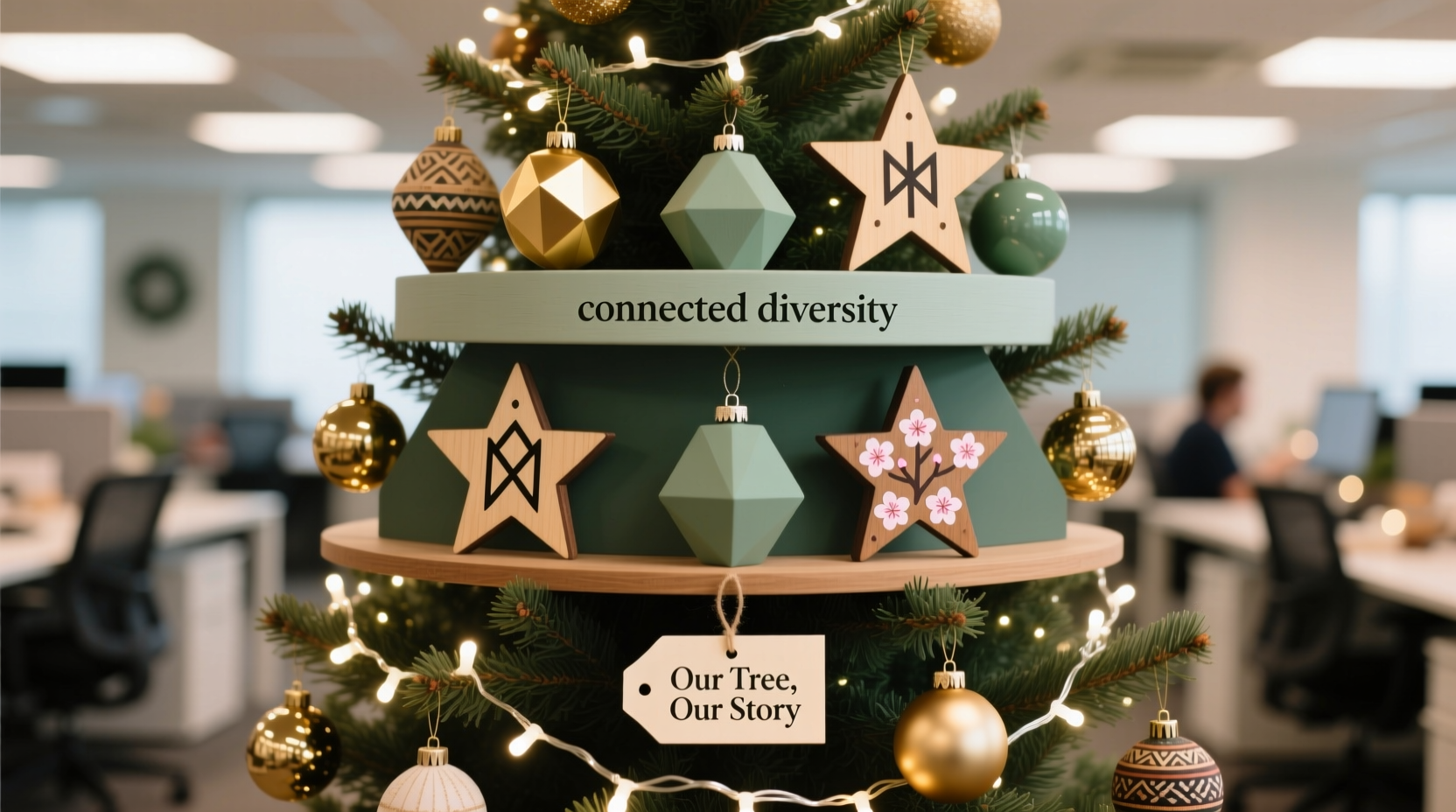
Many teams default to “picking a theme”—like “Winter Wonderland” or “Retro ’80s”—but rigid themes often backfire in diverse workplaces. One person’s “vintage charm” is another’s “cluttered kitsch.” Instead, co-create a visual framework: three flexible, non-prescriptive anchors that guide contributions without dictating them. These are not rules but shared reference points—agreed upon in a 20-minute team huddle or async poll.
A strong framework balances restraint and room for expression. Consider these three pillars:
- Color Anchor: Select one dominant hue (e.g., deep forest green, charcoal grey, or warm terracotta) plus two supporting neutrals (e.g., cream and matte black). No “red and green only” mandates—just a palette that grounds variation.
- Material Language: Prioritize natural, tactile, or textural elements—wood, wool, linen, dried citrus, ceramic, or hand-blown glass. This subtly discourages mass-produced plastic while welcoming handmade, thrifted, or heirloom pieces.
- Scale Rhythm: Define ornament size ranges: 70% small-to-medium (1–3 inches), 20% medium (3–5 inches), and 10% statement pieces (6+ inches). This prevents visual noise and ensures hierarchy.
This approach respects individuality while preventing fragmentation. As interior designer Lena Torres notes in her workplace wellness consultancy work:
“Shared spaces thrive not when everyone looks the same—but when everyone speaks the same visual dialect. A framework gives people permission to be expressive *within* belonging.”
2. Rotate Ornament Contributions by Zone & Role
Assigning “who decorates what” eliminates last-minute scrambles and passive-aggressive ornament stacking. Divide the tree into four vertical zones—not by height, but by symbolic function—and assign each to a rotating group or role-based cohort. This distributes creative agency equitably and adds narrative depth to the tree.
| Zone | Height Range | Contribution Principle | Who Contributes |
|---|---|---|---|
| Roots | Bottom 12–18 inches | Grounding, earthy, functional elements (e.g., pinecones, cinnamon sticks, woven baskets as base accents) | Facilities, admin, and operations staff |
| Branches | Middle 24–36 inches | Personal meaning—ornaments tied to individual stories, values, or cultural traditions (e.g., a tiny origami crane, a miniature book, a family recipe card) | All employees (one per person, pre-submitted) |
| Crown | Top 12 inches + tree topper | Collective aspiration—co-created or voted-on element representing shared goals (e.g., “Innovation,” “Wellness,” “Community”) | Leadership team + DEIB committee |
| Light Path | Integrated throughout (not a physical zone) | String lights must follow one consistent type: warm white LED only, no blinking or multicolor modes | IT or facilities (installed pre-decorating) |
Crucially, this system decouples contribution from hierarchy. The intern’s handmade felt star hangs alongside the CEO’s hand-thrown ceramic bauble—not because of title, but because both reside in the “Branches” zone, curated under the same personal-meaning principle. It transforms decoration from an optional extra into an inclusive ritual.
3. Implement a “Meaning-First” Ornament Submission Process
Unstructured ornament drop-offs lead to duplication, oversaturation, and unintentional exclusion. Replace the open box with a lightweight, meaning-centered submission protocol. Every contributor completes a brief digital form (Google Form or internal Slack bot) with three fields:
- Your Name (optional): Encourages accountability without pressure.
- One-Sentence Story: “This ornament represents…”, “I chose this because…”, or “It reminds me of…” (e.g., “A seashell from my daughter’s first beach trip—symbolizes calm amid chaos.”)
- Material & Size Confirmation: Checkbox verifying it meets the framework (natural/textural, within size range, neutral-aligned).
This process surfaces intentionality before aesthetics. When the decorating team reviews submissions, they’re not filtering for “cuteness” but for resonance and alignment. Duplicate motifs (e.g., five snowflakes) become opportunities—not problems—to cluster thoughtfully (“Let’s place these as a constellation in the upper Branches”) rather than compete.
4. Real-World Example: The Tech Startup That Turned Tension Into Tradition
In 2022, Veridian Labs—a 32-person SaaS company with offices in Berlin, Bangalore, and Portland—faced recurring friction over its annual tree. Designers brought sleek geometric shapes; engineers contributed circuit-board ornaments; the marketing team arrived with glitter bombs. The result? A tree so visually aggressive it triggered migraines for two neurodivergent team members—and prompted HR to issue a “festive sensitivity notice.”
That November, their People Ops lead facilitated a redesign using the framework above. They abandoned “Scandinavian Minimalism” as a top-down theme and instead co-defined a framework: charcoal + oat + clay palette, textural emphasis (no plastic, no foil), and scale rhythm. They introduced the zone-based contribution model and required all ornaments to include a story sentence.
The outcome was transformative. An engineer submitted a tiny, hand-soldered copper pinecone with the note: “My first soldering project—represents patience and precision.” A Bangalore-based product manager contributed a hand-painted clay diya: “Light during long nights, and honoring Diwali’s spirit of new beginnings.” Both lived harmoniously in the Branches zone. The Roots zone featured repurposed server rack screws embedded in resin pinecones—crafted by facilities staff. By December, the tree wasn’t just decorated—it was narrated. Team members paused to read story cards taped discreetly to the trunk. Engagement soared: 94% of staff contributed, versus 52% the prior year. More importantly, the tree remained up until mid-January—not because of policy, but because people wanted to keep reading the stories.
5. Step-by-Step Tree Personalization Timeline
Timing matters as much as technique. Rushed decorating breeds resentment; over-planning kills spontaneity. Follow this six-week cadence for low-stress, high-coherence results:
- Week 6 (Early November): Host a 25-minute “Framework Workshop.” Present palette swatches, material samples, and scale examples. Vote live on anchors. Finalize and share via email/Slack.
- Week 5: Launch ornament submission form. Set deadline for entries (allow 10 days). Assign zone coordinators.
- Week 4: Review submissions. Group similar stories (e.g., “family,” “travel,” “resilience”). Notify contributors if adjustments needed (e.g., “Could we swap the red ribbon for cream?”).
- Week 3: Host “Ornament Story Night” (virtual or in-person, 45 mins). Contributors share their ornament’s meaning aloud—no visuals, just voice. Builds emotional investment before hanging.
- Week 2: Decorating Day. Coordinators hang by zone following scale rhythm. No “first come, first hung”—place intentionally. Document placements with a simple grid sketch.
- Week 1 (Tree Week): Add story cards (small, neutral-toned tags with QR codes linking to full stories). Invite team to browse and reflect—not just admire.
6. Do’s and Don’ts: The Unwritten Rules of Shared Festivity
Even with great systems, social nuance can derail cohesion. These behavioral guardrails prevent goodwill from curdling into quiet resentment:
| Action | Do | Don’t |
|---|---|---|
| Ornament Selection | Choose pieces that reflect your values, not your brand loyalty (e.g., avoid corporate-logo ornaments unless approved as “Crown” symbols) | Bring multiples of the same item hoping for dominance (“I made 12 reindeer—I’ll just fill a branch!”) |
| Placement | Ask zone coordinators where your piece fits best—trust their eye for balance | Re-hang your ornament after someone else moves it “for symmetry” |
| Conversation | Ask others about their ornament’s story before offering critique | Say “That doesn’t match the theme” — remember: there is no theme, only framework |
| After the Holidays | Return your ornament with its story card intact for archival or reuse next year | Assume the tree “belongs” to whoever donated the most pieces |
7. FAQ: Addressing Real Concerns
What if someone brings something clearly outside the framework?
Handle it with grace and curiosity—not correction. Say: “Thanks for sharing this! To keep our tree feeling cohesive, could we explore how its meaning might translate into one of our anchor materials? For example, that bright blue could become a hand-dyed wool tassel.” Often, the contributor is thrilled to co-create a version that honors their intent *and* the collective vision.
How do we include remote workers meaningfully?
Remote contributors receive a small, pre-approved craft kit (e.g., air-dry clay, natural dye, twine) with instructions to make a Branches-zone ornament. Their story submission includes a photo. Their ornament is hung by a local colleague—with the remote worker narrating its placement live via Zoom. Alternatively, create a “Digital Branches” layer: a QR code at the tree’s base links to a gallery of remote contributions with audio stories.
Is it okay to have no tree at all?
Absolutely—if the team consensus is that forced festivity undermines inclusion (e.g., for religious, cultural, or neurodivergent reasons), honor that. Offer alternatives: a “Gratitude Wall” with handwritten notes, a donation drive tree (each branch = $10 to a chosen charity), or a living plant display. The goal isn’t Christmas—it’s shared humanity. As workplace anthropologist Dr. Aris Thorne observes:
“The most successful office traditions aren’t the ones that look the most festive—they’re the ones that feel the most voluntary, visible, and valued by every single person who walks past them.”
Conclusion
A shared office Christmas tree is never just about tinsel and lights. It’s a microcosm of workplace culture—revealing how well you listen, how thoughtfully you include, and how gracefully you hold space for difference. Personalization without clashing isn’t achieved by compromising individuality, but by elevating shared intentionality. When you anchor contributions in meaning, distribute creative authority across roles and zones, and treat aesthetics as a collaborative language—not a competition—you don’t just get a beautiful tree. You build trust, deepen connection, and create a tangible symbol of what your team truly values: respect, narrative, and belonging.
Start small. Pick one framework pillar this year—maybe just the material language or the story requirement. Notice how it shifts the conversation from “Does this fit?” to “What does this say?” That shift is where real cohesion begins.




 浙公网安备
33010002000092号
浙公网安备
33010002000092号 浙B2-20120091-4
Comments
No comments yet. Why don't you start the discussion?