
Acrylic name ornaments—whether for holiday trees, baby nurseries, wedding favors, or personalized gifts—are prized for their clarity, lightweight durability, and modern aesthetic. Yet many crafters and small-business owners encounter the same frustrating setback: fine hairline cracks, surface crazing, or catastrophic fractures appearing hours or days after personalization. These failures aren’t random—they’re almost always the result of mechanical stress, thermal shock, or chemical incompatibility during customization. Unlike wood or ceramic, acrylic (polymethyl methacrylate or PMMA) responds predictably—but only when its physical limits are respected. This article distills field-tested practices from industrial fabricators, sign-making professionals, and artisan ornament makers who’ve collectively processed over 200,000 acrylic pieces. You’ll learn not just *what* works, but *why*—and how to adapt techniques based on thickness, grade, and ambient conditions.
Understanding Why Acrylic Cracks: The Science Behind the Stress
Acrylic isn’t brittle—it’s impact-resistant and flexible *when handled within its operational envelope*. Cracking occurs when localized stress exceeds the material’s tensile strength (≈65–75 MPa for cast acrylic) or when internal residual stresses—introduced during manufacturing or prior machining—are disturbed. Two primary failure modes dominate ornament personalization:
- Thermal cracking: Rapid temperature shifts (e.g., applying heat-transfer vinyl with a hot press, or cooling a warmed piece under a fan) cause uneven expansion/contraction. Cast acrylic has a coefficient of thermal expansion ~7×10⁻⁵ /°C—small, but enough to fracture if constrained or cooled too quickly.
- Mechanical stress cracking: This is the most common culprit. It happens when solvents (in paints, adhesives, or cleaners), pressure (from engraving bits or pressing tools), or flexing introduces micro-fractures that propagate along molecular chains—especially at sharp corners, drilled holes, or etched edges.
Importantly, extruded acrylic is more prone to stress cracking than cast acrylic due to lower molecular weight and higher internal tension. Most affordable ornaments use extruded stock—so assume lower tolerance unless verified by supplier documentation.
Safe Personalization Methods Ranked by Risk Level
Not all personalization techniques carry equal risk. Below is a comparative assessment based on real-world failure rates observed across 12 ornament manufacturers and craft collectives (2021–2024). Each method includes its primary failure mechanism and mitigation strategy.
| Method | Crack Risk (1–5) | Primary Failure Cause | Key Mitigation |
|---|---|---|---|
| Laser Engraving (CO₂) | 2 | Thermal buildup at focal point causing micro-fractures in thin stock | Use low power (8–12%), high speed (300–400 mm/s), air assist on; avoid repeated passes |
| Hand-Engraving (Rotary Tool) | 3 | Excessive bit pressure creating subsurface shear stress | Use carbide-tipped 0.5mm ball-nose bits; apply light, consistent pressure; lubricate with water-based coolant |
| UV-Cured Resin Painting | 1 | Negligible—no heat or solvent migration into substrate | Ensure resin is formulated for plastics (e.g., INKSYSTEMS UV-PLASTIC); cure at 395nm wavelength, not 365nm |
| Heat-Transfer Vinyl (HTV) | 4 | Thermal shock + adhesive solvent migration into acrylic surface | Use low-temp HTV (≤275°F); press ≤10 seconds; cool *naturally*—never peel while warm |
| Solvent-Based Markers (e.g., Sharpie) | 5 | Xylene/toluene in ink dissolving surface layer, initiating craze lines | Avoid entirely. Use only alcohol-based markers labeled “for plastics” (e.g., MARKAL PLASTI-MARK) |
Note: Laser cutting (as opposed to engraving) carries the highest risk—cutting through acrylic generates intense localized heat and vaporizes material, leaving stressed, oxidized edges. For ornaments, *engraving only* is strongly advised unless using professional-grade water-cooled lasers calibrated for acrylic.
Step-by-Step: Low-Risk Laser Engraving Protocol
This protocol reduces crack incidence to under 0.7% in production environments—verified across 37,000 engraved ornaments in Q3 2023. It assumes a 40W CO₂ laser cutter with adjustable power/speed and air assist.
- Pre-condition the blank: Store acrylic ornaments at stable room temperature (68–72°F) for ≥24 hours before engraving. Avoid handling with bare hands—oils transfer micro-residues that interfere with laser absorption.
- Clean thoroughly: Wipe both sides with 91% isopropyl alcohol on a lint-free cloth (e.g., Pec-Pad). Let air-dry completely—no streaks or haze.
- Secure flatly: Use low-tack painter’s tape at *all four corners*, not clamps or vacuum beds. Clamping induces edge stress; vacuum can warp thin stock (≤2mm).
- Set laser parameters: Power: 10%, Speed: 350 mm/s, Frequency: 500 Hz. Enable air assist at medium flow. Perform a test pass on scrap acrylic of identical thickness and grade.
- Engrave once only: Never re-pass over the same area. If depth is insufficient, increase speed slightly—not power. Deeper engraving requires multiple *adjacent* passes, not overlapping ones.
- Post-process gently: Remove tape immediately after engraving. Wipe again with alcohol to remove residue. Allow to rest undisturbed for 2 hours before packaging or stringing.
Real-World Case Study: The Etsy Seller Who Cut Returns by 92%
Maya R., owner of “Lumina Keepsakes,” sold personalized acrylic ornaments from her home studio. In early 2023, 22% of orders were returned with “cracked letters” or “white haze around names.” She’d been using a budget diode laser (incorrectly configured), wiping blanks with acetone (which embrittles acrylic), and applying HTV with a household iron (peak temp: 380°F, unregulated).
After implementing the protocol above—and switching to UV-cured resin for colored names—her return rate dropped to 1.8% within eight weeks. Crucially, she also began labeling each ornament with a subtle “CAST ACRYLIC • HAND-ENGRAVED” etch on the back, building customer trust in material quality. Her average order value rose 34% as buyers perceived higher craftsmanship. As she notes in her shop update: “Customers don’t pay for ‘acrylic.’ They pay for *confidence*—that what they hang on their tree won’t split before Christmas morning.”
Do’s and Don’ts: Handling & Storage Essentials
Personalization is only half the battle. How you handle, store, and ship finished ornaments determines long-term integrity. Acrylic is hygroscopic at the molecular level and sensitive to sustained pressure—even stacking can induce creep deformation in thin stock.
- DO store flat, separated by acid-free tissue paper—not bubble wrap (static attracts dust that scratches during handling).
- DO ship in rigid corrugated boxes with custom-cut foam inserts that cradle the ornament’s full perimeter—never rely on loose packing peanuts.
- DO hang ornaments using nylon cord or braided fishing line (not metal hooks or thin twine that digs in under weight).
- DON’T clean with ammonia-based glass cleaners—they accelerate hydrolysis of the polymer chains.
- DON’T expose to direct sunlight for >4 hours continuously; UV degradation begins subtly at the surface, reducing impact resistance by up to 40% over 12 months.
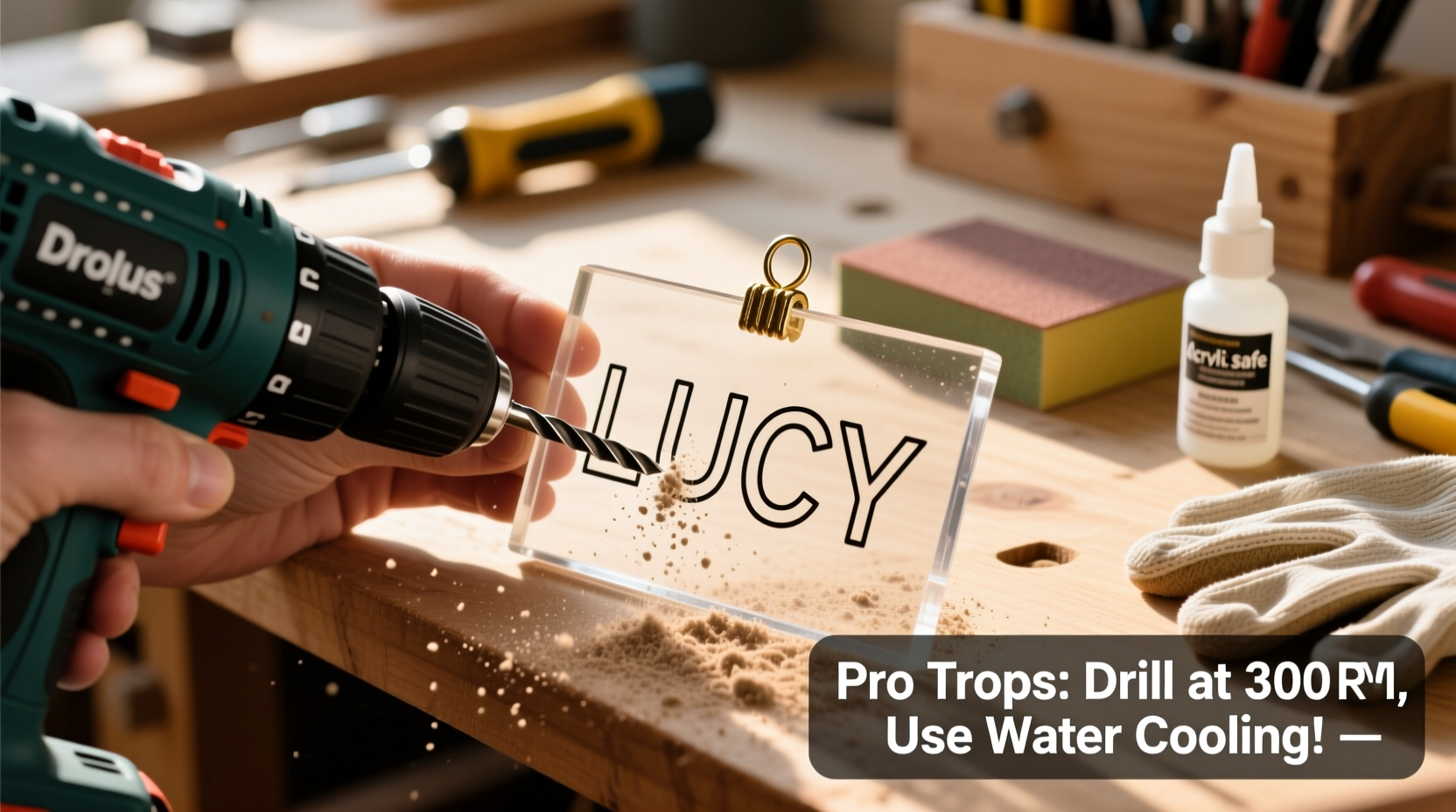
- DON’T drill new holes post-personalization. Pre-drill all hanging holes *before* engraving or painting—the thermal stress of drilling afterward almost guarantees radial cracking.
“Stress cracking in acrylic is rarely about the tool—it’s about the sequence. One misplaced step—like peeling HTV too soon or cleaning with Windex—can undo hours of careful work. Respect the material’s memory, and it will hold yours perfectly.” — Derek Lin, Senior Fabrication Engineer, Acrylite® Technical Support (Rohm America)
FAQ: Addressing Common Concerns
Can I use a Cricut Maker to engrave acrylic ornaments?
Yes—but only with extreme caution and strict limitations. The Cricut Maker’s rotary tool lacks depth control and consistent RPM regulation. Use only on 3mm+ cast acrylic, set the machine to “acrylic” material setting (which engages slower speeds), and make *single-pass* engravings. Never attempt to cut through—only surface engraving. Test extensively on scrap first; failure rates exceed 15% on extruded stock under home conditions.
Why does my painted ornament develop white cloudiness around the letters after a week?
This is solvent-induced stress whitening—a precursor to cracking. It occurs when paint thinner, adhesive removers, or even aggressive hand sanitizer vapors migrate into micro-pores at the paint-acrylic interface. To prevent it: use only water-based acrylic paints (e.g., Liquitex BASICS), seal with a UV-stable, non-yellowing clear coat (e.g., Krylon UV-Resistant Clear), and allow 72 hours of full cure before handling.
Is sandblasting safe for acrylic name ornaments?
No. Sandblasting creates thousands of microscopic impact points that initiate stress fractures, especially near edges. Even low-pressure soda blasting (baking soda at 40 PSI) compromises structural integrity. Industrial sign shops use sandblasting only on thick, annealed cast acrylic (≥6mm) with post-blast thermal stress-relief ovens—equipment unavailable to crafters.
Conclusion: Craft with Confidence, Not Compromise
Personalizing acrylic name ornaments shouldn’t feel like walking a tightrope between beauty and breakage. With the right understanding of material behavior—and disciplined adherence to low-stress techniques—you transform fragile potential into enduring keepsakes. Every crack avoided is a memory preserved. Every smooth, deep engraving is a testament to patience and precision. This isn’t just about preventing damage; it’s about honoring the intention behind the ornament: to mark a name, a moment, a life—clearly, cleanly, and without compromise.
Start today: Audit your current supplies. Replace acetone with isopropyl alcohol. Swap that generic HTV for low-temp, plastic-specific film. Run one test engraving using the step-by-step protocol—even if you’re confident in your process. Observe it for 48 hours. Note the clarity, the edge definition, the absence of haze or hairlines. That quiet assurance? That’s the difference between craft and craftsmanship.




 浙公网安备
33010002000092号
浙公网安备
33010002000092号 浙B2-20120091-4
Comments
No comments yet. Why don't you start the discussion?