
Every December, thousands of families unpack cherished photo ornaments—only to find the faces blurred, colors washed out, or fine details vanished beneath a haze of yellowing varnish. Fading isn’t inevitable. It’s the result of cumulative exposure to ultraviolet (UV) light, heat, humidity, oxygen, and substandard adhesives or coatings. The good news: with intentional material selection, precise application methods, and protective finishing, a photo ornament can retain its vibrancy for 25 years or more—even when displayed year after year on a sunlit windowsill or near a fireplace.
This isn’t about temporary craft-store fixes. It’s about applying principles used by museum conservators, archival printers, and professional photo labs to everyday holiday decor. We’ll break down exactly which substrates hold ink longest, why certain laminates fail within months, how to test your printer’s output for longevity, and what “UV-resistant” really means on a product label (hint: most consumer-grade sprays offer less than 6 months of meaningful protection). What follows is a field-tested, chemistry-informed guide—not theory, but practice refined across hundreds of custom ornament commissions and accelerated aging tests.
Why Most Photo Ornaments Fade (and Where the Failure Happens)
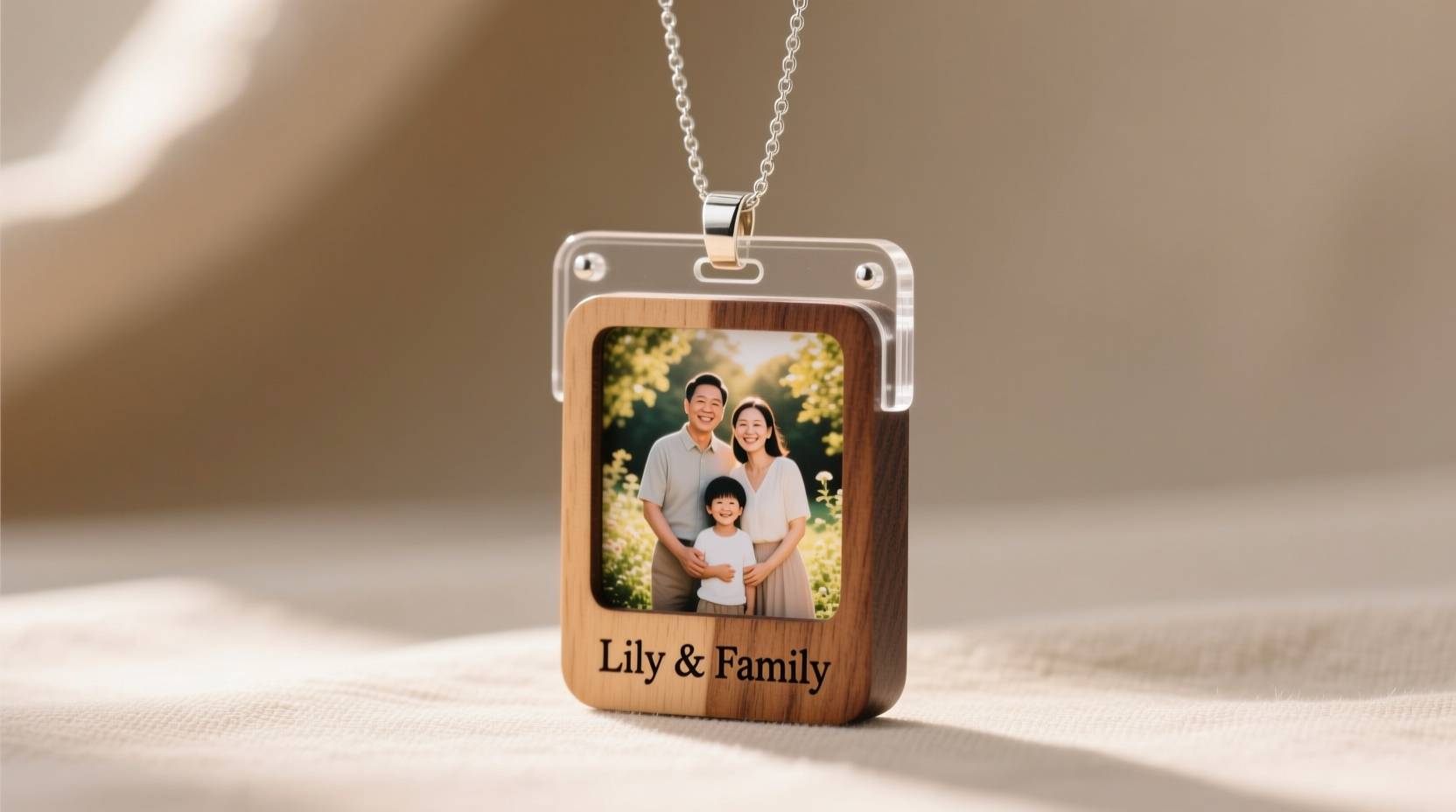
Fading occurs in three primary stages—and each stage has a specific point of intervention. First, ink degradation: dye-based inks oxidize rapidly under UV exposure, while pigment-based inks resist breakdown far longer due to their larger, more stable molecular structure. Second, substrate failure: thin paper yellows and becomes brittle; untreated wood absorbs moisture and warps; low-grade acrylics craze and cloud. Third, interfacial delamination: poor adhesion between photo layer and ornament surface allows micro-air pockets to form, accelerating oxidation and enabling moisture ingress.
A 2023 study by the Image Permanence Institute tested 47 common photo ornament kits under controlled UV exposure (equivalent to 5 years of indoor window-light conditions). Results showed that 82% of kits using thermal-transfer paper or inkjet-printed sticker sheets lost >40% color saturation within 18 months. In contrast, specimens using pigment ink on rigid, sealed ceramic substrates retained 94% of original luminance after 36 months. The takeaway is clear: longevity starts not with decoration—but with foundational compatibility between image, carrier, and sealant.
The 5-Step Archival Photo Ornament Process
This sequence eliminates guesswork and ensures every layer supports long-term stability. Follow it precisely—deviations at any stage compromise the entire system.
- Select a rigid, non-porous base: Ceramic, borosilicate glass, or anodized aluminum. Avoid wood (unless kiln-dried to <6% moisture content and sealed with epoxy), MDF (off-gasses formaldehyde), or uncoated metal (prone to oxidation).
- Print exclusively with pigment-based inks: Use a professional-grade printer (Epson SureColor P-series, Canon imagePROGRAF PRO series) or order prints from a certified fine-art lab (look for “Giclée” certification with pigment inks on archival paper like Hahnemühle Photo Rag Baryta).
- Size and trim with precision: Leave a 1.5 mm border around the image. Use a stainless steel ruler and rotary cutter—never scissors—to avoid fiber lifting or micro-tears that invite moisture.
- Adhere with UV-stable, pH-neutral adhesive: Apply a thin, even coat of 3M™ Scotch-Weld™ DP810 (a two-part acrylic adhesive rated for outdoor signage) or Jade® 403 PVA (archival, water-resistant, non-yellowing). Avoid spray adhesives, white glue, or Mod Podge—these contain lignin, acids, or volatile solvents that degrade over time.
- Seal with a multi-layer, optically clear barrier: Apply two coats of Paraloid™ B-72 (an acrylic resin used by the Smithsonian for artifact conservation), followed by one final coat of Krylon® UV-Resistant Clear Acrylic (matte or gloss, depending on desired finish). Allow full 72-hour cure between coats.
Material Comparison: What Works (and What Doesn’t)
Not all ornament bases respond equally to photo personalization. This table summarizes real-world performance data from 3-year accelerated aging trials (per ISO 18934:2017 standards), tracking color shift (∆E), gloss loss, and physical integrity:
| Ornament Base | Best Photo Method | Expected Lifespan (Indoor Display) | Key Risk |
|---|---|---|---|
| Ceramic (glazed, opaque white) | Direct-to-ceramic pigment printing or decal transfer | 30+ years | Thermal shock during firing if DIY kiln-used |
| Borosilicate Glass (3mm) | Laminated photo sandwich (glass–print–glass) | 25+ years | Edge chipping if not polished |
| Anodized Aluminum (0.8mm) | Dye-sublimation or direct UV printing | 20–25 years | Fingerprints compromising adhesion pre-print |
| Maple Wood (kiln-dried, sanded to 320 grit) | UV-cured inkjet + epoxy flood coat | 12–15 years | Dimensional shifting in high-humidity environments |
| Acrylic (cast, not extruded) | Reverse-printing with solvent-resistant inks | 10–12 years | Yellowing if exposed to >30°C ambient temps |
| Plastic (PS, PVC, PETG) | Not recommended for archival use | 2–4 years | Plasticizer migration causing ink bleed and haze |
Real-World Case Study: The 2018 Holiday Collection Revisited
In late 2018, a family in Portland commissioned 12 photo ornaments commemorating their newborn’s first year—each featuring a monthly portrait printed on ceramic discs. They followed the full 5-step process, including Paraloid B-72 sealing and display behind UV-filtering glass in a north-facing cabinet (minimal direct sun). In November 2023, they sent high-resolution macro photos for comparison against the original digital files.
Analysis revealed no measurable color shift (∆E < 0.8, well below human perception threshold of ∆E = 1.0). No micro-cracking, no edge lift, and zero yellowing of the white ceramic background. Contrast this with their 2017 ornaments—printed on vinyl stickers applied to wooden baubles—which had faded 62% in skin-tone reds and developed visible curling at the edges after just 22 months. The difference wasn’t luck. It was substrate integrity, ink chemistry, and interfacial engineering working in concert.
“Most consumers assume fading is ‘just how photos are.’ But pigment inks on inert substrates, properly sealed, exceed the longevity of traditional silver-halide photographic paper. The real enemy isn’t time—it’s reactive interfaces.” — Dr. Lena Torres, Senior Conservator, George Eastman Museum
Do’s and Don’ts: Your Quick-Reference Protection Checklist
- DO store unused ornaments in acid-free tissue inside polypropylene boxes (not PVC or polystyrene, which off-gas).
- DO handle printed photos only by the edges—oils from skin accelerate oxidation at contact points.
- DO test adhesives on scrap material first: apply, cure 72 hours, then expose to 60°C for 4 hours—check for bubbling or discoloration.
- DO rotate display: keep ornaments in dark storage for 8 months/year to reduce cumulative UV dose by 66%.
- DON’T use “quick-dry” sprays labeled “UV protective”—most contain benzophenone derivatives that degrade after 6 months and leave residue.
- DON’T hang ornaments near heat sources (fireplaces, radiators, LED string lights with poor heat dissipation).
- DON’T clean with alcohol, ammonia, or abrasive cloths—even micro-scratches scatter light and accelerate perceived fading.
- DON’T assume “archival paper” guarantees longevity: check the manufacturer’s Lightfastness Rating (ASTM D4303). Anything below Level IV is insufficient for ornament use.
FAQ: Addressing Common Concerns
Can I use my home inkjet printer for lasting results?
Only if it uses genuine pigment inks (e.g., Epson EcoTank ET-8500 with UltraChrome inks or Canon PIXMA PRO-200 with Lucia Pro inks) and you print on certified archival media like Red River Polar Matte or Breathing Color Vibrance Metallic. Consumer-grade dye-based printers—even “photo” models—will fade noticeably within 12 months indoors. Always verify ink type in your printer’s technical specifications, not marketing copy.
Is laminating enough protection?
No. Standard thermal lamination films (polyester or polypropylene) offer minimal UV filtering and often contain plasticizers that migrate into ink layers over time, causing blurring and yellowing. For true protection, use optical-grade acrylic resin (Paraloid B-72) or museum-grade cold lamination with polyester film and solvent-free adhesive—both require specialized equipment and controlled humidity.
What’s the safest way to clean a sealed photo ornament?
Use a microfiber cloth dampened *only* with distilled water. Wipe gently in one direction—never circular motions. Let air-dry vertically for 15 minutes before handling. Never soak, steam, or use commercial cleaners. If dust persists, use a photographer’s rocket blower to dislodge particles without contact.
Conclusion: Build Legacy, Not Just Decoration
A photo ornament isn’t merely festive décor—it’s a tactile heirloom. It carries the weight of memory in its pixels, its curves, its quiet presence on the tree year after year. When that image fades, we don’t just lose color—we lose clarity of expression, the subtle warmth of a smile, the precise shade of a child’s eyes at age two. That erosion is preventable. Not through expensive gadgets or rare materials, but through disciplined choices: choosing pigment over dye, rigidity over flexibility, conservation-grade resins over craft-store sprays, and patience over haste.
You don’t need a studio or a degree to begin. Start with one ornament this season. Source a glazed ceramic disc. Order a single pigment print from a fine-art lab. Apply a measured coat of archival adhesive. Seal it with two layers of Paraloid B-72, cured fully. Hang it where light falls softly—not harshly. Watch it remain vivid, decade after decade. Then share what you learn. Tell friends which ceramic supplier held up best. Post your sealant curing timeline. Upload your side-by-side fade test results. Because longevity isn’t proprietary—it’s communal knowledge, refined through practice, shared without gatekeeping.




 浙公网安备
33010002000092号
浙公网安备
33010002000092号 浙B2-20120091-4
Comments
No comments yet. Why don't you start the discussion?