
There’s a quiet magic in handwritten holiday details—especially when names appear on stocking tags in elegant calligraphy. But that magic can vanish in an instant if the ink smudges before the tag reaches the mantel. Achieving clean, smudge-free calligraphy on small paper tags requires more than just a steady hand; it demands thoughtful preparation, the right materials, and precise technique. Whether you're crafting gifts for family, clients, or a festive event, mastering this skill ensures your personal touches remain pristine and professional.
The challenge lies in balancing artistry with practicality. Paper tags are often porous, compact, and handled frequently after writing. Add to that the natural oils from fingers and the quick-drying expectations of holiday timelines, and it's easy to see why so many attempts end in smears. But with the right approach, you can create beautiful, lasting calligraphy that enhances your holiday decor without a single blemish.
Choose the Right Tools for Smudge-Free Writing
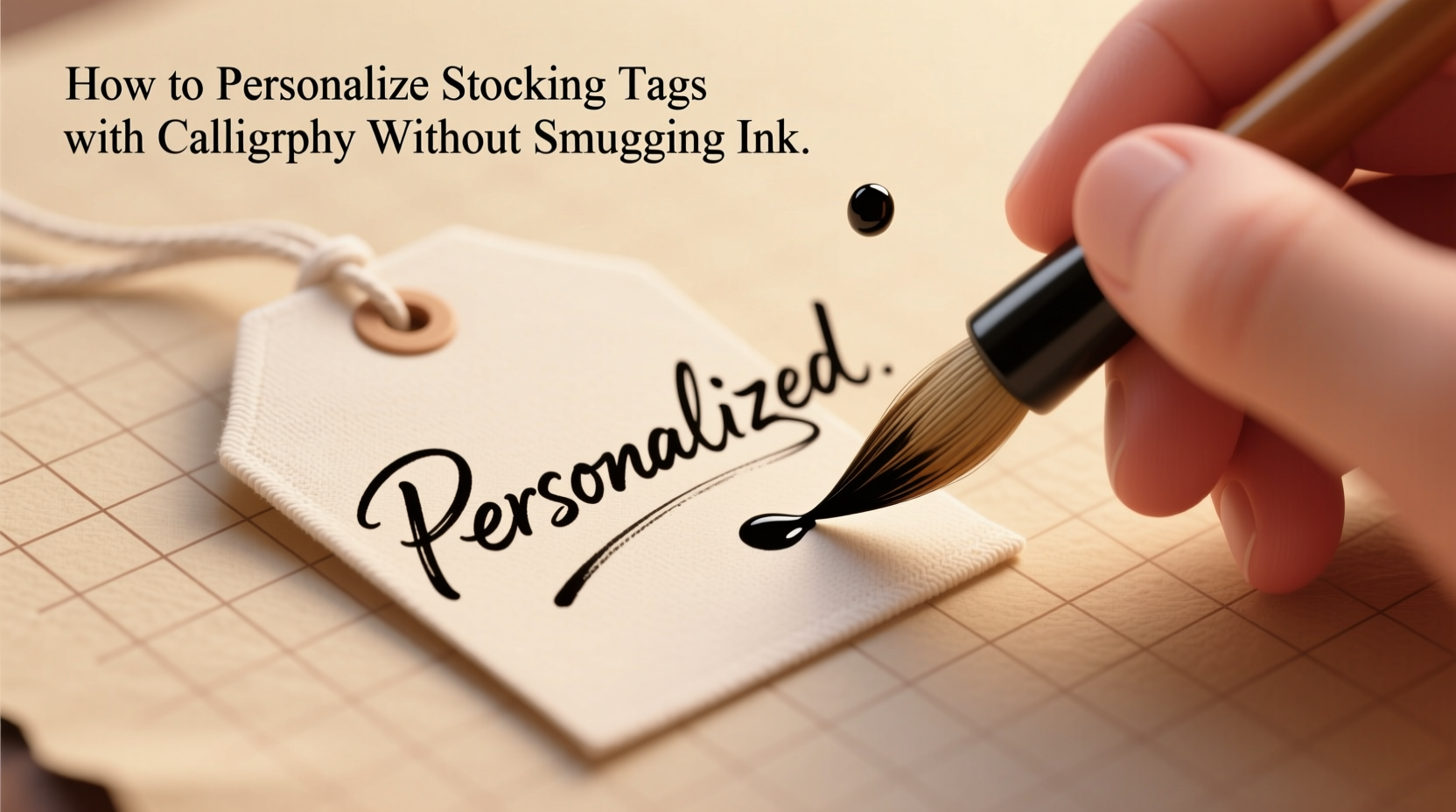
The foundation of smudge-free calligraphy begins long before you put pen to paper—it starts with selecting materials that work together harmoniously. Not all pens, inks, or papers are created equal, especially when precision and durability matter.
Fountain pens with fine nibs offer excellent control but require compatible paper to prevent feathering. Brush pens provide fluid strokes but dry slower, increasing smudge risk. For stocking tags, consider using a **pigment-based gel pen** like the Sakura Pigma Micron or Uni-ball Signo. These inks dry quickly, resist water, and adhere well to coated and uncoated surfaces alike.
Paper quality is equally critical. Thin, fibrous tags absorb ink unevenly and invite bleeding. Opt for tags made from **smooth cardstock (minimum 110 lb)** or those with a light coating. Matte finishes tend to work better than glossy ones, which can cause ink to bead rather than bond.
Prepare Your Workspace and Hands
A cluttered workspace increases the chance of accidental contact with wet ink. Before beginning, clear your surface and lay down a non-slip mat or silicone baking sheet to stabilize the tags. This prevents shifting during writing and protects your table from stray marks.
Equally important is preparing your hands. Skin naturally produces oils that transfer easily to paper. Washing your hands before starting reduces grease transfer, but wearing **cotton or nitrile gloves** takes protection further. If gloves feel restrictive, use a **hand rest guard**—a small plastic shield placed under your writing hand—to keep skin away from the drying area.
Position your body so that your hand moves left to right (for right-handed writers) without hovering over freshly written letters. Left-handed writers should angle the paper clockwise and write from the bottom up where possible, minimizing contact with wet ink.
“Calligraphy isn’t just about the stroke—it’s about respecting the chemistry between ink, paper, and time.” — Lydia Chen, Hand-Lettering Artist & Educator
Step-by-Step Guide to Flawless Calligraphy on Tags
Follow this detailed sequence to ensure every tag turns out sharp and smudge-free.
- Organize your materials: Lay out pens, tags, ruler, pencil, eraser, and drying rack. Have a lint-free cloth nearby to wipe nibs.
- Lightly sketch guidelines: Use a mechanical pencil with a 0.3mm lead to draw faint baseline and waistline guides. Keep pressure minimal to avoid indentations.
- Practice strokes on scrap paper: Warm up your hand and confirm ink flow before touching the actual tag.
- Write slowly and deliberately: Focus on consistent letterforms. Rushing increases shaky lines and inconsistent pressure, leading to blotting.
- Lift the pen fully between letters: Avoid dragging the nib across the page, which can pull wet ink into unwanted trails.
- Let each tag dry for at least 2–3 minutes: Use a timer if necessary. Airflow helps—place a small fan nearby (not blowing directly on the tags).
- Set tags on a drying rack: Elevate them on a wire rack or place them upright in a box divider to prevent backside transfer.
- Cure with a heat tool (optional): For fast-turnaround projects, use a craft heat gun on low setting to accelerate drying—keep it moving and 6+ inches from the surface.
Do’s and Don’ts of Calligraphy on Small Surfaces
| Do | Don’t |
|---|---|
| Use quick-drying, archival-quality ink – Prevents smearing and fading over time. | Use ballpoint or rollerball pens – They smear easily and lack the line variation needed for calligraphy. |
| Work in a cool, dry environment – Humidity slows drying and increases smudge risk. | Touch the inked area immediately – Even a light brush can ruin hours of work. |
| Store finished tags in a flat tray – Prevents bending and surface-to-surface contact. | Stack tags face-down while wet – Causes irreversible transfer and ghosting. |
| Apply a fixative spray (sparingly) – Use a matte, acid-free spray designed for ink drawings. | Over-spray or use hair spray – Can yellow paper and alter ink color. |
Real Example: A Holiday Workshop Success Story
Sarah, a stationery designer in Portland, hosts annual calligraphy workshops for local artisans. One December, she was commissioned to create 75 personalized stocking tags for a luxury boutique’s VIP clients. With only five days to complete the project, speed and consistency were essential—but early samples smeared when packed.
She adjusted her process: switching from standard brush pens to Pigma Micron 01 pens, pre-cutting tags from 120 lb cotton-blend cardstock, and setting up a vertical drying rack made from PVC pipes and mesh dividers. She also introduced a two-person workflow—one wrote, the other placed tags into slots to dry. By adding a dehumidifier to her studio, drying time dropped from 5 to 2.5 minutes per tag.
The result? Every tag arrived at the boutique intact, with crisp, elegant script. Clients praised the attention to detail, and the boutique renewed the commission the following year. Sarah credits the success not to artistic skill alone, but to system refinement and material science.
Enhance Durability with Protective Finishes
Once your calligraphy is dry, consider adding a protective layer—especially if tags will be handled often or stored long-term. Not all finishes are suitable, however. Aerosol sprays designed for artwork, such as Krylon Archival Series or Lascaux UV Protect, provide invisible shielding against fingerprints, moisture, and UV fading.
Apply in a well-ventilated area, holding the can 10–12 inches from the tag. Use short, even bursts across multiple passes rather than one heavy coat. Let dry for 30 minutes before handling. Avoid touching the surface during application.
For a non-spray alternative, some artists use a **cold laminating pouch with a carrier sheet**, trimming it precisely around the tag. While effective, this method changes the tactile feel and may look less handmade. Reserve it for high-traffic environments like office gift exchanges or children’s classrooms.
FAQ
Can I use a dip pen for stocking tags?
Dip pens offer beautiful line variation but are high-risk for smudging due to liquid ink and longer drying times. If used, choose a waterproof India ink and allow at least 5 minutes of drying time per tag. Work in small batches and use a blotting pad beneath each tag to absorb excess.
Why does my ink still smudge even after drying?
This often happens with dye-based inks that sit on the paper surface rather than bonding with fibers. Switch to pigment-based or archival inks. Also, check paper quality—low-density stock cannot properly absorb ink, leaving it vulnerable to friction.
How far in advance can I make these tags?
You can prepare calligraphy tags up to three months ahead if stored properly. Place them in acid-free boxes, separated by tissue paper, and kept away from sunlight and humidity. Finished tags age beautifully when protected.
Checklist: Smudge-Free Calligraphy Tag Preparation
- ☐ Select smooth, heavyweight tags (110 lb or higher)
- ☐ Choose fast-drying, pigment-based pens (e.g., Pigma Micron)
- ☐ Clean and dry hands—or wear non-slip gloves
- ☐ Set up a stable, non-reflective work surface
- ☐ Use a hand rest guard or barrier strip
- ☐ Lightly mark layout with a fine pencil
- ☐ Write with controlled, lifted strokes
- ☐ Allow 2–3 minutes drying time per tag
- ☐ Dry vertically or on a wire rack
- ☐ Apply fixative spray if needed (matte, acid-free)
- ☐ Store finished tags flat and separated
Maintain Artistic Integrity Without Sacrificing Practicality
Personalization elevates ordinary tags into keepsakes. A child might save their name tag for years, attaching it to memory boxes or holiday journals. Knowing this adds weight to the task—you’re not just labeling a stocking; you’re creating a fragment of tradition.
Yet tradition doesn’t have to mean imperfection. The most enduring holiday crafts are those that balance beauty with resilience. By treating calligraphy as both an art and a technical process, you honor the recipient’s experience—their first glimpse of a perfectly penned name, untouched by smears or corrections.
Modern tools don’t diminish craftsmanship—they enhance it. Using archival ink or a drying rack isn’t cheating; it’s stewardship. It shows care not only for the present moment but for the longevity of the gesture itself.
Conclusion
Personalizing stocking tags with calligraphy is a meaningful way to infuse warmth and individuality into the holiday season. With the right materials, deliberate technique, and a few smart precautions, you can achieve stunning results that remain immaculate from workshop to hearth. Smudges don’t have to be the price of artistry—precision and patience ensure your handwriting stays as clear as your intentions.




 浙公网安备
33010002000092号
浙公网安备
33010002000092号 浙B2-20120091-4
Comments
No comments yet. Why don't you start the discussion?