
Journals are more than just notebooks for recording events—they are mirrors of the mind, spaces where thoughts, emotions, and creativity converge. When your journal reflects not only what you think but also how you feel, it becomes a powerful tool for self-awareness and emotional release. One of the most effective ways to deepen this connection is by personalizing your journal’s layout to match your current mood. Rather than forcing entries into rigid templates, allow the structure of each page to evolve with your inner state. This approach transforms journaling from a routine into a responsive practice, aligning form with feeling.
The Emotional Language of Layout Design
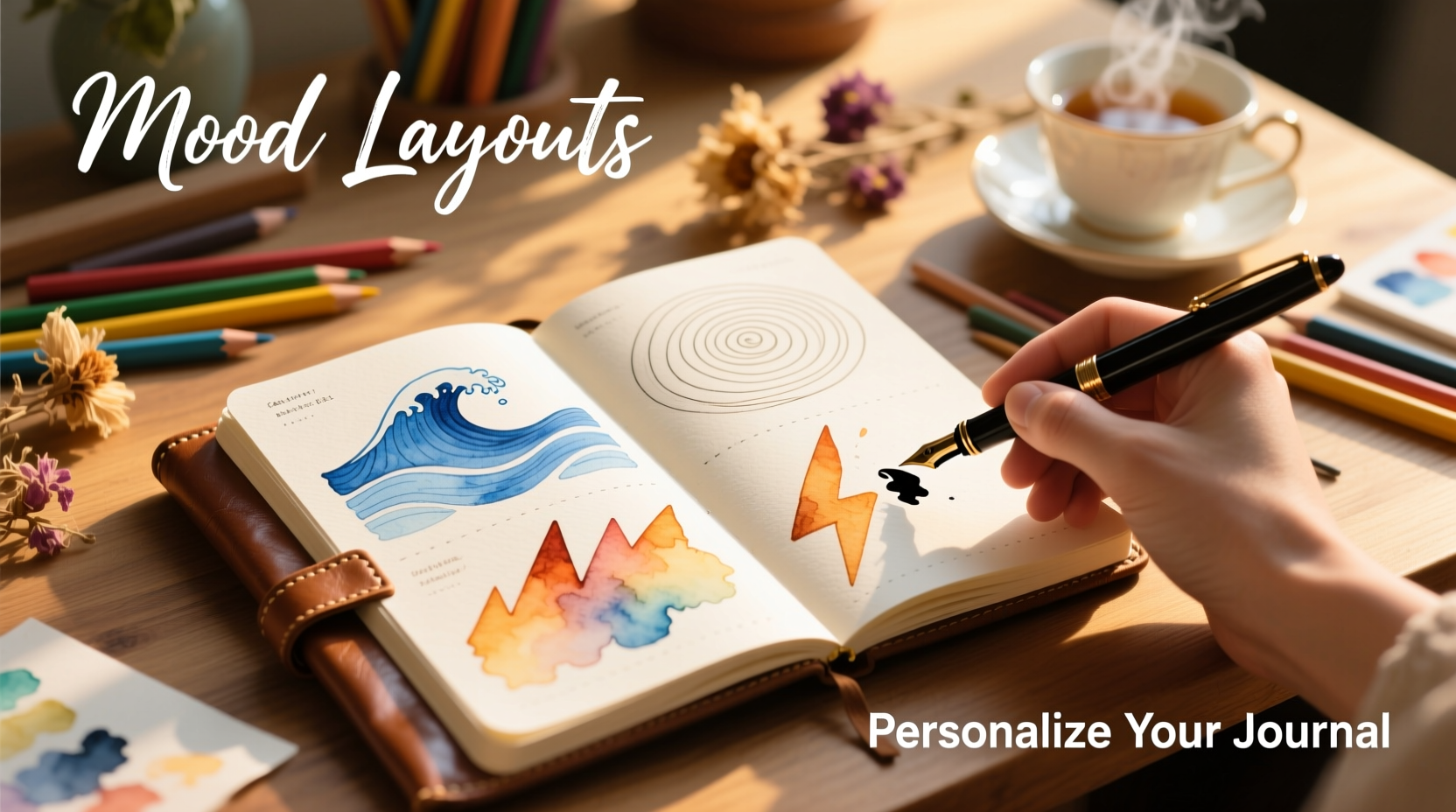
Just as music shifts in tempo and volume to express emotion, so too can the visual design of your journal convey internal states. A cluttered mind might benefit from a chaotic, expressive spread, while calm reflection calls for clean lines and open space. The arrangement of text, margins, doodles, colors, and spacing all contribute to an emotional narrative. Think of your journal as a canvas where structure speaks as loudly as content.
Mood-responsive layouts encourage authenticity. When you're anxious, writing in tight spirals or fragmented bullet points may feel truer than neat paragraphs. When joyful, you might want to burst out of the margins with bold colors and exuberant handwriting. By matching layout to mood, you give yourself permission to be exactly as you are—without editing, censoring, or performing.
Mapping Mood to Design Elements
To effectively tailor your journal layout to your emotional state, consider how specific design components correspond to different feelings. Intentional use of these elements allows your journal to become a dynamic emotional barometer.
- Spacing: Wide margins and generous line spacing suggest openness and calm; cramped text often mirrors mental congestion.
- Font & Handwriting: Loopy cursive may reflect playfulness, while jagged print could signal frustration or urgency.
- Color Palette: Cool tones like blue and green promote tranquility; reds and oranges energize, while black or gray may indicate introspection or melancholy.
- Structure: Grids and bullet points suit focus and planning; freeform, stream-of-consciousness layouts work best for processing complex emotions.
- Visual Elements: Doodles, borders, and icons can reinforce mood—a storm cloud for sadness, sunbursts for joy, tangled lines for confusion.
By consciously selecting these features based on how you feel, you create a feedback loop between emotion and expression. The act of designing a page becomes part of the healing or celebratory process.
A Step-by-Step Guide to Mood-Based Journaling
- Check in with your body and breath. Before opening your journal, pause for 30 seconds. Where do you feel tension? Is your breathing shallow or deep? This physical awareness informs your emotional baseline.
- Name your dominant emotion. Use simple labels: overwhelmed, peaceful, restless, inspired, numb. Avoid judgment—just observe.
- Choose a layout archetype. Match your emotion to one of the foundational design styles (see table below).
- Select materials intentionally. Pick pens, paper, or tools that resonate with your mood—soft pencil for gentleness, bold marker for intensity.
- Begin with visuals, then words. Draw a border, splash color, or sketch a symbol before writing. Let the form lead the content.
- Allow evolution. If your mood shifts mid-entry, change the layout. Cross out, rotate the page, or start a new section.
- Reflect briefly at the end. Note how the layout influenced your ability to express yourself.
Common Mood-to-Layout Pairings
| Mood | Suggested Layout | Design Tips |
|---|---|---|
| Anxious / Overwhelmed | Fragmented Mind Map | Use arrows, bubbles, and disconnected phrases. Allow chaos—don’t force coherence. |
| Calm / Reflective | Minimalist Single Column | Ample white space, centered text, soft ink. Add a single line drawing. |
| Excited / Creative | Collage-Style Spread | Incorporate stickers, magazine cutouts, splashes of paint, and overlapping text. |
| Sad / Grieving | Vertical Flow with Drips | Write downward in narrow columns. Let ink bleed or draw tear-like drips. |
| Angry / Frustrated | Aggressive Typography | Use block letters, sharp angles, red or black ink. Scratch out words if needed. |
| Playful / Joyful | Curved & Circular Layouts | Write in spirals, around doodles, or in rainbow order. Break the margins freely. |
Real Example: A Week of Mood-Based Journaling
Sophie, a graphic designer in her early 30s, began using mood-responsive layouts after noticing her journal entries felt stale and forced. During a particularly stressful project week, she applied the method consistently.
On Monday, overwhelmed by deadlines, she created a fragmented mind map with jagged lines connecting scattered thoughts. She used only black pen and avoided complete sentences. The act of externalizing her mental clutter brought immediate relief.
Tuesday brought mild anxiety. She chose a grid layout with four quadrants: one for fears, one for facts, one for actions, and one left blank for intuition. Structuring her worry this way reduced its power.
Wednesday, after a walk in the rain, she felt refreshed. She painted a light blue watercolor wash across the page and wrote in looping script about sensory details—the smell of wet pavement, the rhythm of drops on leaves.
By Friday, inspiration struck. She taped in a torn piece of patterned paper, drew a sunburst, and filled the rays with rapid-fire ideas in multicolored markers. That entry later became the foundation for a client pitch.
At week’s end, Sophie reviewed her spreads and realized how clearly her emotional journey was documented—not just in words, but in shape, color, and composition. “I didn’t just write about my week,” she said. “I *felt* it again when I looked back.”
“Emotional honesty in journaling isn’t just about what you say—it’s about how it looks. The brain remembers patterns, rhythms, and visuals long after words fade.” — Dr. Lena Torres, Cognitive Psychologist and Journaling Researcher
Essential Checklist for Mood-Aligned Journaling
- ✅ Start each session with a 60-second emotional check-in
- ✅ Keep a small palette of colored pens or pencils accessible
- ✅ Experiment with at least three layout styles per month
- ✅ Label your mood at the top of each entry (optional but insightful)
- ✅ Review past layouts monthly to identify emotional patterns
- ✅ Allow imperfection—your journal doesn’t need to be “pretty”
- ✅ Use non-writing tools: rulers, stencils, washi tape, or even coffee stains for texture
When Structure Supports, Not Suppresses
Some worry that introducing intentional design might make journaling feel performative or burdensome. The key is balance: structure should serve emotion, not override it. On days when energy is low, a simple mood-based layout might mean only changing the ink color or shifting the margin.
The goal isn’t artistic mastery but emotional resonance. You don’t need calligraphy skills or a stationery collection. A single diagonal line across the page can signify disruption; centered text can embody balance. Even minimal changes carry meaning when done with awareness.
If you find yourself hesitating, ask: “Does this layout feel true to how I am right now?” If yes, you’re on the right path. If not, adjust. Your journal belongs entirely to you—there are no rules, only invitations.
Frequently Asked Questions
Can I use digital journals for mood-based layouts?
Absolutely. Digital tools like GoodNotes, Notability, or even Canva offer flexible canvases, layers, and brush options that can mimic hand-drawn expressiveness. Use textured brushes, custom fonts, and color overlays to replicate the tactile feel of analog journaling. The principles of emotional alignment remain the same—only the medium changes.
What if my mood shifts while I’m writing?
This is common—and valuable. When your emotion evolves, let the layout evolve with it. Draw a dividing line, change ink color, or rotate the page 180 degrees to mark the transition. You might even label the shift: “Before the phone call” and “After.” These moments of change are often the most revealing.
How do I avoid turning this into perfectionism?
Focus on intention, not outcome. Remind yourself that the purpose is emotional processing, not creating art. Set a timer for 10–15 minutes if you tend to overthink. At the end of the time, close the journal—unfinished is okay. You can always return later with a different mood and a new layout.
Conclusion: Make Your Journal a True Reflection of You
Your journal should never be a mirror that distorts. It should reflect not just your thoughts, but your heartbeat, your breath, your quietest sighs and loudest joys. When you personalize your journal with layouts that match your mood, you stop documenting life and start living through the page. Each spread becomes a moment preserved in both word and form—an artifact of who you were on a Tuesday afternoon, a rainy evening, or a sunrise full of hope.
Start today. Open your journal. Don’t write first—feel. Then let the layout emerge from that feeling. Trust the crooked lines, the smudges, the colors that don’t quite blend. In those imperfections, you’ll find truth. And in that truth, you’ll find yourself.




 浙公网安备
33010002000092号
浙公网安备
33010002000092号 浙B2-20120091-4
Comments
No comments yet. Why don't you start the discussion?