
In a world where smartphones are nearly universal, personalization is the key to standing out. Your phone case doesn’t have to be generic or mass-produced. With a few basic supplies and some creativity, you can transform a plain case into a custom piece of art that reflects your personality, memories, or style. One of the most accessible and expressive ways to do this is by using DIY stickers and photo transfers. These methods allow you to incorporate meaningful images, quotes, patterns, or artwork directly onto your case—without needing professional tools or expensive materials.
The appeal of handmade customization goes beyond aesthetics. It adds emotional value, turning your device into a conversation starter or a portable memory board. Whether you're decorating a spare case as a gift or revamping your current one, this guide walks through practical, tested techniques to ensure your design lasts, looks clean, and withstands daily use.
Choosing the Right Phone Case for Customization
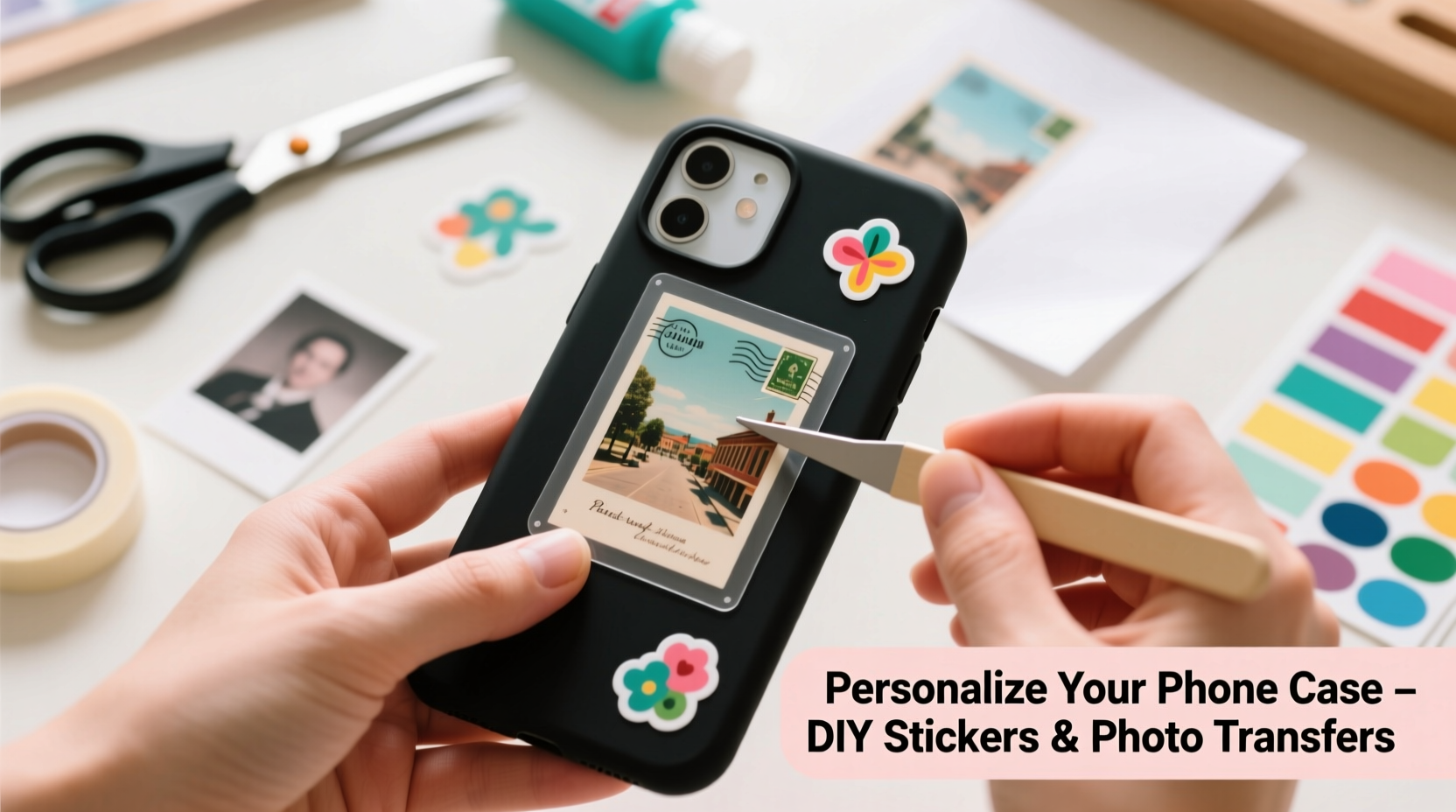
Not all phone cases are equally suited for DIY decoration. The material and texture significantly affect how well stickers adhere and how cleanly photo transfers appear. For best results, opt for a smooth, hard-shell case made of polycarbonate or acrylic. These surfaces provide a flat, non-porous base ideal for adhesives and sealants.
Silicone, TPU (thermoplastic polyurethane), or textured cases tend to absorb moisture and oils, making them poor candidates for long-term sticker application or transfer durability. Matte finishes may also interfere with clarity and adhesion. If you’re buying a new case specifically for customization, look for “glossy,” “hard shell,” or “smooth finish” in the product description.
Creating DIY Stickers for Your Phone Case
Drawing or printing your own stickers gives complete creative freedom. You can sketch original designs, print favorite quotes, or trace illustrations from magazines. The process involves three steps: designing, cutting, and sealing.
- Design your sticker: Use cardstock, sticker paper, or even printer paper. For waterproof results, use vinyl sticker paper available at craft stores. Draw or print your design at the desired size—typically 1–2 inches wide for small accents.
- Cut carefully: Use precision scissors or a craft knife for clean edges. For intricate shapes, consider using a hole punch for circles or stencils for consistent lettering.
- Attach and seal: Apply the sticker to the case using a small amount of glue stick or double-sided tape. Avoid regular glue, which can warp paper. Once in place, cover the entire case with a clear sealant spray or liquid topcoat to protect against scratches and moisture.
For layered effects, stack multiple stickers or combine hand-drawn elements with cut-out magazine clippings. Keep spacing between stickers sufficient to avoid cracking when sealed.
Materials Needed for DIY Stickers
| Material | Purpose | Recommended Type |
|---|---|---|
| Sticker Paper or Cardstock | Base for printed or drawn designs | Waterproof vinyl sticker paper |
| Scissors or Craft Knife | Cutting out designs | Self-healing mat + X-Acto knife |
| Adhesive | Attaching stickers to case | Glue stick or double-sided tape |
| Clear Sealant | Protecting the final design | Mod Podge Outdoor or Krylon Clear Coat |
| Printed Design (optional) | Custom graphics or text | Laser-printed for smudge resistance |
Photo Transfers: Turning Memories into Case Art
Photo transfers allow you to embed actual photographs onto your phone case, creating a deeply personal touch. This method works especially well for preserving travel snapshots, pet photos, or meaningful moments. There are two primary techniques: gel medium transfer and wax paper iron-on transfer.
Gel Medium Photo Transfer (Best for Durability)
This method uses decoupage gel medium—a thick, glue-like substance—to bond a printed image to the surface. The paper is then rubbed away, leaving only the ink embedded in the gel layer.
- Print your photo on a laser printer (inkjet will smear).
- Cut it to fit your case, ideally leaving a small border.
- Apply a thick, even layer of gel medium to the case surface.
- Place the photo face-down onto the gel and press out air bubbles with a credit card.
- Let dry completely (at least 24 hours).
- Gently rub the paper backing with a damp cloth until only the image remains.
- Seal with 2–3 layers of clear topcoat.
The result is a smooth, integrated image that feels part of the case rather than sitting on top. Gel transfers resist peeling and handle daily wear better than adhesive stickers.
Wax Paper Iron-On Transfer (Quick & Temporary)
For a faster, less permanent option, print your photo in reverse (mirror image) on regular printer paper. Place it face-down on wax paper and run a hot iron over it to transfer the toner. Then, position the wax paper on the case and re-iron to bond the image. Finish with a clear coat.
This method is ideal for experimentation but less durable. It may fade or peel after several weeks of use.
“Photo transfers create emotional resonance. A client once transferred her grandmother’s handwriting onto a case—it became her most treasured possession.” — Lena Torres, Handmade Lifestyle Artist
Step-by-Step Guide to a Complete Custom Case Makeover
Follow this timeline to create a polished, long-lasting personalized case in under 48 hours.
Day 1: Design & Prep (1–2 Hours)
- Select your phone case and clean it thoroughly with rubbing alcohol.
- Choose 1–3 photos or design elements to include.
- Print images on laser paper or vinyl sticker sheets.
- Sketch layout on paper to plan placement.
Day 1 Evening: Apply Elements (30 Minutes)
- Attach stickers with glue stick or double-sided tape.
- Perform gel medium transfer if using photos.
- Allow to dry overnight in a dust-free area.
Day 2: Finishing & Sealing (1 Hour Active, 24 Hours Drying)
- Once transfers are fully dry, gently remove paper residue.
- Apply first coat of clear sealant (spray or brush-on).
- Let dry 6–8 hours, then apply second coat.
- Add third coat if extra protection is needed.
- Wait 24 hours before handling regularly.
Avoiding Common Mistakes
Even simple projects can go wrong without attention to detail. Here are frequent errors and how to avoid them:
| Mistake | Consequence | How to Avoid |
|---|---|---|
| Using inkjet prints for transfers | Image smears or dissolves | Always use laser printer output |
| Skipping the cleaning step | Stickers lift or bubble | Wipe case with alcohol before starting |
| Applying too little sealant | Design wears off quickly | Use at least 2–3 protective coats |
| Touching surface during drying | Fingerprints mar finish | Let dry undisturbed on a stand |
| Overlapping stickers too densely | Cracking or uneven texture | Leave space between elements |
Real-Life Example: A Student’s Commemorative Case
Jamal, a college senior, wanted a way to carry his study abroad memories with him. He selected four small photos from his time in Kyoto: a quiet temple garden, a street food stall, a train ride through the mountains, and a group shot with local friends. Using a clear polycarbonate case, he applied each image via gel medium transfer, arranging them in a collage along the back edge. He added a tiny hand-drawn cherry blossom sticker near the camera lens as a subtle accent. After sealing with three layers of Mod Podge Outdoor, the case survived daily pocket storage, drops, and even a brief rainstorm. Two months later, not a single element had lifted. Classmates regularly asked where he bought it—unaware it was a handmade keepsake.
FAQ: DIY Phone Case Personalization
Can I remove the design later if I change my mind?
Yes, but carefully. Soak the case in warm, soapy water for 30–60 minutes, then gently scrape off layers with a plastic card. Residue can be removed with rubbing alcohol. Note: This may leave slight marks or reduce case clarity.
Will the sealant make my case slippery?
High-gloss sealants can increase slickness slightly. For better grip, choose a matte-finish spray like Krylon UV-Resistant Clear Coat Matte. Alternatively, add texture with fine sandpaper (2000 grit) between coats for a soft-touch effect.
Can I use this method on a wallet or folio case?
You can, but focus on non-moving parts. Avoid placing stickers or transfers on hinge areas or inner lining, as repeated folding will cause cracking. Stick to outer panels or the back cover for longevity.
Checklist: DIY Phone Case Personalization Success
- ☐ Choose a smooth, hard-shell case
- ☐ Clean case with rubbing alcohol
- ☐ Print designs on laser paper or vinyl sticker sheet
- ☐ Arrange layout before attaching anything
- ☐ Apply stickers or perform photo transfer
- ☐ Allow full drying time (24+ hours)
- ☐ Apply 2–3 layers of clear sealant
- ☐ Cure for 24 hours before regular use
- ☐ Store in a cool, dry place when not in use
Final Thoughts: Make It Yours, Make It Last
Personalizing your phone case isn’t just about aesthetics—it’s an act of self-expression. A handmade case tells a story no store-bought version can replicate. Whether you’re honoring a memory, showcasing your art, or simply adding a splash of joy to your everyday carry, the process should feel rewarding and accessible.
With the right materials, patience during drying phases, and proper sealing, your DIY creation can last as long as the phone itself. Don’t wait for a special occasion to start. Grab a spare case, pull up a favorite photo, and begin transforming the ordinary into something uniquely yours.




 浙公网安备
33010002000092号
浙公网安备
33010002000092号 浙B2-20120091-4
Comments
No comments yet. Why don't you start the discussion?