
The PlayStation 5 offers more than just next-gen graphics and lightning-fast load times—it also provides a highly customizable user experience. While the default interface is sleek and functional, personalizing it can dramatically improve both usability and aesthetic appeal. Whether you're juggling multiple games across genres or simply want your console to reflect your personality, taking control of your PS5’s layout saves time, reduces clutter, and enhances your daily interaction with the system. With thoughtful organization and creative flair, you can turn the standard dashboard into a streamlined command center tailored to your habits.
Organize Your Game Library with Folders
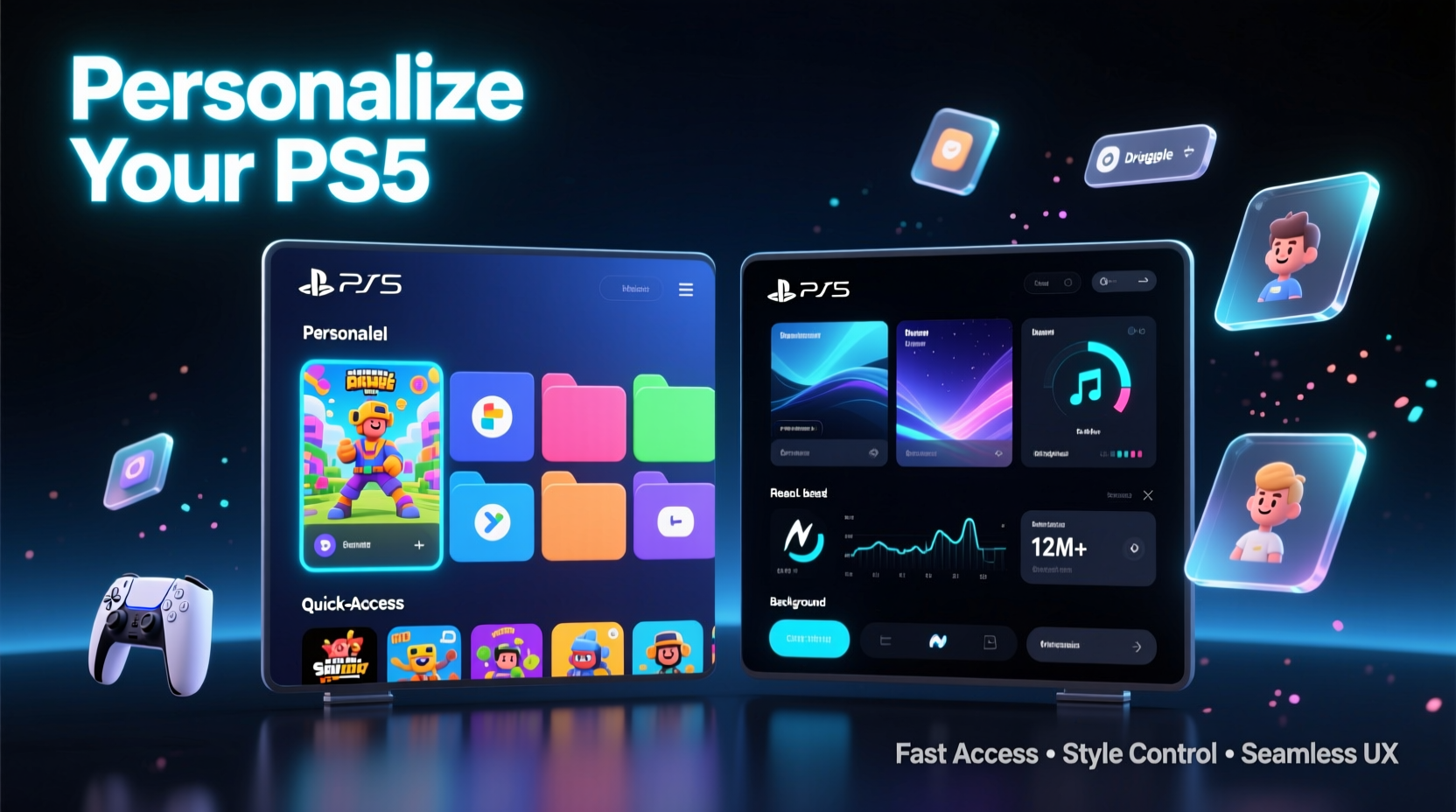
One of the most effective ways to speed up game access is by grouping titles into custom folders. Unlike earlier PlayStation systems, the PS5 allows users to create folders directly on the home screen—just like organizing apps on a smartphone. This feature is particularly useful if you own dozens of digital games or frequently switch between different types of gameplay, such as single-player adventures, competitive multiplayer, and indie experiments.
To create a folder:
- Highlight any game tile on your home screen.
- Press the Options button on your DualSense controller.
- Select \"Move to New Folder\" or choose an existing folder.
- Name the folder (e.g., “RPGs,” “Co-op Games,” “Backlog”) using the on-screen keyboard.
- Add additional games by repeating the process and selecting the same folder.
You can place up to 100 items in a single folder, though only about six will be visible without scrolling. For optimal accessibility, keep high-priority games near the top of each folder list. You can rearrange entries by dragging them within the folder menu.
Customize Your Home Screen Layout Strategically
Your PS5 home screen doesn’t have to remain static. Rearranging tiles ensures that your most-played games are always one click away. The key is intentional placement: prioritize convenience while minimizing visual noise.
Start by moving frequently played games to the front row. To do this, highlight a game icon, press the Options button, and select \"Move\". Then use directional controls to reposition it. Consider placing utility apps like Spotify, YouTube, or Discord slightly off-center so they don’t compete with your core gaming experience.
If you subscribe to PlayStation Plus and regularly download monthly titles, create a temporary “Try These” folder and clear it at the end of each billing cycle. This prevents forgotten freebies from cluttering your library.
Additionally, disable auto-launch features for non-essential cards. Go to Settings > Notifications > Show Game Content Cards and toggle off suggestions or news pop-ups that interrupt focus. A clean home screen means fewer distractions when you’re ready to play.
Leverage Themes and Visual Customization
While the PS5 lacks full theme support like older PlayStation models, subtle visual tweaks still allow room for self-expression. The console uses dynamic backgrounds tied to specific games—if enabled, launching a title changes the color scheme and sound effects of menus. You can manually set these or leave them automatic based on recent activity.
To customize:
- Navigate to Settings > Personalization > Background.
- Choose from preset options or enable dynamic backgrounds linked to individual games.
- Adjust audio feedback under Sound > System Sound Settings > Beep Sound to modify confirmation tones.
For those who value consistency, setting a fixed background—such as the default dark galaxy theme—creates a stable environment. Gamers who enjoy immersion may prefer letting their current game dictate the mood. There's no wrong choice; the goal is alignment with your personal preference.
“We’ve seen players reduce decision fatigue by over 30% just by simplifying their home screen hierarchy.” — Marcus Lin, UX Designer at GameFlow Labs
Optimize Control Center for Instant Access
Beyond the home screen, the PS5’s Control Center (accessed by pressing the PS button) serves as a real-time hub for actions, notifications, music, and settings. Personalizing its layout turns it into a productivity engine.
You can customize which icons appear in the Control Center toolbar:
- Open the Control Center.
- Scroll all the way left and select \"Customize\".
- Add or remove cards such as Music, Friends, Mic/Camera, Internet Browser, or Game Base.
- Rearrange them via drag-and-drop to match your usage frequency.
If you stream often, include the Broadcast and Share Factory shortcuts. Competitive gamers might benefit from having Network Status and Performance Mode visible at all times. Meanwhile, casual players could prioritize Media and Party Chat.
Another powerful—but often overlooked—feature is pinning activities. Many modern games offer in-game missions or modes that appear as “Activities” in the Control Center. By pinning a specific challenge (like a raid in Destiny 2 or a race in Gran Turismo 7), you can jump directly into that segment without booting the full game first. This cuts loading time significantly and keeps momentum during short play sessions.
| Feature | Benefit | Best For |
|---|---|---|
| Pinned Activities | Skip main menus and load straight into gameplay | Time-limited sessions, returning mid-campaign |
| Quick Menu Shortcuts | Access settings without leaving the game | Adjusting audio, mic, or display on-the-fly |
| Game Help Integration | View hints without exiting (PS Plus Premium required) | Stuck on puzzles or boss fights |
Create a Daily Gaming Routine with Profiles and Power Saving
Personalization extends beyond visuals—it includes behavioral automation. Setting up power-saving rules and user profiles tailors the console’s responsiveness to your lifestyle.
For example, configure the system to enter rest mode after 1 hour of inactivity. This preserves energy while keeping downloads and controller charging active. To adjust:
- Go to Settings > System > Power Saving > Set Time Until Enter Rest Mode.
- Select either \"Don't Put in Rest Mode,\" \"3 Minutes,\" or \"1 Hour.\"
If multiple people use the same console, set up individual user profiles. Each profile maintains separate game libraries, trophies, friend lists, and even preferred audio output devices. Switching between accounts takes seconds and ensures personalized experiences without interference.
Mini Case Study: Streamlining for a Busy Parent
Jamie, a parent of two in Seattle, plays games primarily during late evenings after bedtime routines. With limited windows—usually 45 minutes or less—Jamie found themselves wasting precious time navigating through unsorted games and waiting for menus to load.
After applying targeted personalization steps, Jamie created three folders: “Relax & Unwind” (containing low-pressure games like Animal Crossing and Stardew Valley), “Story Mode Progress,” and “Multiplayer Nights.” They pinned ongoing campaign missions from The Last of Us Part I and scheduled automatic downloads for new updates during daytime hours.
They also disabled promotional cards and moved music controls to the Control Center’s top row. As a result, Jamie now spends nearly 20% more time actually playing rather than preparing to play—and reports feeling more satisfied with shorter sessions.
Checklist: Optimize Your PS5 Interface in Under 20 Minutes
Follow this actionable checklist to transform your PS5 setup efficiently:
- ✅ Create at least two folders: one for active games, another for backlog or niche interests.
- ✅ Move your top 3 most-played games to the front row of the home screen.
- ✅ Customize the Control Center to show only essential tools (e.g., Music, Friends, Mic Mute).
- ✅ Pin at least one in-game Activity card for faster entry.
- ✅ Choose a consistent background theme or enable dynamic per-game visuals.
- ✅ Adjust rest mode settings to balance convenience and power efficiency.
- ✅ Review notification settings to suppress unnecessary alerts.
Frequently Asked Questions
Can I rename folders after creating them?
Yes. Open the folder, press the Options button, and select \"Rename Folder.\" You can update the name anytime without affecting the contents.
Do folders sync across consoles if I use cloud storage?
No. Folder organization is stored locally on the console. If you switch to a different PS5—even with the same account—you’ll need to recreate folders manually. However, game data and saves will sync via PlayStation Plus Cloud Storage.
Why aren’t some games showing Activity cards?
Activity support depends on developer implementation. Not all games utilize this feature, especially older ports or indie titles without integrated progress tracking. Check the game’s patch notes or official site to confirm support.
Final Thoughts: Make Your Console Work for You
Personalizing your PS5 isn’t about aesthetics alone—it’s about designing an interface that respects your time, habits, and preferences. A well-organized system removes friction between intention and action. When launching your console feels intuitive and visually aligned with your tastes, engagement deepens naturally.
Take a few moments this week to audit your current setup. Ask yourself: Does my home screen reflect how I actually play? Are my favorite tools easy to reach? Small adjustments compound into meaningful gains in usability and enjoyment.




 浙公网安备
33010002000092号
浙公网安备
33010002000092号 浙B2-20120091-4
Comments
No comments yet. Why don't you start the discussion?