
Selecting the right Christmas tree isn’t just about height or fullness—it’s about harmony. A well-chosen tree becomes the heart of your living space, enhancing your decor without overwhelming it. Too often, families bring home a towering evergreen only to realize it scrapes the ceiling, blocks a lamp, or crowds the sofa. Avoid last-minute stress and awkward trimming by planning ahead. The key is precision: measuring your space, understanding your room layout, and choosing a tree that complements both your ceiling height and surrounding furniture.
This guide walks you through every step—from tape measure to tinsel—so your tree fits not just physically, but aesthetically, within your home. Whether you’re working with a cozy apartment corner or a spacious great room, these strategies ensure your holiday centerpiece feels intentional, balanced, and joyful.
Measure Your Space Accurately
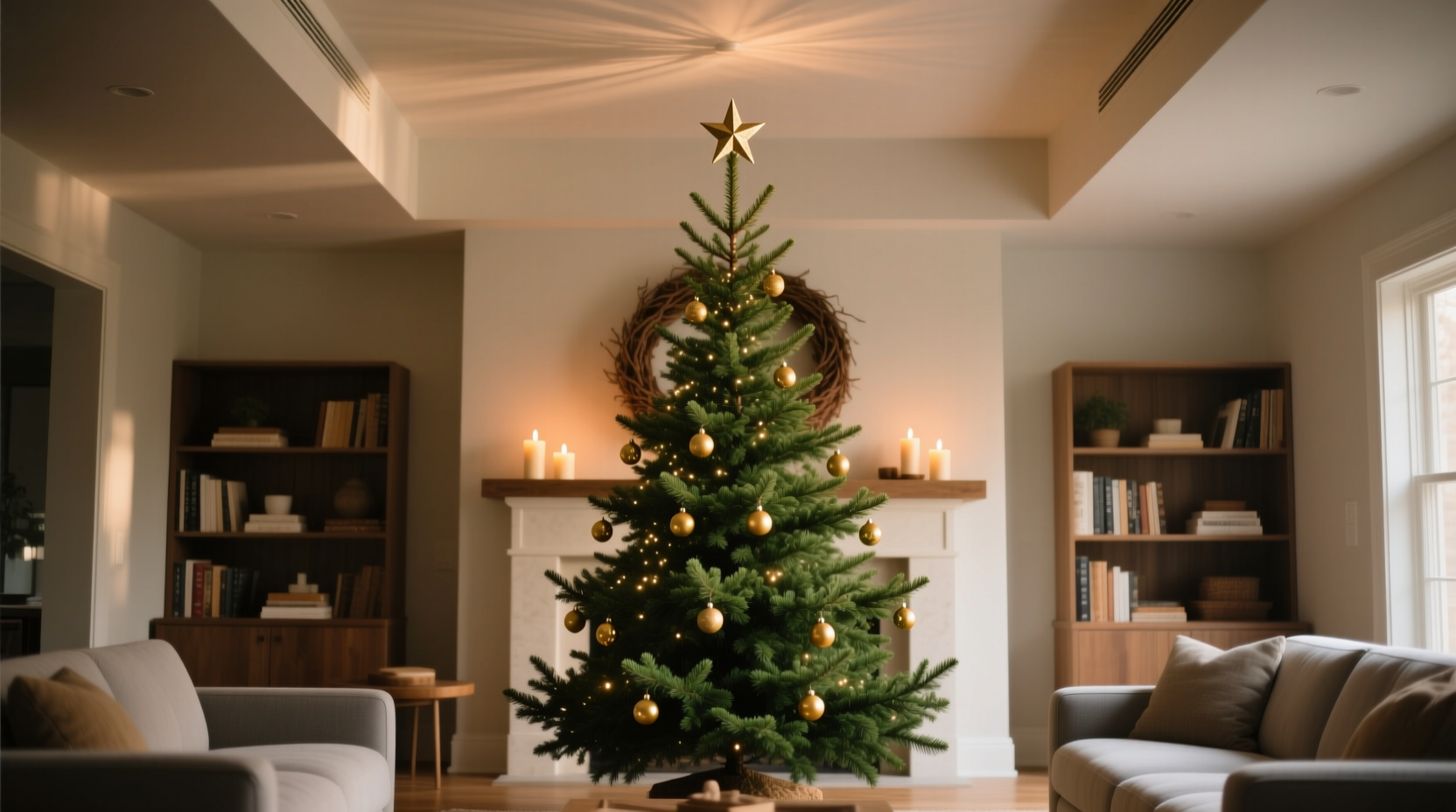
The foundation of a well-fitting Christmas tree is accurate measurement. Many people estimate based on memory or eye-balling the room, which leads to errors. Begin by measuring from the floor to the ceiling in the exact spot where the tree will stand. Don’t assume all rooms have uniform ceiling heights—even within the same floor, architectural details like beams or crown molding can reduce clearance.
Next, account for the tree stand. Most standard stands add 4 to 6 inches in height. If you plan to top the tree with a star or angel, include an additional 6 to 12 inches depending on the ornament size. For example, if your ceiling is 96 inches high, subtract 6 inches for the stand and 10 inches for the topper. That leaves you with a maximum tree height of 80 inches—or 6 feet 8 inches.
Now assess horizontal space. Measure the distance from the wall or corner to any nearby furniture—such as a sofa, coffee table, or entertainment center. A general rule is to allow at least 6 to 12 inches of clearance around the tree’s widest point. This prevents needles from scattering onto furniture and allows easy access for decorating and watering.
Understand Tree Proportions and Species Traits
Not all Christmas trees grow the same way. Different species have distinct silhouettes—some are tall and slender, others broad and bushy. Choosing the right species for your space can make the difference between a graceful centerpiece and a cramped eyesore.
Fir trees, such as Fraser or Balsam, tend to have a naturally conical shape with strong branches that support heavier ornaments. They’re ideal for medium to large rooms with 8- to 9-foot ceilings. Spruce trees, like the Colorado Blue Spruce, are fuller but more brittle—great for density, but their drooping branches may brush against nearby furniture if not pruned.
If your room is narrow or has low clearance, consider a Nordmann Fir or Concolor Fir. These varieties offer a balanced taper and dense foliage without excessive girth. For very tight spaces, specialty growers offer “slim” or “columnar” trees bred specifically for apartments and small homes. These can be as narrow as 24 inches in diameter at the base while still reaching 7 feet tall.
Always ask the lot attendant or nursery staff about the expected spread of the tree. A tag might list height, but rarely includes width at its fullest point. Request to gently pull aside the lower branches to inspect the trunk flare and base width before purchase.
“Many customers don’t realize that a tree’s width at shoulder height can be two-thirds of its total height. A 7-foot tree can easily span 4 feet across—that’s critical in smaller rooms.” — Daniel Reyes, Christmas Tree Farm Manager, Pine Ridge Evergreens
Step-by-Step Guide: Choosing the Right Tree
Follow this six-step process to ensure your Christmas tree fits seamlessly into your home environment.
- Determine the installation spot. Choose the exact location—corner, beside the window, near the TV—and mark it temporarily with tape or a box.
- Measure vertical clearance. Use a retractable tape measure from floor to ceiling. Subtract 6 inches for the stand and 6–12 inches for the topper.
- Measure horizontal space. Record the distance from the wall to nearby furniture. Allow at least 12 inches on each side for airflow and decoration access.
- Select a tree species suited to your dimensions. Slim profiles for small rooms; full-bodied firs for open areas.
- Test fit at the lot (if possible). Some farms allow you to stand the tree upright in a rented stand. Bring a measuring tape and check both height and spread.
- Trim strategically after setup. If minor adjustments are needed, prune lower branches that interfere with furniture—but never cut more than 10% of the foliage.
Do’s and Don’ts: Common Mistakes to Avoid
Even experienced decorators fall into traps when selecting a Christmas tree. The following table outlines frequent missteps and smarter alternatives.
| Don’t | Do |
|---|---|
| Choose the tallest tree available “just because.” | Pick a tree that leaves 6–12 inches of clearance under the ceiling. |
| Ignore the tree’s base width when placing it near furniture. | Ensure at least 12 inches between the tree’s widest branch and any object. |
| Use a heavy topper that pulls the top stem out of alignment. | Opt for lightweight finials or secure heavy toppers with floral wire. |
| Place the tree directly in front of vents or heaters. | Position it away from heat sources to extend freshness and reduce fire risk. |
| Overload lower branches with large ornaments near walkways. | Keep lower sections minimally decorated for safety and accessibility. |
Real Example: Fitting a Tree in a City Apartment
Sophie, a graphic designer in Chicago, lives in a one-bedroom loft with 8-foot ceilings and a compact living area. Her sofa sits just 30 inches from the corner where she wanted the tree. She initially considered a 7.5-foot tree but realized—after measuring—that even with a short stand and no topper, it would leave only 2 inches of breathing room above.
Instead, she opted for a 6-foot Nordmann Fir marketed as “space-saver.” At the farm, she confirmed the base spread was only 28 inches. Once home, she used a low-profile stand and added a 6-inch snowflake topper, bringing the total height to 78 inches—perfect for her space. By allowing 11 inches between the tree and the sofa arm, she avoided needle drop on upholstery and maintained a clear walking path.
Sophie also placed battery-powered lights on the sofa-side branches to create depth without needing to wrap the entire tree. Her solution proved that thoughtful selection beats sheer size every time.
Checklist: Picking the Perfectly Sized Christmas Tree
- ✅ Measure floor-to-ceiling height at the intended location
- ✅ Subtract 6 inches for stand and 6–12 inches for topper
- ✅ Measure distance from wall to nearest furniture piece
- ✅ Allow minimum 12 inches clearance around the tree’s base
- ✅ Choose a species with appropriate width-to-height ratio
- ✅ Consider a “slim” or columnar variety for tight spaces
- ✅ Bring measurements and photos when shopping
- ✅ Test the tree’s footprint with tape on the floor before buying
- ✅ Check water reservoir capacity—larger trees need more hydration
- ✅ Plan lighting and ornament placement to avoid obstructing furniture
Frequently Asked Questions
Can I trim the top off a too-tall Christmas tree?
Technically, yes—but it’s not recommended. Cutting the top alters the tree’s natural symmetry and can cause sap leakage and faster drying. It also limits your topper options. If the tree exceeds your ceiling by more than 2 inches, choose a shorter one instead.
What if my ceiling is sloped or vaulted?
In rooms with angled ceilings, position the tree where headroom is most generous. Measure vertically from the floor to the closest point of the ceiling slope. Focus on functional clearance rather than maximum height. A slightly shorter tree in a balanced location looks more intentional than a tall one crammed into a narrowing space.
How do I keep a large tree from overwhelming small furniture?
Scale matters. Pair oversized trees with substantial furniture. If your sofa is petite, balance the visual weight with lighter decorations—white lights, glass ornaments, and minimal tinsel. Position the tree so its fullest side faces open space, not the furniture. You can also use a tree skirt that matches the rug to visually ground the display.
Final Tips for a Harmonious Holiday Display
A Christmas tree should enhance your home, not dominate it. Beyond measurements, consider sightlines: can you see the TV? Is the reading lamp blocked? Will walking around the tree feel natural or forced? These subtle factors define comfort during the season.
Also, think long-term. A tree that fits today might not work next year if you rearrange furniture. If you plan to keep using the same spot annually, invest in a reusable slim-profile artificial tree tailored to your dimensions. High-quality artificial models mimic natural species and eliminate annual measuring stress.
Finally, involve household members in the decision. Children may want a towering tree, but adults might prioritize function. Finding a middle ground—like a well-proportioned tree with dazzling lights—delights everyone.
“The best Christmas tree isn’t the biggest or shiniest—it’s the one that belongs.” — Clara Bennett, Interior Stylist & Holiday Design Consultant
Conclusion
Picking a Christmas tree that fits perfectly between furniture and ceiling is a blend of math, design sense, and foresight. With precise measurements, informed species selection, and respect for spatial balance, you can create a centerpiece that feels both festive and harmonious. This holiday season, skip the guesswork and embrace intentionality. Your living room—and your family—will thank you.




 浙公网安备
33010002000092号
浙公网安备
33010002000092号 浙B2-20120091-4
Comments
No comments yet. Why don't you start the discussion?