
Selecting the right foundation shade is one of the most critical steps in achieving a flawless makeup look. Yet, shopping for foundation online—without the ability to swatch or test on your skin—can feel like guessing in the dark. Many consumers have experienced the frustration of receiving a bottle that’s too yellow, too pink, or simply too far off from their natural tone. But with the right strategy, you can confidently choose a foundation that blends seamlessly into your complexion, even if you’ve never seen it in person.
The key lies in understanding your skin tone, undertone, and how light affects color perception. Combine this knowledge with smart research techniques and digital tools, and you’ll dramatically increase your chances of getting it right the first time. This guide walks you through a proven method for selecting the ideal foundation shade online—no physical trial needed.
Understand Your Skin Tone and Undertone
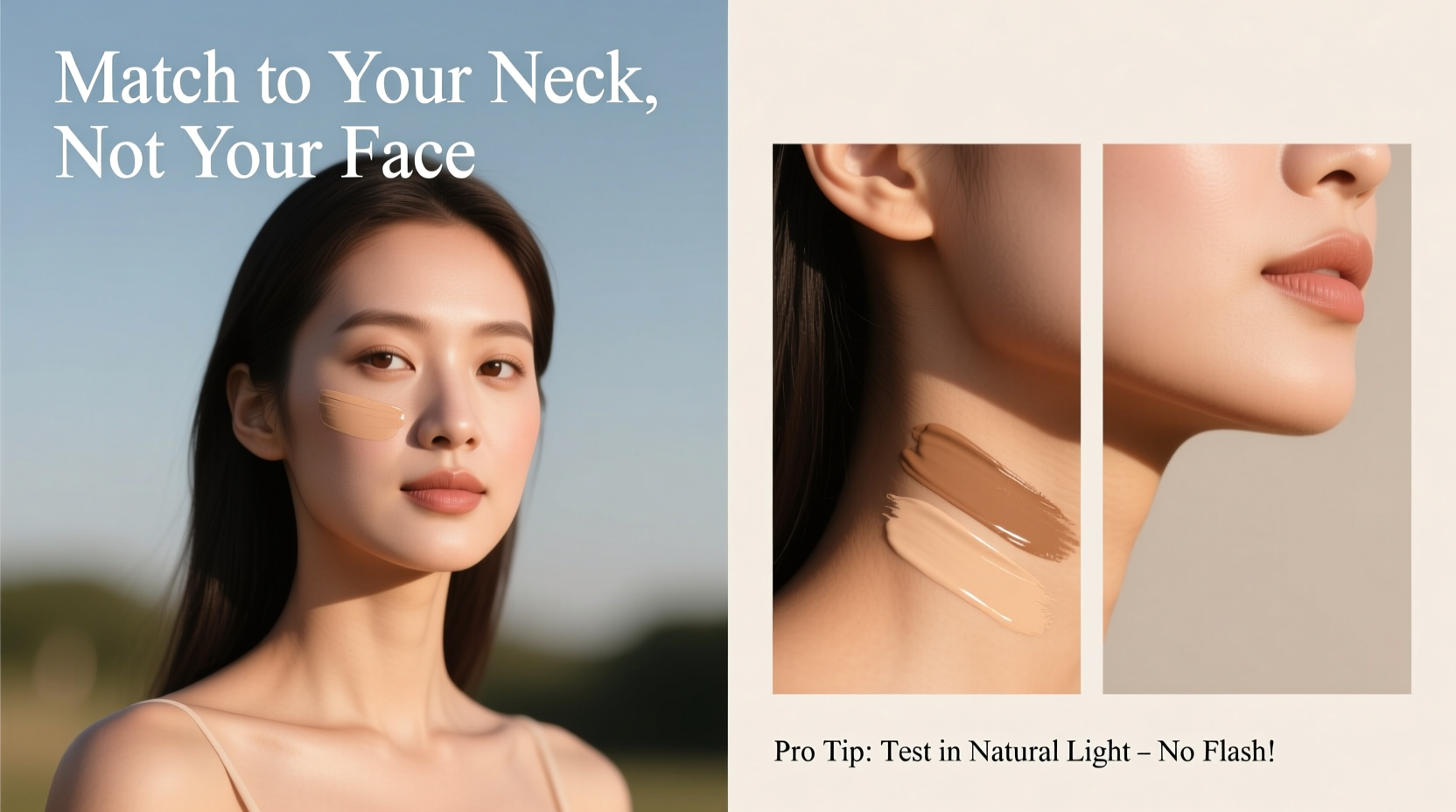
Your skin isn’t just “light,” “medium,” or “deep.” It has nuanced characteristics that determine how foundation will appear once applied. The two primary factors are your surface skin tone (light, tan, olive, medium, deep) and your undertone (cool, warm, neutral, or olive).
Undertones are subtle hues beneath the surface of your skin that remain consistent regardless of tanning or seasonal changes. Misjudging your undertone is the most common reason why foundations look ashy, orange, or muddy.
- Cool undertones: Skin has hints of pink, red, or blue. Veins on the wrist appear blue or purple. Silver jewelry typically complements your complexion better than gold.
- Warm undertones: Skin leans toward yellow, peach, or golden hues. Veins look greenish. Gold jewelry enhances your glow.
- Neutral undertones: A balanced mix of warm and cool. Veins may appear bluish-green. Both silver and gold jewelry work well.
- Olive undertones: A greenish or grayish base, often found in medium to deep complexions. These can be tricky because they don’t fit neatly into warm or cool categories.
“Most people don’t know their undertone, but it’s the single biggest factor in foundation mismatch.” — Lila Chen, Celebrity Makeup Artist and Color Consultant
Use the Sunlight Test for Accurate Assessment
Lighting drastically influences how your skin—and any foundation—appears. Indoor lighting, especially from LEDs or incandescent bulbs, can add warmth or coolness that doesn’t reflect reality. To assess your true tone, use natural daylight.
Stand near a north-facing window (which provides even, diffused light) around mid-morning or early afternoon. Avoid direct sunlight, which can create glare and wash out features. Compare the inside of your forearm to your jawline. If there’s a noticeable difference, your face may be sun-exposed or affected by hormones, so rely more on the forearm for consistency.
If possible, take a photo of your bare face and inner forearm in this lighting. Use it later when comparing product descriptions or swatch images online. Many brands now post swatches on real skin under natural light—matching yours increases confidence in your choice.
Step-by-Step Guide: How to Determine Your Foundation Profile
- Wash your face and wait 15 minutes for your skin to return to its natural state.
- Stand near a window with natural light, facing forward.
- Observe your skin: Is it fair, light, medium, tan, deep, or rich?
- Check your wrist veins: Blue/purple = cool; green = warm; both = neutral.
- Note which metals look best on you: Silver favors cool tones; gold suits warm.
- Identify your foundation profile (e.g., \"light with warm undertone\" or \"deep with neutral-olive undertone\").
Leverage Brand Shade Finders and Customer Reviews
Many reputable beauty brands now offer AI-powered shade matchers or detailed online quizzes. These tools ask about your skin tone, undertone, and previous foundation experiences to recommend a precise match.
Brands like Fenty Beauty, Lancôme, and Maybelline have invested heavily in inclusive shade ranges and digital matching technology. For example, Fenty’s Pro Filt’r Finder analyzes your inputs and suggests up to three potential matches based on thousands of user data points.
Beyond brand tools, customer reviews are invaluable. Focus on reviewers with similar skin profiles. Look for phrases like:
- “I’m NC30 and this is a perfect match.”
- “Wear N20 in NARS Sheer Glow—it’s spot-on.”
- “Olive skin here, and this doesn’t turn orange!”
Pay attention to photos labeled “no filter” or “natural light.” Filtered images often exaggerate coverage or alter color balance.
Decode Foundation Naming Systems
Understanding how brands label their shades helps narrow down options. While not universal, many follow predictable patterns.
| Brand | Shade Format | Example | What It Means |
|---|---|---|---|
| NARS | Letter + Number | DeVina (C2) | C = Cool, W = Warm, N = Neutral; number indicates depth |
| Fenty Beauty | Prefix + Number | Pro Filt’r 180 | Numbers correspond to depth; suffixes like “W” = warm, “C” = cool |
| MAC | Letters only | NYX (NC = Neutral Cool) | NC = Neutral Cool, NW = Neutral Warm, C = Cool, W = Warm |
| Glossier | Number only | Perfecting Skin Tint 7 | Lower numbers = lighter; higher = deeper; limited undertone info |
When in doubt, cross-reference the shade name with third-party databases like MakeupAlley or Temptalia, which provide detailed breakdowns and comparisons across brands.
Avoid Common Online Shopping Pitfalls
Even with preparation, mistakes happen. Here are frequent errors and how to avoid them:
- Relying solely on screen color: Monitors vary widely in color calibration. Never buy based on how a swatch looks on your phone or laptop alone.
- Ignoring oxidization: Some foundations darken within minutes of application. Look for reviews mentioning “oxidizes darker” or “settles after 10 minutes.”
- Assuming all “beige” shades are the same: Beige means different things across brands. One brand’s beige might be pink, another’s yellow.
- Overlooking finish and formula: A matte foundation may appear deeper than a dewy one, even at the same shade level.
“The biggest myth is that one shade fits all seasons. Your skin changes with weather, sun exposure, and hormones—your foundation should adapt.” — Jamal Reyes, Lead Artist at Mented Cosmetics
Do’s and Don’ts When Buying Foundation Online
| Do | Don't |
|---|---|
| Use natural light to assess your skin | Swatch under bathroom lighting |
| Read multiple reviews with photos | Trust influencer swatches without context |
| Check return policies before buying | Purchase full-size bottles without samples |
| Take note of oxidation claims | Assume the shade won’t change after application |
| Order sample sizes when available | Buy five products hoping one works |
Real Example: Choosing a Foundation for Olive Skin
Sophia, a 32-year-old with medium-deep olive skin living in Chicago, struggled for years with foundation that turned orange or ashy. She avoided buying online because past attempts failed—until she developed a system.
First, she confirmed her undertone: her veins appeared greenish, and gold jewelry suited her best, indicating warm-olive. She noted her usual shade in physical stores was “Medium Deep with Golden Undertone” at major retailers.
Next, she visited the Fenty Beauty website and used their shade finder. After inputting her details, it recommended Pro Filt’r Soft Matte Longwear Foundation in 280. Skeptical but hopeful, she ordered a sample from Sephora’s try-before-you-buy program.
She tested it at home in natural light, waited 15 minutes for oxidation, and compared it to her jawline. It matched perfectly. She then purchased the full size and has repurchased twice since. Her success came from combining self-knowledge with brand tools and cautious sampling.
Checklist: How to Pick the Perfect Foundation Shade Online
- ✅ Determine your skin tone and undertone in natural light
- ✅ Take a reference photo of your bare face and forearm
- ✅ Use brand-specific shade finders or quizzes
- ✅ Research customer reviews with photos and shade codes
- ✅ Decode the naming system (e.g., NC, W, C, N)
- ✅ Look for oxidation warnings in reviews
- ✅ Order samples or travel sizes when possible
- ✅ Confirm return policy in case of mismatch
FAQ: Common Questions About Buying Foundation Online
Can I trust virtual try-on tools?
Yes, but with caution. Tools like Sephora’s Virtual Artist or L’Oréal’s ModiFace use augmented reality to simulate foundation on your face via webcam. They’re improving rapidly, but lighting, camera quality, and skin texture can affect accuracy. Use them as a starting point—not a final decision.
What if my skin changes with the seasons?
It’s normal for your complexion to lighten in winter and deepen in summer. Consider having two foundation shades—one for cooler months, one for warmer. Alternatively, mix a drop of bronzer into your foundation in summer or dilute it with moisturizer in winter to adjust the tone subtly.
Are sample kits worth it?
Absolutely. Brands like Tower 28, Merit, and Ilia offer mini foundation sets with three to five shades. For $20–$30, you can test multiple options at home under real conditions. This small investment often saves money long-term by preventing wasted full-size purchases.
Final Thoughts: Confidence Starts With the Right Match
Finding the perfect foundation shade online isn’t guesswork—it’s a process grounded in observation, research, and smart tools. By understanding your skin’s unique characteristics, leveraging digital resources, and using strategic sampling, you can make informed decisions from the comfort of your home.
Don’t rush the process. Take time to analyze your tone, read reviews, and test when possible. The goal isn’t just to cover your skin, but to enhance it—to find a shade that disappears into your complexion and makes you feel put together, confident, and authentic.




 浙公网安备
33010002000092号
浙公网安备
33010002000092号 浙B2-20120091-4
Comments
No comments yet. Why don't you start the discussion?