
Selecting the right foundation shade is one of the most critical steps in achieving a polished, natural-looking makeup application. Yet, even with high-quality products and expert blending techniques, many people end up with foundation that looks ashy, orange, or too dark—all because of poor lighting during the selection process. Artificial store lights, yellow-toned bathroom bulbs, and dim environments distort color perception, making it nearly impossible to judge true skin tone accurately.
The solution lies in natural light—the most reliable source for evaluating skin tone and foundation match. When used correctly, daylight reveals your skin’s true undertones, surface discoloration, and overall balance. This guide will walk you through practical strategies to leverage natural lighting when choosing your ideal foundation shade, ensuring a seamless blend that looks authentic from morning to night.
Why Natural Light Matters for Foundation Matching
Artificial lighting often casts a warm, cool, or yellow tint that alters how foundation appears on your skin. For example, fluorescent lights can make fair shades look ashy, while incandescent bulbs may cause deeper tones to appear muddy or overly red. These inconsistencies lead to mismatches that only become obvious once you step outside.
Natural daylight, especially in the mid-morning or early afternoon, provides balanced full-spectrum illumination. It evenly renders colors without bias, allowing you to see:
- Your skin’s actual undertone (cool, warm, neutral, or olive)
- Subtle variations in pigmentation across your face and neck
- How foundation oxidizes or changes after 10–15 minutes of wear
- Whether the shade blends seamlessly at the jawline
According to celebrity makeup artist Lena Kim, “Over 70% of foundation complaints stem from testing under bad lighting. I always tell clients: if you can’t test in natural light, wait until you can. It’s the single best way to avoid a mask-like finish.”
“Natural light doesn’t lie. If your foundation disappears into your skin in daylight, you’ve found your match.” — Lena Kim, Celebrity Makeup Artist
Step-by-Step Guide to Testing Foundation in Natural Light
Finding the right shade isn’t just about swatching on your wrist or hand—it requires a deliberate process conducted under optimal conditions. Follow this timeline to ensure accuracy:
- Choose the Right Time of Day: Test between 10 a.m. and 2 p.m., when sunlight is brightest and most consistent. Avoid early morning or late afternoon, as golden hour light adds warmth that skews perception.
- Prepare Clean, Bare Skin: Wash your face and let it dry completely. Do not apply moisturizer or primer unless you plan to wear them daily—consistency matters.
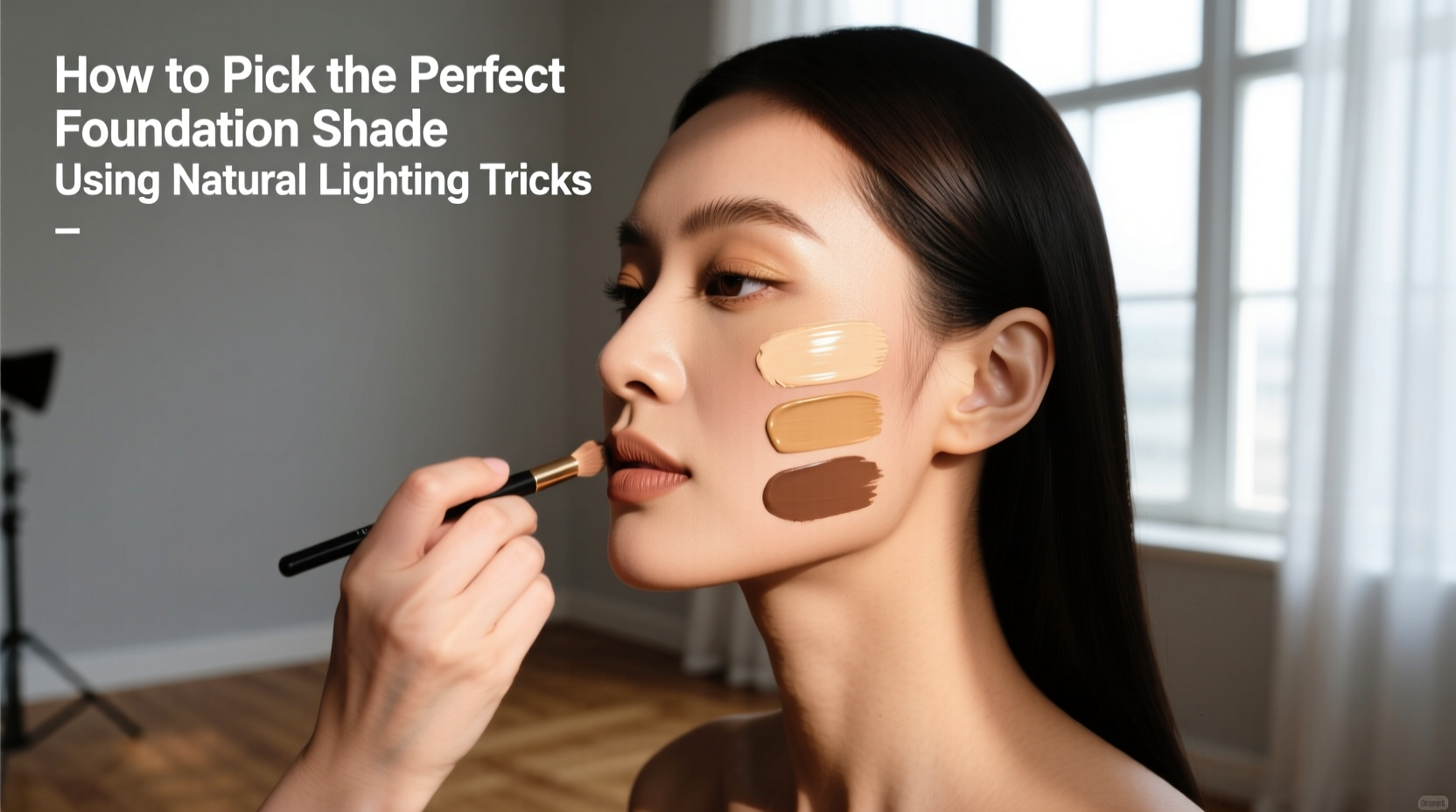
- Swatch Multiple Candidates: Select 3–5 shades close to your suspected match. Apply thin strips vertically along your jawline—not your hand or forearm—as this area best represents your facial tone.
- Wait 10 Minutes: Foundations often oxidize upon air exposure, darkening slightly. Waiting ensures you’re judging the final result, not the initial swatch.
- Step Outside or Near a Window: Stand within 3 feet of a north- or east-facing window, or go outside in shaded daylight (not direct sun, which creates glare). Turn your head side to side to check for flashiness or patchiness.
- Evaluate the Blend: The perfect shade should vanish into your skin. If a line is visible at the jaw, it’s too light or too dark. Pay attention to whether the foundation matches your neck and chest, not just your face.
- Reassess After an Hour: Recheck your foundation after wearing it for a full hour. Some formulas shift due to oil, sweat, or pH reaction. A true match remains undetectable throughout wear.
Common Lighting Mistakes That Lead to Wrong Matches
Even experienced makeup users fall into traps created by misleading lighting. Recognizing these pitfalls can save you from repeated mismatches:
| Mistake | Why It’s Problematic | What to Do Instead |
|---|---|---|
| Testing under store fluorescents | Creates a cool cast, making warm shades look gray or dull | Take samples home or request outdoor testing areas |
| Using yellow-tinted bathroom bulbs | Adds warmth, causing you to pick a cooler, lighter shade than needed | Replace bulbs with daylight-balanced LEDs (5000K–6500K) |
| Applying foundation in dim lighting | Reduces contrast, hiding patchiness and poor blending | Always finalize makeup near a bright window |
| Matching only to the center of the face | Ignores natural darkness around the jaw and neck | Test along the jawline and collarbone for full harmony |
| Ignoring seasonal skin shifts | Skin tone changes with sun exposure; summer and winter shades differ | Have two foundation shades—one for summer, one for winter |
Real-Life Example: Sarah’s Foundation Journey
Sarah, a 32-year-old marketing executive, struggled for years with foundation that looked great in her office but turned chalky and unnatural outdoors. She frequently received comments like, “Your face looks different in sunlight,” which undermined her confidence.
After consulting a makeup artist, she learned she had been testing foundation under her bathroom’s warm vanity lights, leading her to choose a shade two levels too light and overly pink. When she began testing swatches on her jawline near her kitchen window between 11 a.m. and noon, she discovered a deeper, more neutral-beige tone that blended invisibly.
She now keeps two foundations: one for winter (light-medium, neutral undertone) and one for summer (medium, warm-neutral). By aligning her choices with natural light and seasonal shifts, she achieved a consistent, airbrushed look year-round.
Checklist: How to Ensure a Perfect Foundation Match
Use this checklist every time you purchase or reassess your foundation:
- ☑ Test shades on clean, bare skin along the jawline
- ☑ Wait 10–15 minutes for oxidation to occur
- ☑ Evaluate the match in natural daylight (outdoors or near a window)
- ☑ Check that the foundation blends into the neck and décolletage
- ☑ Observe your skin from multiple angles and distances
- ☑ Re-test after one hour of wear to confirm longevity and color stability
- ☑ Consider seasonal changes—adjust your shade twice a year if needed
- ☑ Keep a photo of your matched foundation for future reference
FAQ: Common Questions About Foundation and Lighting
Can I use my phone’s flashlight to test foundation?
No. Most phone flashlights emit a cool-white or blue-tinted light that distorts color. They also create harsh shadows and hotspots, making it difficult to assess evenness. Stick to natural daylight or professional daylight lamps.
What if I don’t have access to natural light?
If you live in a low-sunlight climate or have a windowless bathroom, use a daylight simulation lamp with a color temperature of 5000K–6500K. Position it 18–24 inches from your face and avoid overhead ceiling lights that mix with it.
Should I match foundation to my face or neck?
You should match to both. Your foundation must blend seamlessly from your face to your neck and chest. If it matches your face but leaves a visible line at the jaw, it’s too light or too dark. Always prioritize the jawline and collarbone over the center of the face.
Mastering the Art of Shade Selection
Picking the perfect foundation shade isn’t about guessing or relying on labels like “porcelain” or “deep caramel.” It’s a precision process grounded in observation, timing, and environmental awareness. Natural lighting acts as your most honest evaluator—revealing imperfections, highlighting blends, and confirming compatibility.
By integrating daylight testing into your routine, avoiding common lighting traps, and adjusting for seasonal changes, you eliminate guesswork and build a foundation wardrobe that enhances your natural beauty. Remember, the goal isn’t to cover your skin but to elevate it—so it looks like you, just better-rested and polished.
Make natural light your ally. Test deliberately. Trust what you see in the sun. And never settle for a foundation that doesn’t disappear into your skin.




 浙公网安备
33010002000092号
浙公网安备
33010002000092号 浙B2-20120091-4
Comments
No comments yet. Why don't you start the discussion?