
Every morning, millions of people shoulder their backpacks and head out the door for work, school, or errands. Yet many carry a bag that's too large, too small, or poorly fitted—leading to back pain, shoulder fatigue, and long-term postural issues. Choosing the right backpack isn’t just about style or storage; it’s about preserving your physical well-being during one of the most repeated daily routines. A properly sized backpack supports your load efficiently, aligns with your body mechanics, and reduces strain over time. This guide breaks down the science and practical steps behind selecting a backpack that fits your commute, your body, and your lifestyle—without compromising comfort.
Understand Your Commute’s Demands
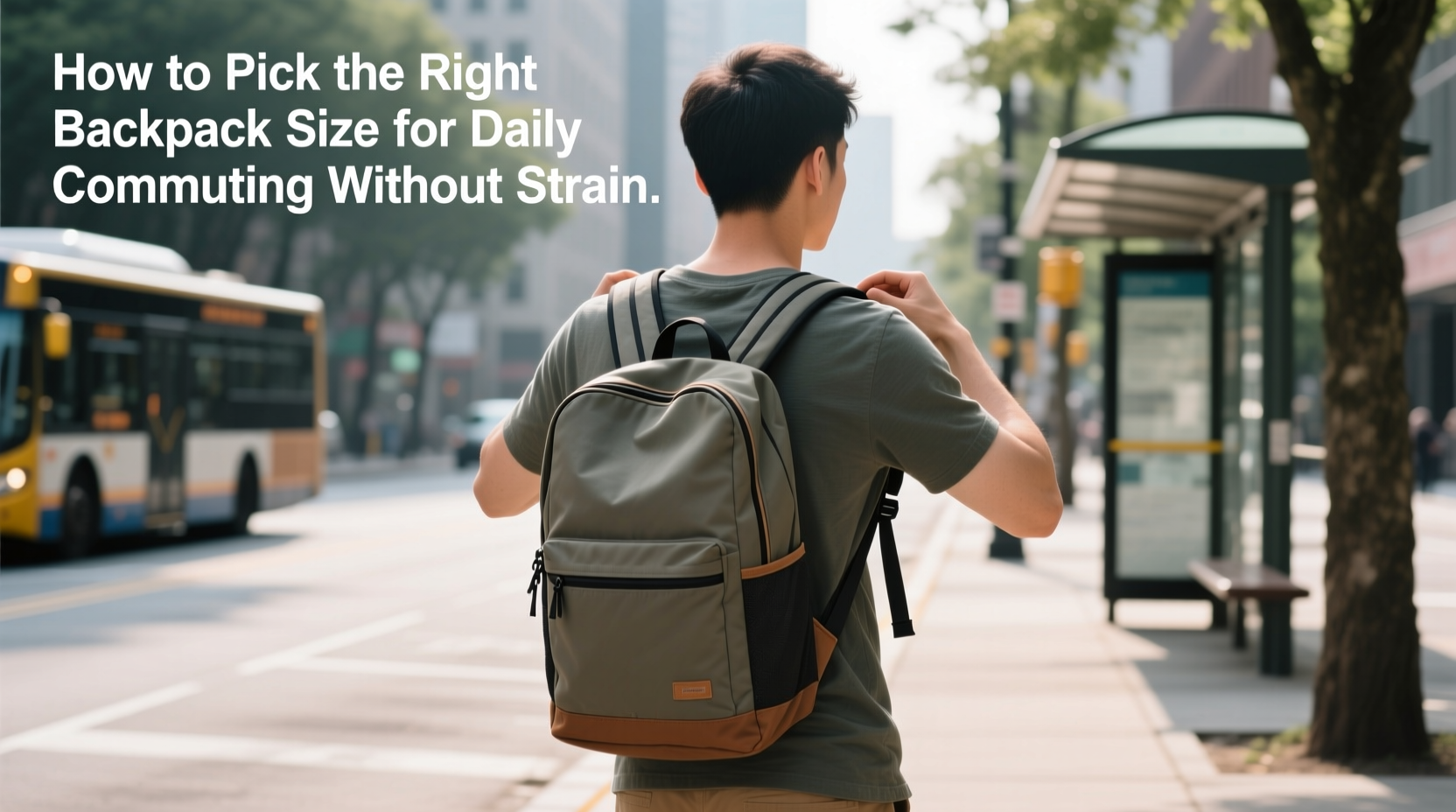
The first step in choosing the right backpack is evaluating what you actually need to carry. Not all commutes are equal: a 10-minute walk to the office requires different gear than a two-hour transit journey with a laptop, gym clothes, and lunch. Start by listing your essential daily items:
- Laptop (and whether it needs padding)
- Notebooks, pens, or documents
- Water bottle or thermos
- Light jacket or umbrella
- Gym clothes or shoes (if heading to a workout after work)
- Snacks or packed meals
- Phone, charger, earbuds
Once you’ve tallied your essentials, consider the environment. Do you bike? Stand on crowded trains? Walk through rain? These factors influence not only capacity but also design features like weather resistance, ventilation, and accessibility.
Match Backpack Volume to Your Body and Load
Backpack sizes are typically measured in liters, indicating total volume. While manufacturers often categorize them as small (10–20L), medium (20–30L), or large (30L+), these labels can be misleading without context. The ideal volume depends on both your torso length and the weight of your load.
A common mistake is opting for a larger bag “just in case.” But excess space encourages overpacking, which shifts your center of gravity backward, forcing you to lean forward to compensate. This posture increases spinal compression and accelerates muscle fatigue.
| Backpack Size (Liters) | Ideal For | Risks if Misused |
|---|---|---|
| 10–15L | Minimalists, short commutes, tablet + essentials | Overstuffing, lack of organization |
| 18–25L | Most commuters: laptop, water, light layers | Too bulky if underfilled |
| 26–35L | Bikers, hybrid workers, gym-goers | Excessive strain if loaded heavily |
| 35L+ | Extended trips, heavy gear, field workers | Poor balance, chronic back stress |
For most urban commuters, 18–25 liters strikes the optimal balance between utility and ergonomics. It accommodates a 15-inch laptop, a water bottle, a small jacket, and personal items without encouraging unnecessary bulk.
Fit Matters More Than Capacity
You can have the perfect volume, but if the backpack doesn’t fit your torso, it will cause discomfort. The key is torso length—not height—that determines proper fit. To measure your torso:
- Locate the C7 vertebra (the bony bump at the base of your neck when you tilt your head forward).
- Find the top of your hip bones (iliac crest).
- Measure the distance between these two points vertically down your spine.
This measurement determines your ideal backpack size:
- 14–16 inches: Small frame or youth-sized packs
- 17–19 inches: Medium—fits most adults
- 20+ inches: Large/tall-specific models
Adjustable shoulder straps and a load-lifter system (straps connecting the top of the pack to the shoulders) help fine-tune fit, but the internal frame must align with your natural spine curvature. A misaligned frame forces the hips and shoulders to compensate, leading to asymmetrical strain.
“Just like shoes, no two backs are the same. A backpack that fits well distributes weight across the hips—the strongest part of your core—rather than relying on the shoulders alone.” — Dr. Lena Patel, Physical Therapist & Ergonomic Consultant
Step-by-Step Guide to Selecting and Testing Your Commuter Backpack
Follow this process to ensure you choose a backpack that supports your body and routine:
- Inventory your daily load. Pack everything you normally carry into a temporary bag and weigh it. Aim to keep total weight under 10–15% of your body weight (e.g., no more than 15 lbs for a 150-lb person).
- Determine your torso length. Use the C7-to-hip measurement method described above.
- Select a volume range. Choose between 18–25L unless your commute demands more (e.g., biking with gear).
- Try before you buy. Visit a store and load the backpack with a similar weight to your daily carry. Walk around for at least five minutes.
- Check pressure points. Ensure the hip belt (if present) sits on your iliac crest, shoulder straps don’t dig into your collarbone, and the back panel doesn’t gap from your spine.
- Assess access and organization. Can you reach your phone or wallet without removing the pack? Is there a padded sleeve for electronics?
- Test ventilation. Look for mesh panels or suspended back systems that reduce sweat buildup during active commutes.
If shopping online, check return policies and read reviews focused on fit and comfort—not just aesthetics.
Design Features That Reduce Strain
Size and fit are foundational, but smart design elements make a significant difference in long-term comfort:
- Padded, contoured shoulder straps: Should follow the curve of your shoulders and distribute pressure evenly. S-shaped straps often fit better than straight ones.
- Hip belt: Transfers up to 80% of the weight to your pelvis. Essential for loads over 10 lbs.
- Chest strap: Stabilizes the pack during movement, especially useful for biking or walking briskly.
- Weight distribution panels: Internal frames or stiffeners keep the load close to your back, improving balance.
- Compression straps: Squeeze the pack tighter when not fully loaded, preventing sway and shifting.
- Water-resistant materials: Prevent added weight from soaked contents, which can increase strain unexpectedly.
Also consider accessibility: top-loading packs may offer more space, but front-panel or clamshell openings let you organize and retrieve items easily—reducing the need to dump contents daily.
Mini Case Study: From Chronic Pain to Comfortable Commuting
Mark, a 34-year-old software developer in Seattle, commuted 45 minutes each way via bus and walking. He used a 32-liter hiking-style backpack to carry his 16-inch laptop, power bank, lunch, and winter coat. After six months, he developed persistent lower back pain and numbness in his left shoulder.
Upon visiting a physical therapist, he learned his backpack was too large and improperly adjusted. The frame extended above his shoulders, and the shoulder straps dug into his clavicle. His hip belt was never fastened, so all weight rested on his upper body. Additionally, the pack was consistently overloaded—at nearly 22 lbs.
He switched to a 22-liter commuter backpack with an adjustable torso, built-in hip belt, and dedicated laptop compartment. He also adopted a minimalist approach: leaving non-essentials at the office and using a foldable tote for occasional extra items. Within three weeks, his pain decreased significantly. By prioritizing fit and function over capacity, Mark transformed his daily experience.
Checklist: Picking the Right Commuter Backpack
Use this checklist before purchasing or switching backpacks:
- ✅ Measured my torso length
- ✅ Weighed my typical daily load
- ✅ Chose a volume between 18–25L (unless specific needs require more)
- ✅ Confirmed the backpack has padded, ergonomic shoulder straps
- ✅ Verified presence of a supportive hip belt (especially for loads >10 lbs)
- ✅ Checked for a chest strap or stabilization feature
- ✅ Ensured the main compartment sits between shoulders and hips when worn
- ✅ Tested the pack with actual weight (in-store or via return policy)
- ✅ Evaluated ease of access and organization
- ✅ Confirmed weather resistance or included rain cover
Frequently Asked Questions
Can a backpack be too small for commuting?
Yes. A too-small backpack forces you to compress items unnaturally, potentially damaging electronics or creating uneven weight distribution. It may also lack critical compartments for organization, leading to fumbling and imbalance. If you’re consistently stuffing or strapping items externally, it’s too small.
Is a 30-liter backpack too big for daily use?
For most standard commutes, yes. A 30-liter pack is designed for travel, outdoor excursions, or carrying extensive gear. Unless you regularly transport gym equipment, multiple notebooks, or tools, it’s likely oversized. Over time, the extra volume leads to overpacking and postural strain.
How do I know if my backpack fits correctly?
A well-fitted backpack rests snugly against your back, with the bottom sitting just above your hips. Shoulder straps should lie flat without slipping or pinching. The hip belt, when fastened, should sit on your pelvic bones—not your stomach. You should be able to move freely without adjusting straps every few minutes.
Conclusion: Make Comfort a Daily Priority
Your backpack is more than a container—it’s an extension of your daily movement. Choosing the right size isn’t about maximizing storage; it’s about minimizing physical cost. By aligning volume with need, matching fit to your body, and leveraging ergonomic design, you protect your spine, shoulders, and energy levels over the long term. Don’t settle for soreness as a normal part of commuting. Reassess your current pack using the steps outlined here. Try a better-fitting alternative, even if it means carrying a little less. Small changes today can prevent chronic discomfort tomorrow.




 浙公网安备
33010002000092号
浙公网安备
33010002000092号 浙B2-20120091-4
Comments
No comments yet. Why don't you start the discussion?