
Finding the perfect foundation shade is a challenge even with in-store testers. When shopping online, the difficulty multiplies—no swatches, no natural light comparisons, and no immediate feedback. Yet, millions of people successfully buy foundation sight unseen every year. The key lies not in guesswork, but in a strategic, informed approach that combines skin analysis, lighting awareness, brand knowledge, and community insights.
With the right tools and understanding, you can confidently select a foundation that blends seamlessly into your skin tone and undertone, avoiding the dreaded ashy cast or orange neck line. This guide walks through proven methods to help you make accurate choices from the comfort of your home.
Understand Your Skin Tone and Undertone
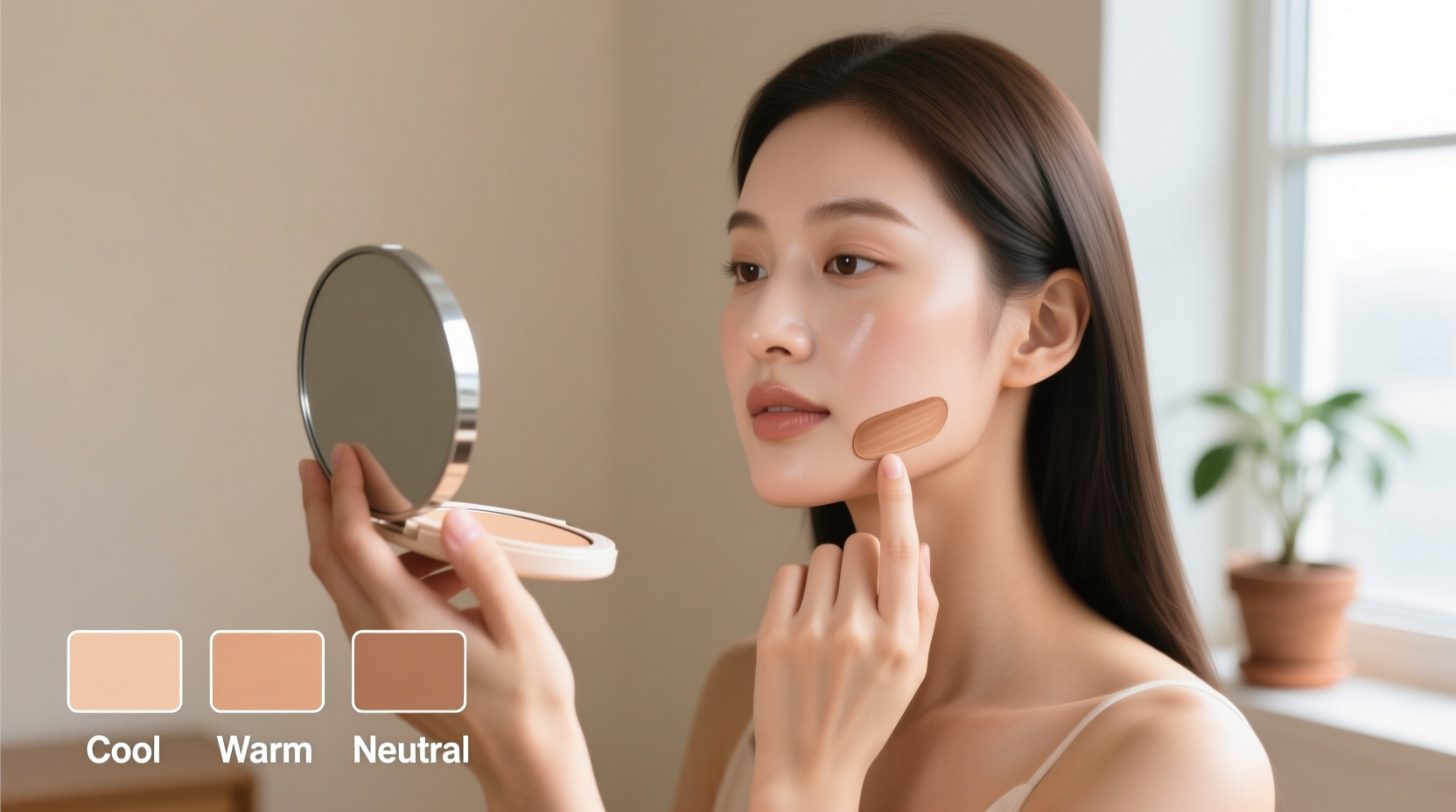
The foundation of any successful match begins with a clear understanding of your skin’s characteristics. Skin tone refers to how light or dark your skin appears, while undertone is the subtle hue beneath the surface—cool (pink, red, blue), warm (yellow, golden, peachy), or neutral (a mix of both).
Mistaking your undertone is one of the most common reasons for mismatched foundation. A shade might appear close in darkness but look unnatural due to clashing undertones. For example, someone with cool undertones wearing a warm foundation may appear sallow or overly yellow.
Another method is the jewelry test: if silver complements your skin better, you're likely cool-toned; if gold enhances your glow, you’re probably warm-toned. However, this isn’t foolproof—some people suit both, indicating a neutral undertone.
For deeper skin tones, undertone identification can be more nuanced. Look at the inner forearm or jawline in daylight. Does your skin lean toward red, olive, or golden hues? Deeper complexions often have rich undertones—red, bronze, or deep golden—that must be matched precisely for a natural finish.
Analyze Lighting Conditions Accurately
Lighting dramatically affects how your skin—and any foundation—appears. What looks like a perfect match under fluorescent bathroom lights might look gray or muddy in daylight. To avoid this, rely on consistent, natural lighting when evaluating your skin.
The best time to assess your skin tone is midday, near a north-facing window where indirect sunlight provides balanced illumination. Avoid direct sun, which can create glare and distort color perception.
If you're comparing your current foundation or checking a sample, do so in the same lighting conditions each time. Consistency prevents misjudgment caused by shifting shadows or artificial bulbs.
| Light Type | Effect on Foundation Appearance | Recommended Use |
|---|---|---|
| Natural daylight | Most accurate representation of true color | Ideal for matching and evaluation |
| Warm indoor lighting | Can make foundations appear darker and warmer | Avoid for shade decisions |
| Cool LED/fluorescent | May cast ashy or gray tones on warm shades | Poor for accurate assessment |
| Phone flash photography | Harsh, unflattering, distorts undertones | Never use for shade matching |
When reviewing product photos online, keep in mind that influencers and brands often edit images or use filters. Always cross-reference multiple sources to get a truer sense of the shade.
Leverage Brand-Specific Shade Naming and Charts
Not all “light beige” shades are created equal. Each brand has its own naming convention and formulation philosophy. Some focus on depth (e.g., Fair, Light, Medium), while others incorporate undertones directly into the name (e.g., N10, W20, C30).
Understanding these systems helps narrow your options. For instance:
- N often stands for Neutral
- W for Warm
- C for Cool
- NC for Neutral-Cool
- NEUT or B may indicate balanced or beige undertones
Many high-end and inclusive brands provide detailed shade finders or online quizzes. Fenty Beauty, for example, uses a numerical system across depths and undertones, making it easier to compare shades across levels. Similarly, IT Cosmetics and Lancôme offer virtual try-on tools powered by AI that analyze your selfie to recommend matches.
“Brand consistency matters. Once you find a formula that works, stick with that line—they’ve already calibrated their pigments to behave predictably.” — Dana Richards, Celebrity Makeup Artist
If you already wear a foundation from another brand, use a shade conversion chart. Websites like MakeUpAlley or Reddit’s r/MakeupAddiction often host crowdsourced comparisons that map equivalent shades across brands. These aren’t perfect, but they offer valuable starting points.
Follow a Step-by-Step Selection Process
Selecting the right foundation online doesn’t have to be overwhelming. Break it down into manageable steps to increase accuracy and confidence.
- Determine your current skin tone category: Use reference points like your hand or jawline to classify your depth (fair, light, medium, tan, deep, etc.).
- Identify your undertone: Use the vein, jewelry, or white paper test to determine if you're cool, warm, or neutral.
- Check your current foundation (if applicable): Note the brand, shade name, and number. This is your baseline.
- Research the new brand’s shade range: Visit their website, read descriptions, and study their naming system.
- Compare using reliable reviews: Search YouTube, Instagram, and beauty forums for swatches on diverse skin tones. Filter by similar depth and undertone.
- Look for oxidation warnings: Some foundations darken within minutes of application. Read reviews to see if the shade holds true.
- Order samples if available: Some retailers (like Sephora or brand websites) offer sample sizes or deluxe minis for testing.
- Start with two close contenders: If unsure, order the closest match and one shade lighter or warmer/cooler, depending on uncertainty.
Use Community Insights and Real User Feedback
One of the greatest advantages of online shopping is access to real user experiences. Before purchasing, search for terms like “[Brand] [Shade Name] review,” or “[Foundation] swatch on olive skin,” to find targeted results.
Platforms like YouTube, TikTok, and Reddit are goldmines for honest feedback. In particular, long-wear tests and “foundation over time” videos show how a product behaves throughout the day, including fading, oxidizing, or settling into pores.
Pay attention to reviewers with skin similar to yours—not just in tone, but in texture, oiliness, and concerns like hyperpigmentation or redness. A reviewer with dry, fair skin may experience a different result than someone with oily, medium-deep skin, even if the shade name is identical.
“I bought my first online foundation based on an influencer’s swatch. It looked great—until I wore it outside. Now I only trust multiple reviews across different lighting.” — Lena M., skincare enthusiast
Engage with comment sections. Ask questions like, “Does this oxidize?” or “How does it wear on combination skin?” Many users respond with detailed follow-ups that go beyond the video script.
Checklist: How to Buy Foundation Online Safely
Before clicking “buy now,” run through this checklist to minimize risk:
- ✅ Identified my skin tone (depth) accurately
- ✅ Confirmed my undertone (cool, warm, neutral)
- ✅ Researched the brand’s shade naming system
- ✅ Watched at least 3 real-person swatches in natural light
- ✅ Checked for oxidation or fading reports
- ✅ Compared with my current foundation (if applicable)
- ✅ Verified return policy in case of mismatch
- ✅ Considered ordering two shades if uncertain
Mini Case Study: Choosing a New Foundation During a Move
Sophia had worn the same foundation for years—NARS Sheer Glow in Gobi. After moving from Seattle to Phoenix, her skin reacted differently to the dry, bright climate. She needed a new formula but didn’t want to visit stores during peak summer heat.
She started by identifying changes in her skin: slightly darker due to mild tanning, with increased redness around the nose. Her undertone remained neutral-warm. Using her old shade as a reference, she searched “NARS Gobi equivalent in Fenty Pro Filt’r” and found a thread on Reddit confirming that 260 was a close match.
She then watched three TikTok videos featuring women with medium skin and neutral undertones applying Fenty 260. One noted slight oxidation, so Sophia decided to also order 250 as a backup. Both arrived within days. She tested them on her jawline in morning light and confirmed 260 was ideal after 10 minutes of wear.
By combining personal analysis with community insight, Sophia avoided a mismatch and found a foundation suited to her new environment.
Frequently Asked Questions
What if the foundation looks different in person than online?
This is common due to screen calibration and photo editing. Always rely on multiple real-life swatches rather than official product images. If the shade is off, check the retailer’s return policy—many allow unopened or lightly used returns.
Should I go lighter or darker if I’m between shades?
It’s generally safer to choose the lighter of two options. Darker foundations can look mask-like and are harder to blend downward. You can always build coverage with concealer or bronzer, but you can’t lighten a foundation once applied.
Do some formulas affect how a shade looks?
Absolutely. A matte foundation may appear deeper than a dewy one due to light reflection. Similarly, silicone-based formulas can temporarily blur imperfections but may emphasize dryness. Always consider finish (matte, satin, radiant) when selecting a shade.
Final Tips for Long-Term Success
Your skin changes with seasons, age, hormones, and environment. A shade that works in winter may be too dark in summer. Reassess your foundation twice a year—spring and fall—to ensure continuity.
Keep a list of your current and past successful shades, including brand, name, and number. Store it in your phone notes or a beauty journal. This log becomes invaluable when trying new lines or shopping during sales.
Finally, don’t rush. Impulse buys lead to wasted money and frustration. Take time to research, compare, and verify. The extra 20 minutes spent now could save you weeks of wearing an ill-fitting base.
“The perfect foundation doesn’t cover your skin—it disappears into it.” — Mario Dedivanovic, Makeup Artist to the Stars
Take Action Today
You don’t need a mirror wall or professional lighting to buy foundation online with confidence. With a clear understanding of your skin, disciplined research habits, and access to real-user insights, you can make smart, satisfying choices from anywhere in the world.
Start by auditing your current routine. Identify your tone and undertone, revisit your favorite products, and explore one new brand using the steps outlined here. When you find a match, celebrate it—and share your success with others who are still searching.




 浙公网安备
33010002000092号
浙公网安备
33010002000092号 浙B2-20120091-4
Comments
No comments yet. Why don't you start the discussion?