
Choosing the right window tint for your vehicle isn’t just about aesthetics or privacy—it’s a decision that directly affects your comfort, safety, and even fuel efficiency. Climate plays a crucial role in determining which type of tint will perform best over time. Whether you're navigating scorching desert heat, enduring humid summers, or driving through freezing winters, the ideal tint varies significantly based on environmental conditions. Understanding how different tints interact with sunlight, heat, and visibility can help you make an informed choice tailored to your region.
Understanding Window Tint Basics
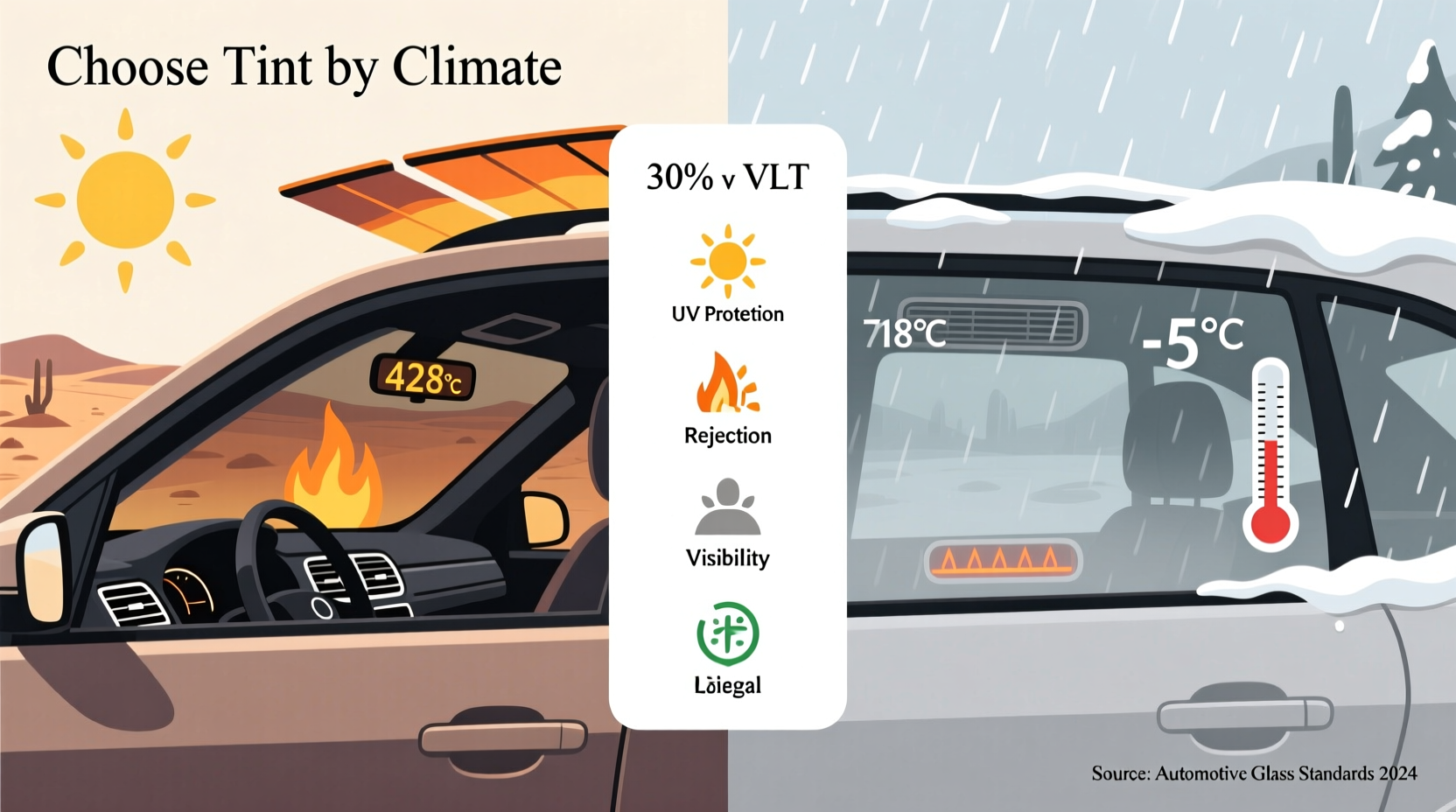
Window tint refers to a thin film applied to glass surfaces to reduce glare, block ultraviolet (UV) rays, and regulate interior temperatures. Tints are measured by Visible Light Transmission (VLT), expressed as a percentage—the lower the VLT, the darker the tint. For example, a 5% VLT is nearly opaque, while a 70% VLT allows most light through.
Beyond darkness, tints differ in material and technology:
- Dyed Film: Absorbs heat using dye layers; affordable but prone to fading and bubbling in intense sun.
- Metalized Film: Contains microscopic metallic particles that reflect heat; durable and effective in hot climates but may interfere with GPS or cell signals.
- Ceramic Film: Uses non-conductive ceramic particles to block heat without affecting signal reception; superior performance and longevity, especially in extreme climates.
- Carbon Film: Offers heat rejection with a matte finish; resists fading better than dyed films and doesn’t interfere with electronics.
- Hybrid Film: Combines dye and metal layers for balanced performance and cost.
The effectiveness of each type depends heavily on your local climate. A tint that performs well in Arizona might be less suitable in Minnesota.
How Climate Influences Tint Performance
Temperature, humidity, solar intensity, and seasonal variation all impact how a window tint functions. In regions with high solar exposure, heat rejection becomes a top priority. In colder areas, maximizing natural light during winter months may outweigh the need for heat blocking.
For instance, infrared (IR) radiation accounts for much of the heat felt inside a parked car. Ceramic and metalized tints excel at rejecting IR, making them ideal for sunny, hot environments. In contrast, dyed films absorb rather than reflect heat, which can lead to thermal stress on glass in fluctuating climates.
Hot and Dry Climates (e.g., Arizona, Nevada)
In arid regions with prolonged sun exposure and temperatures regularly exceeding 100°F (38°C), solar heat gain is the primary concern. Interior surfaces like dashboards and seats can reach over 160°F when exposed to direct sunlight.
Best practices:
- Choose ceramic or metalized tints with high heat rejection (up to 60% reduction).
- Aim for 20–35% VLT on side and rear windows to balance visibility and cooling.
- Avoid dyed films—they degrade faster under constant UV exposure.
“Ceramic tints have revolutionized heat management in vehicles. In Phoenix, we see up to 30°F cooler interiors compared to untreated windows.” — Dr. Alan Reyes, Solar Materials Researcher, Southwest Institute of Thermal Sciences
Humid and Tropical Climates (e.g., Florida, Southeast Asia)
High humidity combined with strong sunlight creates a greenhouse effect inside vehicles. Moisture can also accelerate adhesive failure in low-quality films.
Key considerations:
- Select tints with excellent UV protection (block 99% or more) to prevent interior fading.
- Opt for moisture-resistant adhesives and scratch-resistant coatings.
- Use carbon or ceramic films—they resist warping and maintain clarity despite condensation cycles.
Cold and Seasonal Climates (e.g., Michigan, Canada)
In colder zones, excessive tinting can reduce already limited daylight during winter. However, summer sun still brings heat buildup, so a balanced approach is essential.
Recommendations:
- Use moderate VLT levels (50–70%) to allow passive solar heating in winter.
- Consider dual-season strategies: removable tints or professional films that offer year-round benefits without sacrificing light.
- Avoid heavy rear-window tints if you rely on visibility during snowfall or fog.
Tint Selection Guide by Climate Zone
| Climate Type | Recommended VLT Range | Best Film Type | Avoid |
|---|---|---|---|
| Desert / Arid | 20–35% | Ceramic, Metalized | Dyed films, low-quality hybrids |
| Tropical / Humid | 30–45% | Ceramic, Carbon | Films without UV stabilizers |
| Temperate (Four Seasons) | 40–60% | Hybrid, Carbon | Very dark tints (<20% VLT) |
| Cold / Northern | 50–70% | Light ceramic or clear heat-rejecting | Dark tints on front windows |
Step-by-Step: Choosing the Right Tint for Your Climate
Follow this practical process to select the optimal window tint for your geographic location:
- Assess Your Local Climate Pattern
Track average temperatures, sunlight hours, and seasonal extremes. Use historical weather data from sources like NOAA or Weather.com to identify trends. - Determine Primary Goals
Ask: Are you aiming to reduce AC load? Protect upholstery? Improve nighttime visibility? Different goals align with different film types. - Check Local Tinting Laws
Laws vary by state and country. Most restrict front windshield and driver-side window darkness. For example:- California: Front side windows must allow over 70% VLT.
- Texas: Allows 25% VLT on front windows.
- Canada: Varies by province; Ontario bans any tint on front windshield and driver’s window.
- Test Sample Films
Request small swatches from installers. Apply them to your current windows and observe performance during peak sun hours. - Consult a Certified Installer
Professionals can recommend products tested for regional durability. Look for brands like 3M, Llumar, or Huper Optik with climate-specific warranties. - Schedule Installation During Mild Weather
Avoid extreme heat or cold when applying film. Ideal installation temperatures range between 50–85°F (10–30°C) for proper adhesive curing.
Real-World Example: Tampa vs. Denver Driver Choices
Two drivers—one in Tampa, Florida, and one in Denver, Colorado—faced similar concerns about cabin heat but made different choices based on climate.
Tampa Case: Maria drives a black SUV exposed to full sun daily. After her dashboard cracked from heat damage, she installed 35% VLT ceramic tint. Interior temperatures dropped from 158°F to 126°F within an hour of parking. She also noticed reduced glare and no fading on her leather seats after six months.
Denver Case: James, a commuter in the Rockies, wanted privacy but didn’t want to lose winter warmth. He chose a 55% VLT carbon film that blocks 50% of solar heat while maintaining high clarity. His car stays comfortable in summer without compromising natural light in snowy January mornings.
Their contrasting needs highlight why climate should guide, not follow, tint selection.
Common Mistakes to Avoid
- Choosing Darkness Over Function: A 5% “limo” tint might look sleek, but it offers minimal heat protection if it's a cheap dyed film.
- Ignoring Warranty Terms: Some films are rated only for temperate zones. Using them in deserts voids coverage.
- DIY Installation in Extreme Climates: Bubbles and peeling are more likely in high-humidity or high-heat areas without professional tools and controlled environments.
- Overlooking Windshield Options: Clear, nano-ceramic films can be applied to windshields (where legal) to block heat and UV without reducing visibility.
Frequently Asked Questions
Can I use the same tint in multiple climates?
While possible, it’s not optimal. A tint ideal for Miami may cause visibility issues in Minneapolis winters. If you relocate frequently, consider removable or reprogrammable electrochromic films (available in luxury models).
Do darker tints always provide better heat protection?
No. Heat rejection depends on film composition, not darkness. A light 60% VLT ceramic tint can block more heat than a dark 20% dyed film. Focus on technical specs, not appearance alone.
How long does window tint last in harsh climates?
In desert regions, low-end tints may degrade in 1–2 years due to UV exposure. High-quality ceramic films typically last 10+ years, even under intense sun. Proper installation and maintenance extend lifespan.
Action Checklist: Picking Your Climate-Smart Tint
- Research your area’s average UV index and summer highs.
- Identify your main goal: cooling, glare reduction, or privacy.
- Review local tinting laws for front and rear windows.
- Compare at least three film types (ceramic, carbon, metalized).
- Request product data sheets showing IR/UV rejection percentages.
- Schedule a consultation with a certified installer familiar with regional challenges.
- Verify warranty coverage for fading, bubbling, and delamination.
Final Thoughts
Selecting the right window tint based on climate is a smart investment in your vehicle’s comfort, safety, and longevity. It’s not merely about how dark your windows appear—it’s about how effectively they manage energy transfer, protect against UV damage, and adapt to environmental shifts throughout the year. By aligning your choice with regional demands, you enhance driving experience regardless of season.
Whether you're battling midday sun in Houston or early morning frost in Toronto, there’s a scientifically sound, legally compliant solution designed for your conditions. Don’t settle for generic advice or aesthetic-only decisions. Make your tint work for your climate, not against it.




 浙公网安备
33010002000092号
浙公网安备
33010002000092号 浙B2-20120091-4
Comments
No comments yet. Why don't you start the discussion?