
Potty training a puppy doesn’t have to be a months-long struggle filled with accidents and frustration. With the right approach—specifically, combining crate training with a consistent daily schedule—you can significantly accelerate the process. Most puppies respond well to structure, and by leveraging their natural instinct to keep their sleeping area clean, you create an environment where success becomes routine. This method isn’t just about speed; it’s about building habits that last a lifetime.
The Science Behind Crate Training and Potty Success
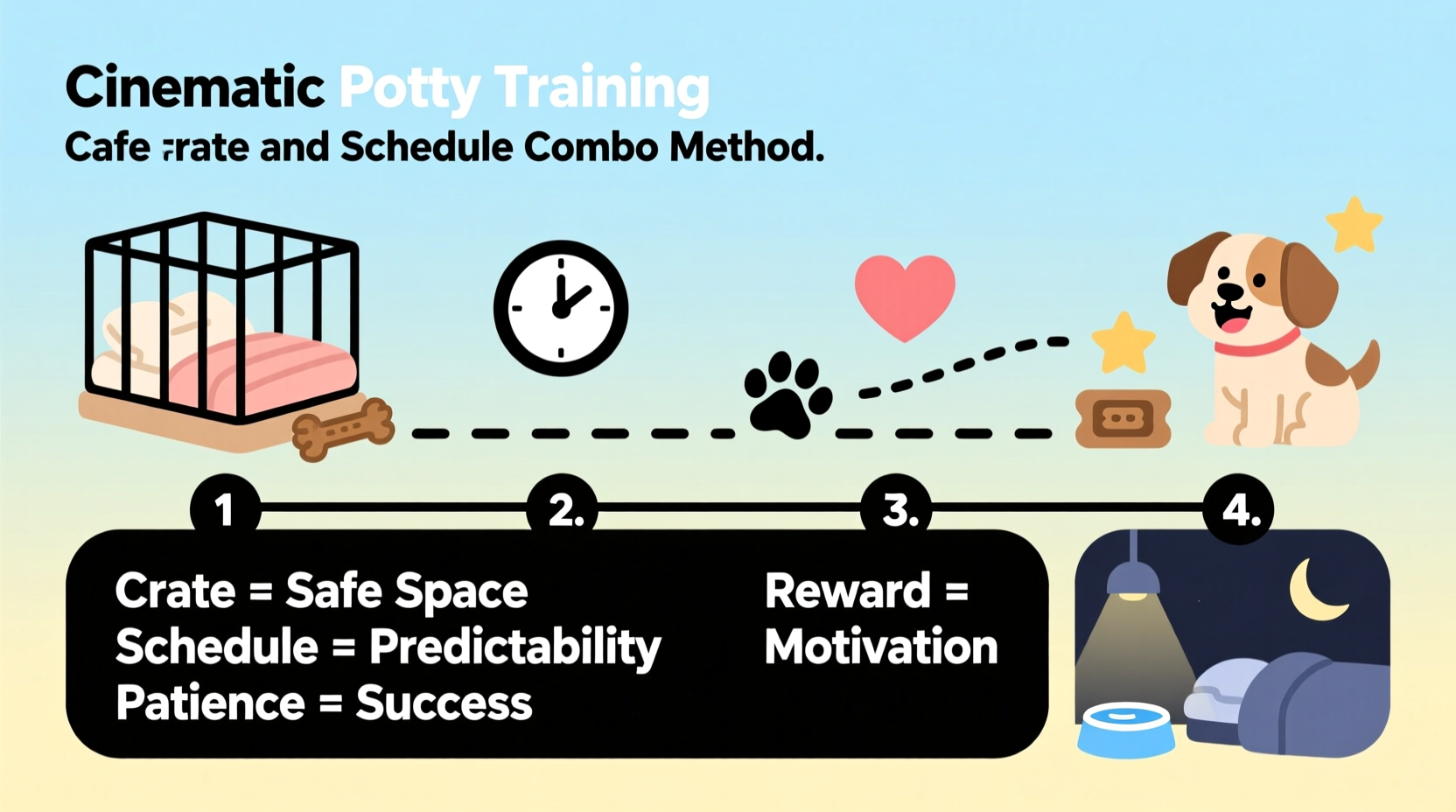
Dogs are den animals by nature. In the wild, they avoid soiling their dens because waste attracts predators and disrupts pack hygiene. A properly sized crate mimics this den-like space, triggering your puppy’s innate desire to stay clean. When used correctly, the crate becomes a safe haven—not a punishment—and helps regulate bathroom timing.
Pairing the crate with a predictable schedule reinforces bladder and bowel control. Puppies thrive on routine. Feeding them at set times leads to predictable elimination windows. Taking them out immediately after waking, eating, drinking, or playing capitalizes on these biological cues. Over time, this repetition teaches the puppy when and where to go.
“Consistency is the cornerstone of effective housebreaking. The combination of crate confinement and timed outdoor access aligns perfectly with canine instincts.” — Dr. Laura Bongiorno, DVM, Canine Behavior Specialist
Step-by-Step Guide: Building the Crate & Schedule Routine
To potty train your puppy faster, follow this structured 7-day foundational plan. While full mastery may take 2–4 weeks depending on breed and age, most owners see major improvement within the first week.
- Choose the Right Crate Size: The crate should be large enough for your puppy to stand, turn around, and lie down—but no bigger. Excess space allows room for accidents. Use a divider if needed.
- Set Fixed Meal Times: Feed your puppy twice daily at the same times (e.g., 7 AM and 5 PM). Avoid free-feeding. This creates reliable digestion patterns.
- Create a Bathroom Schedule: Take your puppy outside immediately after:
- Waking up from sleep
- Eating or drinking
- Playing or vigorous activity
- Being released from the crate
- Select a Designated Potty Spot: Always take your puppy to the same area outdoors. Scent cues help reinforce the behavior.
- Use a Cue Word: Say “Go potty” or “Do your business” while they eliminate. Over time, this verbal cue speeds up the process.
- Reward Immediately: The instant your puppy finishes, offer praise, affection, or a small treat. Timing matters—rewards must come within seconds.
- Gradually Extend Freedom: Once your puppy consistently goes potty outside for three consecutive days, allow supervised indoor freedom between sessions.
Common Mistakes That Slow Progress
Even with the best intentions, some behaviors sabotage potty training. Avoid these pitfalls to maintain progress:
- Letting the puppy cry it out overnight without breaks: Young puppies under 12 weeks often can’t hold it for more than 3–4 hours. Set alarms if needed.
- Using the crate as punishment: If the puppy associates the crate with negativity, they’ll resist entering, weakening its effectiveness.
- Inconsistent feeding times: Random meals lead to unpredictable bathroom needs, making scheduling impossible.
- Not cleaning accidents properly: Residual odors attract repeat incidents. Use enzymatic cleaners, not ammonia-based products.
- Overestimating bladder control: Small breeds like Chihuahuas or Yorkies have tiny bladders. Adjust expectations based on age and size.
| Age (Weeks) | Max Hold Time | Recommended Outdoor Trips Per Day |
|---|---|---|
| 8–10 | 30–60 minutes | 10–12 |
| 11–14 | 1–2 hours | 8–10 |
| 15–20 | 3–4 hours | 6–8 |
| 21+ (or 5+ months) | 4–6 hours | 4–5 |
Real-World Example: How Max the Beagle Was Potty Trained in 10 Days
Sarah adopted Max, a 9-week-old Beagle mix, with no prior training. Determined to avoid accidents on her hardwood floors, she implemented the crate-and-schedule method from day one.
She fed Max at 7 AM and 6 PM daily, took him out every 45 minutes during waking hours, and crated him at night with a mid-morning wake-up. She used a wire crate with a divider to limit space and placed it near her bedroom.
By day 3, Max began signaling by scratching the door. By day 7, he was reliably going outside after meals and naps. On day 10, Sarah allowed him two hours of supervised freedom indoors with zero accidents. Within three weeks, Max was fully housebroken.
The key? Sarah never skipped a scheduled outing—even when tired. Her consistency taught Max what was expected, and the crate ensured he didn’t develop bad habits.
Essential Checklist for Faster Potty Training
Follow this checklist daily to ensure nothing is missed:
- ✅ Crate is appropriately sized with bedding removed during training
- ✅ Meals given at the same times each day
- ✅ Puppy taken outside within 5–15 minutes after eating, drinking, waking, or playing
- ✅ Consistent cue word used every time at the designated potty spot
- ✅ Immediate reward (treat or praise) after successful elimination
- ✅ Accidents cleaned with enzymatic cleaner—never scolded
- ✅ Nighttime trips adjusted based on puppy’s age and capacity
- ✅ No free roam until 3 consecutive accident-free days achieved
Frequently Asked Questions
How long does it take to potty train a puppy using this method?
Most puppies show significant improvement within 7–10 days when the crate and schedule are used consistently. Full reliability typically takes 2–4 weeks, though some small or stubborn breeds may need up to 12 weeks. The key factor is consistency, not time.
What if my puppy cries in the crate at night?
It’s normal for puppies to whine initially. Wait a few minutes to see if they settle. If crying persists, check if they need to go outside—especially if it’s been 3+ hours. Respond calmly, take them straight to the potty spot on a leash, and return to bed without play or interaction if they don’t go. Avoid reinforcing crying with attention.
Can I use pee pads with the crate method?
It’s not recommended during initial training. Pee pads encourage indoor elimination and confuse the message that “outside = correct place.” If you live in a high-rise or face extreme weather, transition off pads as soon as possible by moving them closer to the door, then replacing them with outdoor trips.
Advanced Tips for Stubborn Cases
If your puppy seems resistant despite following the routine, consider these refinements:
- Reduce water before bedtime: Offer water until 7 PM, then remove the bowl. Take the puppy out right before crating for sleep.
- Use a leash indoors: Attach a lightweight leash to your belt and keep the puppy nearby. You’ll notice subtle signs like sniffing or circling before accidents happen.
- Introduce a bell system: Hang a small bell near the door. Each time you take the puppy out, gently tap their paw to ring it. Soon, they’ll learn to do it themselves to signal the need to go.
- Rule out medical issues: Frequent urination, straining, or blood in urine could indicate infection or parasites. Consult your vet if behavior seems off.
“Puppies don’t fail potty training—routines fail puppies. The fastest results come from owners who stick to the plan even when inconvenient.” — Karen Ramirez, Certified Dog Trainer, IAABC
Conclusion: Turn Structure Into Success
Potty training a puppy faster isn’t about shortcuts—it’s about smart strategy. The crate and schedule combo works because it respects canine psychology while providing clear boundaries. When you combine a secure den space with predictable routines, your puppy learns quickly and confidently.
Success isn’t measured by perfection but by progress. Celebrate small wins: the first morning without an accident, the first time your puppy waits by the door, the first full day of clean floors. These moments add up.




 浙公网安备
33010002000092号
浙公网安备
33010002000092号 浙B2-20120091-4
Comments
No comments yet. Why don't you start the discussion?