
Potty training a puppy doesn’t have to be a months-long ordeal. With the right approach—centered on consistency, timing, and positive reinforcement—many puppies can make significant progress in just one week. While every dog is different, establishing a predictable routine drastically increases success rates. The key lies not in speed alone, but in creating habits that stick. This guide breaks down a science-backed, step-by-step method to help you achieve reliable outdoor elimination behavior within seven days.
The Science Behind Puppy Bladder Control
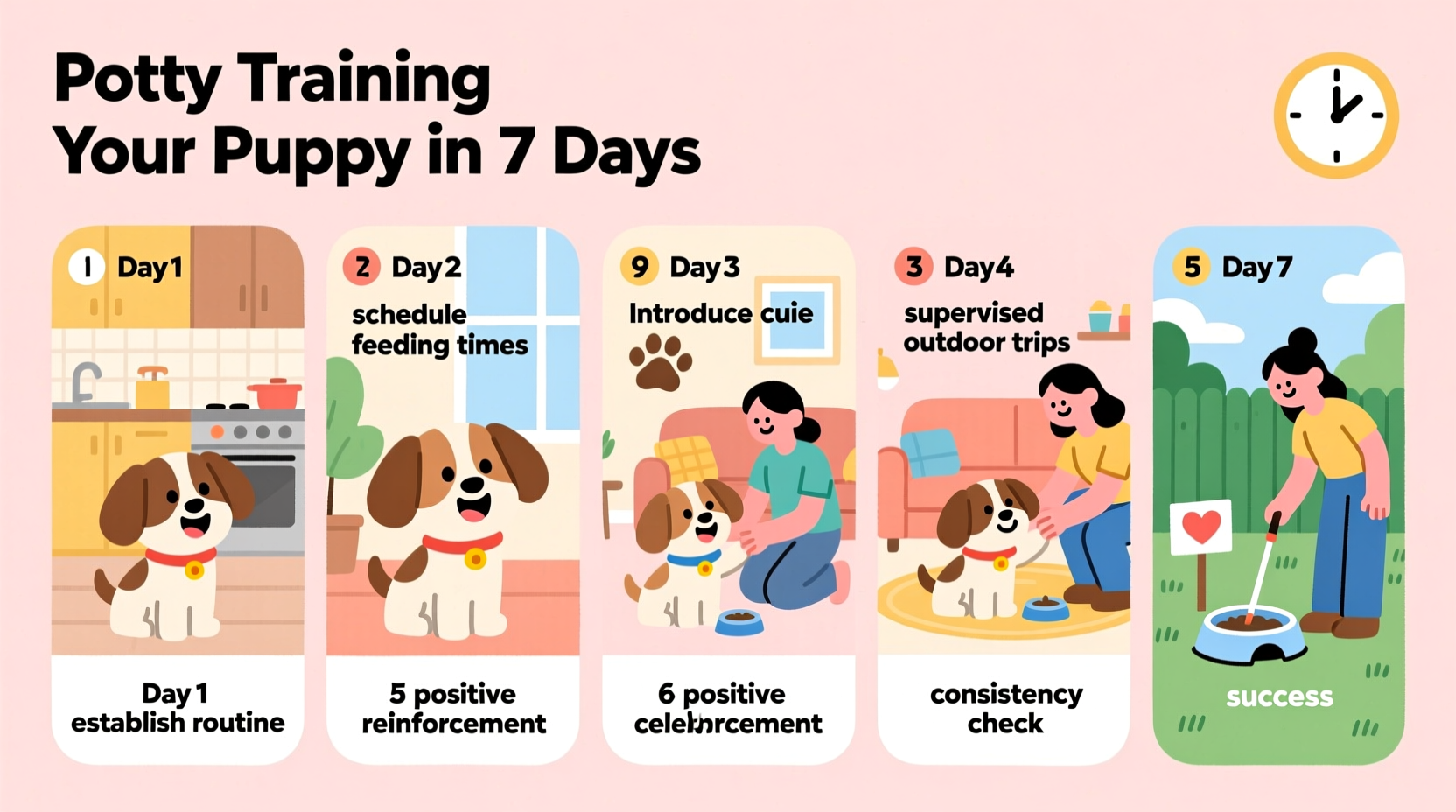
Puppies lack full bladder and bowel control during their first few months of life. On average, a puppy can hold their bladder for about one hour per month of age—plus one. A 10-week-old puppy (about 2.5 months) may only manage 3–4 hours at a time. Their digestive systems are also highly active, often requiring elimination shortly after eating, drinking, waking, or playing.
Neurological development plays a crucial role: young dogs learn through repetition and immediate feedback. When a puppy eliminates in the correct place and receives praise or a treat right away, the brain forms a strong association between the behavior and reward. Conversely, accidents indoors without correction—or worse, punishment—can confuse the puppy and delay learning.
“Consistency is the cornerstone of successful potty training. Puppies thrive on routine because it reduces anxiety and clarifies expectations.” — Dr. Laura Bongiorno, DVM, Canine Behavior Specialist
Step-by-Step 7-Day Potty Training Plan
This structured timeline leverages biological rhythms and behavioral conditioning to accelerate housebreaking. Each day builds on the last, reinforcing the desired behavior through repetition and environmental management.
- Day 1: Establish Schedule & Zone Control
Create a feeding, watering, and bathroom schedule. Feed meals at the same times daily (e.g., 7 AM, 12 PM, 5 PM). Remove water two hours before bedtime. Confine the puppy to a small, easily supervised area or use a crate when unsupervised. - Day 2: Map Elimination Triggers
Watch closely for signs: sniffing, circling, squatting, or sudden stillness. Take the puppy outside immediately after waking, eating, drinking, or playing. Use a leash—even in your yard—to reinforce focus. - Day 3: Introduce a Cue Word
Choose a short phrase like “Go potty” or “Do your business.” Say it calmly as the puppy begins to eliminate. Never yell or interrupt; wait until they finish, then praise and reward instantly. - Day 4: Refine Timing & Reduce Accidents
Based on observations, adjust your outing frequency. Most puppies need 8–10 trips outside daily during training. If an accident occurs indoors, clean thoroughly with enzymatic cleaner to remove scent cues. - Day 5: Extend Supervision & Practice Patience
Continue strict supervision. Avoid scolding mid-accident—this creates fear. Instead, clap once to interrupt, then carry or guide the puppy outside. Reward any outdoor elimination, even partial ones. - Day 6: Begin Fading Assistance
Start allowing brief periods of freedom under watch. Use baby gates to limit access. Gradually increase time between interventions if the puppy shows reliability. - Day 7: Test Independence & Reinforce Success
Simulate real-life conditions: leave the puppy unattended for short intervals in the crate. After each successful stretch of dry time, increase duration slowly. Celebrate every win.
Essential Supplies and Environment Setup
Success depends heavily on preparation. Before starting Day 1, ensure your home supports the training process.
- Crate: Sized so the puppy can stand, turn, and lie down—but not much larger. Dogs naturally avoid soiling their sleeping space.
- Leash: Even for backyard trips, a leash prevents distraction and reinforces routine.
- Treats: Small, soft, high-value rewards (e.g., boiled chicken, commercial training treats).
- Enzymatic Cleaner: Breaks down urine and feces odors at a molecular level, preventing repeat accidents.
- Playpen or Gate System: Creates a safe, confined indoor zone when direct supervision isn’t possible.
| Item | Purpose | Recommended Type |
|---|---|---|
| Crate | Encourages bladder control by limiting space | Wire or plastic, appropriately sized |
| Treats | Reward correct behavior immediately | Pea-sized, soft, palatable |
| Leash | Maintains focus during potty trips | 4–6 foot standard leash |
| Enzymatic Cleaner | Eliminates odor signals that attract repeat soiling | Plant-based enzyme formula |
| Bell System (Optional) | Trains puppy to signal need to go out | Hanging doorbell at puppy’s height |
Common Mistakes That Delay Progress
Even well-intentioned owners can sabotage training with subtle errors. Awareness of these pitfalls improves outcomes significantly.
- Inconsistent Schedules: Feeding or walking at random times disrupts predictability, making it harder for the puppy to anticipate needs.
- Punishing Accidents: Yelling, rubbing a puppy’s nose in waste, or physical correction causes fear and confusion. It does not teach where to go—it only teaches to hide while eliminating.
- Overestimating Bladder Capacity: Expecting a young puppy to “hold it” for six hours leads to inevitable failure and undermines confidence.
- Lack of Supervision: Unwatched puppies will follow instinct, not training. Constant visual monitoring is non-negotiable during the initial phase.
- Changing Outdoor Locations Frequently: Puppies rely on scent markers. Rotating spots makes it harder to associate a specific place with elimination.
Mini Case Study: Bella the Beagle Mix
Two-month-old Bella was adopted by a first-time owner who struggled with frequent indoor accidents. Despite cleaning efforts, Bella kept returning to the same corner of the living room. After consulting a trainer, the owner implemented the 7-day routine method.
Key changes included:
- Feeding twice daily at 7 AM and 5 PM
- Removing water after 7 PM
- Taking Bella outside every 45 minutes during wakefulness
- Using a crate at night and during work hours
- Applying enzymatic cleaner to previous accident sites
By Day 3, Bella began signaling near the door. By Day 6, she went 5 hours overnight without incident. On Day 7, she independently waited by the back door after waking. No indoor accidents occurred after Day 5. The owner credited success to rigid adherence to timing and immediate rewards.
Checklist: Your 7-Day Potty Training Toolkit
Print or bookmark this checklist to stay on track:
- ✅ Set fixed meal times (2–3x daily)
- ✅ Remove water bowl 2 hours before bedtime
- ✅ Crate the puppy when unsupervised
- ✅ Take puppy outside after waking, eating, drinking, playing
- ✅ Use a consistent cue word during elimination
- ✅ Reward within 3 seconds of finishing outdoors
- ✅ Clean accidents with enzymatic cleaner—never ammonia-based products
- ✅ Limit free-roam areas until reliability improves
- ✅ Keep a log of elimination times and locations
- ✅ Stay patient and avoid punishment
Frequently Asked Questions
Can all puppies be potty trained in 7 days?
While some puppies show dramatic improvement in a week, complete reliability may take longer—especially for smaller breeds with faster metabolisms or dogs from chaotic backgrounds. However, establishing a solid foundation in seven days sets the stage for full mastery within 2–4 weeks.
What if my puppy won’t go outside?
Wait up to 15 minutes on a leash in the designated spot. If no elimination occurs, return indoors and confine the puppy (crate or playpen) for 20–30 minutes, then try again. Avoid turning potty trips into play sessions—keep them calm and focused.
Should I use pee pads if I live in an apartment?
Pee pads can be useful for very young puppies or extreme weather, but they complicate long-term training. If used, place them adjacent to the door and gradually shift them outside over time. Ideally, transition to outdoor-only elimination as soon as possible to prevent confusion.
Final Thoughts and Next Steps
Potty training in seven days is achievable not through magic, but through disciplined routine, keen observation, and timely reinforcement. The goal isn’t perfection on Day 7, but rather the establishment of reliable patterns that minimize accidents and build communication between you and your puppy. Consistency turns effort into habit, and habit into trust.
Remember, setbacks are normal. A single accident doesn’t erase progress. What matters is your response: clean it properly, analyze potential triggers (was the puppy left too long? Did excitement cause distraction?), and recommit to the schedule.




 浙公网安备
33010002000092号
浙公网安备
33010002000092号 浙B2-20120091-4
Comments
No comments yet. Why don't you start the discussion?