
Rabbits are intelligent, social animals capable of learning complex behaviors when guided with patience and kindness. One of the most practical skills you can teach your pet rabbit is proper litter use. Unlike cats, rabbits don’t instinctively bury their waste in a box—but they *can* be trained to consistently use one. The key lies in understanding rabbit behavior and applying positive reinforcement techniques that build trust and encourage repetition of desired actions.
Potty training isn’t just about convenience; it’s about creating a harmonious living environment where both you and your rabbit feel comfortable. When done correctly, this process strengthens your bond, reduces cleanup time, and allows for greater freedom within the home. This guide outlines a proven, humane approach rooted in behavioral science and real-world success.
Understanding Rabbit Elimination Behavior
Rabbits are naturally clean animals. In the wild, they designate specific areas for urination and defecation, often choosing spots away from their nesting or feeding zones. This instinct makes them excellent candidates for litter training. However, their habits differ from those of cats or dogs—they may mark territory with small droppings or spray urine during adolescence, especially unneutered males.
Before beginning training, it’s essential to recognize normal elimination patterns:
- Droppings: Rabbits produce two types—round fecal pellets and cecotropes (soft, nutrient-rich clusters they typically consume directly). You’ll mostly see hard pellets scattered around feeding or resting areas.
- Urine: Typically yellow or amber, sometimes cloudy. Frequent squatting indicates a need to go.
- Spraying: Common in intact rabbits; involves standing on hind legs and releasing a stream backward. Neutering significantly reduces this behavior.
Because rabbits often eat and eliminate simultaneously, placing hay near the litter box supports natural instincts. They’re more likely to stay in the box if food is accessible, increasing the chance of successful elimination inside.
“Rabbits thrive on routine and consistency. Positive reinforcement works because it aligns training with their natural preferences—not against them.” — Dr. Laura Brown, DVM, Exotic Animal Behavior Specialist
Step-by-Step Guide to Litter Training with Positive Reinforcement
Success hinges on structure, timing, and reward-based encouragement. Follow these steps carefully, adjusting based on your rabbit’s personality and progress.
- Spay or neuter your rabbit. Hormonal behaviors interfere with training. Altered rabbits are calmer, less territorial, and far more receptive to learning. Most veterinarians recommend this procedure at 4–6 months of age.
- Choose the right litter box. Use a low-sided, corner-fitting tray large enough for your rabbit to turn around in. Plastic cat litter pans or specialized rabbit trays work well. Avoid ones with high edges that discourage entry.
- Select safe, non-toxic litter. Paper-based or aspen shavings are ideal. Never use clay, clumping, or cedar litters—they pose respiratory and digestive risks if ingested.
- Place multiple boxes strategically. Start with boxes in corners where your rabbit tends to eliminate. Include one in their main living area and another near favorite resting spots. Gradually consolidate as habits form.
- Add hay to the box. Place fresh timothy hay in a rack attached to the side or directly in the box. Eating triggers bowel movements, making the box a functional dining space.
- Confine initially for consistency. Begin training in a smaller, manageable space like a spare room or pen. This limits accident locations and increases successful repetitions.
- Observe and anticipate. Watch for signs: circling, sniffing, or shifting position. Gently guide your rabbit into the box when these occur.
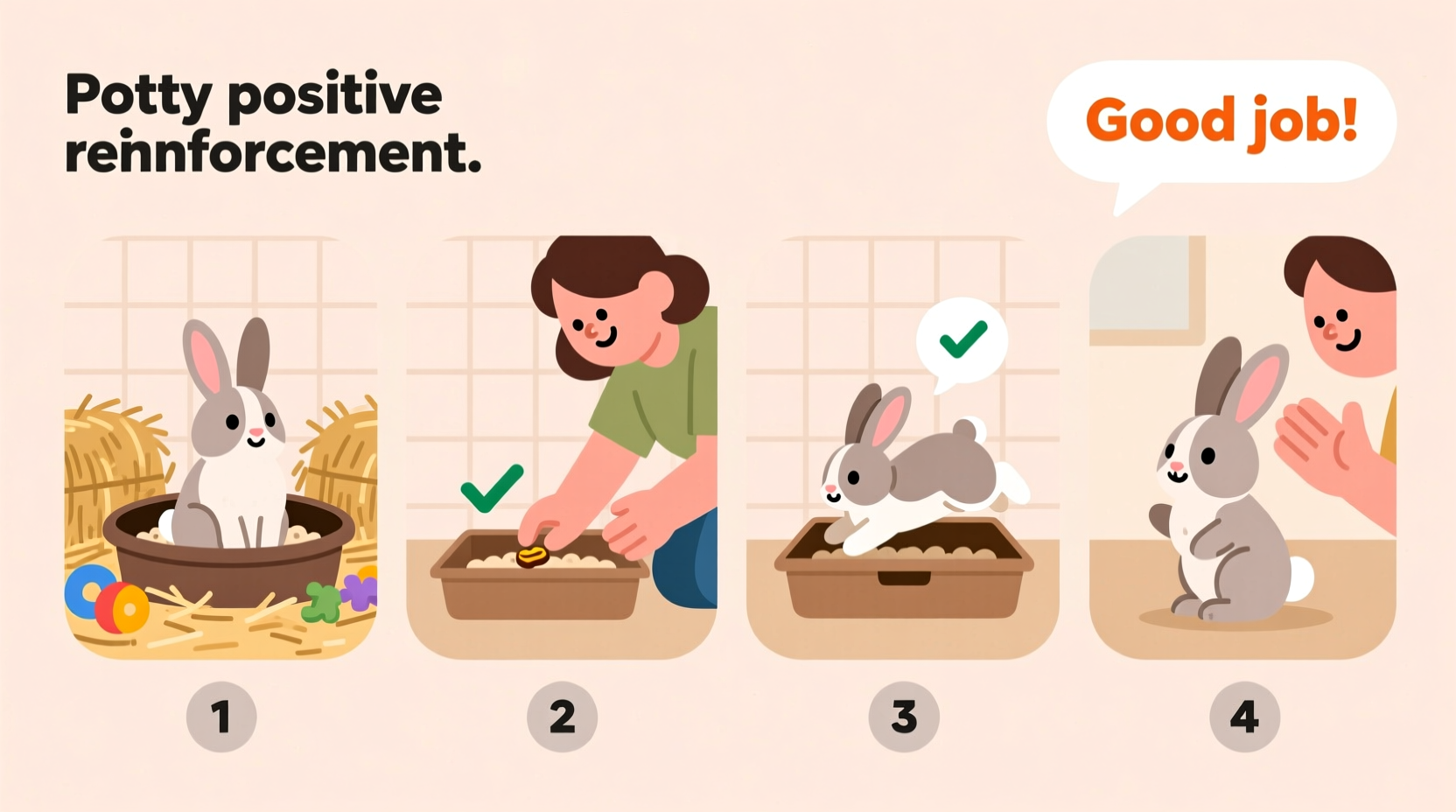
- Reward immediately after correct use. As soon as your rabbit finishes eliminating in the box, offer a small treat (e.g., a pea or carrot bit) and calm verbal praise like “good job.” Timing is critical—the reward must follow within seconds to create the association.
- Leave some droppings in the box. A few pellets act as olfactory cues, signaling this is the appropriate spot. Only clean the box partially every few days to maintain scent familiarity.
- Gradually expand freedom. Once consistent for at least one week, allow access to larger areas. Monitor closely and add temporary barriers or additional boxes as needed.
Common Challenges and How to Overcome Them
Even with careful planning, setbacks happen. Understanding typical obstacles helps you respond effectively without frustration.
Accidents Outside the Box
Occasional misses are normal, especially during transitions. Instead of reacting negatively, analyze the cause: Is the box too small? Is there competition from other pets? Has the routine changed?
Solution: Increase box availability temporarily and reinforce rewards for any nearby attempts—even partial successes count.
Refusal to Enter the Box
Some rabbits avoid the box due to texture, smell, or past discomfort. Others may not understand its purpose.
Solution: Try different litters, reposition the box, or sit beside it while offering treats to build positive associations. Hand-feeding near or inside the tray can help desensitize reluctance.
Urine Spraying on Furniture or Walls
This is typically hormonal or territorial. Unaltered rabbits are far more prone to spraying, but even fixed rabbits may do so under stress.
Solution: Ensure spaying/neutering has been performed. Clean sprayed areas thoroughly with enzyme-based cleaners to remove odor cues. Block access to vertical surfaces temporarily with cardboard shields.
Litter Digging or Kicking
Rabbits dig instinctively. While messy, this behavior isn’t defiance—it’s exploration.
Solution: Use deeper boxes or place mats underneath to catch debris. Avoid punishing digging; instead, redirect with toys or tunnels placed nearby.
Do’s and Don’ts of Rabbit Potty Training
| Do’s | Don’ts |
|---|---|
| Use treats like parsley, cilantro, or a single oat to reward success | Give large quantities of sugary treats like fruit |
| Keep the litter box clean but retain a slight odor for familiarity | Scrub the box with strong disinfectants daily |
| Place hay in or near the box to encourage prolonged stays | Put food bowls directly in the litter tray |
| Be patient—training can take weeks to months | Yell, grab, or rub a rabbit’s nose in waste |
| Neuter/spay early to reduce marking behaviors | Assume training failure means the rabbit “won’t learn” |
Mini Case Study: Training Thistle, a 5-Month-Old Rex Rabbit
Thistle was adopted at 12 weeks old, unaltered and prone to spraying along baseboards. Her owner, Maria, began training immediately in a 6x8 ft exercise pen with two litter boxes—one in each back corner. She used paper-pellet litter and added a hay rack to each box.
At first, Thistle ignored the boxes entirely, dropping pellets randomly. Maria observed that Thistle ate most of her hay in the morning, so she started hand-feeding small pieces whenever Thistle approached a box. Within three days, Thistle began lingering in the box while eating. The first full urination inside was rewarded instantly with a pea and soft praise.
Maria noticed spraying persisted near the doorway. She blocked the area with a low bookshelf and placed an extra box nearby. After Thistle was neutered at 16 weeks, spraying decreased dramatically. By week six, 90% of eliminations occurred in boxes. After eight weeks, Maria expanded Thistle’s space to the entire living room, adding one central box. Today, Thistle uses her litter box reliably and enjoys supervised free-roam time daily.
The turning point wasn’t perfection—it was consistency in rewarding effort, not just results.
Essential Checklist for Success
- ☑ Spay or neuter your rabbit before starting
- ☑ Choose a spacious, low-entry litter box
- ☑ Use safe, non-dusty, non-clumping litter
- ☑ Place hay in or beside the box
- ☑ Confine to a small area during initial training
- ☑ Reward immediately after correct use
- ☑ Maintain partial cleanliness—don’t over-clean
- ☑ Monitor behavior and adjust placement as needed
- ☑ Expand space gradually upon consistent success
- ☑ Stay patient and never punish accidents
Frequently Asked Questions
Can older rabbits be potty trained?
Yes. While younger rabbits often learn faster, adult rabbits can be trained successfully with consistent reinforcement. Older rabbits may have established habits, so progress might be slower, but motivation through treats and environmental adjustments remains effective.
How long does potty training usually take?
Most rabbits show improvement within 2–3 weeks, with reliable use developing over 6–8 weeks. Some achieve consistency in as little as 10 days, while others—especially unaltered or previously stray rabbits—may take several months. Patience and routine are more important than speed.
My rabbit won’t stop pooping everywhere. Is this normal?
Incessant pooping outside the box is common during early training. Remember, rabbits drop pellets frequently throughout the day, especially while moving or eating. Focus on urinary control first, as that’s messier and harder to manage. For scattered droppings, sweep them up regularly or use a handheld vacuum. Over time, many rabbits will begin grouping droppings near their box or even inside it, particularly if hay is present.
Final Thoughts: Building Trust Through Kindness
Potty training a rabbit isn’t about dominance or correction—it’s about collaboration. Positive reinforcement fosters confidence, reduces anxiety, and turns training into a shared language between you and your pet. Each small victory, whether a single pellet in the box or a full urination session, builds momentum.
The methods outlined here respect your rabbit’s nature rather than suppress it. By working with their instincts—eating while eliminating, preferring quiet corners, responding to rewards—you create an environment where good habits emerge naturally.
Remember, every rabbit is different. Some adapt quickly; others require more time and adjustment. What matters most is consistency, compassion, and celebrating progress, no matter how minor it may seem.




 浙公网安备
33010002000092号
浙公网安备
33010002000092号 浙B2-20120091-4
Comments
No comments yet. Why don't you start the discussion?