
Walking 40 miles is not a casual stroll—it’s a physical challenge that demands preparation, discipline, and smart pacing. Whether you're training for a charity walk, an endurance event, or personal achievement, completing four decades of distance in a single stretch requires more than just putting one foot in front of the other. Done correctly, it's achievable without injury or burnout. The key lies in structured preparation, proper fueling, and disciplined pacing. This guide breaks down exactly how to approach this goal with confidence and efficiency.
Build a Progressive Training Plan
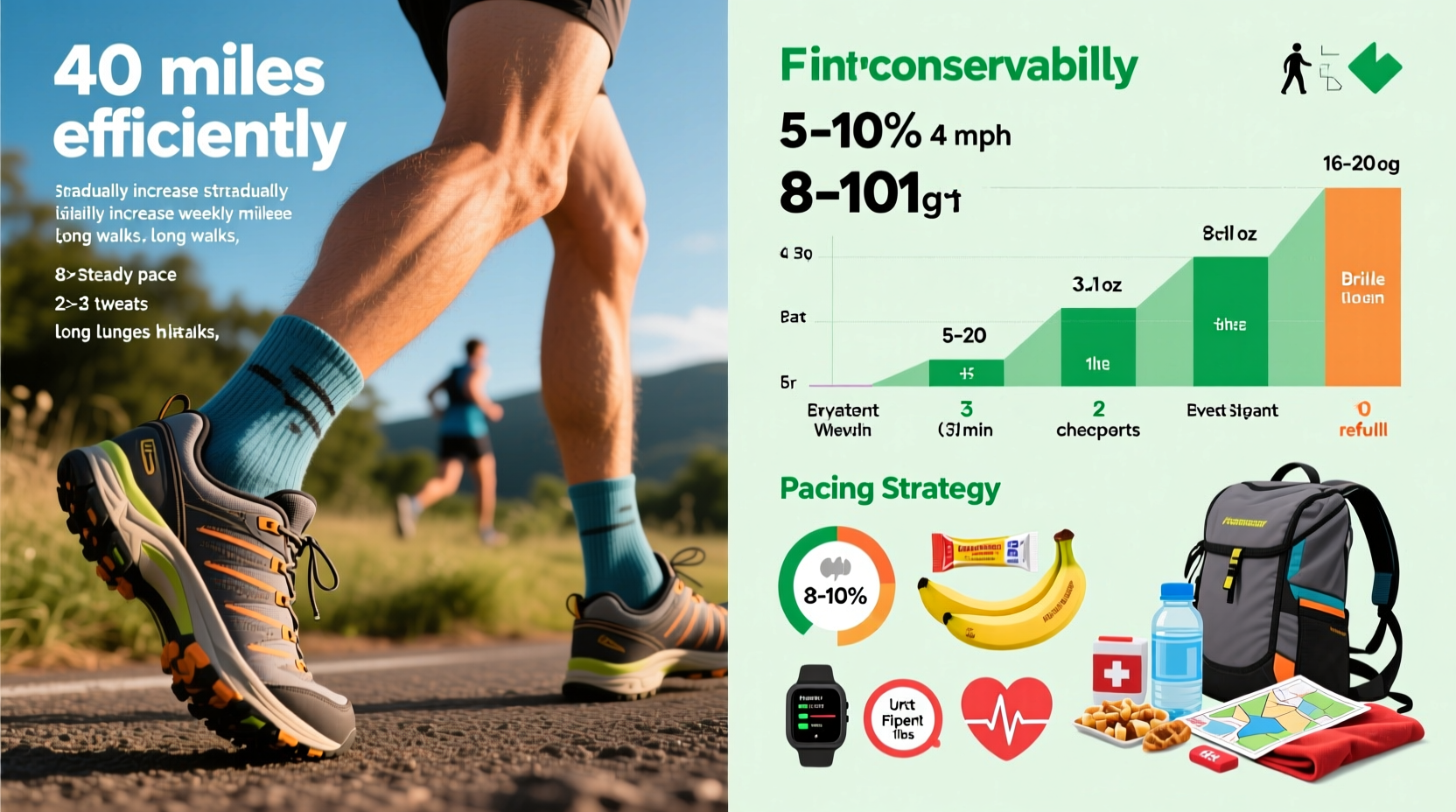
Success begins weeks—or even months—before the event. Your body needs time to adapt to long durations on your feet. Jumping straight into a 40-mile walk without prior conditioning leads to blisters, joint pain, and early fatigue. Instead, build mileage gradually using a weekly progression model.
Start with regular walks of 5–10 miles at a moderate pace. Over 8 to 12 weeks, increase your longest weekly walk by no more than 10% per week. This allows connective tissues and muscles to strengthen while minimizing overuse injuries. Include back-to-back long walks (e.g., 15 miles Saturday, 10 miles Sunday) to simulate multi-day strain.
In addition to distance, practice walking on terrain similar to your event route—pavement, gravel, hills, or trails. Incorporate strength training twice a week, focusing on glutes, quads, hamstrings, and core stability. Strong stabilizing muscles reduce fatigue and improve posture over long distances.
Nutrition and Hydration Strategy
Fuel management is as critical as physical training. A 40-mile walk can burn between 3,500 and 6,000 calories depending on weight, pace, and terrain. Under-fueling leads to energy crashes; overeating causes digestive discomfort.
Begin hydrating two days before the event. Aim for pale yellow urine as a sign of proper hydration. On walk day, drink 4–8 ounces of water every 15–20 minutes. Use electrolyte drinks every 60–90 minutes, especially in heat, to replace lost sodium and prevent cramping.
For fueling, consume 30–60 grams of carbohydrates per hour after the first 60 minutes. Good options include bananas, energy gels, dried fruit, granola bars, and peanut butter sandwiches. Practice your nutrition plan during training to avoid gastrointestinal surprises.
| Time on Feet | Carbohydrates (per hour) | Fluid Intake | Electrolytes |
|---|---|---|---|
| 0–60 min | Not needed | Water only | None required |
| 1–3 hours | 30g | 4–6 oz water | Optional |
| 3–6 hours | 30–60g | 6–8 oz fluid | Every 60–90 min |
| 6+ hours | 60g max | 8 oz + electrolyte drink | Every 60 min |
“Consistent fueling every 45–60 minutes prevents bonking and keeps mental focus sharp,” says Dr. Lena Torres, sports nutritionist at the National Endurance Institute. “Waiting until you’re hungry or thirsty means you’re already behind.”
Pacing for Efficiency and Sustainability
Many walkers fail not because they lack fitness, but because they start too fast. Excitement and adrenaline can trick you into sprinting the first few miles, leaving you drained by mile 20.
The ideal strategy is a negative split approach: walk slightly slower than goal pace in the first half, then maintain or slightly increase speed later if energy allows. For a 40-mile walk completed in 10 hours, aim for 15-minute miles (4 mph). That’s aggressive but realistic for trained walkers.
Break the distance into manageable segments. Focus on reaching each 5-mile checkpoint rather than the full 40. Use a GPS watch or smartphone app to monitor pace, but don’t obsess. Glance occasionally, adjust if needed, and return to rhythm.
Step-by-Step Pacing Timeline (10-Hour Goal)
- Miles 0–10: Pace: 16 min/mile. Focus on warm-up, hydration, and settling into rhythm.
- Miles 10–20: Pace: 15 min/mile. Begin fueling every 45 min. Monitor foot comfort.
- Miles 20–30: Pace: 15 min/mile. Reapply lubricant if needed. Stay mentally engaged.
- Miles 30–40: Pace: 15–16 min/mile. Maintain form. Short walk breaks (1–2 min every 30 min) aid recovery.
Recovery and Injury Prevention
Preparation isn’t complete without addressing what happens during and after each step. Blisters, chafing, and muscle tightness are common but avoidable.
Wear moisture-wicking socks—consider double-layered or synthetic blends—and break in footwear well in advance. Apply anti-chafe balm to inner thighs, under arms, and heels before starting. Carry blister tape or moleskin in a small kit.
Stretch dynamically before walking: leg swings, hip circles, ankle rolls. Post-walk, perform static stretches for calves, hamstrings, and hips. Use a foam roller the same day and next morning to accelerate muscle recovery.
- Replace worn-out shoes (typically after 300–500 miles).
- Avoid sudden changes in stride length or surface type mid-event.
- Listen to pain signals—sharp or localized pain means stop and assess.
Real-World Example: Completing the Four-Day March
Consider Mark R., a 47-year-old participant in the International Four-Day Marches in the Netherlands. Each day, he walked 25–30 miles over flat terrain, totaling over 100 km (62 miles) across four days.
Mark trained for 14 weeks, building from 8-mile weekend walks to 20-milers. He practiced his nutrition with energy chews and diluted juice, discovering that soda upset his stomach. During the event, he used a 50-minute-on, 10-minute-off rhythm, taking short breaks to stretch and refuel. By pacing conservatively on Day 1, he avoided swelling and finished strong on Day 4—something 20% of participants failed to do.
His takeaway: “The people who rushed ahead on Day 1 were limping or quitting by Day 3. I passed dozens in the final hours just by staying consistent.”
Essential Preparation Checklist
- 8–12 Weeks Before
- • Build weekly long walks up to 20+ miles
- • Choose and break in walking shoes
- • Test nutrition and hydration plans
- 1–2 Weeks Before
- • Taper mileage by 30–50%
- • Increase carbohydrate intake slightly
- • Confirm gear: socks, poles, backpack, blister kit
- Event Day
- • Eat a light, carb-rich breakfast 2–3 hours prior
- • Start hydrated; carry fluids and snacks
- • Begin at conservative pace
Frequently Asked Questions
How long does it take to walk 40 miles?
For most trained walkers, 40 miles takes 8 to 12 hours, including short breaks. At an average pace of 3.5 to 4.5 mph, expect 9 to 11 hours of moving time. Elite power walkers may finish in under 8 hours.
Can I walk 40 miles without training?
It’s possible for very fit individuals, but strongly discouraged. Untrained bodies risk severe blisters, tendonitis, stress fractures, and exhaustion. Even active people benefit from at least 4–6 weeks of progressive walking preparation.
Should I use trekking poles?
Trekking poles reduce knee strain by up to 25%, especially on pavement or downhill sections. They also improve rhythm and upper-body engagement. Many long-distance walkers report less fatigue when using them consistently.
Walk Smart, Finish Strong
Walking 40 miles efficiently isn’t about raw speed—it’s about consistency, preparation, and intelligent pacing. Your greatest advantage isn’t stronger legs, but better planning. Train progressively, fuel strategically, and respect the distance by starting slow. Every mile adds up, and each decision along the way shapes your outcome.




 浙公网安备
33010002000092号
浙公网安备
33010002000092号 浙B2-20120091-4
Comments
No comments yet. Why don't you start the discussion?