
Artificial trees—whether Christmas trees, decorative fakes in living rooms, or synthetic houseplants—add aesthetic appeal and require minimal maintenance. But for cat owners, these elegant additions can quickly become targets of feline curiosity. Cats are natural climbers, and an upright, textured structure like an artificial tree is irresistible. The result? Knocked-over trees, scattered ornaments, tangled wires, and frustrated pet owners.
The good news: with thoughtful planning and consistent strategies, you can coexist peacefully with both your artificial tree and your cat. This guide offers practical, proven methods to protect your decor while respecting your cat’s instincts. No drastic measures, no harmful deterrents—just smart, humane solutions that work.
Understanding the Feline Fascination
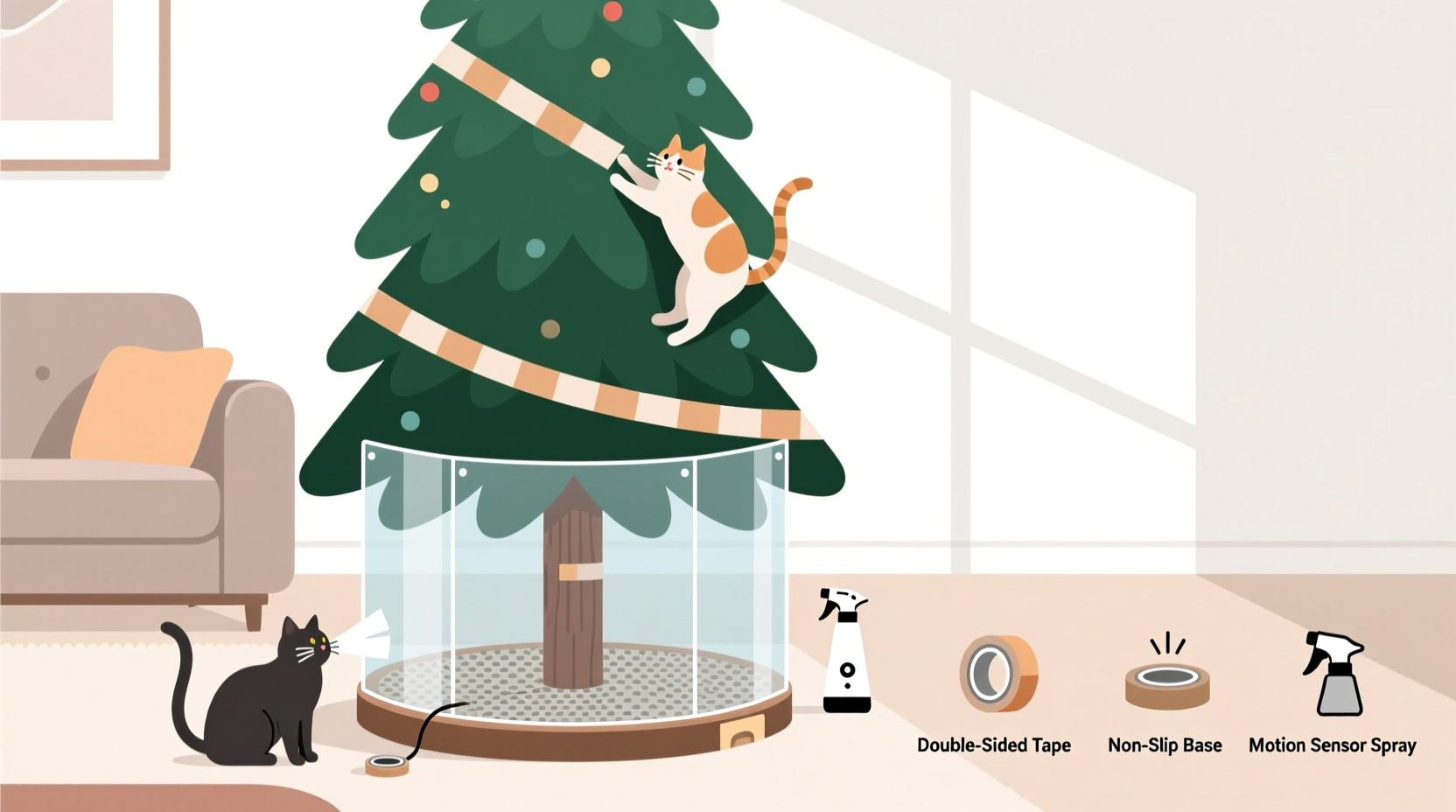
Cats climb for instinctual reasons. In the wild, elevated perches offer safety, surveillance, and territory control. Even domesticated cats retain this drive. An artificial tree mimics a vertical landscape—its branches resemble limbs, its texture invites clawing, and its stillness makes it seem like a safe platform.
Additionally, novelty plays a role. Introducing a new object into a cat’s environment triggers investigation. If the tree wobbles when touched, it becomes even more engaging—a moving target activates play behavior. Without intervention, this curiosity escalates into climbing and toppling.
To prevent damage, it's essential to address both the physical stability of the tree and the behavioral motivation behind the climbing.
Stabilize the Tree: Make It Immovable
The first line of defense is ensuring the artificial tree cannot be tipped over—even under determined feline pressure. A stable base discourages climbing because cats prefer structures that respond to movement. If the tree doesn’t sway, it loses some of its appeal.
Here are several stabilization techniques:
- Use a heavy-duty stand: Choose a metal or reinforced plastic stand designed for tall or wide trees. Avoid flimsy plastic bases.
- Add weight to the base: Fill the stand with sandbags, bricks wrapped in cloth, or water-filled containers. This lowers the center of gravity.
- Anchor to the wall: Use soft nylon straps, picture hooks, or tension rods to secure the top third of the tree to a stud in the wall. This prevents forward tipping.
- Place in a corner: Positioning the tree in a corner allows two walls to act as partial braces, reducing the angles from which a cat can push.
For extra security, consider freestanding tree anchors—products like the Tree Defender or DIY PVC frames that surround the trunk and block access to the lower branches.
“Cats test stability instinctively. If a tree doesn’t move when nudged, most cats lose interest within days.” — Dr. Lena Torres, Feline Behavior Consultant
Redirect the Behavior: Offer Better Alternatives
Prevention isn’t just about blocking access—it’s about providing appealing alternatives. A cat denied a climbing outlet will seek other options, often less desirable ones (like bookshelves or curtains).
Create competitive enrichment by introducing cat-friendly vertical spaces nearby:
- Install a cat tree or condo: Place it close to the artificial tree but not so close that it enables jumping onto the fake tree. Choose one with multiple levels, scratching posts, and cozy hideaways.
- Add window perches: Elevated shelves near windows satisfy a cat’s desire for observation and sunlight, reducing the need to climb elsewhere.
- Introduce interactive toys: Dangle teaser toys from a wand or install motion-activated gadgets near the cat tree to encourage use.
Make the cat tree more enticing than the artificial one. Rub it with silver vine or catnip, place treats in its crevices, or drape favorite toys from its highest point. Rotate toys weekly to maintain novelty.
Timeline: Training Your Cat to Prefer the Cat Tree
Behavior change takes consistency. Follow this 14-day timeline to shift your cat’s focus:
| Day | Action |
|---|---|
| 1–3 | Set up cat tree near artificial tree. Sprinkle catnip and place treats on lower levels. |
| 4–7 | Play with your cat near the cat tree daily. Reward any interaction (sniffing, touching, sitting). |
| 8–10 | Begin gently placing your cat on the cat tree after meals or naps. Pair with praise or treats. |
| 11–14 | Gradually increase distance between artificial and cat trees. Monitor behavior; reinforce success. |
By day 14, many cats develop a routine of using their designated climbing space. Patience and positive reinforcement are key—never force the cat, but consistently reward desired choices.
Deterrents That Work—Without Harming Comfort
While redirection is ideal, mild deterrents can help break initial climbing habits. The goal is not to scare the cat, but to make the artificial tree less inviting.
Effective, humane deterrents include:
- Double-sided tape: Cats dislike sticky textures. Apply adhesive strips (like Sticky Paws) to the tree stand or lower trunk.
- Aluminum foil: Temporarily wrap the base. The sound and feel deter most cats, though it may not suit all decors.
- Citrus scents: Lightly spray diluted lemon or orange extract around the base. Avoid spraying directly on the tree if it could stain.
- Motion-activated air sprayers: Devices like the Ssscat emit a harmless burst of air when motion is detected, startling without harm.
Use deterrents only during the training phase. Once the cat learns to avoid the tree, remove them to maintain a pleasant environment.
Case Study: The Johnson Family’s Christmas Solution
The Johnsons loved holiday traditions, but every year their artificial Christmas tree ended up on the floor by December 5th—courtesy of Luna, their 3-year-old Bengal mix. Determined to preserve their decor, they implemented a multi-pronged strategy.
First, they upgraded to a heavy steel stand and filled it with two sandbags. They anchored the top of the tree to a wall stud using clear fishing line (less visible than straps). Then, they placed a tall cat tree five feet away, infused with silver vine and equipped with dangling feather toys.
They also used double-sided tape on the tree skirt’s edge and set up a Ssscat air sprayer pointed at the trunk. Each time Luna approached, she heard a soft hiss and retreated. Within three days, she stopped trying. By Christmas Eve, the tree stood intact—and Luna was curled up atop her own condo, watching from above.
“We didn’t want to exclude her from the room,” said Sarah Johnson. “We just wanted her to choose something else. And she did.”
Do’s and Don’ts: Quick Reference Table
| Do | Don’t |
|---|---|
| Secure the tree to the wall or ceiling | Leave the tree unanchored on a slippery surface |
| Provide a competing cat tree or perch | Expect your cat to “just know” the tree is off-limits |
| Use scent or texture deterrents temporarily | Spray citrus or vinegar directly on ornaments or lights |
| Reward alternative behaviors with treats or play | Yell at or chase the cat when it climbs |
| Supervise initial interactions with the tree | Leave fragile decorations within paw’s reach |
Frequently Asked Questions
Can I use essential oils to keep my cat away from the tree?
No. Many essential oils—especially citrus, tea tree, and pine—are toxic to cats, even in small amounts. Diffusers or sprays can cause respiratory distress or liver damage. Stick to safer deterrents like diluted extracts or physical barriers.
What if my cat only climbs at night when I’m not watching?
Use passive deterrents such as motion-activated devices or textured barriers. You can also confine your cat to another room at night during the tree’s setup period, especially if unsupervised. Gradual exposure during waking hours helps build long-term habits.
Are there artificial trees designed to be cat-proof?
Not officially labeled as such, but some features help. Look for slimmer profiles, sturdier bases, and pre-lit models with tucked-in wires. Trees with fewer low-hanging branches reduce climbing leverage. Pair any model with anchoring and enrichment for best results.
Final Checklist: Cat-Safe Artificial Tree Setup
- Choose a heavy, stable stand and add weight (sand, water, etc.).
- Anchor the tree to a wall or ceiling using soft straps or wire.
- Position the tree in a corner or against two walls if possible.
- Install a competing cat tree or perch nearby.
- Apply temporary deterrents (tape, foil, scent) to the base.
- Remove or secure fragile ornaments below 3 feet.
- Supervise early interactions and reward alternative behaviors.
- Gradually phase out deterrents once the cat adapts.
Conclusion: Harmony Between Decor and Instinct
Living with cats doesn’t mean sacrificing style. Preventing them from climbing and knocking over artificial trees is less about restriction and more about intelligent design and behavioral guidance. By stabilizing the tree, offering better alternatives, and using gentle deterrents, you create an environment where both your decor and your cat can thrive.
Success lies in understanding that climbing isn’t misbehavior—it’s natural expression. Redirect it wisely, and you’ll enjoy a beautiful space without conflict. Start today: assess your tree’s stability, set up a cat tree, and begin building new habits. With patience, your home can be both festive and feline-friendly.




 浙公网安备
33010002000092号
浙公网安备
33010002000092号 浙B2-20120091-4
Comments
No comments yet. Why don't you start the discussion?