
Every year, millions of households wrestle with the same frustrating ritual: untangling a knotted mess of Christmas lights. The struggle isn’t just time-consuming—it can damage delicate wiring and lead to burnt-out bulbs. But there’s a simple, low-cost solution that has stood the test of time: the cardboard roll method. This technique uses repurposed materials to store lights neatly, ensuring they’re ready to hang the moment the holidays return. No special tools, no expensive organizers—just smart wrapping.
The key to success lies in consistency and proper execution. When done correctly, this method not only prevents tangles but also protects insulation, reduces strain on connectors, and makes inventory management easier. Whether you have LED strands or vintage incandescents, the cardboard roll method is universally applicable and remarkably effective.
Why Christmas Lights Tangle—and How to Stop It
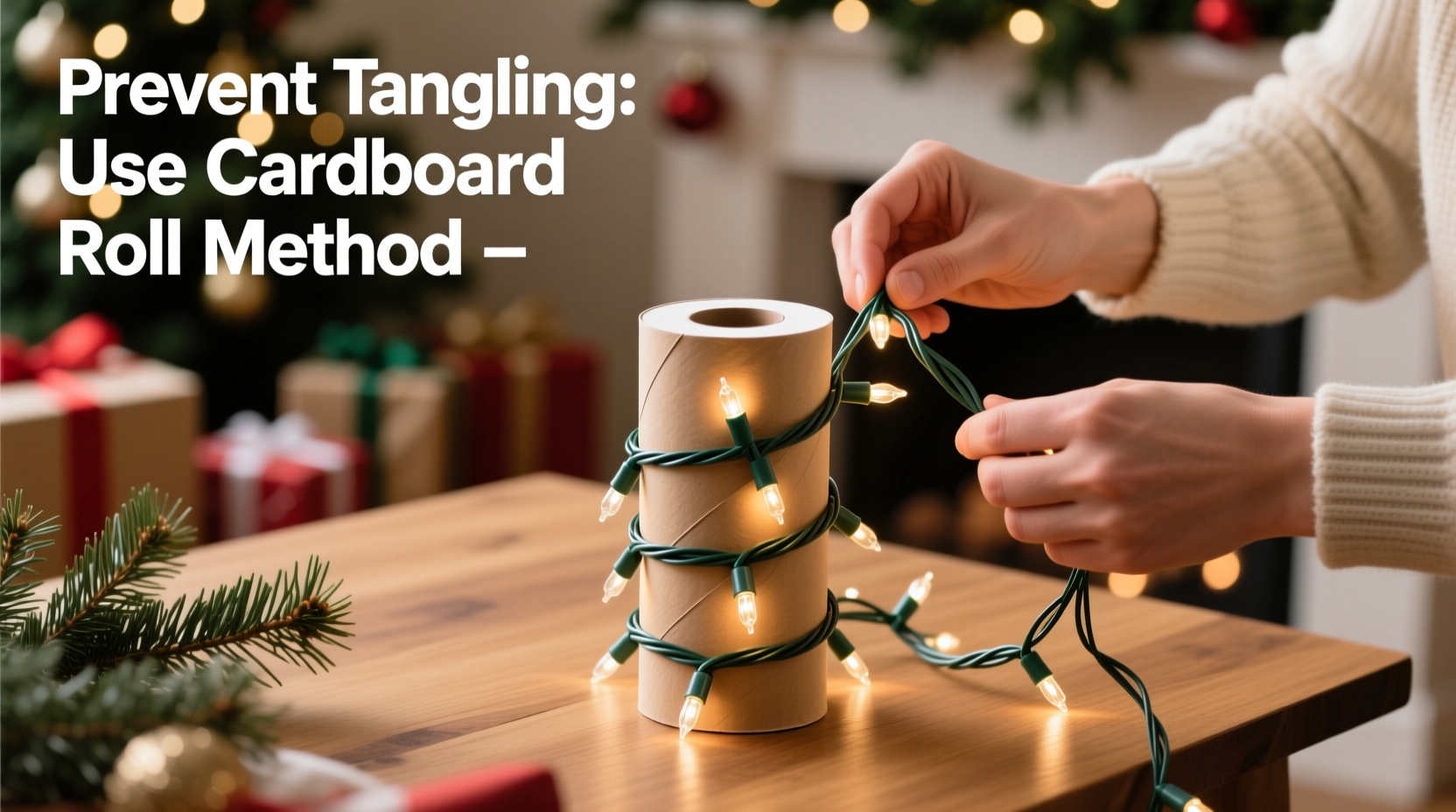
Christmas lights tangle due to improper storage. Most people wrap them haphazardly around their hands or stuff them into boxes, creating loops that shift and twist over time. Physics plays a role too: when flexible wires are loosely coiled, even minor movement causes adjacent loops to interlock, forming knots that grow tighter with handling.
According to Dr. Dorian Raymer, a physicist who studied knot formation at the University of California, San Diego, “Any string-like object longer than about 1.5 feet has a high probability of becoming knotted when agitated.” Holiday light strands often exceed 50 feet—making them prime candidates for spontaneous knotting.
The cardboard roll method combats this by immobilizing each loop. By anchoring the wire along a rigid surface, the strand maintains its shape throughout storage. There's no slack for shifting, no opportunity for coils to cross over one another. The result? Lights that unroll smoothly, ready to drape across railings, trees, and rooftops without delay.
“Proper storage isn’t just about convenience—it extends the life of your lights by reducing stress on filaments and connections.” — Laura Bennett, Home Organization Specialist
Step-by-Step Guide: Using the Cardboard Roll Method
The beauty of this method is its simplicity. You likely already have everything you need at home. Follow these steps carefully to ensure your lights stay tangle-free for years.
- Gather Supplies: Find a sturdy piece of cardboard approximately 6–8 inches wide and tall enough to accommodate your longest light strand when wrapped vertically. Cereal boxes, shipping packaging, or old file folders work well. Also gather scissors, masking tape, and optionally, a marker for labeling.
- Cut and Shape the Cardboard: Cut the cardboard into a rectangular panel. Then, cut two small notches—one near the top center and one near the bottom center—just wide enough to hold the light plug securely. These notches will anchor both ends of the strand.
- Start Wrapping from the Plug End: Begin with the male plug (the end that goes into the outlet). Insert it into the bottom notch so it’s held firmly in place. This ensures the heaviest component—the plug—is secured first and won’t pull loose during storage.
- Wrap Vertically in Parallel Lines: Bring the first loop upward along the side of the cardboard and lay it flat. Continue wrapping the strand vertically, keeping each pass parallel and snug against the previous one. Avoid crossing or overlapping wires. Treat each wrap like a column on a grid—orderly and uniform.
- Secure the Opposite End: Once all lights are wound, insert the female end (or the end with the bulb cluster) into the top notch. If your strand doesn’t reach exactly, use a small piece of tape to secure any excess.
- Label the Roll: Use a marker to write details directly on the cardboard: color (e.g., \"warm white\"), length (e.g., \"50 ft\"), location used last year (e.g., \"front porch\"), and whether it’s indoor/outdoor rated. This saves time during setup next season.
- Store Flat or Stacked: Place wrapped rolls flat inside a storage bin, ideally with dividers or cushioning between layers. Store in a cool, dry area away from rodents and moisture.
Benefits of the Cardboard Roll Method Over Other Techniques
While various storage methods exist—from plastic reels to foam tubes—the cardboard roll approach offers distinct advantages in cost, accessibility, and effectiveness.
| Method | Cost | Tangle Prevention | Eco-Friendliness | Accessibility |
|---|---|---|---|---|
| Cardboard Roll | Free (repurposed material) | High (when done properly) | Excellent (biodegradable) | Very High (available in most homes) |
| Plastic Reel | Moderate to high ($8–$25 per reel) | High | Poor (plastic waste) | Moderate (requires purchase) |
| Foam Pool Noodle | Low ($2–$4 per noodle) | Moderate (can compress over time) | Fair (non-recyclable foam) | High |
| Hand-Wrapped Loops | Free | Low (high tangle risk) | Good | Very High |
Unlike rotating reels, which may pinch wires or require disassembly, the cardboard method applies even pressure without mechanical stress. It’s also fully customizable—simply adjust the size of the cardboard to match different strand lengths. And because it uses recycled materials, it aligns with sustainable living practices.
Common Mistakes to Avoid
Even with the right technique, errors can undermine results. Here are frequent pitfalls and how to avoid them:
- Wrapping diagonally or haphazardly: This creates uneven tension and increases friction between wires, leading to snags. Always wrap straight up and down in tight, parallel lines.
- Using flimsy cardboard: Thin or warped boards bend under pressure, allowing coils to loosen. Choose thick, rigid pieces that maintain their shape.
- Skipping the notches: Without anchors, plugs can slip out during handling. Notches keep both ends locked in place.
- Overloading one roll: Never wrap multiple strands together unless they’re connected. Mixing colors or types leads to confusion and potential damage during unwrapping.
- Storing in damp areas: Basements and garages with high humidity can degrade insulation and corrode metal contacts. Always store indoors in climate-controlled spaces.
Real-Life Example: A Family’s Transformation
The Thompson family in Portland, Oregon, used to spend nearly three hours every December untangling lights. With four outdoor displays and a 12-foot tree, their collection included 17 strands of varying lengths and colors. Frustration peaked in 2021 when two sets burned out mid-unwrapping due to internal wire damage from repeated kinking.
In spring 2022, Sarah Thompson decided to try the cardboard roll method after seeing it on a home improvement forum. She spent a Saturday cutting cereal boxes and shipping cartons into uniform panels. Each light strand was tested, labeled, and wrapped vertically with precision. She stored the rolls in a plastic tote lined with bubble wrap.
When the holidays arrived, the entire decoration process changed. “We pulled out the first roll, unclipped the tape, and the lights just flowed out perfectly,” she recalled. “No pulling, no cursing, no cutting knots. We decorated the house in under an hour.” Now, her system is a family tradition—her kids help label rolls and check connections each spring.
Checklist: Prepare Your Lights for Tangle-Free Storage
Use this checklist annually to ensure your lights go into storage cleanly and safely:
- ✔ Test every strand for full functionality
- ✔ Replace or repair damaged bulbs and fuses
- ✔ Clean off dust and debris with a dry cloth
- ✔ Select appropriately sized cardboard panels
- ✔ Cut clean notches at top and bottom edges
- ✔ Wrap each strand individually in vertical lines
- ✔ Secure both plug ends in notches
- ✔ Label each roll clearly with type and use case
- ✔ Slide into plastic bags if storing long-term
- ✔ Store in a dry, rodent-free environment
Frequently Asked Questions
Can I reuse the same cardboard roll every year?
Yes, as long as the cardboard remains intact and free from moisture damage. Inspect each roll before reuse—discard any that show signs of warping, mold, or fraying. Reinforce weak spots with packing tape if needed.
What if my light strand is longer than the cardboard is tall?
If your strand exceeds the height of the cardboard, consider using a larger box or wrapping in a zigzag pattern—but only as a last resort. Better alternatives include splitting very long runs into two shorter segments (if they’re detachable) or creating a taller roll from joined cardboard pieces.
Is this method safe for LED lights?
Absolutely. In fact, LEDs benefit even more from careful storage due to their thinner wiring and sensitive circuitry. The cardboard roll method prevents micro-fractures in solder joints caused by repeated bending and pulling.
Maximizing Longevity: Beyond Just Untangling
Preventing tangles is only part of the equation. True longevity comes from comprehensive care. After wrapping, take additional steps to protect your investment:
- Rotate usage: Don’t rely on the same set every year. Rotate between multiple strands to distribute wear evenly.
- Inspect annually: Even in storage, environmental factors can affect performance. Check all lights in early November.
- Keep spare bulbs and fuses: Store extras with your lights. Many incandescent sets come with spare bulbs—keep them handy.
- Use surge protectors: When plugging in, always connect through a weatherproof surge protector to prevent voltage spikes.
“Organized storage adds years to your lights’ usable life. I’ve seen properly stored strands last over a decade.” — Mark Tran, Electrical Safety Consultant
Conclusion: Start This Spring, Enjoy Next Winter
The best time to organize your Christmas lights isn’t December—it’s April. As decorations come down, take a few extra minutes to wrap each strand using the cardboard roll method. That small effort will save hours next holiday season and preserve your lights for many winters to come.
This technique proves that practical solutions don’t need to be complex. With everyday materials and mindful habits, you can eliminate one of the most dreaded parts of holiday prep. No more frustration, no more wasted time—just smooth, joyful decorating.




 浙公网安备
33010002000092号
浙公网安备
33010002000092号 浙B2-20120091-4
Comments
No comments yet. Why don't you start the discussion?