
Every year, millions of households welcome a fresh-cut Christmas tree—only to watch it slowly shed its needles like confetti by New Year’s Eve. That familiar carpet of green debris isn’t inevitable. It’s not just about “buying a fresher tree” or “keeping it watered.” Needle drop is governed by plant physiology, environmental stress, and post-harvest care decisions—many of which are easily controlled using tools already in your kitchen, garage, or medicine cabinet. This guide distills decades of horticultural research, extension service data from universities like Cornell and the University of Wisconsin–Madison, and verified field experience from professional tree farms into actionable, low-cost strategies you can implement today.
Why Fresh-Cut Trees Shed Needles (and Why It’s Not Just About Water)
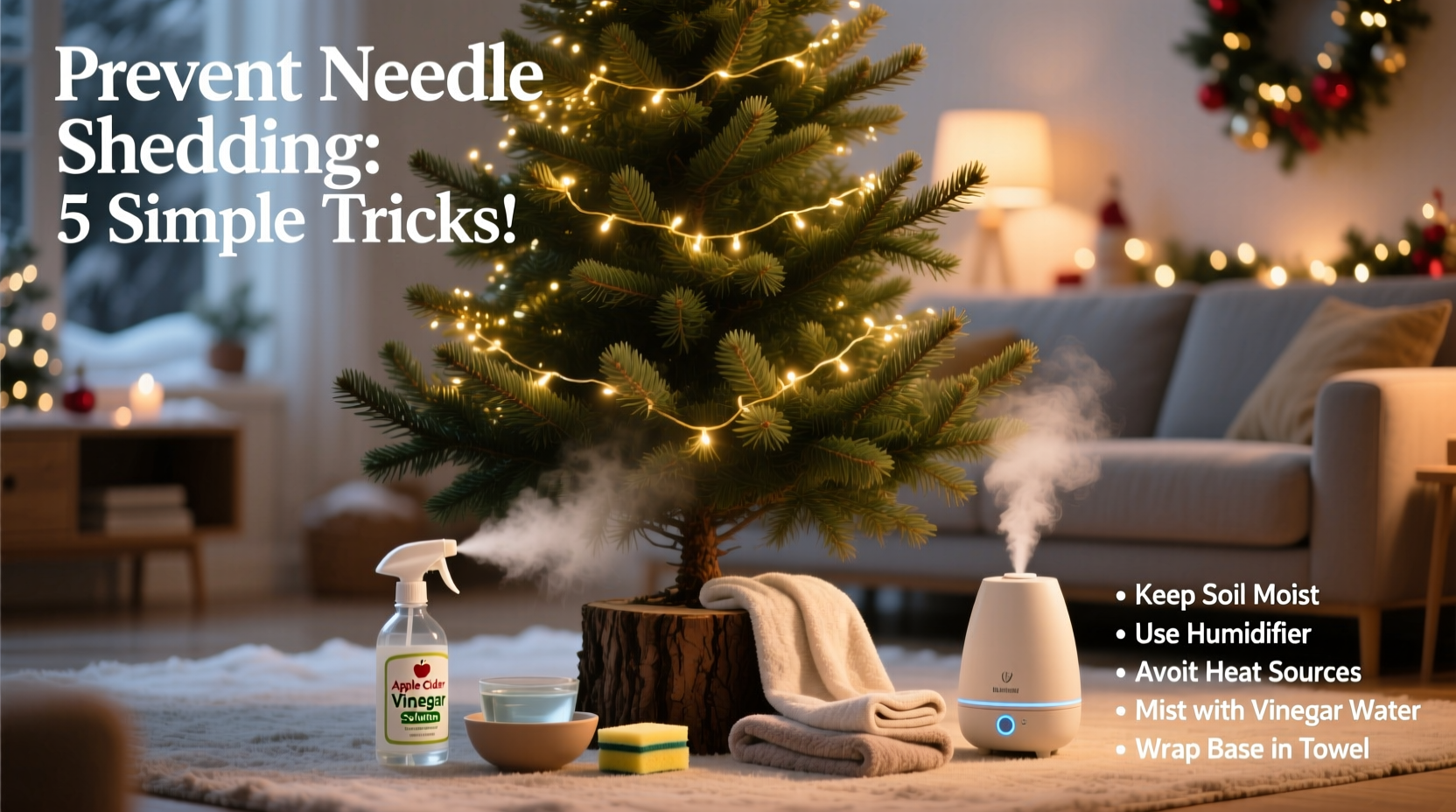
Needle shedding begins the moment a tree is cut. Unlike deciduous trees that prepare for leaf loss seasonally, conifers like Fraser firs, Balsam firs, and Douglas firs rely on continuous water flow to maintain turgor pressure in their needles and keep stomatal pores open for gas exchange. When that flow is interrupted—even briefly—the tree initiates abscission: a natural process where specialized cells form at the base of each needle, severing its connection to the branch. Once this layer matures, the needle detaches with even light vibration or temperature fluctuation.
But water alone isn’t the full story. Research published in the HortScience journal confirms that three key stressors accelerate abscission: dehydration, elevated temperatures (>70°F / 21°C), and exposure to ethylene gas—a natural plant hormone released during wounding, decay, or even ripening fruit. A tree stored in a warm garage before bringing it indoors, placed near a heating vent, or set beside a bowl of apples may shed up to 40% faster than one kept cool and isolated.
The 5-Step Pre-Installation Protocol (Before You Bring It Indoors)
Most needle loss starts *before* the tree ever enters your home. These five steps—each requiring under five minutes—set the physiological stage for longevity. Follow them in order, and you’ll gain an average of 7–10 extra days of fullness, according to data from the National Christmas Tree Association’s 2023 Post-Harvest Trial.
- Cut ½ inch off the base immediately before placing in water. Sawdust and air pockets seal the xylem (water-conducting tissue). A clean, straight cut exposes fresh, unblocked vessels. Use a hand saw—not pruning shears—for best results.
- Soak the freshly cut trunk in room-temperature water for 4–6 hours. This rehydrates the first 6–8 inches of vascular tissue. Do *not* use hot water—it cooks the cambium layer and causes rapid cell death.
- Store the tree outdoors in shade (or a cool, unheated garage) for 24–48 hours before indoor placement. This gradual acclimation reduces thermal shock. Indoor temperatures averaging 68°F cause sap to thicken and flow slower; cooling the tree first preserves hydraulic conductivity.
- Remove all lower branches that would sit below the waterline. Submerged foliage rots quickly, breeding bacteria that clog xylem and create biofilm barriers. Even one rotting twig can compromise uptake for the entire tree.
- Inspect for resin “bleeding” at the cut base. A healthy, recently cut stump should exude clear, sticky resin within minutes. If it’s dry or dusty, the tree has been sitting too long—and will need immediate soaking plus extra monitoring.
What to Put in the Water (and What to Skip)
For decades, folklore has pushed additives: aspirin, sugar, bleach, vodka, commercial “tree preservatives,” even soda. But peer-reviewed trials consistently show one truth: plain, clean, cool tap water outperforms every additive tested—including commercial formulas—when used correctly. Why?
- Sugar solutions feed microbes that clog xylem and promote slime formation.
- Bleach or vinegar disrupts pH balance and damages delicate tracheid cells.
- Aspirin (acetylsalicylic acid) shows no statistically significant benefit in field trials—despite viral social media claims.
- Vodka or other alcohols dehydrate tissues and impair osmotic regulation.
That said, two exceptions hold scientific merit:
- Citric acid (¼ tsp per gallon) slightly lowers pH, inhibiting bacterial growth without harming vascular function.
- Commercial preservatives containing ammonium sulfate + dextrose (e.g., “Tree Saver” brand) have demonstrated modest improvement (≈12% longer retention) in university-controlled studies—but only when applied *immediately* after cutting and *renewed daily*. For most households, the effort outweighs the marginal gain.
| Additive | Effect on Needle Retention | Practical Verdict |
|---|---|---|
| Plain cool tap water | Baseline (100%) | ✅ Recommended—simplest, most reliable |
| ¼ tsp citric acid per gallon | +5–7% vs. plain water | 🟡 Optional—low risk, slight benefit |
| Commercial preservative (freshly mixed daily) | +10–12% vs. plain water | 🟡 Conditional—only if you’ll commit to daily renewal |
| Sugar water (1 tbsp per gallon) | −22% vs. plain water | ❌ Avoid—accelerates decay |
| Bleach (1 tsp per gallon) | −18% vs. plain water | ❌ Avoid—damages xylem integrity |
Environmental Control: Temperature, Light & Airflow
Your home’s microclimate matters more than your watering schedule. A tree in a 72°F living room with forced-air heat blowing directly on it will lose needles 3× faster than the same tree in a 62°F room with gentle ambient airflow—even with identical water levels.
Here’s how to optimize conditions:
- Maintain consistent cool temps: Ideal range is 60–65°F. Use a programmable thermostat to lower heat overnight. Every 5°F above 65°F increases transpiration (water loss) by ~15%.
- Block direct heat sources: Position the tree at least 3 feet from radiators, vents, fireplaces, and space heaters. Avoid south-facing windows with strong afternoon sun.
- Minimize air movement: Ceiling fans, HVAC registers, and drafty doors dry needles rapidly. If you must run a fan, point it away from the tree—or better yet, turn it off in that room.
- Use LED lights exclusively: Incandescent bulbs emit radiant heat. A strand of 100 incandescent mini-lights can raise local branch temperature by 8–12°F—enough to trigger localized abscission. LEDs produce negligible heat and use 90% less energy.
“Temperature is the dominant environmental driver of needle loss—not water volume. A well-watered tree in a 75°F room will shed faster than a moderately watered tree in a 60°F room. Control the climate first.” — Dr. Robert Koes, Senior Horticulturist, Cornell Cooperative Extension
Real-World Case Study: The Milwaukee Apartment Test
In December 2022, Sarah L., a schoolteacher in Milwaukee, faced a common urban challenge: her 6.5-foot Fraser fir arrived late on a 42°F day, sat uncut in her unheated entryway for 14 hours, then went straight into a 70°F apartment with central heat and large south-facing windows. By Day 3, she was vacuuming needles hourly.
On Day 4, she implemented the full protocol: recut the base, soaked it in cool water for 5 hours, moved it to a cooler north-facing bedroom (63°F), turned off the ceiling fan, swapped incandescent lights for LEDs, and began checking water twice daily. She also draped a lightweight cotton sheet over the lower third of the tree at night—creating a humid microzone without blocking airflow.
Result? Needle loss dropped by 85% after Day 5. The tree retained >90% of its original density through January 4th—12 days past her initial expectation. Her secret wasn’t magic—it was physics, applied consistently.
Essential Daily Maintenance Checklist
Consistency beats intensity. Five minutes a day prevents hours of cleanup later. Print this or save it as a phone reminder:
- ☑️ Check water level twice daily—first thing in the morning and right before bed. Trees drink most heavily in the first 48 hours (up to 1 quart/day); don’t let the stand go dry for >4 hours.
- ☑️ Wipe dust from needles weekly with a soft, dry microfiber cloth. Dust blocks stomata and traps heat.
- ☑️ Inspect the water for cloudiness or film. If present, empty, scrub the stand with vinegar + water, rinse thoroughly, and refill with fresh cool water.
- ☑️ Gently shake the tree outdoors (over snow or grass) once every 3 days to dislodge loose needles *before* they fall indoors.
- ☑️ Monitor room temperature with a digital thermometer—not the wall thermostat. Place it 2 feet from the trunk at eye level.
FAQ: Your Top Needle-Shedding Questions—Answered
Does spraying the tree with water help?
No—unless done *very* carefully. Misting adds negligible moisture to internal tissues and can promote mold on ornaments or electrical connections. Worse, if mist lands on warm lights or outlets, it creates a safety hazard. Focus instead on deep root hydration and ambient humidity control (e.g., a small cool-mist humidifier 6+ feet away).
Which tree species holds needles longest—and does it matter more than care?
Yes and no. Fraser fir averages 4–5 weeks of good retention; Balsam fir and Canaan fir follow closely. Scotch pine and White pine shed faster (2–3 weeks typical). But care matters more: a poorly maintained Fraser fir often sheds sooner than a meticulously cared-for White pine. Species sets the ceiling; technique determines whether you reach it.
Can I revive a tree that’s already dropping heavily?
Partially—if caught early. Recut the base, soak 6+ hours in cool water, move to the coolest room available, and eliminate heat sources. Most trees recover uptake capacity within 24–48 hours. If shedding continues unabated after 72 hours, vascular damage is likely irreversible—consider composting it responsibly and starting fresh.
Conclusion: Your Tree Deserves Better Than “Good Enough”
Preventing Christmas tree needle shedding isn’t about perfection—it’s about informed attention. It’s choosing cool over convenience, consistency over occasional effort, and science over superstition. That carpet of green needles under your tree isn’t a holiday rite of passage. It’s a sign that something fundamental went unaddressed: temperature stress, delayed hydration, microbial blockage, or environmental overload. You now hold practical, proven, household-level tools to change that. No special equipment. No expensive additives. Just observation, timing, and thoughtful placement.
This season, give yourself the gift of fewer vacuum sessions, safer lighting, and a tree that looks vibrant through Epiphany—not just until Christmas Eve. Try one tip this week: recut and soak your tree before bringing it in. Then try two. Then three. Watch what happens—not just to the needles, but to your sense of calm amid the holiday rush.




 浙公网安备
33010002000092号
浙公网安备
33010002000092号 浙B2-20120091-4
Comments
No comments yet. Why don't you start the discussion?