
Wearing a face mask has become part of daily life for many, but one persistent annoyance remains: foggy glasses. Whether you're commuting, working, or simply walking into a warm building, the moment your lenses cloud over can be frustrating—and sometimes dangerous if it obstructs vision. The root cause is simple: warm breath escapes from the top of the mask and condenses on cooler lens surfaces. The good news? You don’t need special equipment or expensive products to fix this. With a few smart adjustments and household items, you can significantly reduce or even eliminate lens fogging.
This guide explores practical, science-backed methods that are easy to implement at home. From proper mask fit to DIY sealing techniques, we’ll walk through proven strategies that deliver real results—no guesswork required.
Why Glasses Fog When Wearing Masks
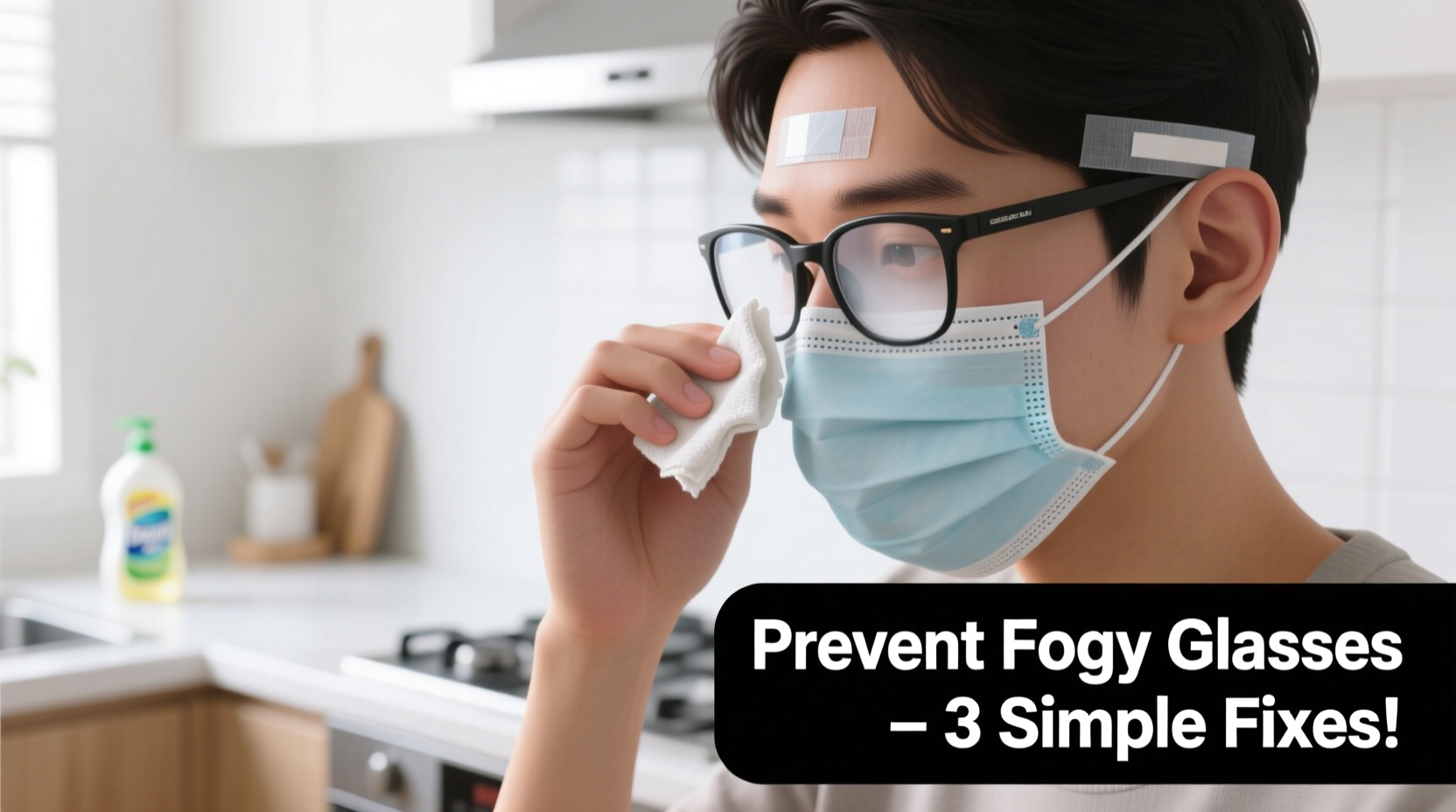
Fogging occurs due to temperature and humidity differences. When you exhale, warm, moist air rises from your mouth and nose. If your mask doesn’t form a tight seal across the bridge of your nose, that air flows upward and hits the cooler surface of your eyeglass lenses. This causes the moisture in your breath to condense into tiny water droplets—the familiar fog.
Materials matter too. Plastic lenses tend to fog more easily than glass because they’re poorer conductors of heat and cool down faster. Anti-reflective coatings can also influence how quickly fog forms and dissipates.
The solution isn’t to stop wearing masks or avoid glasses—it’s to redirect your breath downward, where it belongs.
“Proper mask fit is critical not only for infection control but also for preventing lens fogging. A well-sealed mask stops airflow from escaping upward.” — Dr. Lena Patel, Ophthalmic Research Specialist
Step-by-Step Guide to Stop Glasses from Fogging
Follow this five-step process to achieve clear vision while safely masked:
- Choose the right mask style. Opt for masks with a built-in nose wire. These allow you to mold the top edge snugly around the contour of your nose, blocking upward airflow.
- Position your glasses correctly. Place your glasses over the top edge of the mask, not under it. This creates a barrier that traps escaping air inside the mask.
- Seal the gap between mask and skin. Use tape, fabric strips, or adhesive patches to close any space along the upper edge of the mask.
- Pre-treat lenses with anti-fog solutions. Apply a homemade or commercial anti-fog agent before putting on your glasses.
- Breathe downward. Consciously direct your breathing toward your chest rather than straight ahead or upward.
Implementing all steps maximizes effectiveness, but even one or two changes can make a noticeable difference.
Effective Home Fixes to Try Today
You likely already have everything you need at home to solve this problem. Here are some of the most reliable DIY methods:
1. Tape the Top of Your Mask
Use hypoallergenic medical tape (like paper tape or 3M Micropore) to secure the upper edge of your mask to your skin along the bridge of your nose. This physically blocks exhaled air from rising. Apply the tape so it adheres both to the mask and your skin for maximum seal.
2. Wear Glasses Over the Mask
This may seem counterintuitive if you're used to tucking your glasses under the mask, but placing them on top uses their weight and frame design to press the mask material against your face. It acts like a secondary seal. For best results, adjust the arms of your glasses so they sit firmly without slipping.
3. Create a Chin Tuck Seal
Pull the bottom of your mask below your chin and then bring it back up, creating extra tension across the front of your face. This “double-layer” stretch helps the mask cling tighter to your cheeks and jawline, reducing overall air leakage—including at the top.
4. Use a Tissue as a One-Way Barrier
Fold a single-ply tissue and place it inside the top third of your mask, directly against the nose wire. The tissue absorbs moisture and redirects airflow downward. Replace it every few hours or when damp. This method is especially useful for surgical masks without adjustable wires.
Do’s and Don’ts Table: Managing Foggy Lenses
| Do’s | Don’ts |
|---|---|
| Do use a mask with a moldable nose wire. | Don’t rely solely on loose-fitting cloth masks without adjustments. |
| Do position glasses over the mask, not under. | Don’t use saliva to wipe lenses—it leaves residue that attracts moisture. |
| Do pre-clean lenses with soapy water to create a temporary anti-fog film. | Don’t apply household cleaners like Windex directly on coated lenses. |
| Do replace inner tissues or tapes periodically during long wear. | Don’t ignore signs of skin irritation from prolonged taping. |
Make Your Own Anti-Fog Solution at Home
Commercial anti-fog sprays work, but you can make an equally effective version using common household items. Here’s a simple recipe:
- Mix 1 tablespoon of mild dish soap (like Dawn) with 1 cup of warm water.
- Dip a soft cloth into the solution.
- Gently wipe both sides of your lenses.
- Let air dry—do not rinse or wipe off.
The soap leaves behind a microscopic surfactant layer that prevents water molecules from clustering into fog droplets. One application can last several hours, depending on humidity and breathing intensity.
Reapply after cleaning your glasses normally. Avoid using soaps with lotions or fragrances, as these can leave streaks or degrade lens coatings.
“A thin layer of soap disrupts surface tension, which is exactly what prevents fog formation. It’s low-tech but highly effective.” — Prof. Alan Zhou, Materials Scientist at MIT
Mini Case Study: A Teacher’s Daily Struggle
Sarah, a middle school teacher in Portland, spent months struggling with fogged lenses during virtual and in-person classes. Her prescription glasses would steam up within minutes of putting on her surgical mask, forcing her to constantly remove and clean them—disrupting lessons and increasing exposure risk.
She tried several methods: adjusting straps, using anti-fog cloths, even wearing contacts. Nothing worked consistently. Then she implemented a three-part fix: she began using a reusable cotton mask with a nose wire, placed a folded tissue inside the top edge, and started wearing her glasses over the mask.
The change was immediate. Her lenses stayed clear throughout the school day. She later shared the technique with colleagues, six of whom reported similar success. “It sounds silly,” she said, “but being able to see my students again made teaching feel human again.”
Checklist: Prevent Foggy Glasses in 5 Minutes or Less
Quick Fix Checklist:
- ☐ Choose a mask with a flexible nose wire
- ☐ Mold the wire tightly over the bridge of your nose
- ☐ Position glasses over the top of the mask
- ☐ Insert a folded tissue inside the upper mask layer
- ☐ Apply homemade anti-fog solution (soap + water)
- ☐ Test seal by breathing deeply—no warm air should hit lenses
- ☐ Carry spare tissues and wipes for midday refresh
Run through this checklist each morning or before entering environments where visibility matters—like driving, medical appointments, or meetings.
FAQ: Common Questions About Glasses and Mask Fogging
Can I use shaving cream as an anti-fog treatment?
Yes, non-gel shaving creams can work similarly to soap. Apply a small amount to lenses, rub gently with a microfiber cloth, then buff dry. It leaves a thin film that resists fogging for several hours. However, test on one lens first—some formulas contain additives that may harm coatings.
Why do my glasses fog up even with a well-fitted mask?
Even small gaps can allow enough warm air to escape and cause fogging. Factors like talking frequently, high indoor humidity, or rapid temperature changes (e.g., entering a warm room from outside) increase the likelihood. Combine physical sealing with anti-fog treatments for best results.
Are there masks specifically designed to prevent fogging?
Yes. Some brands now market “anti-fog” or “glasses-friendly” masks with extended upper panels, double nose wires, or internal moisture barriers. While effective, they’re not necessary—most standard masks can be adapted using the methods described here.
Final Thoughts and Action Plan
Foggy glasses don’t have to be an unavoidable side effect of mask-wearing. With a few thoughtful adjustments, you can maintain clear vision, comfort, and safety—all without spending money or relying on hard-to-find products. The key lies in controlling airflow and treating lens surfaces proactively.
Start with one method—like repositioning your glasses over the mask—and build from there. Combine techniques based on your lifestyle. If you’re on your feet all day, prioritize durability and breathability. If you work at a desk, focus on long-lasting anti-fog treatments.
Small changes lead to big improvements in daily function and confidence. Clear lenses mean clearer communication, safer navigation, and less frustration.




 浙公网安备
33010002000092号
浙公网安备
33010002000092号 浙B2-20120091-4
Comments
No comments yet. Why don't you start the discussion?