
Every holiday season, families pull out their beloved tinsel garlands—shimmering strands of festive cheer meant to drape elegantly across mantles, stair railings, and Christmas trees. But too often, the magic is short-lived. Within minutes of unpacking, tinsel clings stubbornly to hands, clothing, and nearby surfaces, turning a joyful decorating ritual into a frustrating battle with static electricity. The culprit? Dry winter air, synthetic materials, and improper handling. The good news: with the right knowledge and techniques, you can eliminate static cling and enjoy a smooth, stress-free tinsel garland installation.
Tinsel, traditionally made from PVC or mylar-coated plastic, is inherently prone to static buildup. When rubbed against itself during storage or unpacking, electrons transfer between strands, creating an imbalance that results in repulsion and attraction—leading to chaotic, unmanageable tangles. This issue worsens in low-humidity environments, which are common in heated homes during winter. But by understanding the science behind static and applying practical solutions, you can preserve both your decor and your peace of mind.
The Science Behind Static Cling in Tinsel Garlands
Static electricity occurs when two materials come into contact and then separate, causing electrons to transfer from one surface to another. One becomes positively charged; the other negatively charged. In the case of tinsel garlands, the thin plastic filaments easily rub together in storage, building up significant static charge. Once exposed to air—especially dry indoor air—the strands repel each other and attract nearby objects like skin, wool sweaters, or furniture.
Winter conditions amplify this problem. Indoor heating systems reduce relative humidity, sometimes dropping it below 30%. At these levels, air lacks moisture to conduct away electrical charges, allowing static to accumulate and persist. A single strand of tinsel may carry enough charge to leap several inches toward a grounded object—or stick relentlessly to your sleeve.
Understanding this mechanism is the first step toward control. You're not fighting whimsy; you're managing physics. And like any physical phenomenon, static can be mitigated through environmental adjustment, material treatment, and careful handling.
Step-by-Step Guide to Static-Free Tinsel Installation
Installing tinsel without static doesn’t require expensive tools or complex preparation. It does, however, benefit from a deliberate sequence of actions designed to neutralize charge and minimize friction. Follow this timeline for best results:
- Prepare the Environment (1–2 hours before): Turn on a humidifier in the room where you'll be working. Aim for 40–50% relative humidity if possible. Close windows and doors to maintain stable conditions.
- Unpack Carefully: Remove the garland from its storage container slowly. Avoid shaking or pulling sharply, as this increases friction and static generation.
- Ground Yourself: Before touching the tinsel, touch a metal faucet, appliance, or radiator to discharge any personal static buildup.
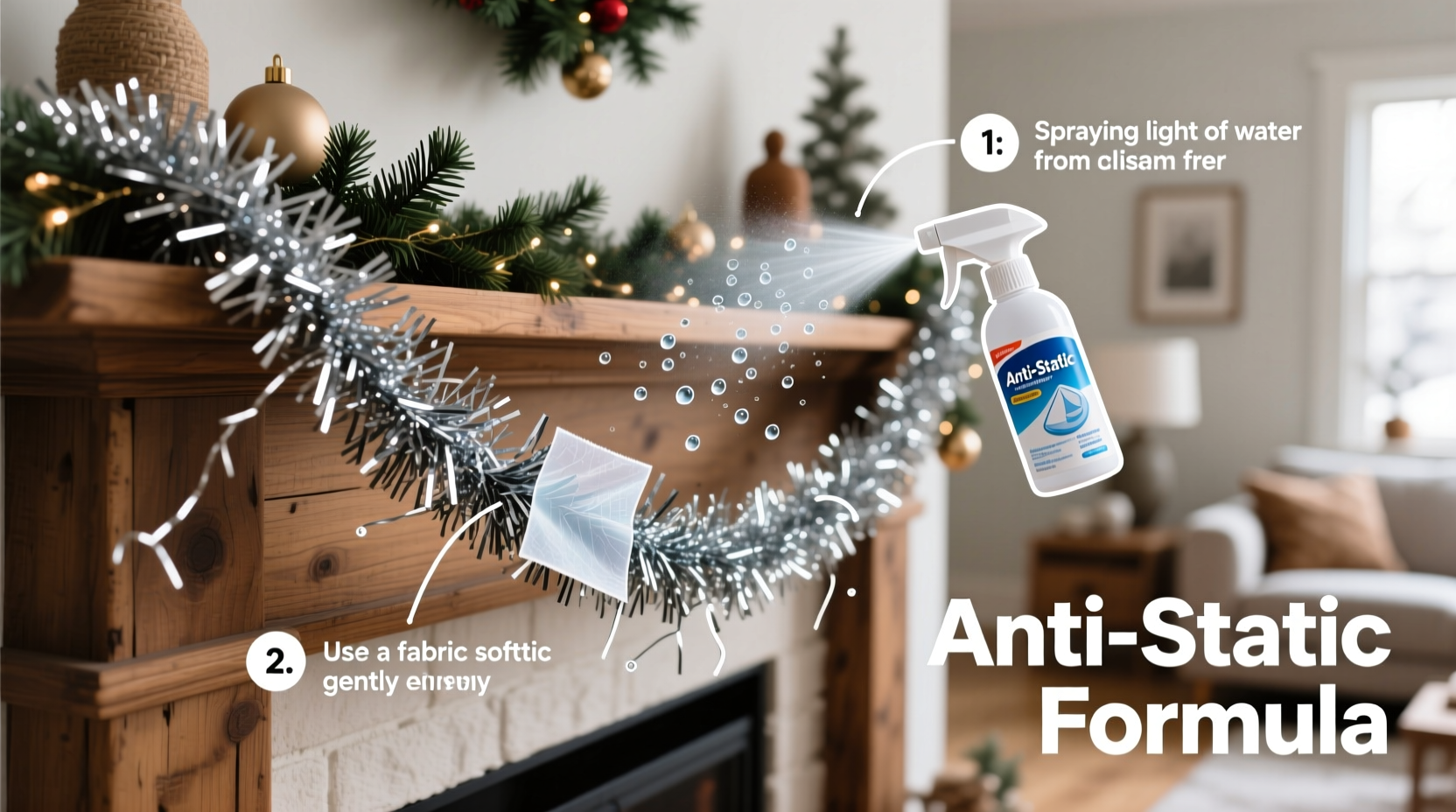
- Spray Lightly with Anti-Static Solution: Use a fine mist of diluted fabric softener (see recipe below) or commercial anti-static spray from a distance of about 12 inches. Do not soak the tinsel.
- Let It Rest: Allow the sprayed garland to sit for 5–10 minutes so the solution can evenly distribute and dissipate charge.
- Handle with Cotton Gloves: Wear clean cotton gloves to reduce skin-to-tinsel contact. Synthetic fabrics on bare hands exacerbate static.
- Install Gradually: Drape the garland in sections rather than trying to hang it all at once. Work from top to bottom on trees or railings.
- Final Touch-Up: If stray strands lift after installation, use a dryer sheet to gently smooth them into place.
This method prevents the majority of static issues while preserving the aesthetic appeal of your tinsel. Rushing through steps—especially skipping grounding or spraying—increases the likelihood of cling and frustration.
Effective Anti-Static Treatments and Household Solutions
You don’t need specialized products to combat static in tinsel. Many effective remedies can be made from common household items. The key is using ingredients that leave a thin, conductive residue to help dissipate electrical charges without damaging the material.
A simple and widely tested solution is a diluted fabric softener spray:
- Mix one part liquid fabric softener with ten parts water in a clean spray bottle.
- Shake gently before use.
- Mist the tinsel lightly from 10–12 inches away—never drench it.
- Allow to air-dry for a few minutes before handling.
Fabric softeners contain cationic surfactants that neutralize negative charges on surfaces. While originally designed for laundry, they work equally well on plastics like tinsel when properly diluted.
Alternatively, use unscented dryer sheets. Gently run one over the length of the garland before and during installation. The waxy coating transfers just enough anti-static agent to reduce clinging without leaving visible residue.
For those preferring natural options, a light mist of water with a drop of hair conditioner can offer temporary relief. However, avoid vinegar-based sprays—they may degrade metallic coatings over time.
“Even slight humidity changes can dramatically reduce static in synthetic decorations. Pairing environmental control with topical treatments gives the best long-term results.” — Dr. Alan Reeves, Materials Physicist, National Holiday Lighting Institute
Do’s and Don’ts of Tinsel Handling and Storage
How you store your tinsel garland directly impacts how much static it develops next season. Poor storage leads to compaction, increased surface contact, and inevitable charge buildup. Use the following table as a reference for proper care practices.
| Do’s | Don’ts |
|---|---|
| Store tinsel loosely coiled in a breathable cotton bag | Compress tinsel tightly in plastic bins |
| Keep in a climate-controlled area (ideally 40–50% humidity) | Store in attics, basements, or garages with temperature extremes |
| Place a dryer sheet inside the storage container | Use plastic wrap or zip-lock bags for long-term storage |
| Label containers clearly to avoid rough handling during retrieval | Stack heavy items on top of tinsel boxes |
| Inspect and lightly treat garlands before storing | Store tinsel near wool blankets or synthetic fabrics |
Plastic storage containers, while durable, trap noxious gases from off-gassing materials and encourage static accumulation due to constant surface contact. Opt instead for acid-free tissue paper and wide cardboard tubes or custom fabric rolls. These allow airflow and reduce filament-to-filament friction.
Real-World Example: A Family’s Holiday Breakthrough
The Thompson family in Minneapolis had struggled for years with their heirloom tinsel garlands. Every December, the process of decorating their staircase turned into a comedy of errors: strands flew everywhere, stuck to arms, floated upward like sentient ribbons, and refused to lie flat. After one particularly disastrous attempt left tinsel tangled in a ceiling fan, they decided to investigate solutions.
They began by purchasing a digital hygrometer and discovered their living room humidity was only 28%. They introduced a central humidifier and placed smaller units near storage areas. Next, they switched from plastic bins to handmade cotton drawstring bags lined with anti-static dryer sheets. Before installation, they applied a light mist of homemade anti-static spray and wore cotton gloves.
The difference was immediate. For the first time in memory, the tinsel draped smoothly, stayed in place, and didn’t leap toward anyone who walked by. Their children even enjoyed helping with the decoration process. “It went from being something we dreaded to a real family tradition,” said Sarah Thompson. “We actually look forward to getting the tinsel out now.”
Essential Checklist for Static-Free Tinsel Season
Before you begin your next holiday decoration project, go through this checklist to ensure a seamless experience:
- ✅ Check indoor humidity levels (ideal: 40–50%)
- ✅ Turn on humidifiers 1–2 hours before unpacking
- ✅ Gather cotton gloves and anti-static spray or dryer sheets
- ✅ Choose a spacious, clutter-free area for setup
- ✅ Ground yourself by touching a metal object before handling tinsel
- ✅ Lightly mist tinsel with anti-static solution
- ✅ Allow treated garland to rest for 5–10 minutes
- ✅ Install in manageable sections, smoothing as you go
- ✅ Store properly afterward using breathable containers and anti-static aids
Completing these steps systematically reduces the risk of static-related mishaps and extends the usable life of your decorations. Over time, consistent care means less effort each year.
Frequently Asked Questions
Can I use hairspray to stop tinsel from clinging?
No, hairspray is not recommended. While it may temporarily weigh down strands, it contains polymers and alcohol that can stiffen, discolor, or degrade tinsel over time. It also leaves a sticky residue that attracts dust. Stick to diluted fabric softener or commercial anti-static sprays instead.
Why does my tinsel attract more static some years than others?
Variations in static are usually due to changes in indoor humidity, storage conditions, or the age of the tinsel. Older garlands may have microfractures in the coating that increase surface area and static retention. Additionally, new HVAC filters or ventilation patterns can alter room dryness from year to year.
Is there a way to fix tinsel that’s already statically charged?
Yes. Immediately stop handling it. Lay the garland flat on a non-conductive surface (like a wooden table), and lightly mist with an anti-static solution. Alternatively, pass a dryer sheet slowly along the length of the strands. Let it rest for 10 minutes before resuming installation.
Conclusion: Enjoy Your Decor Without the Drama
Static cling doesn’t have to be an unavoidable side effect of using tinsel garlands. With a combination of environmental control, proper handling, and smart storage, you can preserve the beauty and ease of your holiday traditions. The small investments in time and preparation pay back in smoother installations, longer-lasting decor, and more joyful moments shared with loved ones.
Your tinsel should shimmer—not scatter. By applying these strategies year after year, you’ll transform a common seasonal annoyance into a seamless part of your festivities. Take control of static this holiday season and let your decorations shine the way they were meant to.




 浙公网安备
33010002000092号
浙公网安备
33010002000092号 浙B2-20120091-4
Comments
No comments yet. Why don't you start the discussion?