
Every year, as families unpack their holiday decorations, one frustrating problem reappears: tinsel and lightweight ornaments clinging together, sticking to hands, or refusing to drape properly due to static electricity. This invisible force can turn festive preparations into a battle with glitter-covered fingers and tangled garlands. Static cling isn’t just annoying—it diminishes the elegance of your decor and adds unnecessary time to setup and cleanup. The good news is that with a few strategic adjustments to how you handle, store, and treat these delicate items, static can be significantly reduced or even eliminated.
Static electricity builds up when materials rub against each other—especially synthetic fibers like those used in tinsel, mylar icicles, and plastic snowflakes. Dry indoor air during winter exacerbates the issue, creating ideal conditions for electrons to transfer and generate charge. Understanding this process is the first step toward controlling it. By addressing environmental factors, choosing the right handling techniques, and using simple household remedies, you can enjoy smooth, static-free decorating.
Understanding Why Static Cling Happens
Static cling occurs when two surfaces come into contact and then separate, causing an imbalance of electrical charges. Lightweight Christmas decor—particularly metallic tinsel, foil ribbons, and plastic ornaments—is typically made from non-conductive synthetic materials such as polyethylene or polyester. These materials easily gain or lose electrons through friction (a process known as triboelectric charging), especially when pulled from storage boxes or unwound from spools.
Indoor heating systems lower humidity levels during winter months, often dropping relative humidity below 30%. In dry air, static charges aren't dissipated efficiently, allowing them to build up on surfaces. As a result, tinsel strands repel or attract each other, stick to clothing, or cling stubbornly to tree branches instead of draping naturally.
The severity of static depends on several factors:
- Material composition: Metallic-coated plastics are more prone to static than natural fibers.
- Ambient humidity: Below 40% RH dramatically increases static problems.
- Handling method: Rapid unwrapping or rubbing increases friction and charge buildup.
- Storage conditions: Plastic bins and tissue paper can generate static when unpacked.
“During the holidays, we see a surge in calls about ‘sticky’ decorations. Most of the time, it’s not a defect—it’s physics. Low humidity combined with synthetic materials creates perfect conditions for static. The fix is often as simple as adding moisture back into the environment.” — Dr. Lena Pruitt, Indoor Environmental Scientist
Effective Methods to Prevent and Eliminate Static Cling
Preventing static isn’t about eliminating physics—it’s about managing the variables within your control. From pre-treatment to environmental adjustments, here are proven strategies to keep your lightweight decor behaving.
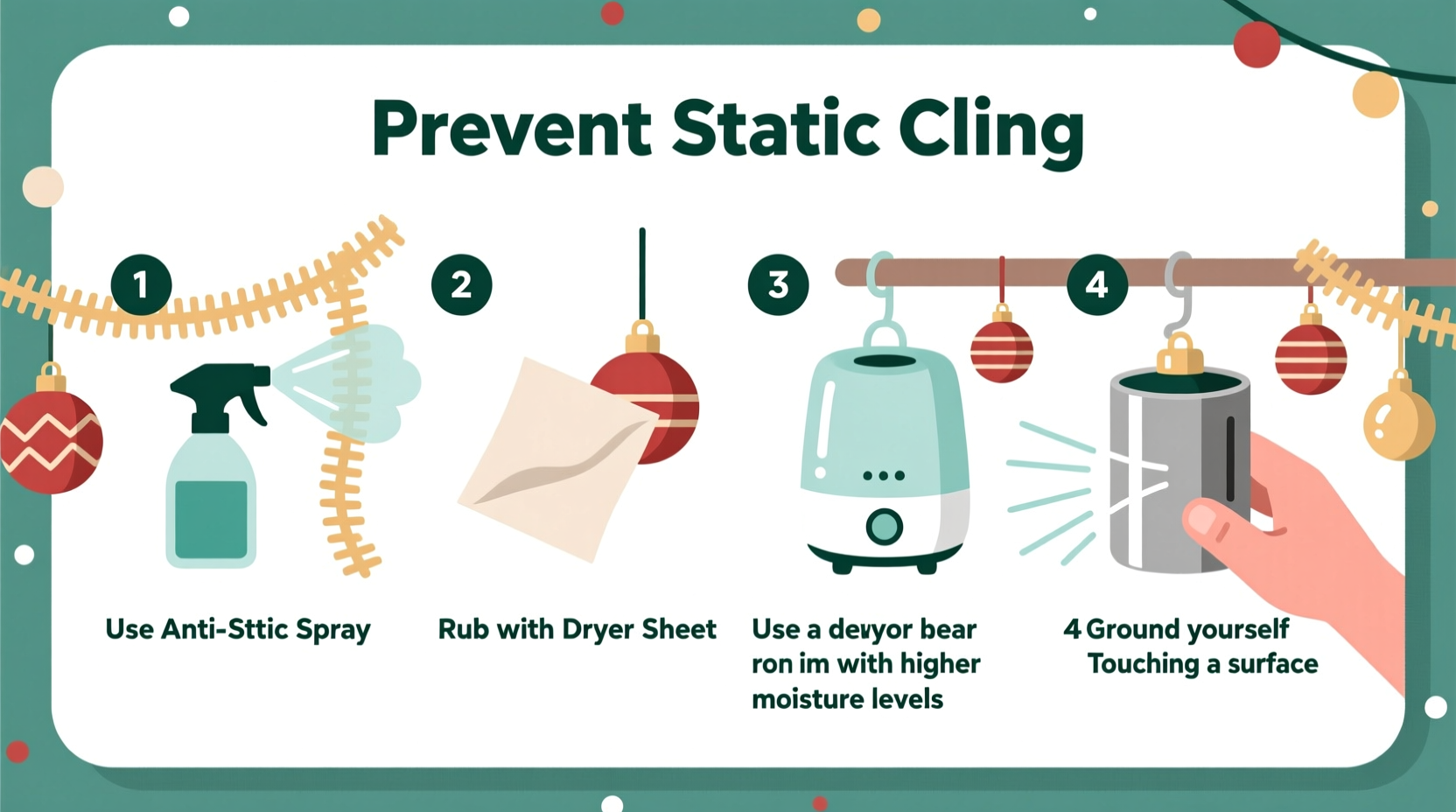
1. Increase Humidity Levels
Maintaining indoor humidity between 40% and 60% is one of the most effective ways to reduce static. Moisture in the air helps conduct away electric charges before they accumulate. Use a hygrometer to monitor room humidity and adjust accordingly.
2. Pre-Treat Decorations with Anti-Static Spray
Commercial anti-static sprays or DIY versions can neutralize charges on contact. Lightly mist tinsel or garlands before hanging—just enough to dampen slightly without soaking.
To make a homemade solution:
- Mix one part fabric softener with five parts water in a spray bottle.
- Shake gently to combine.
- Test on a small section first to ensure no discoloration.
- Spray lightly from 8–10 inches away.
The cationic surfactants in fabric softener coat fibers and reduce surface resistance, helping dissipate static. Avoid oversaturating, as excess moisture can damage paper-based or glued decorations.
3. Use Metal Hangers or Ground Yourself
Before handling tinsel, touch a grounded metal object like a faucet, radiator, or appliance. This discharges any built-up static on your body, preventing it from transferring to the decor. Alternatively, wear cotton gloves, which generate less static than bare hands or wool.
4. Condition Tinsel with Dryer Sheets
Rubbing a dryer sheet over tinsel or lightly running strands through one reduces static almost instantly. The waxy coating left behind acts as a lubricant and anti-static agent.
Best Storage Practices to Minimize Future Static
How you store your decorations has a lasting impact on how they behave when unpacked. Poor storage contributes significantly to static issues year after year.
Plastic bins, while convenient, are notorious for generating static when opened. Similarly, wrapping tinsel tightly around cardboard or stuffing it into crowded containers increases surface friction. Instead, adopt storage methods that minimize contact and preserve treatment.
Recommended Storage Materials
| Material | Static Risk | Recommendation |
|---|---|---|
| Plastic bins | High | Lay a cotton sheet inside or line with tissue paper |
| Polyester bags | High | Avoid; switch to cotton drawstring bags |
| Tissue paper (undyed) | Low | Wrap individual pieces loosely |
| Cotton pillowcases | Very Low | Ideal for tinsel garlands and fragile icicles |
| Vacuum-sealed bags | Extreme | Do not use—increases compression and friction |
Store boxes in a climate-stable area—not in attics or garages where temperatures fluctuate. Fluctuations promote condensation and material stress, both of which worsen static upon opening.
Step-by-Step Guide: Static-Free Decorating Timeline
Follow this sequence for a smoother, frustration-free decorating experience:
- One day before decorating: Turn on a humidifier in the room where you’ll set up your tree or display. Aim to raise humidity to at least 40%.
- Day of decorating – 30 minutes prior: Open storage boxes and let contents acclimate to room temperature. Do not remove items yet.
- Before handling: Touch a metal faucet or appliance to ground yourself. Consider wearing cotton gloves.
- Pre-treat tinsel: Lightly spray with DIY anti-static solution or pass through a dryer sheet.
- Unwrap slowly: Avoid rapid pulling. Let strands fall naturally rather than shaking them loose.
- Hanging technique: Use wooden or plastic hooks instead of metal if possible. Apply decor in sections, stepping back frequently to assess drape.
- Final touch: Mist the air around (not directly on) the tree with a fine water spray to settle lingering charges.
This timeline allows environmental and material factors to stabilize before interaction, minimizing the sudden shocks and clinging that ruin the flow of decoration.
Real-World Example: A Church Nativity Display Rescue
In December 2022, the volunteer team at Grace Fellowship Church struggled with their annual outdoor nativity scene. Their mylar “starlight” tinsel, meant to shimmer above the manger, clumped uncontrollably every evening when lights turned on. Volunteers spent hours untangling strands, only for them to re-cling by morning.
After consulting a local physics teacher, they implemented three changes: storing tinsel in cotton sacks instead of plastic totes, treating each piece with a diluted fabric softener spray before installation, and installing a small weatherproof humidifier inside the display shed. They also grounded the metal frame by connecting it to a buried copper rod.
The results were immediate. The tinsel draped smoothly, maintained separation, and caught the wind elegantly. Attendance at the display increased by 35%, with many visitors commenting on the professional appearance. “It looked like magic,” said lead decorator Maria Tran. “But really, it was just science done right.”
Essential Checklist: Prevent Static Cling This Holiday Season
Use this checklist to ensure your decorations stay neat and manageable:
- ✅ Measure indoor humidity and use a humidifier if below 40%
- ✅ Ground yourself before handling tinsel or lightweight decor
- ✅ Pre-treat tinsel with anti-static spray or dryer sheet
- ✅ Store decorations in cotton or acid-free paper—not plastic
- ✅ Avoid vacuum sealing or compressing delicate items
- ✅ Unpack and acclimate decor before use
- ✅ Handle items slowly to reduce friction
- ✅ Keep a spare dryer sheet in each storage container
Frequently Asked Questions
Can I use hairspray to stop static on tinsel?
No. While hairspray may temporarily weigh down tinsel, it contains polymers and alcohol that can leave a sticky residue, attract dust, and degrade metallic coatings over time. It’s not recommended for long-term use on delicate decor.
Why does my tinsel still cling even after spraying?
If static persists, ambient humidity may still be too low. Also, ensure you’re not oversaturating—the goal is a light, even mist. Over-wetting can cause drooping or damage adhesives. Allow treated decor to sit for 5–10 minutes before handling to let the solution work.
Is there a permanent fix for static-prone decorations?
There’s no permanent fix, but consistent preventive habits—proper storage, pre-treatment, and humidity control—can reduce static to negligible levels each year. Some collectors replace older tinsel with modern anti-static versions made with carbon-infused fibers, though these are rare and typically custom-made.
Conclusion: Enjoy a Smoother, More Elegant Holiday Display
Static cling doesn’t have to be a seasonal inevitability. With a clear understanding of its causes and practical steps to counteract it, you can transform your decorating experience from chaotic to graceful. Simple actions—like adjusting humidity, using dryer sheets, and storing decor wisely—pay dividends every holiday season. Your tinsel will drape beautifully, your lightweight ornaments will stay in place, and your time will be spent celebrating, not untangling.
The holidays are about joy, tradition, and shared moments. Don’t let something as small as static steal your peace. Implement these strategies this year, and pass them on to family members who help decorate. Small changes today create lasting improvements for years to come.




 浙公网安备
33010002000092号
浙公网安备
33010002000092号 浙B2-20120091-4
Comments
No comments yet. Why don't you start the discussion?