
Tinsel garlands bring festive sparkle to holiday décor, but when draped near electronics—televisions, sound systems, computers, or gaming consoles—they often become a nuisance due to static cling. The lightweight metallic strands attract to screens, speakers, and vents, not only marring the visual appeal but potentially interfering with device performance. More critically, persistent static buildup can increase the risk of electrostatic discharge (ESD), which may damage sensitive electronic components over time.
Static electricity occurs when two materials rub together, transferring electrons and creating an imbalance. Tinsel, typically made from metallized plastic film like PET (polyethylene terephthalate), is highly prone to holding a charge, especially in dry indoor environments common during winter months. When placed near conductive surfaces such as metal speaker grills or glass screens, the charged tinsel is irresistibly drawn to them.
The solution lies not in avoiding tinsel altogether, but in understanding the science behind static and applying targeted strategies to neutralize or prevent it—safely and effectively. This guide provides actionable methods backed by material science and electrical safety principles to keep your tinsel looking elegant without compromising your electronics.
Understanding Static Cling: Why It Happens Around Electronics
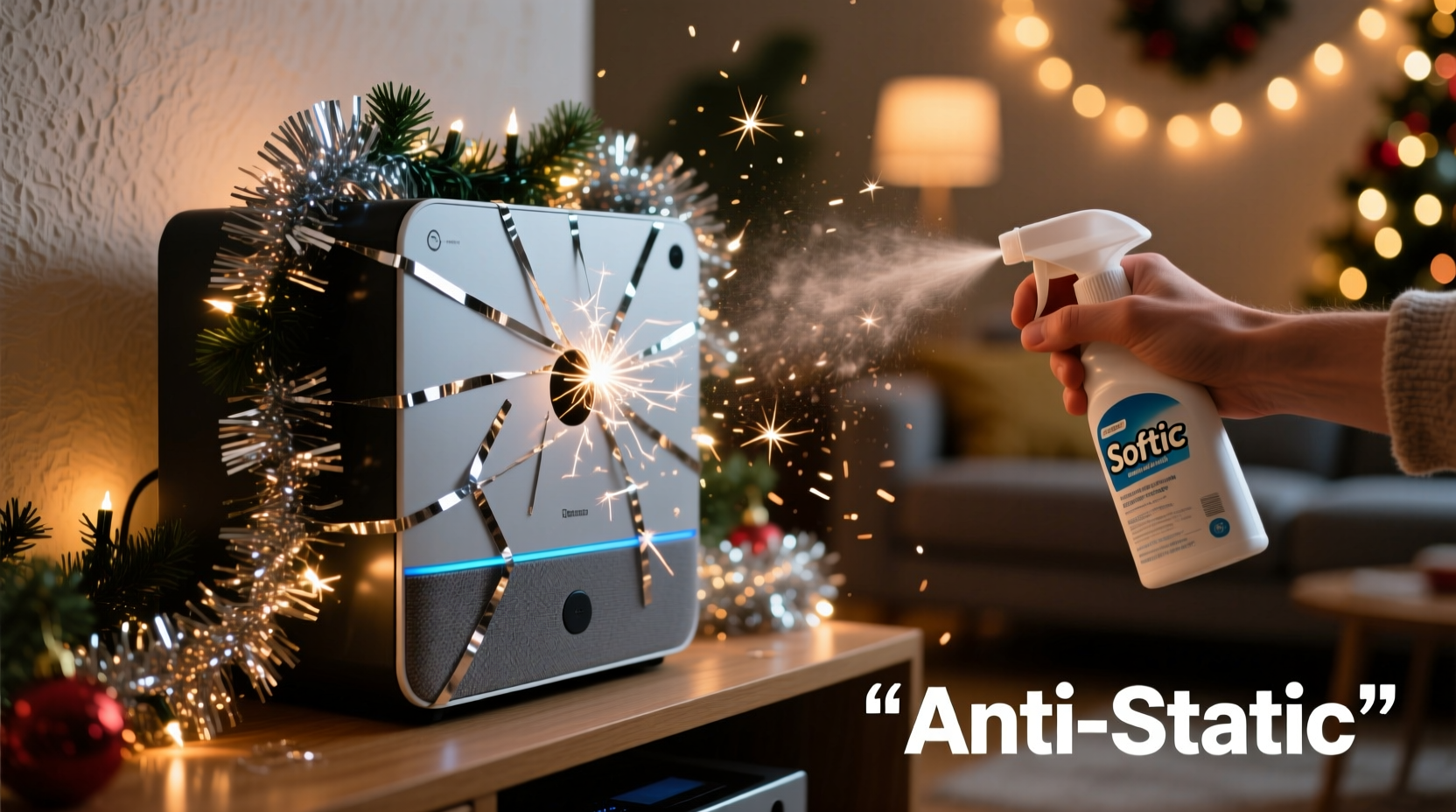
Static cling isn’t random—it follows predictable physical laws. When tinsel moves through the air or brushes against fabric, furniture, or hands, it gains a negative charge. Electronics, particularly those with grounded metal parts or large flat surfaces like TVs, act as attractive points for this charge. The screen’s surface, even if non-conductive, can develop an opposite charge through induction, pulling the tinsel toward it.
Moreover, many modern homes are sealed tightly during colder months, reducing humidity. Dry air increases the likelihood of static buildup because moisture in the air normally helps dissipate electric charges. With relative humidity below 40%, static problems intensify. Electronics themselves generate heat, which further dries the surrounding air, creating a perfect storm for cling-prone conditions.
Another overlooked factor is airflow. Devices like game consoles or AV receivers emit warm air through vents. As tinsel hangs nearby, convection currents lift and swirl the strands, increasing contact with charged surfaces and promoting repeated clinging behavior.
Proven Methods to Prevent Static Cling
Preventing static cling requires a combination of environmental control, material treatment, and strategic placement. No single method works universally, so layering approaches yields the best results.
1. Increase Ambient Humidity
Maintaining indoor humidity between 40% and 60% significantly reduces static electricity. Moisture allows charges to leak away harmlessly before building up. Use a digital hygrometer to monitor levels in your living space.
A portable humidifier placed near entertainment centers adds localized moisture without over-humidifying the entire room. Ultrasonic models are quiet and effective, releasing a fine mist that blends into the air. For smaller setups, placing a shallow tray of water near a heat source (but safely away from electronics) can help raise local humidity slightly.
2. Treat Tinsel with Anti-Static Sprays
Commercial anti-static sprays designed for clothing or upholstery can be lightly applied to tinsel. Products containing quaternary ammonium compounds work by forming a conductive layer that dissipates charge. However, caution is essential: never spray directly onto electronics or allow overspray near vents or screens.
“Applying anti-static agents to décor items near electronics should be done off-site, in a well-ventilated area, and only after ensuring full drying.” — Dr. Linette Lopez, Electrical Safety Consultant at the National Fire Protection Association (NFPA)
To apply safely:
- Lay the tinsel on newspaper outdoors or in a garage.
- Hold the spray 12–18 inches away and mist lightly—do not soak.
- Allow at least 30 minutes to dry completely before handling.
- Test on a small section first to ensure no discoloration.
3. Use Fabric Softener Dilution (DIY Method)
A cost-effective alternative is a diluted fabric softener solution. Mix one part liquid fabric softener with five parts water in a spray bottle. Lightly mist the tinsel while wearing gloves, then hang to dry fully before use. The cationic surfactants in softeners coat fibers and reduce friction-based charging.
4. Ground Nearby Surfaces
While you can't ground tinsel directly, grounding adjacent surfaces can help. If your TV stand or media console is metal, ensure it’s properly earthed. Some audiophiles and home theater enthusiasts attach grounding wires from equipment racks to cold water pipes to minimize ESD risks. While extreme for casual users, even touching a grounded appliance before adjusting tinsel can discharge your body and prevent adding more static during installation.
5. Choose Alternative Materials
Consider swapping traditional metallic tinsel for less static-prone alternatives. Options include:
- Foam or felt garlands: Lightweight, non-conductive, and available in festive colors.
- Paper chains: Classic, biodegradable, and naturally low-static.
- LED string garlands: Battery-powered lights woven into flexible stems eliminate loose strands entirely.
Step-by-Step Prevention Plan
Follow this sequence before decorating to minimize static issues from the start:
- Assess the environment: Measure room humidity. If below 40%, activate a humidifier 24 hours before decorating.
- Prepare tinsel safely: Lay out tinsel away from electronics. Apply anti-static spray or DIY solution and let dry completely.
- Clean surfaces: Wipe down TV screens, speaker cabinets, and shelves with a microfiber cloth to remove existing dust and residual charge.
- Install with spacing: Use clear fishing line or adhesive hooks to suspend tinsel at least 6 inches from any electronic device. Avoid direct contact with screens or grills.
- Monitor and maintain: Check weekly for new clinging. Re-mist tinsel if needed and reposition loose ends promptly.
Do’s and Don’ts: Safe Tinsel Management Near Electronics
| Do’s | Don’ts |
|---|---|
| Use anti-static treatments before hanging | Spray chemicals directly on or near electronics |
| Maintain humidity above 40% | Place tinsel inside ventilation openings |
| Hang tinsel using non-conductive supports | Allow tinsel to drape over power cords or ports |
| Inspect garlands weekly for wear or charge buildup | Use compressed air near charged tinsel (can worsen static) |
| Store tinsel in anti-static bags after use | Leave tinsel attached to devices when not in use |
Real Example: A Home Theater Owner’s Experience
Mark R., a homeowner in Denver, Colorado, installed tinsel garlands around his wall-mounted TV and surround sound system each December. Over three years, he noticed increased audio distortion during playback and occasional unresponsiveness in his receiver’s touch controls. After consulting an AV technician, he learned that static discharge from clinging tinsel was likely interfering with signal pathways.
Following the technician’s advice, Mark switched to a routine involving pre-treated tinsel, a desktop humidifier, and strategic suspension using invisible nylon lines. He also began removing all décor immediately after the holidays instead of leaving it up for weeks. Within one season, both device stability and picture clarity improved noticeably. “I didn’t realize something so decorative could cause real technical issues,” he said. “Now I treat tinsel like I do cleaning—part of seasonal maintenance, not just decoration.”
Checklist: Static-Safe Holiday Decorating
Before hanging tinsel near electronics, complete this checklist:
- ✅ Measured room humidity and adjusted if below 40%
- ✅ Selected tinsel or alternative décor suitable for electronic zones
- ✅ Pre-treated tinsel with anti-static solution and allowed full drying
- ✅ Cleaned all nearby electronic surfaces with a dry microfiber cloth
- ✅ Planned mounting method to avoid direct contact with devices
- ✅ Positioned tinsel at least 6 inches from vents, screens, and ports
- ✅ Established a weekly inspection schedule during display period
- ✅ Prepared storage container with anti-static lining for post-season
Frequently Asked Questions
Can static from tinsel actually damage my TV or speakers?
Yes, though rare, repeated electrostatic discharges can degrade sensitive circuitry over time. Modern devices have some ESD protection, but constant exposure to static fields may interfere with capacitive sensors, touch controls, or audio input circuits. Preventative measures reduce long-term risks.
Is it safe to use dryer sheets on tinsel?
Dryer sheets can transfer anti-static compounds when gently rubbed on tinsel, but they leave behind residue and fragrances that may stain surfaces or trigger allergies. A better option is a diluted fabric softener spray used off-site and allowed to dry thoroughly. Never insert dryer sheets into electronic enclosures.
How should I store tinsel to prevent static next year?
Store tinsel in a sealed container with a humidity pack (like those used for camera gear) to maintain stable moisture. Wrap it loosely in cotton cloth or place it inside an anti-static bag (commonly used for computer components). Avoid plastic bags, which promote static buildup during storage.
Conclusion: Decorate Smart, Protect Your Tech
Festive décor should enhance your space, not endanger your electronics. By understanding how static forms and spreads, you can enjoy the shimmer of tinsel garlands without inviting unwanted cling or risk. Simple steps—like adjusting humidity, treating materials safely, and maintaining distance—go a long way in preserving both your holiday spirit and your devices’ longevity.
Start preparing early: test your environment, gather supplies, and plan placements before the first strand goes up. With mindful practices, you can create a joyful, sparkly atmosphere that’s as safe as it is beautiful.




 浙公网安备
33010002000092号
浙公网安备
33010002000092号 浙B2-20120091-4
Comments
No comments yet. Why don't you start the discussion?