
Unwrapping tinsel during the holiday season should be a joyful experience—not a battle against stubborn static that sends shimmering strands flying across the room. If you've ever tried to open a package of tinsel only to have it stick aggressively to your hands, clothes, or worse, cling to every fiber of your carpet, you're not alone. This frustrating phenomenon is especially common in homes with synthetic carpets and dry indoor air. The good news: with a few strategic adjustments and preventive measures, you can dramatically reduce—or even eliminate—static cling on tinsel during unpacking.
Static electricity builds up easily between synthetic materials like plastic-based tinsel and nylon or polyester carpet fibers. When two insulating surfaces rub together (like tinsel and packaging, or tinsel and carpet), electrons transfer, creating an imbalance that results in static charge. Once charged, lightweight tinsel becomes magnetically attracted to nearby surfaces, including your skin, clothing, and flooring. Understanding this process is the first step toward controlling it.
Understanding Why Static Cling Happens
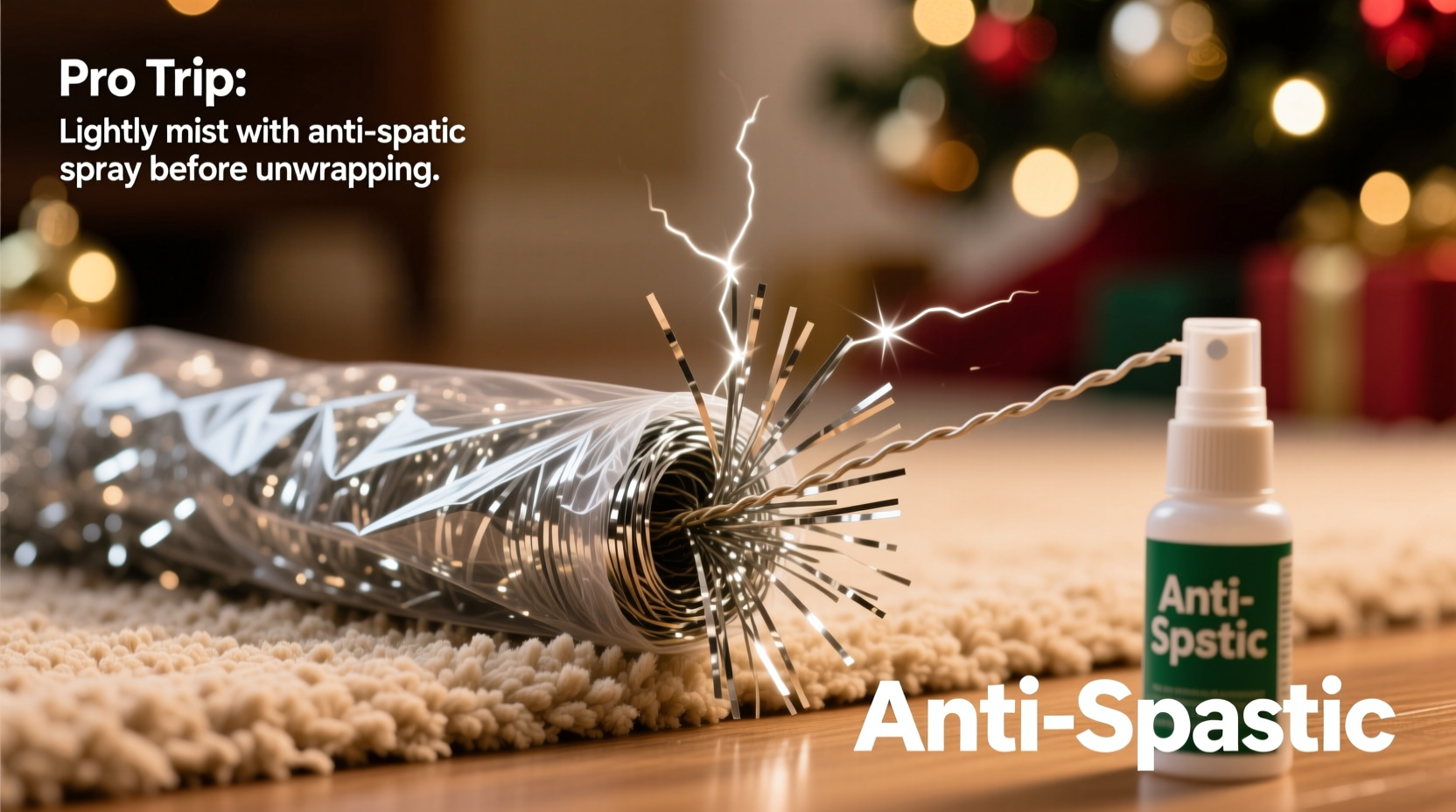
Static cling occurs due to the triboelectric effect—the scientific term for when two materials come into contact and separate, causing one to lose electrons (becoming positively charged) and the other to gain them (becoming negatively charged). Tinsel, typically made from metallized plastic film such as PET (polyethylene terephthalate), is highly prone to accumulating static charge. Carpeted floors, particularly those made from synthetic fibers like nylon or olefin, are equally susceptible.
Dry indoor environments, common in winter when heating systems reduce humidity, exacerbate the issue. In low-humidity conditions (below 40% relative humidity), air lacks moisture to dissipate electrical charges, allowing static to build up more easily. This means that opening a bag of tinsel on a heated, carpeted living room floor creates the perfect storm for static disaster.
Additionally, the act of peeling tinsel from its packaging generates friction, which further increases charge separation. Once charged, the tinsel seeks balance by clinging to neutral or oppositely charged surfaces—including your sweater, pet, or the very carpet you're standing on.
Effective Strategies to Prevent Static Cling
Preventing static cling isn’t about luck—it’s about preparation and environment control. By adjusting where, how, and when you unwrap tinsel, you can avoid the mess before it starts.
1. Increase Ambient Humidity
Maintaining indoor humidity between 40% and 60% significantly reduces static electricity. Dry air acts as an insulator, preserving charge imbalances; moist air helps conduct and neutralize them. Use a digital hygrometer to monitor your home’s humidity levels.
If your home falls below 40%, consider running a humidifier in the room where you plan to decorate. Even a temporary boost from a portable unit can make a noticeable difference when handling delicate items like tinsel.
2. Choose the Right Unwrapping Surface
Avoid placing tinsel directly on carpeted surfaces during unpacking. Instead, use a non-conductive but static-resistant surface such as a wooden table, glass countertop, or cotton-covered tray. These materials are less likely to generate or hold static charge compared to synthetic carpet fibers.
If you must work on the floor, lay down a large cotton sheet or towel first. Cotton absorbs moisture better than synthetics and doesn't generate as much friction-induced charge.
3. Pre-Treat Tinsel with Anti-Static Agents
A light application of anti-static spray can neutralize charges before they become problematic. Commercial anti-static sprays designed for clothing or electronics are safe for occasional use on tinsel. Alternatively, a diluted solution of water and fabric softener (one part softener to ten parts water) lightly misted onto a cloth—and then gently wiped over the tinsel—can help reduce static.
Caution: Never soak tinsel. Excess moisture may damage metallic coatings or cause clumping. Always test any treatment on a small section first.
4. Ground Yourself Before Handling
Your body can carry a significant static charge, especially after walking across carpet. Before touching tinsel, discharge yourself by touching a grounded metal object—such as a faucet, radiator, or appliance chassis. This safely transfers excess electrons and resets your personal charge to neutral.
Wearing leather-soled shoes instead of rubber soles also helps reduce personal static accumulation, as leather conducts electricity slightly better than insulating rubber.
Step-by-Step Guide: Safe Tinsel Unwrapping Protocol
Follow this five-step process to minimize static cling every time you unpack tinsel:
- Prepare the Environment: Turn on a humidifier 30–60 minutes before unpacking. Aim for at least 45% relative humidity.
- Select a Safe Work Surface: Move to a hard-surface table or place a cotton blanket on the floor to create a buffer zone between tinsel and carpet.
- Discharge Static from Your Body: Touch a metal faucet or appliance to ground yourself. Avoid shuffling feet on carpet just before handling.
- Treat Tinsel Lightly (Optional): If static has been a recurring problem, lightly wipe tinsel strands with a cloth dampened with anti-static solution.
- Unwrap Slowly and Deliberately: Open the packaging carefully without shaking or pulling quickly. Rapid motion increases friction and charge generation.
Do’s and Don’ts of Tinsel Handling Near Carpets
| Do | Don’t |
|---|---|
| Use a humidifier to raise indoor moisture levels | Handle tinsel in overly dry rooms (below 35% humidity) |
| Work on wood, glass, or cotton-covered surfaces | Unwrap tinsel directly on synthetic carpet |
| Ground yourself before touching tinsel | Walk across carpet and immediately touch tinsel |
| Lightly treat tinsel with anti-static spray | Soak tinsel in liquid solutions |
| Store tinsel in sealed containers with silica gel packs | Leave tinsel exposed in dusty, dry closets |
Real-World Example: A Holiday Decorator’s Wake-Up Call
Sarah M., a seasonal decorator from Minneapolis, used to spend hours untangling tinsel from her family room carpet each December. “I’d open the box right on the floor,” she recalls, “and within seconds, half the tinsel would be stuck to my socks, the couch, and the rug. It felt like trying to wrap spaghetti around a magnet.”
After researching static issues online, Sarah implemented a simple protocol: she began using a folding table in her dining room, ran a humidifier overnight, and started grounding herself by touching the sink before handling decorations. She also switched to storing tinsel in zip-top bags with a dryer sheet inside—a trick she found on a home science forum.
The result? Her next tinsel unwrapping session took under five minutes with zero clinging. “It was almost boring,” she says. “But in the best way. No drama, no frustration—just shiny strands ready to hang.”
“Static control in holiday decorating isn’t about perfection—it’s about managing environmental variables. Humidity, surface choice, and grounding make all the difference.” — Dr. Alan Zhou, Materials Scientist specializing in electrostatic phenomena
Long-Term Prevention: Storage and Maintenance Tips
Static problems don’t start at unpacking—they often begin months earlier during storage. How you store tinsel between seasons plays a crucial role in how easily it generates static later.
- Use Anti-Static Storage Bags: Store tinsel in resealable polyethylene bags with a fabric softener sheet or anti-static strip inside. The sheet slowly releases conditioning agents that reduce charge buildup.
- Avoid Heat and Sunlight: Keep tinsel in a cool, dark closet. High temperatures increase molecular activity, making materials more prone to electron transfer.
- Include Moisture Control: Add silica gel packets to storage containers to stabilize humidity and prevent brittleness.
- Label and Isolate: Keep tinsel separate from wool blankets, plastic toys, or other static-prone items that could induce charge through proximity.
Frequently Asked Questions
Can I use hairspray to stop tinsel from clinging?
While hairspray may temporarily weigh down tinsel and reduce flyaway strands, it’s not recommended. Hairspray contains polymers and alcohols that can leave residue, attract dust, and degrade the metallic coating over time. For long-term care, stick to safer anti-static methods like humidity control or fabric softener misting.
Why does tinsel stick to me but not to metal ornaments?
Tinsel clings to you because both your body and clothing (especially synthetic fabrics) can hold a static charge. Metal ornaments, however, are conductive and do not retain static charge—they dissipate it quickly. This makes them immune to the kind of clinging seen with insulating materials like plastic tinsel.
Is there static-free tinsel available?
True \"static-free\" tinsel doesn’t exist yet, but some manufacturers now offer tinsel treated with anti-static coatings during production. Look for labels indicating “low-static” or “easy-release” properties. Alternatively, consider switching to heavier garlands made from natural materials like popcorn, cranberries, or paper chains, which don’t suffer from static issues.
Checklist: Prevent Static Cling on Tinsel – Quick Reference
Before you unwrap your next batch of tinsel, run through this checklist:
- ✅ Check room humidity (aim for 40–60%)
- ✅ Turn on humidifier if needed
- ✅ Choose a non-carpeted work surface (or cover carpet with cotton)
- ✅ Ground yourself by touching metal
- ✅ Prepare anti-static spray or damp cloth (optional)
- ✅ Open packaging slowly and carefully
- ✅ Store leftover tinsel in sealed bag with dryer sheet
Conclusion
Dealing with static cling on tinsel doesn’t have to be an annual holiday headache. With a little understanding of the science behind static electricity and a few practical adjustments to your environment and habits, you can transform a frustrating chore into a smooth, mess-free process. From increasing humidity to choosing the right surface and grounding yourself, each small action adds up to big results.
Take control of your decorating experience this season. Implement these strategies early, share what works with your family, and enjoy the sparkle without the struggle. After all, the holidays are about joy—not wrestling with rogue strands of tinsel stuck to the carpet.




 浙公网安备
33010002000092号
浙公网安备
33010002000092号 浙B2-20120091-4
Comments
No comments yet. Why don't you start the discussion?