
Every holiday season, millions of homes come alive with shimmering lights, festive garlands, and delicate decorations. Among the most iconic—but often frustrating—are tinsel strands and lightweight ornaments. While they add sparkle and whimsy, they also carry a notorious side effect: static cling. This invisible force causes tinsel to stick to hands, clothes, pets, and even itself, turning joyful decorating into a tangled ordeal. The good news is that static cling is not inevitable. With an understanding of its causes and a few practical strategies, you can handle these fragile decorations smoothly and efficiently—without the frustration.
Static electricity occurs when two materials rub together, transferring electrons and creating an imbalance of charge. Lightweight synthetic materials like plastic tinsel or polystyrene ornaments are especially prone to this because they don’t conduct electricity well and easily accumulate charge. Low humidity—common in heated indoor spaces during winter—exacerbates the issue. But by adjusting your environment, tools, and techniques, you can dramatically reduce or eliminate static buildup.
Understanding the Science Behind Static Cling
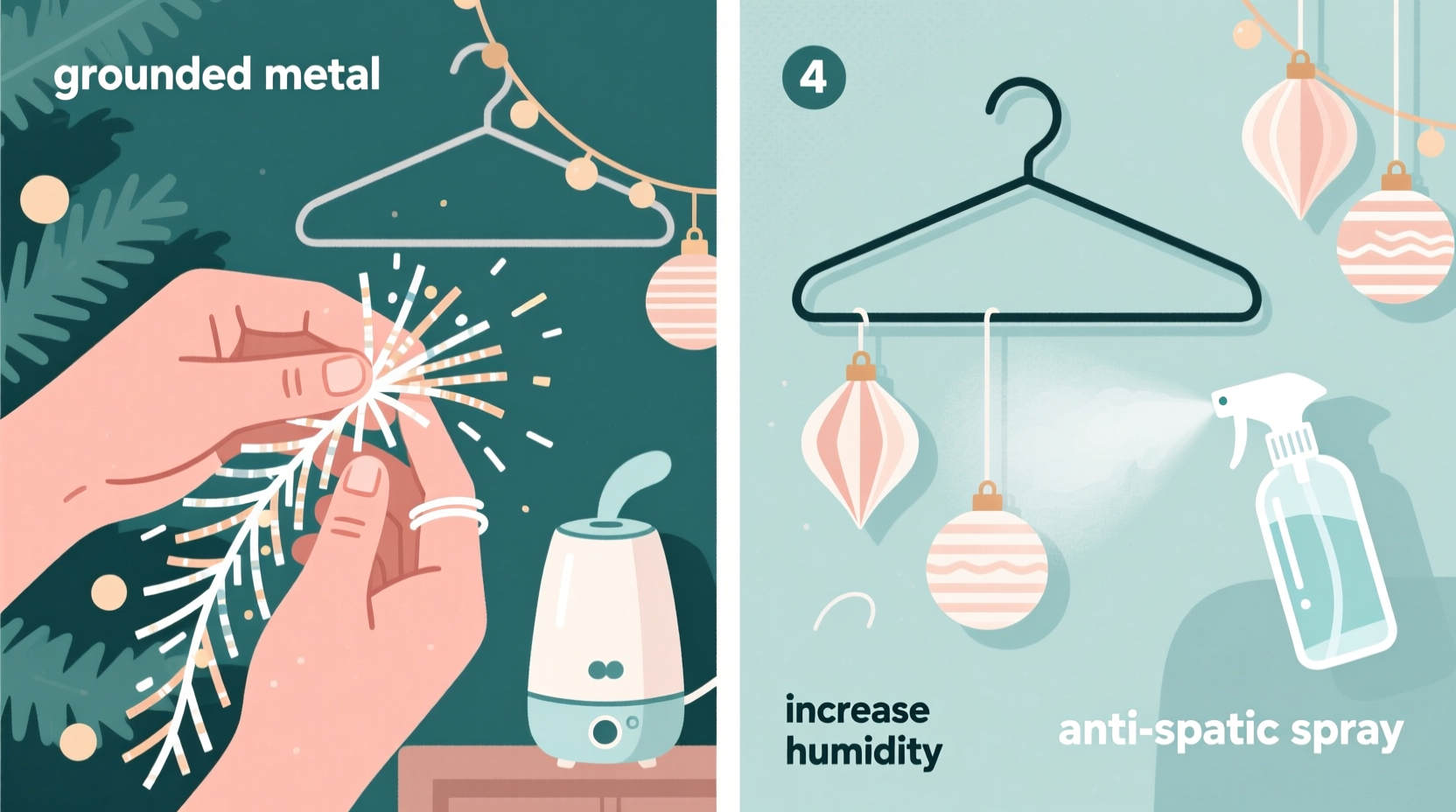
At its core, static cling is caused by electrostatic forces. When you pull tinsel from a bag or hang a foam ornament, friction between surfaces generates an electric charge. Since tinsel is made of thin plastic films (often PVC or Mylar), it holds onto this charge instead of dissipating it. The result? Strands leap toward your sweater, hair, or nearby metal objects, seemingly defying gravity.
The problem intensifies in dry air. Humidity allows charges to disperse through moisture in the air, but in winter, indoor heating reduces relative humidity to as low as 10–20%, far below the ideal 40–60%. In such conditions, static builds rapidly and lingers longer. Lightweight ornaments made from foam, plastic, or metallized film behave similarly—repelling each other or sticking unpredictably to surfaces.
This isn’t just a nuisance—it can damage delicate decorations. Repeated pulling and tugging may stretch or break tinsel strands, while clinging ornaments might fall and shatter when removed from clothing or tree branches. Preventing static isn’t about perfection; it’s about preserving both your decor and your peace of mind.
Effective Methods to Reduce Static During Decoration
Preventing static cling involves a combination of environmental control, surface treatment, and handling technique. The most effective approach integrates multiple strategies tailored to your space and materials.
Increase Indoor Humidity
Maintaining proper humidity is the single most impactful step. A hygrometer can help monitor levels, but aim for at least 40% relative humidity. Portable humidifiers placed near your decorating area make an immediate difference. For a quick boost, place bowls of water near heat sources or hang damp towels in the room (away from electrical devices).
Use Anti-Static Sprays Safely
Commercial anti-static sprays work by leaving a conductive residue that dissipates charge. However, use them cautiously on delicate decorations. Test on a small area first, and spray lightly on a cloth—not directly on tinsel—to avoid moisture damage. Alternatively, make a DIY solution using one part fabric softener to ten parts water. Lightly mist gloves or tools (never decorations themselves) to minimize direct contact.
Ground Yourself Before Handling
Touching a grounded metal object—like a faucet or appliance chassis—before touching tinsel can discharge built-up static. For continuous grounding, wear cotton clothing instead of synthetics like polyester or nylon, which generate more friction. Leather-soled shoes also help dissipate charge compared to rubber soles, which insulate.
Work on Non-Conductive Surfaces
Avoid laying tinsel on wool blankets, plastic tables, or synthetic fabrics. Instead, use wood, glass, or cotton-covered surfaces. These materials are less likely to generate triboelectric charge when rubbed. If using a table, cover it with a damp (not wet) cotton towel to gently neutralize static without risking water exposure.
“Static issues spike every winter due to low humidity. Simple changes—like humidifying the room or using cotton gloves—can reduce decoration frustration by over 70%.” — Dr. Lena Peterson, Materials Scientist & Home Electrodynamics Researcher
Step-by-Step Guide to Tangle-Free Tinsel Application
Applying tinsel without chaos requires preparation and patience. Follow this sequence to keep strands manageable and evenly distributed.
- Prepare the Environment: Run a humidifier for at least one hour before starting. Close windows to maintain stable temperature and humidity.
- Unpack Carefully: Open tinsel packaging slowly. Do not shake or pull strands aggressively. Let them rest flat for 5–10 minutes to acclimate.
- Wear Cotton Gloves: This reduces skin-to-tinsel contact and prevents oils and static transfer from hands.
- Use a Static-Controlled Tool: Wrap the end of a wooden dowel or skewer in a slightly damp cotton cloth. Use it to lift and guide tinsel strands onto tree branches.
- Apply in Small Sections: Work top-down, using gentle draping motions. Avoid rubbing or dragging tinsel across branches.
- Pause and Reset: Every 10–15 minutes, touch a grounded object and check humidity levels. Rehydrate gloves or tools if needed.
- Final Smoothing: Once hung, use a soft-bristled brush (like a clean paintbrush) to adjust placement without direct contact.
Do’s and Don’ts When Handling Lightweight Ornaments
Foam snowmen, plastic icicles, and mylar balls bring charm but are equally vulnerable to static. Their light weight makes them prone to floating away or clustering together. The following table outlines best practices for handling them safely.
| Do’s | Don’ts |
|---|---|
| Handle ornaments with cotton gloves | Touch them with bare hands after walking on carpet |
| Store in breathable fabric bags | Keep in plastic bins without anti-static lining |
| Lightly dust with a microfiber cloth before use | Use feather dusters that generate friction |
| Attach with fabric ribbon instead of metal hooks | Hang using charged plastic clips |
| Use a grounding wrist strap for large displays | Work under ceiling fans or forced-air vents |
Additionally, consider pre-treating storage containers. Line plastic bins with parchment paper or anti-static packing sheets used in electronics shipping. These create a passive shield against charge buildup over months of storage.
Real-World Example: A Stress-Free Community Tree Project
The annual Winterlight Festival in Burlington, Vermont, features a 20-foot community tree adorned with thousands of handmade tinsel strands and foam ornaments. In past years, volunteers struggled with static-related delays—tinsel stuck to jackets, ornaments floated off stands, and setup took nearly three full days.
For the 2023 event, the organizing committee consulted a local materials expert and implemented several changes. They set up two commercial humidifiers in the hall 24 hours before assembly. Volunteers wore cotton gloves and grounded wristbands connected to the metal tree frame. Tinsel was pre-cut into manageable lengths and stored in linen sacks. Lightweight ornaments were handled with wooden tongs wrapped in soft cloth.
The results were dramatic. Setup time dropped to just one day, with no incidents of tangled tinsel or lost decorations. Feedback from volunteers highlighted improved comfort and efficiency. “We spent time decorating, not untangling,” said lead organizer Miriam Tran. “It felt like magic—but it was just smart prep.”
Essential Checklist for Static-Free Decorating
- ✅ Check indoor humidity (aim for 40% or higher)
- ✅ Run a humidifier for at least one hour before starting
- ✅ Wear cotton gloves and natural-fiber clothing
- ✅ Ground yourself by touching metal before handling decor
- ✅ Use wooden or glass surfaces for prep work
- ✅ Pre-cut tinsel into uniform lengths to reduce friction
- ✅ Avoid plastic storage bins; opt for fabric-lined containers
- ✅ Keep a microfiber cloth handy for smoothing strands
- ✅ Store unused items in a closed cotton bag during project
- ✅ Clean decorations gently before storing to prevent future static traps
Frequently Asked Questions
Can I use hairspray to control static on tinsel?
No. Hairspray contains polymers and alcohol that can stiffen, discolor, or degrade plastic tinsel over time. It may temporarily reduce static but risks long-term damage. Instead, use humidity control or indirect anti-static methods.
Why do some tinsel strands repel each other after hanging?
This happens when both strands carry the same charge—like poles repelling. To fix it, lightly mist the air around the tree (not the tinsel) with water or use a fabric softener-dampened cloth waved nearby to neutralize the field. Avoid direct spraying.
Are there static-resistant tinsel alternatives available?
Yes. Some manufacturers now offer “anti-static” tinsel made with conductive fibers or coated films. Look for products labeled “low-static” or “easy-drape.” Natural fiber garlands like raffia or paper chains are excellent non-static alternatives with vintage charm.
Conclusion: Decorate with Confidence This Season
Static cling doesn’t have to be part of your holiday tradition. By understanding the conditions that cause it and applying simple, science-based solutions, you can transform a frustrating task into a smooth, enjoyable experience. From adjusting humidity to choosing the right materials and techniques, every small step adds up to a bigger impact. Whether you're decorating a small tabletop tree or organizing a community display, these methods ensure your focus stays where it belongs—on celebration, creativity, and joy.
Take action today: test your home’s humidity, gather cotton gloves, and prepare your storage system with breathable materials. With a little preparation, the only thing that should stick this season is the memories—not the tinsel.




 浙公网安备
33010002000092号
浙公网安备
33010002000092号 浙B2-20120091-4
Comments
No comments yet. Why don't you start the discussion?