
Static cling is a persistent annoyance during the holiday season, especially when working with lightweight, synthetic materials like tinsel and ribbon. Whether you're decorating a tree, wrapping gifts, or crafting festive centerpieces, static electricity can cause decorations to stick to your clothes, hands, and each other—making the process frustrating and time-consuming. The issue arises from dry air, friction between surfaces, and the insulating nature of plastic-based decor. Fortunately, with a few practical adjustments and household solutions, static cling can be significantly reduced or eliminated altogether.
Understanding the science behind static electricity helps in choosing the right prevention method. When two materials rub together—like your sweater and a spool of ribbon—electrons transfer, creating an imbalance that results in static charge. Since tinsel and most decorative ribbons are made from non-conductive plastics such as polyester or PVC, they hold onto this charge easily, attracting dust, lint, and even repelling intended placement on trees or packages. The good news is that simple environmental and material interventions can neutralize this effect without requiring specialized tools.
Understanding the causes of static in holiday decor
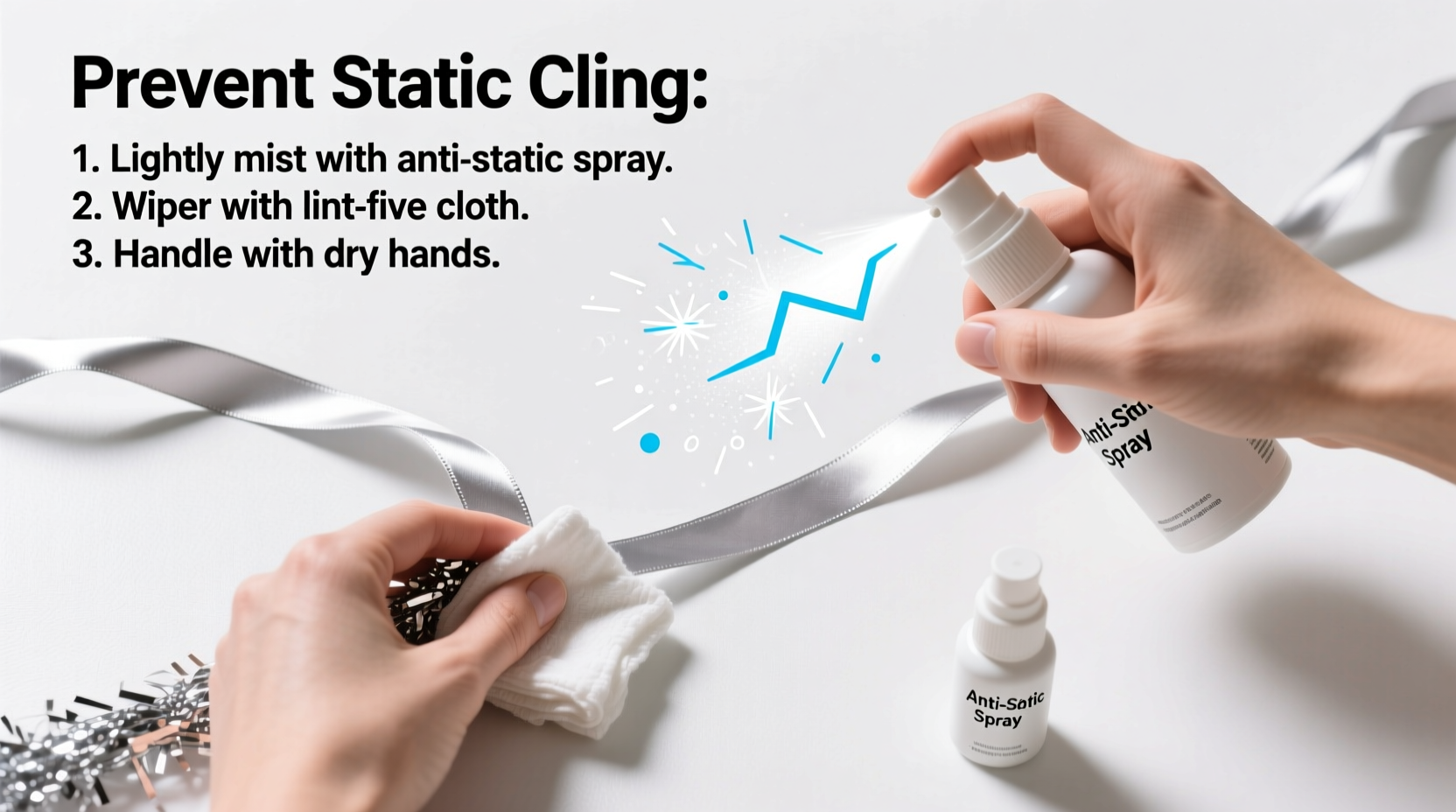
Static buildup in tinsel and ribbon is primarily influenced by three factors: low humidity, material composition, and physical contact. During winter months, indoor heating systems reduce relative humidity, often dropping levels below 30%. Dry air lacks moisture, which normally helps dissipate electrical charges. In such conditions, any friction—such as unrolling ribbon or shaking out a strand of tinsel—can generate enough charge to create noticeable clinging.
The materials used in festive decor also contribute. Most tinsel is made from thin strips of metallized plastic film, while ribbons are typically woven or extruded polyester, acetate, or polypropylene. These synthetic polymers are excellent insulators, meaning they resist the flow of electrons and therefore retain static charge far longer than natural fibers like cotton or wool. Even brief contact with skin or clothing can transfer enough charge to make them leap toward nearby surfaces.
Additionally, storage conditions play a role. Tinsel and ribbon stored in plastic bins or wrapped tightly in cellophane may develop internal static through constant surface contact. When opened after long periods, the sudden release can result in immediate cling issues. Recognizing these root causes allows for targeted prevention strategies rather than relying on trial and error.
Effective methods to eliminate static during use
Preventing static cling doesn’t require expensive products—many effective solutions are already in your home. The key is to either neutralize existing charge, increase surface conductivity, or raise ambient humidity.
1. Use anti-static sprays or fabric softener solutions
A light mist of anti-static spray can instantly reduce static in both tinsel and ribbon. Alternatively, dilute liquid fabric softener with water (one part softener to five parts water) and lightly spray it onto a cloth, then gently wipe the surface of the ribbon or drape tinsel over the damp cloth for a few seconds. Do not soak the material—excess moisture can damage metallic finishes or cause warping.
2. Increase room humidity
Running a humidifier in the room where you’re decorating can dramatically reduce static problems. Aim for a relative humidity between 40% and 50%. This level is high enough to allow natural dissipation of electrical charges but low enough to prevent condensation or mold growth. If you don’t have a humidifier, placing bowls of water near heat sources or hanging damp towels nearby can provide modest improvement.
3. Touch metal frequently
Grounding yourself periodically interrupts the accumulation of static charge. After every few minutes of handling tinsel or ribbon, touch a large metal object connected to building ground—such as a radiator pipe, sink faucet, or metal appliance frame. This safely discharges built-up electricity from your body before it transfers to delicate materials.
4. Condition materials before use
Wipe ribbons with a dryer sheet before cutting or draping. The waxy residue left behind reduces surface resistance and prevents recharging. For tinsel, gently run strands through your fingers after rubbing them with a dryer sheet. Be cautious not to bend or break brittle pieces, especially older vintage tinsel.
5. Work on non-carpeted surfaces
Carpets, especially synthetic ones, generate significant static through foot traffic. If possible, decorate on hardwood, tile, or laminate flooring. If carpet is unavoidable, place a large cotton blanket or sheet beneath your workspace to minimize localized charging.
“Static isn’t just annoying—it can actually degrade delicate materials over time by attracting abrasive dust particles. Preventing it preserves both appearance and longevity.” — Dr. Lena Peterson, Materials Scientist at the Institute for Polymer Research
Step-by-step guide to static-free handling
Follow this sequence before and during your decorating session to ensure minimal interference from static cling:
- Prepare the environment: Turn on a humidifier at least one hour before starting. Target 40–50% humidity if using a hygrometer.
- Dress appropriately: Avoid wool sweaters, nylon jackets, or rubber-soled shoes, which generate more static. Cotton clothing is ideal.
- Discharge yourself: Touch a grounded metal object before opening packaging.
- Treat the materials: Lightly pass ribbon over a used dryer sheet or apply diluted fabric softener mist with a spray bottle.
- Unroll slowly: Avoid rapid unwinding, which creates friction. Let ribbon fall loosely instead of pulling taut.
- Work in short intervals: Every 5–7 minutes, pause to re-ground yourself and check for accumulating static.
- Store properly afterward: Place leftover tinsel and ribbon in cotton pillowcases or anti-static bags, not plastic containers.
Do’s and Don’ts: A quick-reference table
| Do’s | Don’ts |
|---|---|
| Use a humidifier to maintain 40–50% humidity | Work in extremely dry, overheated rooms |
| Wipe ribbons with a dryer sheet before use | Soak tinsel or ribbon in liquids |
| Touch metal objects frequently to ground yourself | Wear synthetic fabrics while decorating |
| Store materials in breathable cotton bags | Leave tinsel in sealed plastic storage bins long-term |
| Apply diluted fabric softener mist lightly | Use aerosol hairspray near flammable or delicate decor |
| Handle materials slowly to reduce friction | Unroll ribbon rapidly or shake out tinsel aggressively |
Real-world example: Solving static in a professional gift-wrapping studio
In late November 2023, The Velvet Bow, a boutique gift-wrapping service in Portland, faced recurring complaints from staff about tinsel and foil ribbon sticking uncontrollably to gloves, scissors, and wrapping tables. Orders were taking 30% longer due to repeated detangling and reapplication. Owner Mara Lin conducted an internal review and discovered their studio’s humidity averaged only 26%, well below optimal levels. Additionally, employees wore polyester-blend uniforms and worked on vinyl-covered tables—both contributing to static generation.
Mara implemented several changes: she purchased two ultrasonic humidifiers, switched employee aprons to 100% cotton, replaced vinyl table covers with linen cloths, and introduced a pre-shift routine where workers wiped all ribbons with unscented dryer sheets. Within a week, reported static incidents dropped by 90%, and productivity returned to normal. Customer feedback improved, noting neater, more precise embellishments. The total investment was under $150, with immediate returns in labor efficiency and presentation quality.
This case illustrates how seemingly minor environmental details can have major operational impacts—especially in crafts involving fine, electrostatic-prone materials.
FAQ: Common questions about static and holiday decor
Can I use hairspray to stop static in tinsel?
No, standard hairspray is not recommended. While it may temporarily weigh down strands, many formulas contain alcohol and polymers that can stiffen or discolor delicate tinsel. Over time, residue builds up and attracts dust. If you must use a fixative, opt for a dedicated anti-static spray designed for fabrics.
Why does my ribbon stick to the scissors when I cut it?
This occurs due to triboelectric charging—the act of cutting creates friction between the ribbon and metal blades, transferring electrons. To reduce this, dip scissors in water briefly and dry them so a thin layer of moisture remains, or wipe blades with a dryer sheet between cuts. Using ceramic-coated scissors can also help, as they generate less static than steel.
Is there a difference between old-fashioned and modern tinsel in terms of static?
Yes. Vintage tinsel, often made from actual metal (like lead or aluminum), conducts electricity better and therefore holds less static charge. Modern plastic tinsel, while safer and lighter, is highly insulative and prone to clinging. However, its lower density makes it more susceptible to airborne movement once charged.
Essential checklist for static-free decorating
- ✅ Measure room humidity—aim for 40–50%
- ✅ Turn on a humidifier at least one hour in advance
- ✅ Wear cotton or natural fiber clothing
- ✅ Ground yourself before handling materials
- ✅ Wipe ribbons with a dryer sheet or anti-static cloth
- ✅ Use diluted fabric softener mist (lightly applied)
- ✅ Work on non-synthetic surfaces (wood, glass, cotton-covered tables)
- ✅ Store leftover decor in breathable fabric bags
- ✅ Keep metal objects nearby for periodic grounding
- ✅ Avoid rapid movements when unrolling or draping
“Prevention beats correction. Addressing static before it becomes visible saves time, reduces frustration, and protects fragile materials.” — Clara Nguyen, Professional Event Stylist and Holiday Design Consultant
Conclusion: Take control of your holiday crafting experience
Static cling doesn’t have to sabotage your holiday preparations. By understanding the underlying causes and applying simple, accessible solutions, you can handle tinsel and ribbon with precision and ease. From adjusting room humidity to adopting smart handling techniques, each step contributes to a smoother, more enjoyable decorating process. These practices not only improve immediate results but also extend the life of your seasonal supplies by reducing stress from repeated tangling and forced separation.
Whether you're wrapping a single gift or designing an elaborate display, taking a few proactive measures ensures your focus stays on creativity—not static. Start implementing these strategies today, and experience a noticeably calmer, cleaner, and more efficient holiday setup.




 浙公网安备
33010002000092号
浙公网安备
33010002000092号 浙B2-20120091-4
Comments
No comments yet. Why don't you start the discussion?