
Every holiday season begins the same way for millions of households: dragging the artificial Christmas tree out of storage, unboxing it branch by branch, and preparing for the festive centerpiece of the home. But along with the joy often comes an unexpected annoyance—static cling. Branches stick together, needles attract dust and tinsel like magnets, and even family members get zapped when touching the metal stand. This isn’t just a minor inconvenience; static can make assembly frustrating, damage delicate ornaments, and create safety hazards in dry environments.
Static electricity builds up primarily due to friction between synthetic materials—especially the PVC or PE plastic used in artificial tree branches—and dry air, which is common during winter months. When you pull the tree apart after months in a cardboard box or plastic storage bag, electrons transfer between surfaces, creating an imbalance that results in static discharge. The good news? With proper preparation and a few smart techniques, you can significantly reduce or even eliminate static cling before it starts.
Understanding Why Static Cling Happens
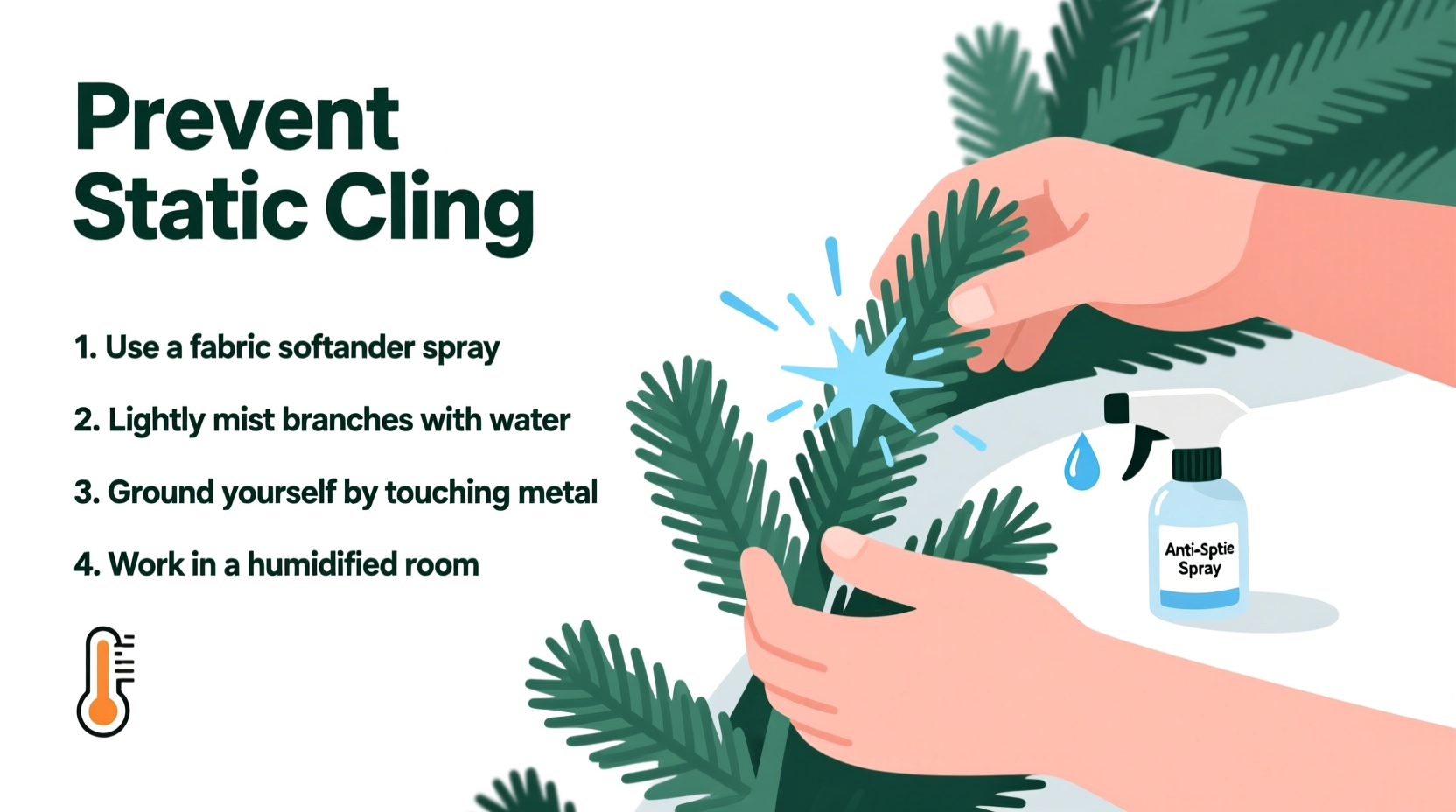
Artificial Christmas trees are typically made from polyvinyl chloride (PVC) or polyethylene (PE), both non-conductive plastics that easily accumulate static charge. During storage, branches rub against each other inside compressed containers. Once exposed to low-humidity indoor air—often below 30% relative humidity in heated homes—the conditions become ideal for static buildup.
When you handle the tree, your body acts as a conductor. Touching a charged branch allows electrons to jump, causing a small but noticeable shock. More subtly, static causes lightweight decorations like flocking, tinsel, and garlands to stick unpredictably to branches or float away mid-decoration. Dust particles also cling more aggressively to statically charged surfaces, making your tree look dusty within hours of setup.
The problem isn't limited to discomfort. In rare cases, significant static discharge near flammable materials (like loose insulation or aerosol sprays) could pose a fire risk. While this is unlikely under normal circumstances, minimizing static improves both safety and convenience.
“Static buildup on artificial trees is one of the most common seasonal complaints we see in home electronics and appliance support calls.” — Dr. Alan Reeves, Electrical Safety Consultant at the National Home Safety Institute
Step-by-Step Guide to Prevent Static Cling Before Assembly
Prevention starts long before you open the storage container. Follow this timeline-based approach to neutralize static at every stage:
- Prepare the Room 24 Hours in Advance
Move the tree into the room where it will be assembled. Let it acclimate to the ambient temperature and humidity. Avoid bringing a cold tree directly from a garage or attic into a warm house, as rapid temperature shifts increase condensation risks and exacerbate static. - Increase Humidity Levels
Use a humidifier to raise indoor humidity to at least 40%. Moist air conducts electricity better than dry air, helping dissipate static charges naturally. Place the humidifier near the tree area and run it continuously during setup. - Treat Storage Containers Proactively
Before removing any branches, lightly mist the outside of the storage bag or box with an anti-static spray (such as diluted fabric softener solution—see recipe below). Do not soak the container; a fine mist is sufficient to begin neutralizing surface charges. - Unpack Slowly and Strategically
Remove sections one at a time. Work on a non-carpeted surface if possible (carpet generates additional static). Hold each branch gently without excessive rubbing. As soon as a section is out, lay it flat and allow it to rest for 5–10 minutes before fluffing. - Apply Anti-Static Treatment to Branches
Lightly spray each branch section with a homemade or commercial anti-static solution. Focus on densely packed areas where friction was highest during storage.
Effective Anti-Static Solutions You Can Use Today
Several safe, affordable treatments can neutralize static on artificial trees. Here’s a comparison of the most effective options:
| Solution | How to Apply | Effectiveness | Safety Notes |
|---|---|---|---|
| Diluted Fabric Softener Spray | Mix 1 part liquid fabric softener with 10 parts water in a spray bottle. Mist lightly over branches. | High – lasts through setup | Avoid oversaturation; test on small area first |
| Commercial Anti-Static Spray | Spray evenly from 6–8 inches away | Very High – fast acting | Ensure product is safe for plastics |
| Hairspray (light hold) | Quick burst per section | Moderate – temporary | May leave residue; use sparingly |
| Water Mist Only | Fine mist with clean water | Low – short-term relief | Safe but evaporates quickly |
| Alcohol-Free Hand Lotion | Rub small amount on hands, then lightly touch branches | Moderate – reduces personal shocks | Do not apply directly to tree |
The diluted fabric softener method remains a favorite among professional decorators due to its effectiveness and low cost. One gallon of mixture can treat multiple trees and double as a general anti-static tool for holiday decor.
DIY Anti-Static Spray Recipe
- 1 cup distilled water
- 1 tablespoon unscented liquid fabric softener
- Optional: 5 drops essential oil (e.g., pine or cinnamon for scent)
Pour into a clean spray bottle. Shake gently before each use. Store in a cool place; discard after two weeks. Always do a spot test on a hidden branch section to ensure no discoloration occurs.
Storage Practices That Reduce Future Static Buildup
How you store your artificial tree after the holidays has a direct impact on static levels next year. Many people unknowingly worsen the problem by using improper containers or skipping key steps during packing.
Cardboard boxes seem convenient, but they generate friction and absorb moisture unevenly. Plastic storage bags trap dry air and encourage static accumulation. Instead, invest in a durable, ventilated tree storage system designed specifically for artificial trees. These usually feature padded dividers and breathable fabric exteriors that minimize contact and allow airflow.
Before storing, ensure the tree is completely dry. Any residual moisture from cleaning or anti-static sprays must evaporate fully to prevent mold. Allow each section to air-dry for at least 24 hours in a climate-controlled space before packing.
Best Storage Materials Compared
- Hard-Sided Tree Bags: Offer excellent protection from dust and pests. Choose models with ventilation panels.
- Soft Fabric Sleeves: Lightweight and collapsible, but less protective against crushing.
- Original Manufacturer Boxes: Often too narrow and prone to splitting. Not recommended beyond one season.
- Customizable Stackable Crates: Ideal for large trees; allow modular organization and airflow.
Regardless of container type, never compress the tree beyond its natural fold. Over-packing increases surface friction and makes next year's unpacking harder.
Real Example: A Family’s Holiday Turnaround
The Thompson family in Denver had struggled for years with their 7.5-foot pre-lit artificial tree. Every November, the process began with frustration: branches stuck together, lights tangled, and their youngest child cried after receiving repeated shocks. One year, they nearly abandoned the artificial tree altogether.
After reading about humidity’s role in static control, they decided to try a new approach. Two days before unpacking, they placed a cool-mist humidifier in the living room and ran it continuously. They prepared a spray bottle with the DIY fabric softener solution and laid down a cotton sheet on the floor to reduce carpet-generated static.
When they opened the storage bag, they didn’t rush. Each section was removed slowly, misted lightly, and left to rest for ten minutes before fluffing. To their surprise, the branches separated easily. No shocks occurred. Even the string lights came out untangled.
“It felt like we got a brand-new tree,” said Sarah Thompson. “The difference was night and day. We’ve done it the same way every year since.”
Checklist: Prevent Static Cling This Holiday Season
Use this actionable checklist to ensure a smooth, shock-free setup:
- ✅ Run a humidifier in the setup room 24 hours before unpacking
- ✅ Prepare an anti-static spray (homemade or commercial)
- ✅ Unpack the tree gradually—section by section
- ✅ Mist each branch lightly before fluffing
- ✅ Avoid wearing wool or synthetic clothing during assembly
- ✅ Use dryer sheets in storage containers for next year
- ✅ Store tree in a ventilated, upright container after drying completely
- ✅ Keep spare batteries or bulbs nearby in case lights were disturbed
Frequently Asked Questions
Can I use a lint roller to remove static from my tree?
Yes, but only after assembly. A lint roller can help pick up dust and fibers attracted by static, but it won’t prevent the underlying charge. For best results, combine physical cleaning with environmental controls like humidity and anti-static sprays.
Is it safe to spray water or solutions directly on pre-lit trees?
Yes, as long as the tree is unplugged and the solution is applied lightly. Never soak electrical components or light sockets. Always use a fine mist and avoid spraying near wire ends or plug connections. Allow treated sections to dry briefly before plugging in.
Will grounding the tree eliminate static?
Grounding is impractical for decorative trees and unnecessary. Unlike industrial equipment, artificial trees don’t carry dangerous voltages. However, touching a grounded metal object (like a faucet or appliance) before handling the tree can discharge your body and reduce personal shocks.
Conclusion: Make Your Holiday Setup Smoother Than Ever
Static cling doesn’t have to be a seasonal inevitability. By understanding how it forms and taking proactive steps—from adjusting humidity to using simple household remedies—you can transform tree assembly from a chore into a joyful ritual. The right preparation saves time, protects your decor, and keeps everyone comfortable.
Start this year by gathering your supplies early: a spray bottle, fabric softener, and a reliable humidifier. Share these tips with family members who help decorate so everyone stays shock-free. And when your beautifully fluffed, static-free tree stands proudly lit in the corner, you’ll know the extra effort was worth it.




 浙公网安备
33010002000092号
浙公网安备
33010002000092号 浙B2-20120091-4
Comments
No comments yet. Why don't you start the discussion?