
Synthetic Christmas trees have become a staple in homes across the world—offering convenience, reusability, and consistent appearance year after year. But one common frustration often goes unaddressed: the sudden, sharp jolt of static electricity when touching or assembling the tree. This phenomenon isn’t just startling—it can be uncomfortable, especially for children or pets. More importantly, repeated exposure to static discharge near electronics or flammable materials poses subtle risks.
The culprit? Synthetic materials like PVC and polyester, which are excellent at generating and holding static charge, particularly in dry indoor environments common during winter. Fortunately, static shock is not inevitable. With a few strategic adjustments to how you handle, store, and maintain your artificial tree, you can eliminate most—or all—of these shocks.
Understanding Why Static Shock Occurs
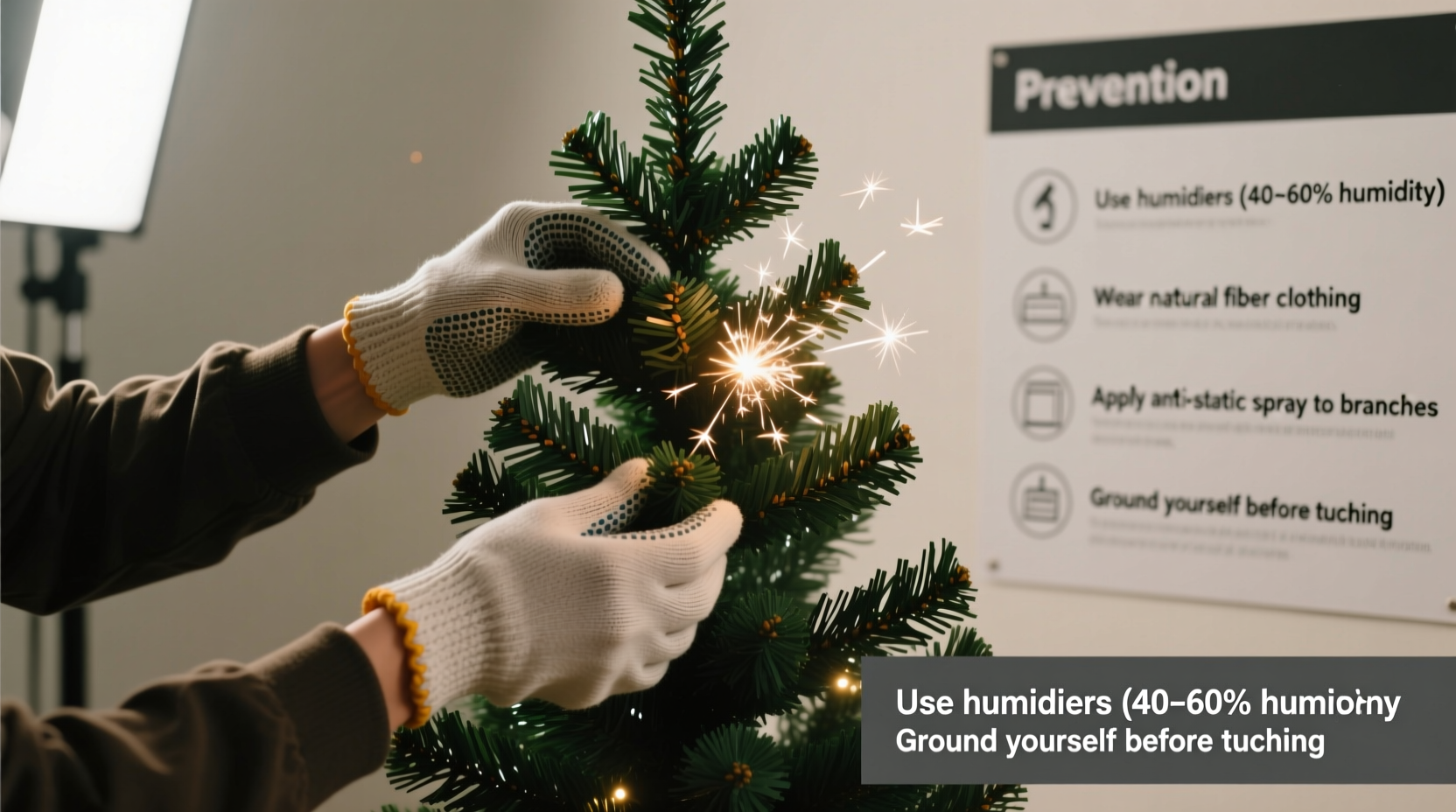
Static electricity forms when two surfaces rub together and electrons transfer from one to the other. One surface becomes positively charged, the other negatively charged. When you touch a charged object—like a synthetic tree branch—those excess electrons jump to you (or vice versa), causing a visible spark and that familiar zap.
In the case of artificial Christmas trees, several factors converge to make static buildup likely:
- Dry indoor air: Winter heating systems reduce indoor humidity, creating ideal conditions for static accumulation.
- Material composition: Most synthetic trees are made from polyvinyl chloride (PVC) or similar plastics, which are highly insulative and prone to retaining charge.
- Mechanical friction: Unfolding, shaking, and handling branches generates significant contact between plastic components.
- Footwear and clothing: Rubber-soled shoes and wool sweaters increase personal charge buildup, making shocks more frequent.
Unlike natural trees, which contain moisture and organic compounds that dissipate charge, synthetic trees act like electrical insulators—trapping energy until it discharges through the nearest conductor: usually you.
“Static buildup on synthetic trees is a classic example of triboelectric charging. The drier the environment, the worse it gets. Simple environmental control can reduce incidents by over 80%.” — Dr. Alan Reyes, Electrostatics Researcher, University of Colorado Boulder
Step-by-Step Guide to Preventing Static Shock
Preventing static shock isn't about eliminating the tree—it's about managing the conditions around it. Follow this sequence before, during, and after setup to minimize risk.
- Condition the storage space. Before retrieving your tree from storage, ensure the room where you’ll assemble it has moderate humidity (40–60%). If necessary, run a humidifier for 24 hours prior.
- Ground yourself before handling. Touch a grounded metal object—like a radiator pipe, faucet, or appliance chassis—to discharge any existing static on your body.
- Unpack slowly and deliberately. Avoid rapid shaking or vigorous unfolding. Let branches unfurl gradually to reduce friction-based charging.
- Use an anti-static spray. Lightly mist tree sections with a commercial anti-static product or a DIY solution (see below). Focus on dense branch clusters and trunk areas.
- Install early in the process. Apply treatments before attaching lights or ornaments, which could be damaged by accidental discharge.
- Monitor humidity during display. Keep a hygrometer nearby and maintain indoor humidity above 40%. Reapply anti-static measures if shocks return.
Effective Anti-Static Solutions and Products
Several products and homemade remedies can neutralize static on synthetic trees. The key is consistency and safe application.
Commercial Anti-Static Sprays
Products like Static Guard or SC Johnson’s anti-static formulas are designed for fabrics but work well on plastic foliage. They leave a thin conductive residue that allows charges to dissipate gradually.
Dryer Sheets
Rubbing dryer sheets (e.g., Bounce or Snuggle) over branches can temporarily reduce static. The waxy coating contains cationic surfactants that neutralize negative charges. While not long-lasting, they’re useful for quick fixes.
DIY Anti-Static Spray
A cost-effective alternative uses common household items:
This solution works because fabric softeners contain quaternary ammonium compounds that disrupt electron transfer. Distilled water prevents mineral deposits on branches.
Ionizing Devices
For recurring issues, consider using a small ionizer or air purifier near the tree. These devices release negative ions into the air, balancing positive charges on nearby surfaces.
Storage Practices That Reduce Future Static Buildup
How you store your tree after the holidays plays a crucial role in next season’s static levels. A poorly stored tree accumulates more charge simply by sitting in a cold, dry basement or attic.
| Do’s | Don’ts |
|---|---|
| Store in a climate-controlled space (e.g., interior closet) | Leave in uninsulated garage or attic |
| Use breathable cotton storage bags | Seal in plastic bins or heavy-duty trash bags |
| Place silica gel packs inside storage container | Store while damp or dusty |
| Lightly treat with anti-static spray before storing | Compress branches tightly without padding |
Cotton bags allow minimal airflow while preventing dust accumulation. Plastic enclosures trap no moisture and promote static retention due to lack of grounding. Silica gel helps maintain low humidity within the bag, preventing mold without encouraging extreme dryness.
“Storing your tree in a sealed plastic bin is like charging a battery in a vacuum—it holds onto every bit of potential energy until you open it.” — Karen Myles, Home Safety Consultant, National Fire Protection Association (NFPA)
Real Example: The Denver Family’s Static-Free Holiday
The Thompson family in Denver struggled for years with painful static shocks every time they assembled their 7.5-foot pre-lit tree. Their two young children dreaded helping, and one incident caused a minor burn-like sensation on their daughter’s finger.
After consulting a local electrician, they learned their home’s winter humidity dropped below 25% due to forced-air heating. They implemented three changes:
- Installed a central humidifier set to maintain 45% RH
- Began using a diluted fabric softener spray during setup
- Switched from a plastic storage tub to a ventilated canvas bag
Last holiday season, they reported zero static shocks. “It felt surreal,” said mother Lisa Thompson. “We actually enjoyed putting up the tree together. No jumping, no complaints. Just carols and hot cocoa.”
Their experience underscores that static prevention isn’t about one magic fix—it’s a system of environmental control, proper materials handling, and consistent maintenance.
Checklist: Prevent Static Shock This Holiday Season
Use this actionable checklist before assembling your synthetic Christmas tree:
- ✅ Measure indoor humidity; aim for 40–60%
- ✅ Run a humidifier for 24 hours before setup
- ✅ Ground yourself by touching metal plumbing or appliances
- ✅ Unpack the tree slowly, avoiding aggressive shaking
- ✅ Lightly apply anti-static spray or wipe branches with a dryer sheet
- ✅ Use a cotton storage bag instead of plastic
- ✅ Place a small ionizer or air purifier near the tree area
- ✅ Reassess humidity levels weekly during display
Frequently Asked Questions
Can static shock from a Christmas tree damage LED lights?
Yes, though rare. Electrostatic discharge (ESD) can exceed 10,000 volts, enough to degrade sensitive LED drivers or microcontrollers in light strings. While modern lights have some ESD protection, repeated shocks may shorten lifespan. Always ground yourself before connecting wires.
Is it safe to use regular furniture polish on synthetic trees to reduce static?
No. Furniture polishes often contain silicone or petroleum distillates that attract dust, degrade plastic over time, and may pose fire risks near lights. Stick to water-based anti-static sprays or fabric softener solutions specifically diluted for safety.
Will hanging metal ornaments reduce static?
Potentially. Metal ornaments act as passive grounding points, allowing charge to dissipate gradually. However, they won’t prevent overall buildup. For best results, combine with humidity control and anti-static treatment.
Conclusion: Enjoy a Safer, More Comfortable Holiday Setup
Static shock when handling a synthetic Christmas tree is a common but solvable problem. By understanding the science behind static buildup and applying practical interventions—from humidity management to anti-static treatments—you can transform a jarring chore into a smooth, enjoyable tradition.
The goal isn’t perfection—it’s progress. Even implementing one or two of these strategies can dramatically reduce shocks. Over time, combining proper storage, environmental control, and safe handling creates lasting benefits beyond just comfort: protecting your tree, your electronics, and your family’s experience.




 浙公网安备
33010002000092号
浙公网安备
33010002000092号 浙B2-20120091-4
Comments
No comments yet. Why don't you start the discussion?