
Every holiday season, millions of people face the same frustrating ritual: untangling a knotted mess of Christmas lights. What should be a joyful moment—stringing up festive decor—quickly turns into a test of patience. The good news? With a few smart storage strategies, you can avoid this annual headache for good. Tangled lights aren’t inevitable; they’re the result of haphazard storage. By investing just a few extra minutes when taking down your decorations, you can preserve their condition and make next year’s setup faster, easier, and stress-free.
The key is consistency and technique. Whether you have delicate fairy lights, heavy-duty outdoor strands, or vintage incandescent sets, proper handling ensures longevity and tangle-free reuse. This guide covers proven methods backed by decorators, electricians, and storage experts—all designed to keep your lights neat, functional, and ready to shine year after year.
Why Christmas Lights Tangle—and How to Stop It
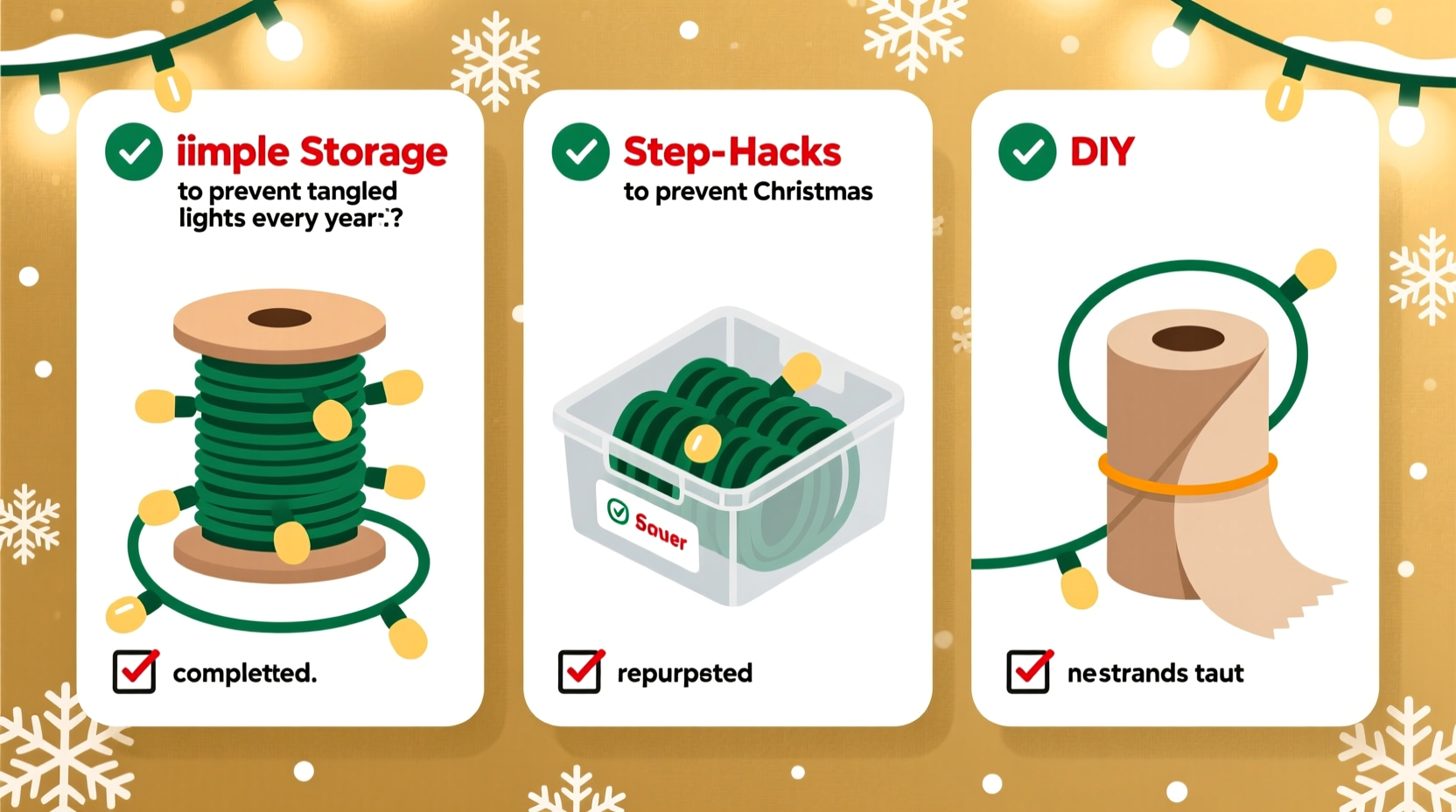
At first glance, it might seem like Christmas lights have a mind of their own. But in reality, tangles form due to physics and improper coiling. When wires are loosely wrapped or stuffed into boxes, even slight movement causes loops to slip and twist around each other. Over time, especially during storage in attics or garages where temperatures fluctuate and items shift, these small snags evolve into complex knots.
According to Dr. Laura Chen, a materials engineer who specializes in flexible cabling systems, “Wires naturally seek equilibrium. If stored under tension or without structure, they deform and entwine. Controlled winding distributes stress evenly and prevents internal twisting.” This means the way you coil and store your lights directly impacts their future usability.
“Properly stored lights don’t just last longer—they perform better and reduce electrical hazards caused by frayed or pinched wires.” — Mark Rivera, Residential Electrician & Holiday Lighting Specialist
Beyond convenience, preventing tangles helps maintain wire integrity. Sharp bends or crushed sections can damage insulation or break internal filaments, leading to partial outages or fire risks. A well-stored strand isn’t just neater—it’s safer.
Step-by-Step Guide to Tangle-Free Light Storage
Storing lights correctly takes only slightly more effort than tossing them in a box. Follow this five-step process at the end of each holiday season to ensure flawless results every time:
- Unplug and inspect all strands. Before packing away, check each set for broken bulbs, exposed wires, or melted sockets. Replace faulty sections or retire damaged strings entirely. Safety comes first.
- Clean gently if needed. Use a dry microfiber cloth to wipe off dust and cobwebs. For outdoor lights, a slightly damp cloth removes grime—but let them dry completely before storage.
- Choose a winding method. Select one of the techniques described below (e.g., cardboard reel, towel wrap, or spool box) based on your available tools and light type.
- Coil slowly and deliberately. Hold the plug end securely in one hand and feed the wire through your fingers, forming uniform loops about 6–8 inches wide. Avoid pulling tightly—gentle tension preserves flexibility.
- Secure ends and label. Fasten both ends with twist ties, Velcro straps, or tape. Label each strand with location (e.g., “Front Porch,” “Tree Top”) and bulb count to simplify setup next year.
Top 5 Storage Hacks for Tangle-Free Results
Not all storage solutions are created equal. The best methods combine structure, protection, and accessibility. Here are five reliable hacks used by professional decorators and organized households alike.
1. Cardboard Reel Method
Cut two rectangles of corrugated cardboard (8” x 10”). Cut a notch in the center of one short edge on each piece. Slide a wooden dowel or sturdy stick through both notches to create a spindle. Wrap lights evenly around the dowel, then slide off and store flat. The cardboard shields the bulbs, while the dowel ensures consistent loop size.
2. Towel or Pool Noodle Wrap
Cut a pool noodle or rolled bath towel lengthwise to create a soft trough. Lay the light strand inside and wrap the foam or fabric around it. Secure with rubber bands. Ideal for fragile or LED lights, this method cushions against impact and prevents kinks.
3. Plastic Spool Box System
Use empty thread spools, PVC pipe scraps, or custom-made plastic reels. Attach a screw or peg to a wall-mounted board and wind each strand onto its own spool. Store the entire board in a closet. This keeps multiple sets organized and visible.
4. Magazine Holder Rack
Repurpose desktop magazine holders or shallow bins. Place one end of the coiled lights at the base and feed the rest upward in a spiral. Drop the bundle into the container so the open top holds the shape. Great for small spaces and apartment dwellers.
5. Vacuum-Seal Bag with Internal Divider
For long-term climate-controlled storage, place pre-coiled lights in vacuum-seal bags with folded cardboard dividers between layers. Seal partially to remove excess air without compressing the wires. Prevents moisture buildup while saving shelf space.
Comparison Table: Do’s and Don’ts of Light Storage
| Method | Do | Don’t |
|---|---|---|
| Cardboard Reel | Use thick, rigid cardboard; label each reel | Use flimsy boxes that bend under pressure |
| Pool Noodle Wrap | Cut cleanly; match noodle diameter to light thickness | Use degraded or cracked foam that may crumble |
| Plastic Container | Choose clear bins with tight lids; add dividers | Overstuff containers causing crushing |
| Hanging Storage | Use padded hangers; hang in climate-controlled area | Hang in damp garages where rodents nest |
| Vacuum Sealing | Seal only partially; include desiccant pack | Compress LEDs or thin wires completely |
Real Example: From Chaos to Calm in One Season
Sarah Thompson, a homeowner in Portland, Oregon, used to spend nearly three hours every December untangling her collection of 17 light strands. “I’d pull them out of an old shoebox, and they looked like a bird’s nest,” she recalls. After attending a local home organization workshop, she adopted the cardboard reel method. She cut ten uniform pieces from a discarded appliance box, notched them, and labeled each for specific uses—garland, tree, railing, etc.
Last holiday season, Sarah unpacked her lights and hung the first strand in under two minutes. “No cutting, no cursing. I actually enjoyed decorating for the first time in years,” she says. Her children now help coil the lights at season’s end as part of their family tradition. “It takes 10 extra minutes, but saves us hours later.”
Checklist: Your Annual Light Storage Routine
Follow this checklist every January to guarantee tangle-free lights next holiday season:
- ✅ Unplug and test each strand for functionality
- ✅ Remove any broken bulbs or damaged sections
- ✅ Wipe down wires and sockets with a dry cloth
- ✅ Choose a winding tool (cardboard, spool, noodle, etc.)
- ✅ Coil from the plug end using consistent loop size
- ✅ Secure both ends with Velcro or twist ties
- ✅ Label each set with location and notes
- ✅ Store in a cool, dry place away from pests and sunlight
- ✅ Keep original packaging for spare bulbs and fuses
- ✅ Review system annually and upgrade as needed
Frequently Asked Questions
Can I use zip ties to secure coiled lights?
Avoid standard plastic zip ties—they can cut into insulation over time, especially in cold environments. Instead, use reusable Velcro straps, soft fabric ties, or twist ties made from coated wire. These hold firmly without damaging the cord.
How many lights should I store per container?
Ideally, one to three strands per bin or reel holder. Overcrowding increases friction and shifting during storage, raising the risk of tangles. If you have many strands, consider separating them by room or exterior zone.
Is it safe to store lights in the attic?
Only if the attic is climate-controlled and dry. Extreme heat can warp plastic sockets and degrade wiring, while humidity promotes corrosion. If storing in an attic, use sealed plastic bins with silica gel packs and elevate off the floor.
Final Thoughts: Make Next Year Easier Today
Preventing tangled Christmas lights isn’t about perfection—it’s about consistency. The small effort you invest in proper storage pays exponential dividends when the next holiday season arrives. No more scissors in hand, picking apart stubborn knots. No more replacing half-dead strands because of poor handling. Just smooth, effortless decoration that lets you focus on what truly matters: celebration, connection, and joy.
Start building your tangle-free system now, while the memory of last year’s frustration is still fresh. Gather supplies, involve family members, and turn storage into a closing ritual of the holidays. In doing so, you’re not just organizing wires—you’re creating peace of mind for years to come.




 浙公网安备
33010002000092号
浙公网安备
33010002000092号 浙B2-20120091-4
Comments
No comments yet. Why don't you start the discussion?