
For many households, the arrival of the Christmas tree signals the start of the holiday season. But for cat owners, it can also signal the beginning of a nightly battle. A curious feline leaping into the branches, batting at ornaments, or attempting to scale the trunk can turn festive cheer into frustration—especially when the tree crashes to the floor before dawn. While cats are naturally drawn to vertical spaces and novel objects, their interaction with a Christmas tree doesn’t have to end in disaster. With thoughtful preparation, environmental enrichment, and a few clever deterrents, you can keep both your cat and your tree safe throughout the season.
Understanding Why Cats Target the Christmas Tree
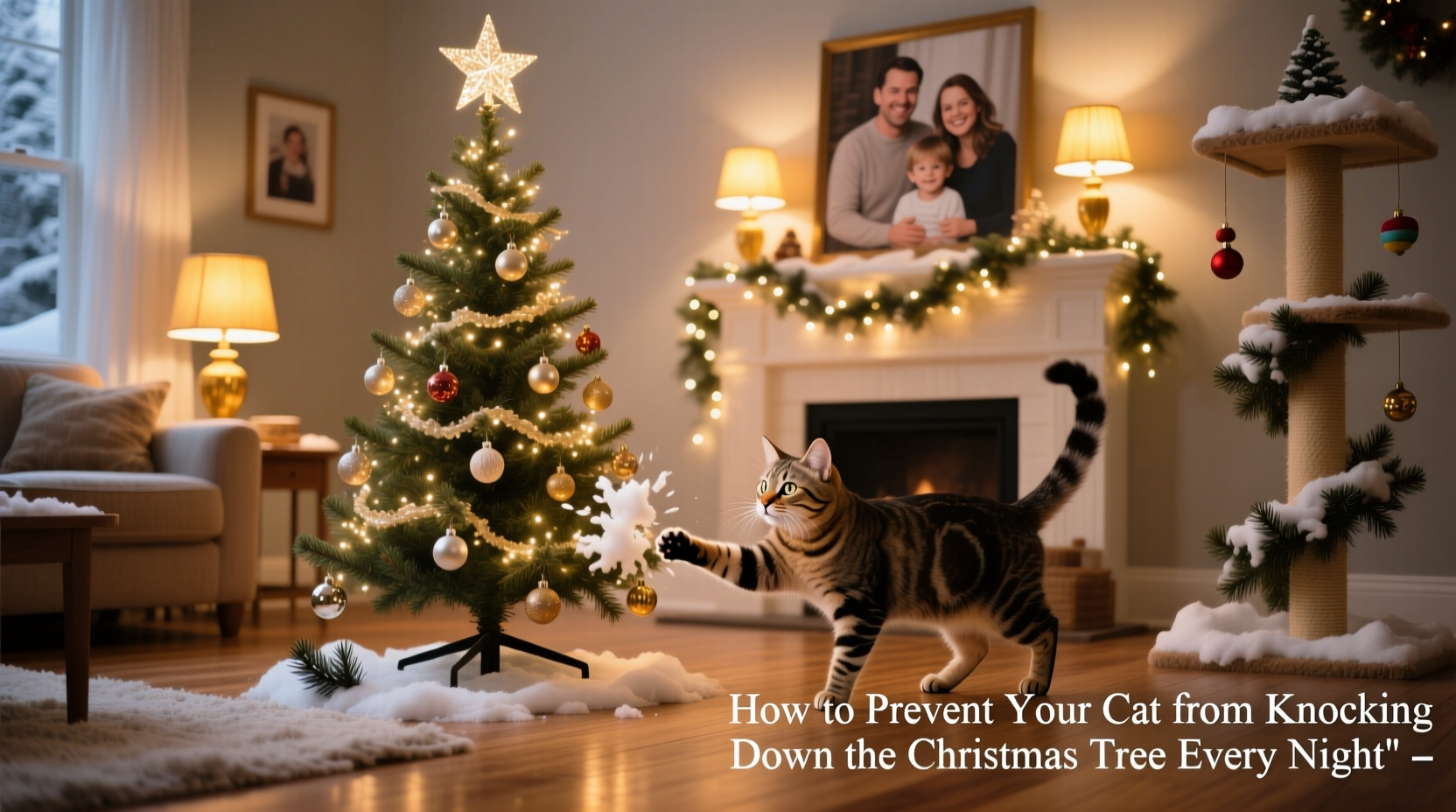
Cats don’t knock over Christmas trees out of malice. Their behavior stems from instinct and curiosity. The tree presents an irresistible combination: a tall structure ideal for climbing, dangling objects that mimic prey, and unfamiliar scents and textures that invite investigation. In the wild, cats use elevated vantage points to survey their territory. Indoors, bookshelves, curtains, and now, Christmas trees, serve the same purpose.
The flicker of lights, movement of ornaments, and rustle of tinsel further stimulate a cat’s predatory instincts. Even a gently swaying branch can trigger a pounce. Additionally, the tree itself may carry outdoor smells—pine resin, soil from the stand, or even traces of wildlife—that intrigue a sensitive nose. For some cats, the tree becomes a new form of play equipment, especially if other forms of stimulation are lacking.
Addressing the root causes—not just the symptoms—is essential. Punishing a cat for interacting with the tree is ineffective and counterproductive. Instead, focus on redirecting their natural behaviors toward appropriate outlets.
“Cats aren’t being ‘bad’ when they climb or bat at ornaments—they’re expressing normal feline behaviors in a human-designed environment.” — Dr. Sarah Thompson, Feline Behavior Consultant
Step-by-Step Guide to Securing Your Tree
Preventing tree-toppling starts with physical stability. Even the most well-behaved cat can cause a poorly secured tree to fall through innocent play. Follow this sequence to minimize risk:
- Choose the right location: Place the tree away from furniture your cat can jump from, such as sofas or bookshelves. Avoid high-traffic areas where sudden movements might startle your cat mid-climb.
- Use a sturdy base: Opt for a heavy-duty metal or solid wood stand with broad support. Fill water reservoirs only when the tree is secured—waterlogged bases can become slippery.
- Anchor the tree to the wall: Use soft nylon straps or fishing line attached from the top branches to a wall hook. Ensure the anchor point is strong (e.g., into a stud) and the connection is taut but not visible from afar.
- Stabilize the trunk: Wrap wide ribbon or non-adhesive tape around the trunk and secure it to nearby furniture or wall brackets. Avoid anything that could damage walls or bark.
- Test stability: Gently shake the tree to simulate cat contact. If it wobbles excessively, reinforce the anchoring system.
Creating Cat-Safe Alternatives and Enrichment
Removing temptation isn’t enough—you must replace it with better options. A bored cat will seek novelty, and the Christmas tree is often the most exciting thing in the house. Provide alternatives that satisfy the same instincts:
- Cat trees and shelves: Position multi-level cat furniture near the Christmas tree—but not so close that jumping between them is possible. Choose models with hammocks, tunnels, and perches at varying heights.
- Interactive toys: Introduce puzzle feeders, motorized mice, or feather wands to engage hunting behaviors. Rotate toys weekly to maintain interest.
- Window perches: Install a cushioned ledge near a bird-watching window. Add a bird feeder outside to create a live “nature show” that distracts from indoor decor.
- Seasonal catnip play zones: Create a holiday-themed play area with cat-safe decorations like felt stockings filled with catnip or crinkle paper.
Spend extra time playing with your cat each evening before bed, when many incidents occur. A 10–15 minute session with a wand toy can tire them out and reduce nighttime exploration.
Do’s and Don’ts of Cat-Friendly Tree Decoration
What you hang on the tree matters as much as how you secure it. Some decorations pose serious risks to cats, while others simply encourage unwanted attention. Use the table below to guide your choices.
| Category | Do | Don’t |
|---|---|---|
| Ornaments | Use lightweight, unbreakable materials like felt, wood, or fabric. Hang higher-up items securely. | Hang glass, metal, or small ornaments within reach. Avoid anything that dangles low. |
| Lights | Use LED lights (cooler to touch). Secure cords along the trunk with twist ties. | Leave cords loose or use older incandescent bulbs that heat up. |
| Tinsel & garland | Skip entirely or use paper chains made from recycled holiday cards. | Use plastic tinsel or string-like garlands—these can cause intestinal blockages if ingested. |
| Tree skirt | Use a simple fabric skirt weighted with non-toxic filler (like rice in a sealed pouch). | Use electric heating pads or decorative elements with small parts underneath. |
Real Example: How One Household Saved Their Tree (and Sanity)
The Rivera family had given up on Christmas trees after three consecutive years of toppled firs, shattered ornaments, and one trip to the vet after their cat Luna ingested tinsel. Determined to try again, they redesigned their approach before setting up the fourth tree.
They started by placing the tree in a corner of the dining room, far from the living room sofa. They anchored it to the wall using clear fishing line connected to a discreet hook drilled into a stud. The stand was reinforced with sandbags hidden beneath a burlap skirt.
Instead of traditional tinsel, they strung popcorn and cranberries—Luna showed interest but quickly lost enthusiasm after a few licks. Ornaments were limited to the upper third of the tree; lower branches were left bare. They introduced a new cat tree beside the window, complete with a perch overlooking the backyard bird feeder.
Each evening, they played with Luna using a feather wand for 15 minutes, followed by a food puzzle. Within a week, her visits to the Christmas tree decreased from multiple nightly climbs to brief sniffing inspections. The tree stood upright until January 3rd—longest in family history.
Checklist: Pre-Tree Setup for Cat Owners
Before bringing the tree indoors, go through this checklist to ensure a safer holiday season:
- ✅ Choose a stable, heavy stand
- ✅ Select a room without jump-off points nearby
- ✅ Purchase cat-safe ornaments (felt, wood, fabric)
- ✅ Buy anchoring supplies (nylon straps, hooks, fishing line)
- ✅ Prepare alternative enrichment (new toys, cat tree upgrades)
- ✅ Remove all tinsel and edible-looking decorations
- ✅ Plan a daily play routine during the holidays
- ✅ Check that tree water is covered or treated (to discourage drinking)
- ✅ Inform guests not to leave food or wrapping under the tree overnight
- ✅ Set up motion-activated camera to monitor nighttime activity
Frequently Asked Questions
Can I use double-sided tape or aluminum foil around the tree base?
Yes, these are effective short-term deterrents. Cats dislike the texture of sticky tape and crinkly foil. However, use them only as part of a broader strategy. Over-reliance may stress your cat if they feel trapped or punished without understanding why.
Is it safe for my cat to drink from the tree stand?
No. Tree water can contain preservatives, mold spores, or bacteria that may cause gastrointestinal upset. Cover the stand with a decorative lid or place a barrier (like a cardboard collar) to block access while allowing you to refill.
What if my cat is still obsessed with the tree despite all precautions?
Some cats remain fixated, especially if they’ve previously been rewarded with play or attention during tree interactions. Consider limiting access by closing the door to the room when unsupervised. Alternatively, use a baby gate to create a physical barrier while still allowing visual access.
Conclusion: A Peaceful Holiday Is Possible
Living harmoniously with a cat during the holidays doesn’t require sacrificing tradition. It requires planning, empathy, and a willingness to adapt the environment to meet both human and feline needs. By securing the tree, enriching your cat’s world, and choosing decorations wisely, you create a space where celebration and safety coexist.
Remember, your cat isn’t trying to ruin Christmas—they’re responding to their instincts in a home full of new stimuli. With patience and consistency, you can redirect those instincts in ways that protect your tree and deepen your bond with your pet.




 浙公网安备
33010002000092号
浙公网安备
33010002000092号 浙B2-20120091-4
Comments
No comments yet. Why don't you start the discussion?