
The holiday season brings warmth, celebration, and a centerpiece most families cherish: the Christmas tree. But for cat owners, that same festive symbol can become a nightly battleground. Cats are naturally curious, agile, and drawn to movement—making dangling ornaments, twinkling lights, and soft branches irresistible. Unfortunately, their playful instincts can lead to disaster: tipped trees, broken glass, scattered tinsel, and a living room in disarray. The good news? You don’t have to choose between a safe home and a beautiful tree. With thoughtful planning and cat-sensitive strategies, you can protect both your feline companion and your holiday spirit.
Understand Why Cats Are Drawn to the Tree
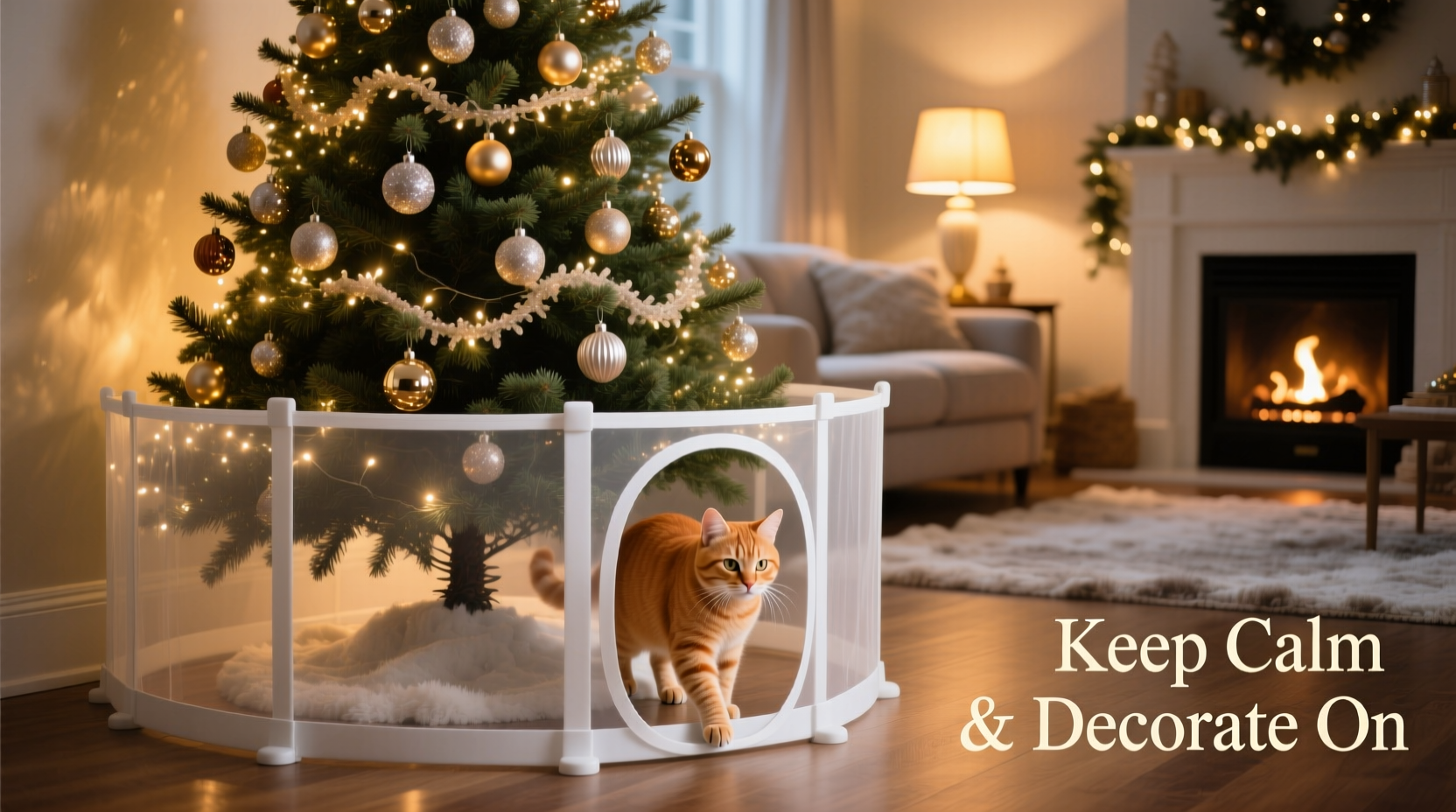
Cats aren’t trying to ruin Christmas—they’re responding to instinct. A Christmas tree mimics many elements of a natural feline environment: vertical space for climbing, textures to scratch, objects to bat around, and overhead cover. The flickering lights resemble moving prey, and the scent of pine or fir can be novel and stimulating. Combine this with potential boredom during colder months, and the tree becomes an irresistible playground.
Additionally, some cats may see the tree as territory. If it’s placed in a high-traffic area, they might feel compelled to investigate or claim it. Others simply enjoy the game of swatting ornaments or batting at low-hanging decorations. Recognizing these motivations is the first step toward prevention. Rather than scolding or restricting after the fact, the goal is to redirect behavior proactively.
“Cats don’t misbehave out of malice—they respond to environmental cues. Modify the environment, and you change the behavior.” — Dr. Sarah Lin, Feline Behavior Consultant
Stabilize the Tree: The Foundation of Safety
No matter how well-behaved your cat usually is, a poorly secured tree is a hazard waiting to happen. Even a gentle nudge from a tail or a leap onto a lower branch can send the entire structure toppling—potentially injuring your pet or damaging furniture.
Begin by anchoring the tree properly. If using a real tree, ensure the stand has a wide base and adjustable screws that grip the trunk tightly. For artificial trees, double-check that all sections are securely connected and the base is fully assembled. Then, go a step further with discreet stabilization methods:
- Use fishing line or thin, clear cord to tether the top of the tree to a wall hook or ceiling anchor.
- Attach the middle section to a nearby piece of furniture using soft straps or velcro ties.
- Place heavy, non-tip items around the base to discourage close investigation.
Aim for stability without sacrificing aesthetics. The support should be invisible once the tree is decorated. This way, you gain peace of mind without compromising the festive look.
Create Cat-Friendly Alternatives
Instead of trying to keep your cat away from the tree entirely, offer appealing alternatives nearby. Boredom is a major driver of destructive behavior. By enriching your cat’s environment, you reduce their need to seek stimulation from the tree.
Set up a dedicated “cat zone” within sight of the tree. Include:
- A multi-level cat tree with platforms, hiding spots, and scratching surfaces.
- Toys that mimic prey—feathers on strings, motorized mice, or puzzle feeders.
- A cozy bed or heated pad near a window for bird watching.
- Interactive games scheduled during peak activity times (dawn and dusk).
You can even create a “cat tree” of your own using cardboard boxes, paper bags, and sisal-wrapped posts. Decorate it with safe, cat-approved items like felt ornaments or crinkle balls. Some owners hang a second small tree—made of branches or cardboard—for their pets to explore safely.
Another effective strategy is food enrichment. Hide treats around the room or use slow-feed puzzles to keep your cat mentally engaged. A stimulated cat is less likely to target the Christmas tree.
Step-by-Step: Building a Holiday Cat Zone
- Choose a location near the Christmas tree but far enough to avoid interference.
- Place a cat tree or condo with multiple levels and hiding spots.
- Add seasonal toys like jingle-ball trackers or light-chasing projectors.
- Incorporate scent enrichment with cat-safe herbs like silver vine or valerian root.
- Schedule daily play sessions using wand toys to simulate hunting.
- Maintain variety by rotating toys weekly to prevent habituation.
Modify Decorations Strategically
What you hang on the tree matters as much as where you place it. Certain decorations increase the risk of accidents or ingestion. Tinsel, for example, is especially dangerous—if ingested, it can cause intestinal blockages requiring surgery. Long, dangling ribbons and lightweight ornaments are also prime targets for batting and chewing.
Adopt a decoration strategy that balances beauty and safety:
- Use lightweight, shatterproof ornaments made of plastic or fabric.
- Hang delicate or sentimental items high—above 6 feet if possible.
- Avoid tinsel, garlands made of popcorn (choking hazard), or anything edible.
- Keep electrical cords tucked away or covered with cord protectors.
- Use battery-powered lights instead of plug-in strands when feasible.
Do’s and Don’ts of Cat-Safe Tree Decorating
| Do | Don't |
|---|---|
| Use unbreakable ornaments | Hang glass or ceramic baubles low |
| Secure cords behind tape or covers | Leave loose wires exposed |
| Decorate higher branches with tempting items | Use tinsel or stringy materials |
| Include motion-free or static lights | Use blinking or laser-like lights that attract attention |
| Add natural pine scent sparingly | Use essential oil diffusers nearby (toxic to cats) |
Use Deterrents That Respect Your Cat’s Nature
Some deterrents work not by punishing, but by making the tree less appealing. The key is to avoid anything that causes fear or stress. Loud noises, sprays with strong odors, or sudden movements may backfire, leading to anxiety or redirected aggression.
Instead, opt for subtle, sensory-based deterrents:
- Tactile surfaces: Place aluminum foil, double-sided tape, or plastic carpet runners (nubby side up) around the tree base. Most cats dislike the texture under their paws.
- Scent barriers: Citrus peels or cotton balls with a drop of citrus oil (kept out of reach) can deter some cats, though sensitivity varies.
- Visual cues: Motion-activated air sprayers release a harmless puff of air when triggered, teaching cats to avoid the area through mild surprise—not pain.
Always pair deterrents with positive reinforcement. When your cat chooses the cat tree over the Christmas tree, reward them with praise or a treat. Over time, they’ll learn which behaviors earn rewards.
Mini Case Study: The Thompson Family’s Solution
The Thompsons had given up on Christmas trees for three years after their Bengal cat, Luna, knocked one over twice—once taking a lamp and coffee table with it. Determined to bring back the tradition, they redesigned their approach.
They purchased a pre-lit artificial tree with a wide, stable base and anchored it to the wall with clear fishing line. They replaced glass ornaments with felt stars and wooden animals, reserving fragile heirlooms for a memory box display. Around the base, they placed a low barrier made of interlocking foam tiles painted to match the floor.
Next to the tree, they installed a tall cat tree with a hammock near the top—positioned so Luna could survey the room. They added a battery-powered toy that projected moving dots on the ceiling during evening hours. Daily 10-minute wand toy sessions became part of the family routine.
The result? Luna showed interest at first, sniffing and pawing at the base, but quickly shifted her attention to her new perch and toys. By day three, she was napping beside the tree—not in it. The Thompsons enjoyed a full month of festive decor, and Luna didn’t attempt a climb once.
FAQ: Common Concerns About Cats and Christmas Trees
Can I use double-sided tape around the tree?
Yes, but only if it’s non-toxic and placed where your cat won’t lick it. Sticky textures are unpleasant underfoot and often discourage approach. Use temporary placement and remove once your cat learns the boundary.
Is it safe for cats to drink Christmas tree water?
No. Real tree water may contain sap, mold, or preservatives that are toxic to cats. Always cover the stand with a lid or decorative skirt to prevent access. Check daily for leaks or evaporation.
What if my cat still climbs the tree despite precautions?
Consider temporarily confining your cat to another room during unsupervised hours, especially at night. Gradually increase exposure as behavior improves. Consult a veterinarian or behaviorist if the behavior seems compulsive or aggressive.
Checklist: Cat-Safe Christmas Tree Setup
- ✅ Choose a stable tree stand with a wide base
- ✅ Anchor the tree to a wall or ceiling discreetly
- ✅ Use only shatterproof, lightweight ornaments
- ✅ Hang breakable or sentimental items high (above 6 feet)
- ✅ Cover electrical cords with protectors or tape
- ✅ Block access to tree water with a skirt or lid
- ✅ Set up a cat tree or play zone nearby
- ✅ Introduce deterrents like foil or carpet runners
- ✅ Schedule daily interactive play sessions
- ✅ Monitor behavior and adjust strategy as needed
Conclusion: Celebrate Safely and Joyfully
Preventing your cat from knocking over the Christmas tree isn’t about restriction—it’s about redirection, preparation, and understanding. With a secure setup, engaging alternatives, and smart decorating choices, you can enjoy a festive home that’s safe for everyone. The goal isn’t a perfect, untouched tree, but a harmonious holiday where both your traditions and your cat’s well-being are respected.




 浙公网安备
33010002000092号
浙公网安备
33010002000092号 浙B2-20120091-4
Comments
No comments yet. Why don't you start the discussion?