
A freshly cut Christmas tree brings warmth, fragrance, and tradition into the home each holiday season. But nothing dims the festive spirit faster than a dry, brittle tree shedding needles by the second week. Indoor heating, delayed setup, and improper care accelerate moisture loss in evergreens. Fortunately, with the right techniques, you can extend your tree’s freshness for weeks—keeping it lush, green, and aromatic through New Year’s.
The key lies in understanding how trees lose moisture and what practical steps counteract those conditions. From selection to daily maintenance, every decision impacts longevity. This guide walks through science-based strategies used by arborists, professional decorators, and seasoned homeowners to preserve their trees well beyond the usual lifespan.
Choose the Right Tree at the Right Time
Not all Christmas trees are created equal when it comes to indoor resilience. Some species retain moisture far better than others under heated indoor conditions. Equally important is *when* you purchase your tree. A tree cut weeks before display has already begun losing water, even if stored properly.
Pine, spruce, and fir varieties differ significantly in needle retention. For example, the Fraser fir and Balsam fir are widely praised for their ability to hold onto moisture and resist drying. Colorado blue spruce also performs well indoors due to its thick cuticle layer that slows evaporation. In contrast, Scotch pine may yellow quickly unless meticulously cared for.
When selecting a tree, perform the freshness test: gently run your hand over a branch. If numerous needles fall off, the tree is likely dehydrated. Lift a branch and let it bounce back; a healthy branch will spring back into shape, while a dry one stays bent or breaks.
Prepare and Make the First Cut
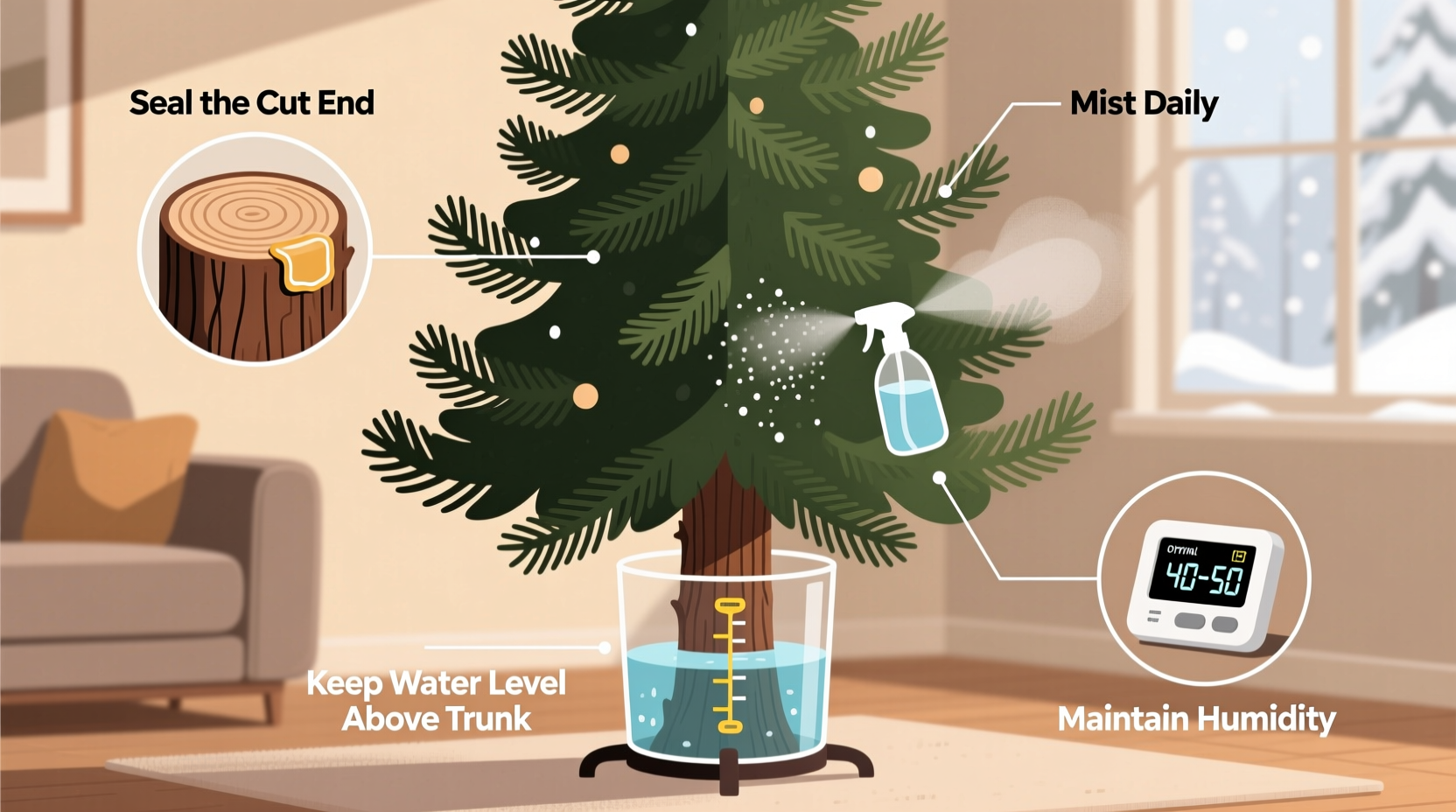
Once you bring the tree home, preparation is critical. The single most effective step you can take is making a fresh cut at the base of the trunk before placing it in water. This removes any sealed sap or dried tissue that blocks water uptake.
Trees begin sealing their vascular systems within hours of being cut. When submerged without a fresh cut, they cannot absorb water efficiently—even if sitting in several inches of liquid. A new cut reopens the xylem channels, allowing capillary action to pull moisture upward.
“Just like cutting the stems of flowers before arranging them, a fresh cut on a Christmas tree restores its ability to drink water. It’s non-negotiable for long-term freshness.” — Dr. Linda Chalker-Scott, Urban Horticulturist, Washington State University Extension
Use a sharp handsaw to remove at least half an inch (1.25 cm) from the base. Do this immediately before placing the tree in its stand. Avoid angled cuts—they reduce surface area for water absorption and make it harder to secure the tree upright.
Use a Proper Water-Holding Stand
The stand is not just for stability—it’s the lifeline of your tree. Many people underestimate how much water a fresh tree consumes, especially during the first few days indoors. A large tree can drink over a quart (nearly a liter) of water per day initially.
Select a stand with a minimum capacity of one gallon (3.8 liters) for trees up to 7 feet tall. Larger trees require proportionally bigger reservoirs. Check water levels twice daily, particularly in the first 72 hours, as this is when water uptake peaks.
Never let the water drop below the base of the trunk. Once the cut end seals again from exposure to air, rehydration becomes nearly impossible. Refill with plain tap water—no additives needed.
Do Additives Help? Debunking Common Myths
Many suggest adding sugar, aspirin, bleach, or commercial “tree preservatives” to the water. However, research from institutions like the Christmas Tree Research Council and university horticulture departments consistently shows these provide no meaningful benefit—and some may even harm the tree.
Sugar promotes bacterial growth in stagnant water, clogging the trunk’s pores. Bleach kills bacteria but damages living tissues. Aspirin (acetylsalicylic acid) has shown minor stress-reducing effects in lab plants but doesn’t improve water uptake in conifers.
Plain water works best. Keep it clean by changing it only if debris accumulates, and always maintain the water level above the cut.
Control the Indoor Environment
Indoor climate plays a massive role in how quickly your tree dries out. Heat sources such as radiators, fireplaces, space heaters, and direct sunlight dramatically increase transpiration—the process by which trees lose moisture through their needles.
To slow drying, place your tree away from HVAC vents, stoves, and south-facing windows. Ideal room temperature for preserving a tree is between 65°F and 68°F (18°C–20°C). Every degree above this increases evaporation rates.
Humidity also matters. Winter indoor air is often extremely dry, sometimes dropping below 30% relative humidity. Using a humidifier near the tree can help maintain ambient moisture, reducing stress on the needles.
| Factor | Best Practice | Avoid |
|---|---|---|
| Temperature | Keep room under 68°F (20°C) | Placing near heat sources |
| Light Exposure | Indirect natural light | Direct afternoon sun |
| Water Access | Daily refills, fresh cut base | Letting water run dry |
| Airflow | Moderate circulation | Blowing ceiling fans or vents |
Additionally, consider using LED Christmas lights. They emit significantly less heat than incandescent bulbs, reducing localized drying around branches. Turn lights off when leaving the house or sleeping to further minimize thermal stress.
Step-by-Step Guide to Maximizing Freshness
Follow this timeline to ensure your tree stays hydrated and vibrant throughout the holidays:
- Day 1 – Purchase & Transport: Select a fresh tree and transport it securely. Cover with a tarp to reduce wind exposure and moisture loss during transit.
- Evening of Day 1 – Prepare the Base: Make a straight, ½-inch fresh cut at the bottom of the trunk. Do not delay this step.
- Immediately After Cutting – Set Up in Stand: Fill the stand with room-temperature tap water and place the tree in it within 30 minutes.
- Days 2–3 – Monitor Water Intake: Check water levels every 12 hours. Expect high consumption; refill as needed.
- Ongoing (Daily): Top off water daily. Keep away from heat sources and direct sunlight.
- Weekly – Inspect Needle Health: Gently touch branches. If needles feel brittle or fall easily, assess water access and environmental factors.
- Before Disposal: Once the tree begins significant needle drop or drying, remove it safely before becoming a fire hazard.
Real Example: One Family’s Month-Long Tree Success
The Reynolds family in Vermont typically put up their tree the Friday after Thanksgiving. In past years, their Douglas fir would start browning by mid-December, leading to early disposal. Determined to change that, they implemented a strict freshness protocol in 2023.
They purchased their tree on December 1st—a Balsam fir from a local farm—ensuring minimal time between cutting and setup. At home, they made a fresh cut and placed it in a 1.5-gallon stand filled with water. The tree was positioned in a corner away from their wood stove and south-facing window.
They checked water twice daily, refilling each morning and evening. They installed a small humidifier nearby and switched all decorations to LED lights. No additives were used in the water.
The result? Their tree remained supple and fragrant through January 5th, with minimal needle drop. Neighbors commented on its health, and the family reported it smelled stronger than ever in its third week. By following simple, consistent practices, they extended their tree’s life by over two weeks compared to previous years.
Essential Checklist for Tree Longevity
- ☑ Choose a long-needle-retention species (e.g., Fraser fir, Balsam fir)
- ☑ Buy close to setup date (ideally within 3–5 days)
- ☑ Make a fresh ½-inch cut before placing in stand
- ☑ Use a stand holding at least 1 gallon of water
- ☑ Fill stand with plain tap water immediately
- ☑ Check water level twice daily for first week
- ☑ Keep tree away from heat sources and direct sun
- ☑ Use LED lights to reduce heat exposure
- ☑ Maintain indoor humidity if possible
- ☑ Remove tree promptly once drying accelerates
Frequently Asked Questions
Can I revive a dry Christmas tree?
If a tree has been out of water for more than a few hours, revival is unlikely. Once the cut end seals and cells desiccate, water uptake stops permanently. Prevention is far more effective than attempted recovery. Always prioritize immediate placement in water after a fresh cut.
How do I know if my tree is still healthy?
Healthy trees have flexible branches that spring back when bent. Needles should be firmly attached and emit a strong pine scent when crushed. If shaking a branch causes multiple needles to fall, or if the trunk feels lightweight and bark cracks easily, the tree is drying out.
Should I drill holes in the base to help it absorb water?
No. Drilling holes does not improve water uptake and can destabilize the tree in the stand. The outer layers of the trunk are responsible for water transport; a clean, flat cut is sufficient and safer.
Conclusion: Enjoy a Fresher, Longer-Lasting Holiday Tree
Preventing your Christmas tree from drying out isn’t about magic solutions or secret formulas—it’s about consistency, timing, and understanding plant biology. A fresh cut, ample water, and a cool, stable environment make all the difference. These steps don’t require special products or expertise, just attention and routine care.
By choosing the right tree, setting it up correctly, and managing its surroundings, you can enjoy a vibrant centerpiece that enhances your celebrations for weeks. More than aesthetics, a healthy tree reduces fire risk, minimizes mess, and preserves the sensory joy of the season—the scent of pine, the soft texture of needles, the warmth of tradition.




 浙公网安备
33010002000092号
浙公网安备
33010002000092号 浙B2-20120091-4
Comments
No comments yet. Why don't you start the discussion?