
Perfume is more than just a scent—it’s an extension of identity, mood, and personal style. Yet few things are more frustrating than applying your favorite fragrance in the morning only to realize it’s nearly gone by midday. While some fade is natural, rapid dissipation often results from how the fragrance interacts with your skin chemistry, application technique, or storage conditions. The good news: with informed choices and consistent habits, you can significantly extend your perfume’s longevity. This guide reveals practical, science-supported strategies to help your scent stay vibrant from dawn to dusk.
Understanding Why Perfumes Fade on Skin
Not all perfumes behave the same way on every person. What works beautifully for one individual may vanish within hours on another. This variation stems from several interrelated factors:
- Skin Chemistry: Your skin's pH, oil production, and hydration levels influence how fragrance molecules bind and evaporate.
- Fragrance Concentration: Eau de Parfum (EDP) and Parfum contain higher concentrations of aromatic oils than Eau de Toilette (EDT), making them inherently longer-lasting.
- Environmental Conditions: Heat accelerates evaporation, while humidity can either enhance diffusion or dull top notes depending on composition.
- Application Method: Spraying on clothes vs. pulse points yields different staying power due to fabric absorption versus body heat activation.
Fragrance longevity follows a typical arc: top notes emerge first (citrus, herbs), followed by heart notes (floral, spicy), then base notes (woody, musky). When a scent \"fades,\" it usually means the volatile top and middle notes have dissipated, leaving little trace of the full olfactory experience—even if base notes linger subtly.
“Fragrance performance isn’t just about the bottle—it’s a dynamic interaction between formulation, skin, and environment.” — Dr. Lena Moretti, Cosmetic Chemist & Olfactory Researcher
Choose the Right Fragrance for Your Skin Type
Your skin type plays a pivotal role in how long a perfume lasts. Matching your fragrance concentration and composition to your skin’s characteristics can dramatically improve retention.
Dry Skin: Opt for Oil-Rich Formulas
Dry skin lacks natural sebum, which helps trap and slow the release of fragrance molecules. As a result, perfumes tend to evaporate faster.
Look for perfumes labeled as “Parfum” or “Extrait,” which contain 15–30% aromatic compounds—nearly double that of Eau de Toilette. Rich, warm accords like vanilla, amber, sandalwood, and patchouli also adhere better to dry skin.
Oily Skin: Embrace Lighter Compositions
Oily skin naturally holds onto fragrance longer because sebum binds with scent oils. However, this can sometimes distort lighter notes, making citrus or green scents turn sour.
Select fresh, crisp fragrances with strong top notes that won’t be overwhelmed by oiliness. Citrus, aquatic, and ozonic profiles perform well. Avoid overly sweet or heavy oriental scents unless you prefer an intense sillage.
Normal/Combination Skin: Most Versatile
If your skin is balanced, you likely enjoy moderate to excellent fragrance retention. You can experiment across categories, but still benefit from proper layering and application techniques.
| Skin Type | Best Fragrance Types | Avoid If Possible |
|---|---|---|
| Dry | Parfum, EDP; warm, resinous bases | Eau Fraîche, EDT with high alcohol |
| Oily | EDT, Cologne; bright, fresh top notes | Overly sweet gourmands |
| Normal | All concentrations; layered scents | None specific—test first |
Step-by-Step Guide to Long-Lasting Scent Application
Applying perfume correctly can double its wear time. Follow this sequence for optimal results:
- Shower and Exfoliate: Clean, smooth skin absorbs fragrance more evenly. Use a gentle scrub to remove dead cells that might interfere with scent adhesion.
- Moisturize Immediately After Bathing: Apply an unscented balm or fragrance-free lotion to damp skin. Hydrated skin acts like a sponge for scent molecules.
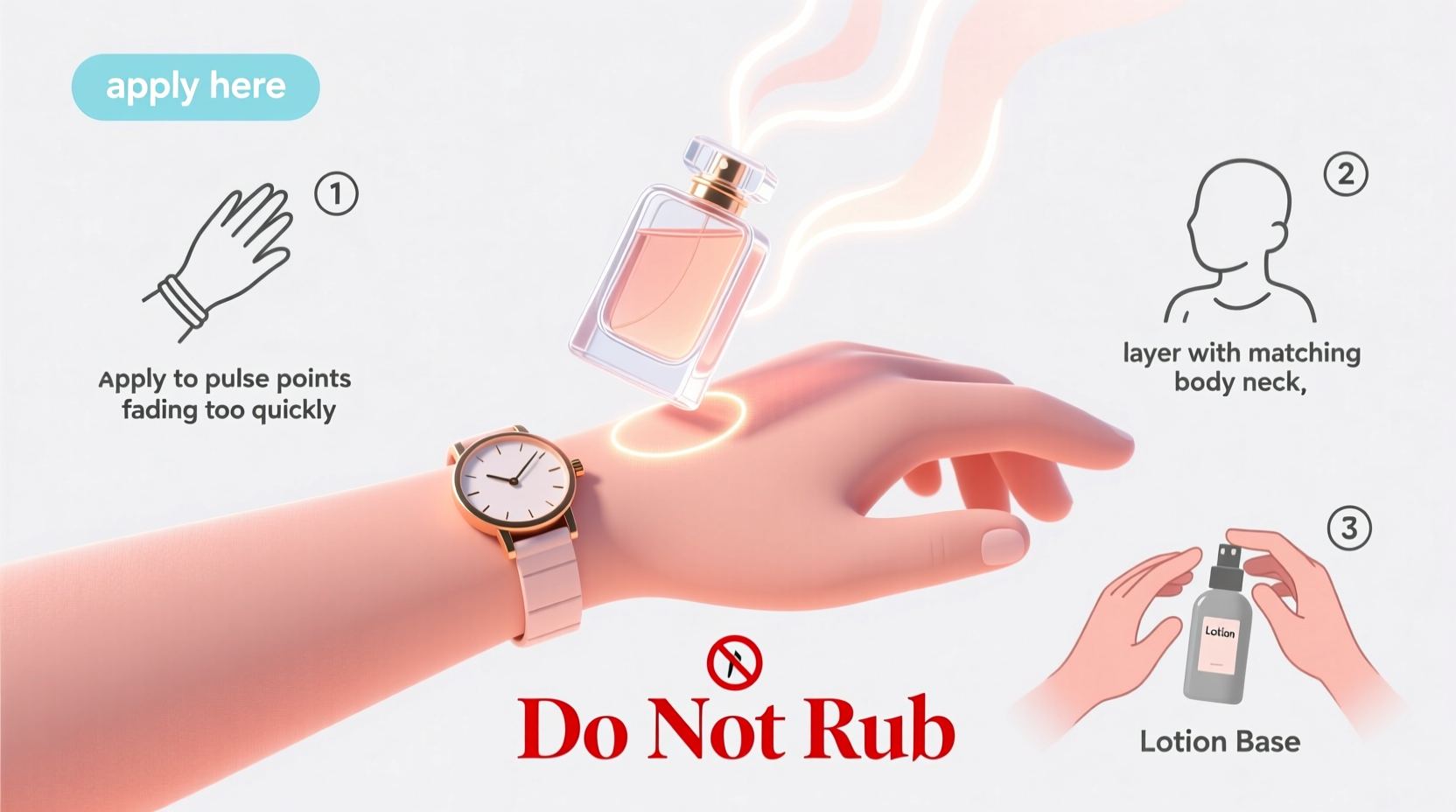
- Layer With Matching Scented Products: Use a matching body wash, shower gel, or lotion from the same fragrance line. This builds a “scent base” that amplifies and prolongs the main perfume.
- Target Pulse Points: Spray or dab on areas where blood flow is close to the surface—wrists, inner elbows, neck, behind ears, and décolletage. Body heat gently warms the fragrance, releasing it gradually.
- Avoid Rubbing: Never rub wrists together after spraying. This crushes delicate top notes and increases alcohol evaporation.
- Reapply Strategically: Carry a travel-sized version or perfume oil for touch-ups after lunch or before evening events.
Storage and Handling: Protect Your Investment
A perfume’s shelf life and performance begin deteriorating the moment it’s exposed to light, heat, and air. Poor storage doesn’t just shorten longevity—it alters the scent profile.
- Keep It Cool: Store bottles in a dark cabinet or drawer away from radiators, windows, or bathrooms where temperature fluctuates.
- Avoid Sunlight: UV rays break down essential oils and alcohol, leading to oxidation and flat, sour notes.
- Minimize Air Exposure: Keep caps tightly sealed. Once opened, most perfumes last 3–5 years; decanting into smaller vials reduces headspace and preserves freshness.
- Don’t Store in the Car: Summer temperatures inside vehicles can exceed 70°C (160°F), permanently damaging fragrance compounds.
“I’ve seen perfectly formulated perfumes ruined in weeks simply because they were left on a sunlit vanity. Storage is half the battle.” — Antoine Dubois, Master Perfumer at Grasse Institute
Real Example: Sarah’s Scent Struggles and Solution
Sarah, a 32-year-old teacher from Portland, loved her floral-citrus EDT but found it disappeared within two hours. She reapplied multiple times daily, causing headaches and irritation. After consulting a fragrance specialist, she realized three key issues:
- She applied perfume directly to dry skin without moisturizing.
- She stored her bottle on a windowsill exposed to morning sunlight.
- Her go-to scent was an EDT with high citrus content—volatile and short-lived.
The solution? Sarah switched to a matching body cream, began storing her perfume in a linen closet, and layered with a complementary EDP in the evening. Within days, her fragrance lasted six to eight hours consistently. “I didn’t need a new scent,” she said. “I just needed to use it right.”
Checklist: Maximize Your Perfume Longevity
Use this checklist daily to ensure your fragrance performs at its best:
- ✅ Moisturize skin before applying perfume
- ✅ Choose Parfum or EDP for longer wear
- ✅ Apply to pulse points—not clothing (unless specified)
- ✅ Avoid rubbing wrists after spraying
- ✅ Store bottles upright in a cool, dark place
- ✅ Use matching scented body products for layering
- ✅ Replace old perfumes showing color changes or off-smells
- ✅ Reapply midday using a rollerball or mini spray
Frequently Asked Questions
Does drinking water affect how long perfume lasts?
Indirectly, yes. Well-hydrated skin retains moisture better, creating a more stable surface for fragrance adherence. Dehydrated skin tends to be flaky and less receptive, contributing to faster scent loss.
Can I make my own long-lasting perfume at home?
You can create longer-lasting DIY blends by using high-proof alcohol (like perfumer’s alcohol) and diluting with carrier oils such as jojoba or fractionated coconut oil. Adding fixatives like benzoin resin or vetiver essential oil also helps anchor volatile top notes. However, homemade versions typically lack the precision blending of commercial perfumes and may not last as long without proper aging.
Why does my perfume last longer on clothes than on skin?
Fabrics absorb fragrance oils more slowly and don’t generate heat like skin does, resulting in slower release. Natural fibers like cotton and wool hold scent better than synthetics. However, always test on inconspicuous areas first—perfume dyes can stain, and alcohol may damage delicate fabrics.
Conclusion: Make Every Scent Last
Preventing your perfume from fading too quickly isn’t about luck—it’s about understanding the synergy between product, skin, and practice. From selecting the right concentration to mastering application and storage, each step contributes to a richer, longer-lasting sensory experience. These small adjustments compound over time, turning fleeting whiffs into enduring impressions. Whether you’re wearing a signature scent or rotating seasonal favorites, taking control of how your fragrance behaves empowers you to present yourself with confidence and consistency.




 浙公网安备
33010002000092号
浙公网安备
33010002000092号 浙B2-20120091-4
Comments
No comments yet. Why don't you start the discussion?