
Nothing signals the holiday season like the scent of pine, the soft rustle of boughs, and the warm glow of lights nestled in deep green needles. Yet for many households, that idyllic image fades within days—replaced by brittle branches, carpet-strewn needles, and a faint, unsettling aroma of dry wood. A real Christmas tree isn’t just décor; it’s a living cut plant with specific physiological needs. When those needs go unmet, moisture loss accelerates dramatically—not just diminishing beauty, but increasing fire risk. According to the National Fire Protection Association (NFPA), nearly 200 home fires each year are attributed to dry, improperly maintained Christmas trees. The good news? Most rapid drying is preventable. This article distills decades of arboricultural research, nursery best practices, and real-world homeowner experience into actionable, evidence-based steps—no myths, no folklore, just what works.
Why Real Trees Dry Out—And Why Timing Matters
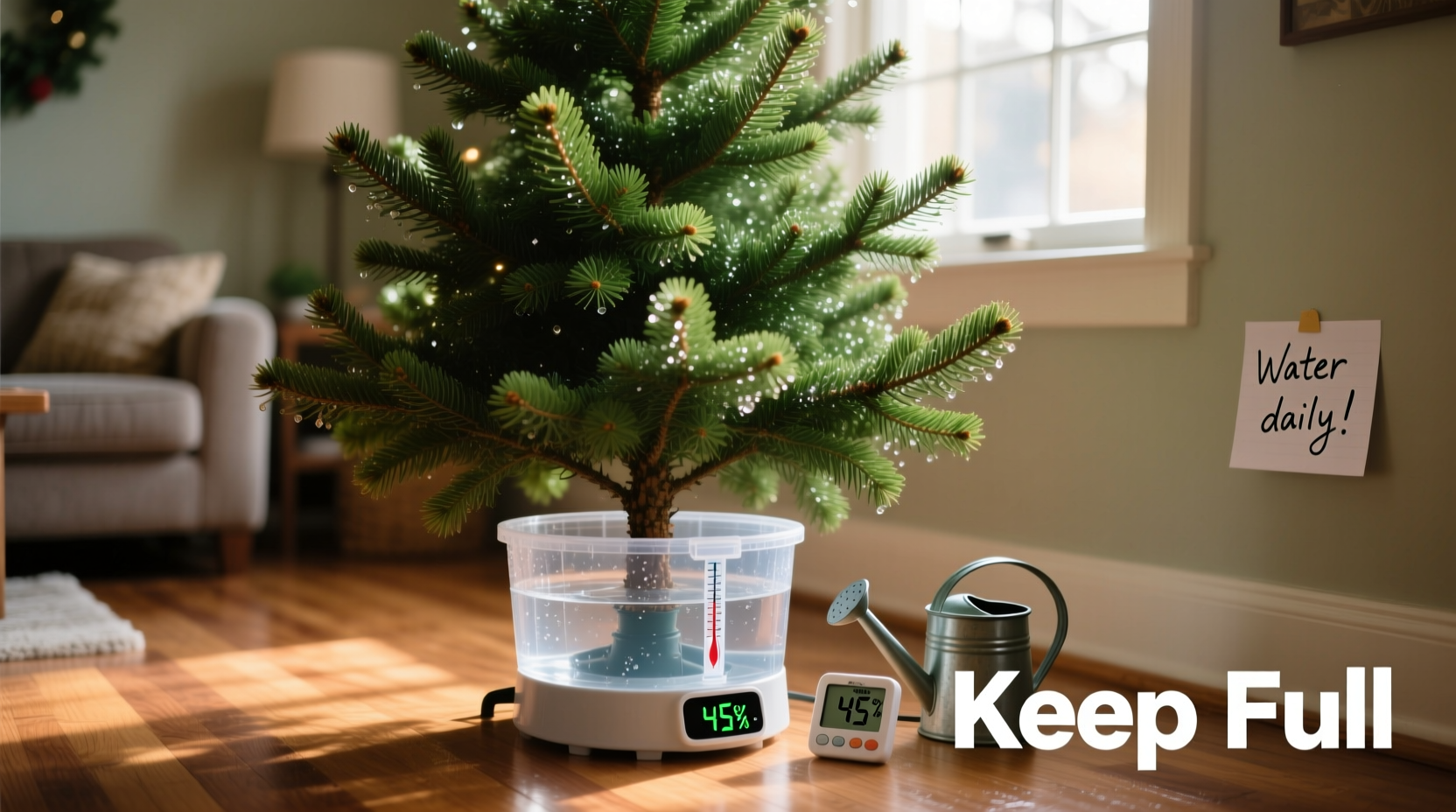
A freshly cut Christmas tree begins losing moisture the moment its vascular system is severed. Unlike living trees rooted in soil, cut conifers rely entirely on water uptake through the cut stump—a process governed by capillary action, transpiration rates, and xylem integrity. Within hours, air embolisms can form in the water-conducting vessels, especially if the cut dries before water contact. Once blocked, those pathways cannot be reopened. Temperature, humidity, light exposure, and airflow all compound the problem: indoor heating systems routinely drop relative humidity to 10–20%—far below the 40–60% ideal for tree hydration. A study published in HortTechnology found that Fraser firs stored at 72°F (22°C) with low humidity lost up to 40% of their initial moisture weight in just five days—while identical trees kept at 55°F (13°C) with 50% humidity retained over 85% of their moisture for 14 days.
The critical window is the first 24 hours after cutting. That’s when water uptake is most efficient—and most vulnerable to failure. Delayed hydration, improper cuts, or exposure to wind or sun before bringing the tree indoors sets the stage for irreversible decline.
Step-by-Step Hydration Protocol: From Lot to Living Room
Follow this precise sequence—deviating even slightly reduces effectiveness:
- Make a fresh, straight cut — At least ¼ inch off the base, using a sharp hand saw (not pruning shears or a chainsaw). Angle cuts trap air; jagged edges impede water flow. Do this immediately before placing in water—even if the tree was “pre-cut” at the lot.
- Submerge the stump within 30 minutes — Never let the freshly cut end air-dry. Place directly into a stand with at least one gallon of water. If transport takes longer than 30 minutes, wrap the base in damp burlap or place it in a bucket of water.
- Use plain, cool tap water — Additives (sugar, aspirin, bleach, commercial preservatives) show no consistent benefit in peer-reviewed trials and may promote bacterial growth that clogs xylem. Clean water is optimal.
- Check water level twice daily — Especially the first 48 hours. A large tree can drink a quart or more per day initially. Refill before the water drops below the cut surface—even if that means topping off multiple times a day.
- Relocate away from heat sources — Keep at least three feet from fireplaces, radiators, heating vents, and direct sunlight. Each 10°F increase above 65°F doubles transpiration rate.
Do’s and Don’ts: Evidence-Based Tree Care
Myths about tree care persist because they sound plausible—but science tells a different story. Below is a distilled comparison of proven practices versus common misconceptions.
| Action | Do | Don’t |
|---|---|---|
| Cutting the base | Make a fresh, straight, ¼-inch cut with a clean hand saw just before placing in water | Accept a pre-cut base unless you re-cut it yourself; use dull tools or power saws that crush xylem |
| Water additives | Use only clean, cool tap water | Add sugar, soda, fertilizer, or commercial “preservatives”—they offer no measurable hydration benefit and may encourage microbial blockage |
| Tree stand capacity | Choose a stand holding ≥1 gallon of water for trees under 7 feet; ≥1.5 gallons for taller trees | Use small stands (<½ gallon) or decorative stands without reservoirs—most trees consume 1+ quarts daily early on |
| Indoor placement | Position in coolest room possible (ideally 60–65°F); avoid drafts and direct heat | Place near forced-air registers, above floor vents, or next to wood stoves—even brief exposure to dry heat accelerates desiccation |
| Needle testing | Test weekly: gently grasp a branch and pull toward you—if >10% of needles detach easily, hydration is failing | Rely solely on visual cues like browning tips—by then, significant moisture loss has already occurred |
Real-World Case Study: The Two-Tree Experiment in Portland, OR
In December 2022, landscape horticulturist Lena Ruiz conducted an informal but rigorously tracked experiment with two identical 6.5-foot Noble firs purchased from the same local lot on December 1st. Both trees were cut fresh that morning.
Tree A (Control) was taken home, placed in a standard 1-gallon stand with tap water, and positioned three feet from a gas fireplace that ran 4–6 hours daily. Water was checked once per day—often refilled only every other day when visibly low.
Tree B (Protocol Group) received the full step-by-step hydration protocol: fresh cut upon arrival, submerged within 15 minutes, water checked and topped off twice daily (morning and evening), and placed in a north-facing bedroom kept at a steady 62°F—away from all heat sources and direct light.
By December 10th, Tree A had lost 68% of its original needle mass, emitted a papery crackle when touched, and required daily vacuuming. Its water consumption had dropped to less than ¼ cup per day—indicating severe xylem blockage. Tree B remained supple, released strong resinous fragrance when brushed, and retained 94% of its needles. Crucially, its water uptake stayed steady at 1.2–1.5 quarts daily through December 15th.
Lena notes: “The difference wasn’t magic—it was physics and timing. Tree A’s first 24 hours were compromised by delayed hydration and thermal stress. Once those xylem pathways sealed, no amount of later care could restore function.”
Expert Insight: What Arborists and Tree Farmers Recommend
Dr. Robert K. Tchou, Professor of Urban Forestry at Oregon State University and advisor to the Pacific Northwest Christmas Tree Association, emphasizes prevention over intervention:
“The single most impactful thing a consumer can do is treat the tree like perishable produce—not furniture. It’s not ‘dry’ because it’s old; it’s dry because its water column broke. That break happens fastest when the cut dries, the water gets warm or dirty, or ambient conditions accelerate evaporation. A tree cut on November 25th can outlast one cut on December 10th—if handled correctly from minute one.”
Similarly, Sarah Lin, third-generation Christmas tree farmer in North Carolina, stresses species selection alongside care: “Fraser fir holds moisture longest—up to 5 weeks with proper care. Douglas fir follows closely. But Scotch pine? It’s beautiful, but its resin seals xylem faster when stressed. Know your species’ limits—and don’t fight them.”
Essential Pre-Season Checklist
Before you head to the lot or order online, prepare these essentials. Skipping any item increases drying risk significantly.
- ✅ Fresh-cut saw — Hand saw with fine, sharp teeth (no blade rust or pitch buildup)
- ✅ Large-capacity tree stand — Verified minimum 1-gallon reservoir; test seal integrity before use
- ✅ Bucket or plastic tub — For transport if setup is delayed beyond 30 minutes
- ✅ Damp burlap or clean towel — To wrap base during short transport
- ✅ Thermometer & hygrometer — To monitor room temperature and humidity (ideal: ≤65°F, ≥40% RH)
- ✅ Weekly needle test reminder — Set calendar alerts to assess branch flexibility and needle retention every 7 days
FAQ: Addressing Common Concerns
How long can a real tree stay fresh indoors?
With strict adherence to hydration protocol, most premium species (Fraser, Balsam, or Nordmann fir) remain visibly fresh for 4–5 weeks. Lower-humidity homes or warmer rooms may reduce that to 3 weeks. Needle retention beyond 5 weeks is rare—even with perfect care—due to natural senescence. Plan purchase timing accordingly: mid-to-late November for early December setup, or early December for Christmas Day freshness.
Does drilling holes in the trunk help water absorption?
No—this is harmful. Drilling creates dead zones in the xylem, disrupts capillary pathways, and introduces infection risk. Research from the University of Wisconsin–Madison confirms drilled trunks absorb 37% less water than cleanly cut ones. A single, straight cut remains the gold standard.
What if my tree stops drinking water?
Once uptake ceases (no water level drop for 48+ hours), the xylem is likely blocked. Re-cutting the base *only works if done within minutes of removing from water*—and even then, success is limited after day 3. Prevention is the only reliable strategy. If uptake stops, prioritize fire safety: increase monitoring, keep lights unplugged when unattended, and plan removal sooner rather than later.
Conclusion: Your Tree Deserves Consistent, Science-Informed Care
A real Christmas tree is more than tradition—it’s a botanical specimen requiring thoughtful stewardship. Preventing rapid drying isn’t about luck or folklore; it’s about honoring the tree’s physiology with timely, precise actions. That fresh cut, that immediate submersion, that twice-daily water check—they’re not chores. They’re acts of respect for the living material gracing your home. When you follow the hydration protocol, you’re not just preserving green needles—you’re reducing fire hazard, extending festive ambiance, and honoring the work of the growers who nurtured that tree for 7–12 years before harvest. Start this season with intention: buy early, cut fresh, hydrate immediately, and monitor diligently. Your tree—and your peace of mind—will reflect that care.




 浙公网安备
33010002000092号
浙公网安备
33010002000092号 浙B2-20120091-4
Comments
No comments yet. Why don't you start the discussion?