
Pothos (Epipremnum aureum) is one of the most resilient and popular houseplants, known for its trailing vines and heart-shaped leaves. What makes it even more appealing is how effortlessly it can be multiplied. Propagating pothos in water is not only simple but also rewarding—watching roots emerge from a cutting over days feels like witnessing quiet magic. With minimal tools and consistent care, you can turn one healthy pothos into dozens. Whether you're looking to fill your home with greenery, gift plants to friends, or revive a leggy specimen, water propagation offers a reliable method that works year-round.
Why Water Propagation Works So Well for Pothos
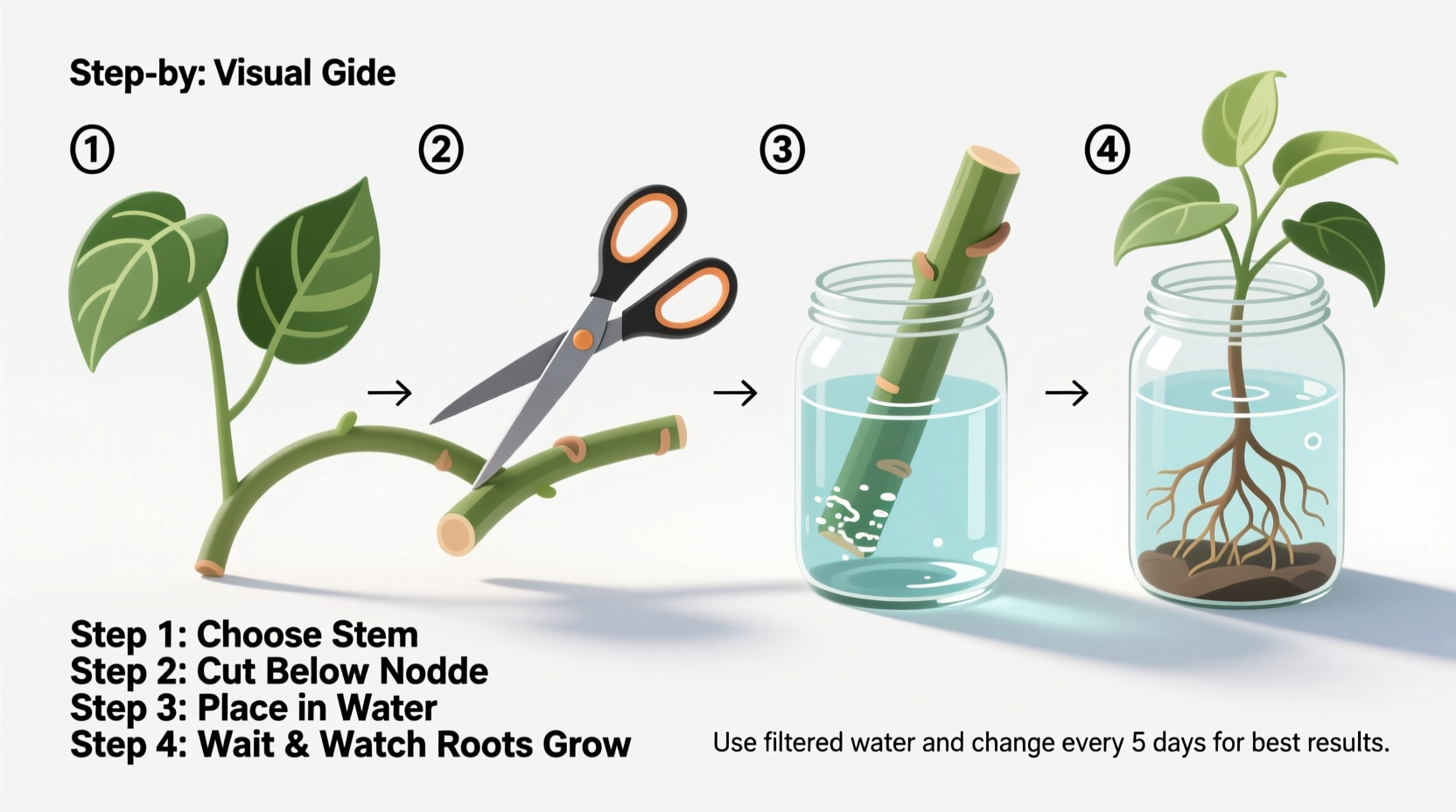
Pothos naturally thrive in humid, tropical environments where moisture is abundant. Their ability to root quickly in water stems from their adaptation to high-humidity conditions. Unlike some plants that require soil or special hormones to encourage rooting, pothos cuttings readily develop roots when placed in water. This process allows you to monitor root development closely, ensuring each cutting is healthy before transplanting.
Water propagation also eliminates guesswork. You can see exactly when roots form, assess their strength, and change the water regularly to prevent rot. It’s an ideal method for beginners and seasoned plant enthusiasts alike because it requires few materials and delivers visible results within weeks.
Step-by-Step Guide to Propagating Pothos in Water
Follow these clear steps to successfully propagate pothos in water. With attention to detail, nearly every cutting will take root.
- Select a Healthy Vine: Choose a mature pothos plant with vibrant green leaves and no signs of yellowing, pests, or disease. Look for a stem with at least four leaves and several nodes—the small brown bumps on the stem where roots and new growth emerge.
- Make the Cut: Using clean, sharp scissors or pruning shears, cut just below a node. Each cutting should be 4–6 inches long and include 2–4 leaves. Avoid leaving too many leaves on the cutting, as they can decay in water.
- Remove Lower Leaves: Strip off the bottom one or two leaves so that only the node is submerged when placed in water. Leaves underwater will rot, which can contaminate the water and inhibit root growth.
- Place in Water: Submerge the node(s) in a clean glass, jar, or vase filled with water. Make sure the leaves remain above the waterline. A clear container helps you monitor root development and algae buildup.
- Choose the Right Location: Set the container in a spot with bright, indirect light. Avoid direct sunlight, which can overheat the water and promote algae growth. A north- or east-facing windowsill is ideal.
- Maintain the Setup: Change the water every 5–7 days to keep it oxygenated and free of bacteria. Top off with fresh water between changes if levels drop.
- Wait for Roots: Within 7–10 days, small white roots should begin to emerge from the nodes. Full root systems typically develop in 3–4 weeks. Wait until roots are at least 1–2 inches long before considering transplanting to soil or continuing growth in water.
When to Separate Multiple Nodes
If your cutting has multiple nodes spaced apart, you can either leave them together or separate them later. Leaving multiple nodes on one stem often results in a bushier plant once rooted. However, if you want several individual plants, wait until roots form at each node, then carefully snip between them and place each section in its own container.
Best Practices and Common Mistakes
While pothos are forgiving, certain habits increase success rates and reduce setbacks. The following table outlines key do’s and don’ts for water propagation.
| Do’s | Don’ts |
|---|---|
| Use clean tools to prevent infection | Use cloudy or stale water |
| Change water weekly | Leave cuttings in dark, cold areas |
| Ensure nodes are submerged | Submerge leaves in water |
| Provide bright, indirect light | Expose containers to direct sun |
| Be patient—roots take time | Disturb cuttings daily by pulling them out |
Real Example: Reviving a Leggy Pothos
Sarah had a golden pothos that had grown tall and sparse after a year on a bookshelf. The lower leaves had dropped, leaving bare stems. Instead of discarding it, she decided to rejuvenate the plant through propagation. She took several 5-inch cuttings from the top growth, each with two nodes and three leaves. After removing the lower leaves and placing them in recycled glass bottles filled with filtered water, she set them on a bright kitchen windowsill.
Within nine days, tiny white roots appeared. By day 22, all cuttings had developed strong root systems over an inch long. Sarah transplanted half into pots with well-draining soil and kept the others growing hydroponically in decorative vases. The original plant was pruned back to encourage bushier growth, and within six weeks, it began sprouting new shoots from dormant nodes. In less than two months, Sarah went from one struggling plant to five thriving ones—one renewed parent and four offspring.
“Propagation isn’t just about making more plants—it’s about understanding their biology and giving them what they need to thrive.” — Dr. Linna Reyes, Botanist and Indoor Plant Specialist
Can You Keep Pothos Growing in Water Indefinitely?
Yes, pothos can live in water permanently, though they may grow slower than their soil-grown counterparts. To maintain long-term health:
- Use a liquid houseplant fertilizer diluted to ¼ strength every 4–6 weeks.
- Change the water weekly to replenish oxygen and minerals.
- Clean the container monthly to prevent biofilm or algae buildup.
- Prune occasionally to manage size and encourage branching.
Some growers prefer the aesthetic of pothos in sleek glass vessels, creating living sculptures in kitchens, bathrooms, or offices. Just ensure the water remains clean and nutrient-rich for sustained vitality.
Checklist: Successful Pothos Water Propagation
Use this checklist to ensure every step is covered before and during propagation.
- ☐ Select a healthy parent plant with no signs of stress
- ☐ Sterilize scissors or shears with rubbing alcohol
- ☐ Cut stem just below a node, 4–6 inches long
- ☐ Remove lower leaves to expose node(s)
- ☐ Place node in clean water; keep leaves dry
- ☐ Position in bright, indirect light
- ☐ Change water every 5–7 days
- ☐ Wait for roots to reach 1–2 inches before transplanting or separating
- ☐ Optional: Add diluted fertilizer if keeping in water long-term
Frequently Asked Questions
How long does it take for pothos cuttings to root in water?
Roots typically appear within 7–10 days, though cooler temperatures or low light may slow the process. A full, usable root system usually develops in 3–4 weeks. Patience is key—avoid moving or disturbing the cutting during early stages.
Can I propagate variegated pothos in water?
Absolutely. Varieties like ‘Marble Queen,’ ‘Neon,’ or ‘Jade’ propagate just as easily in water as solid green types. However, variegated forms may root slightly slower due to lower chlorophyll content. Ensure they receive bright, indirect light to maintain coloration and energy for root production.
What should I do if my cutting isn’t rooting?
If no roots appear after three weeks, check the following: Was the node submerged? Was the water changed regularly? Was the location too dark or cold? Also, confirm the parent plant was healthy. Try again with a fresh cutting from a different part of the vine, ideally newer growth with active nodes.
Maximizing Growth: Tips for Lush, Bushy Offspring
To get the most out of your propagated pothos, consider these advanced tips:
- Take multiple cuttings from one vine: Space cuts between nodes to generate several plants from a single trim.
- Rotate containers: Turn jars 180 degrees weekly to promote even root and shoot development.
- Pinch back new growth: Once your propagated plants have several leaves, pinch off the growing tip to encourage lateral branching and a fuller appearance.
- Combine cuttings in one container: For a fuller display, group 3–5 rooted cuttings in a larger vase or pot.
Conclusion: Grow Your Green Family with Confidence
Propagating pothos in water is one of the simplest and most satisfying projects any plant lover can undertake. With nothing more than a glass of water, a sharp pair of scissors, and a bit of patience, you can multiply your collection endlessly. Whether you’re revitalizing an old plant, sharing cuttings with friends, or designing a cascading indoor garden, the process connects you to the quiet rhythm of plant life.
Every node holds potential. Every cutting is a chance to grow something new. Start today with a single snip—before you know it, your home could be filled with thriving pothos, each one rooted in care and curiosity.




 浙公网安备
33010002000092号
浙公网安备
33010002000092号 浙B2-20120091-4
Comments
No comments yet. Why don't you start the discussion?