
Chopping an onion may seem like a simple kitchen task, but doing it correctly affects flavor distribution, texture, cooking time, and even safety. A poorly chopped onion can result in uneven cooking, inconsistent seasoning, or unnecessary exposure to irritants. Mastering the technique ensures precision, efficiency, and control—whether you're preparing a weeknight dinner or executing a multi-course meal. This guide provides a comprehensive breakdown of the proper method for chopping raw onions, including knife skills, anatomy awareness, tear reduction strategies, and culinary applications.
Understanding the Onion: Anatomy and Purpose
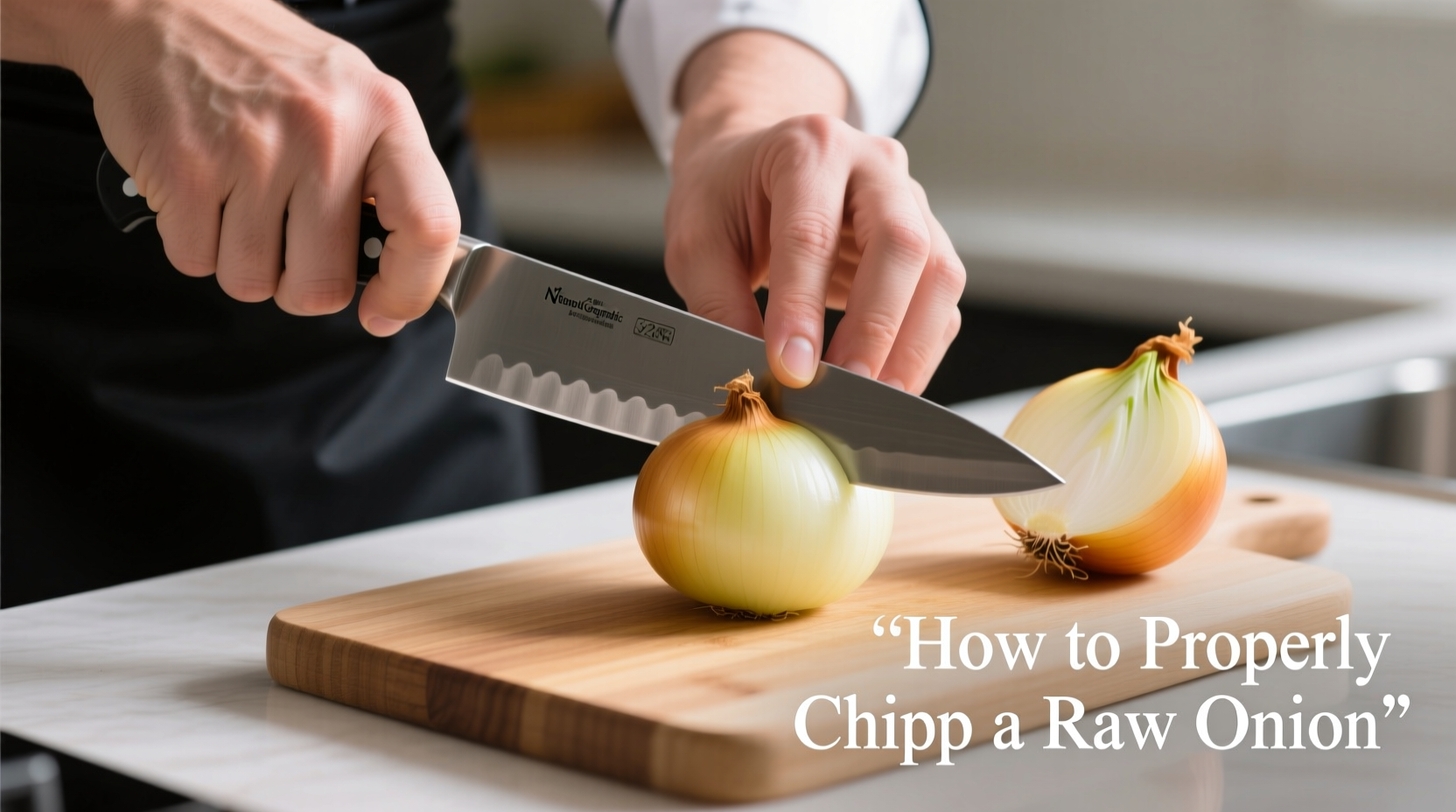
An onion (Allium cepa) is a bulbous vegetable belonging to the lily family, widely used as a foundational ingredient in global cuisines. Its layered structure consists of concentric rings protected by a papery outer skin, with a root end anchoring fibrous roots and a top (stem) end forming a slight crown. When cut, enzymes within the cells release sulfenic acid, which converts into a volatile gas—syn-propanethial-S-oxide—that irritates the eyes and causes tearing.
The way an onion is chopped influences how its flavors integrate into dishes. Fine mincing disperses pungency evenly, ideal for salsas or spice pastes. Medium dice works well in soups, stews, and sautés where uniform cooking is essential. Larger slices are suited for grilling, frying, or pickling. Understanding the internal structure allows cooks to manipulate cuts effectively while minimizing waste and maximizing yield.
Key Characteristics of Raw Onions
- Flavor Profile: Pungent, sharp, slightly sweet when raw; develops deeper sweetness when cooked.
- Aroma: Strong, sulfurous scent released upon cutting; diminishes slightly after exposure to air.
- Color & Form: White, yellow, or red varieties with translucent flesh arranged in concentric layers.
- Heat Level: Moderate to high pungency depending on variety and freshness; younger onions tend to be milder.
- Culinary Function: Aromatics base (mirepoix, sofrito), textural component, raw garnish, or pickled condiment.
- Shelf Life: Whole, unpeeled onions last 2–3 weeks at room temperature in a cool, dry place; once cut, store in a sealed container in the refrigerator for up to 5 days.
Essential Tools for Chopping Onions
Proper equipment ensures safety, consistency, and speed. The following tools are recommended:
- Sharp Chef’s Knife (8–10 inches): A sharp blade slices cleanly through cell walls without crushing, reducing juice release and minimizing airborne irritants.
- Cutting Board: Use a stable, non-slip surface made of wood or plastic. Avoid glass boards, which dull knives quickly.
- Bowl or Container: For holding chopped onions post-cutting.
- Damp Towel (Optional): Place under the cutting board to prevent slipping during repetitive motion.
Expert Tip: Never use a serrated knife for chopping onions. It tears rather than slices, releasing more enzymes and increasing eye irritation. A smooth, sharp blade glides through tissue cleanly, preserving integrity and comfort.
Step-by-Step Guide: How to Properly Chop a Raw Onion
Follow this precise sequence to achieve consistent results every time:
Step 1: Prepare Your Workspace
Wash your hands and rinse the onion under cool water to remove surface dirt. Dry both the onion and your hands. Position your cutting board securely on a damp cloth if needed. Ensure your knife is sharpened and ready.
Step 2: Trim the Ends
Place the onion on the board with one flat side down. Using a chef’s knife, slice off the stem end (top), removing about 1/4 inch. Do not cut deeply—just enough to expose the inner layers without compromising structural integrity. Leave the root end intact initially; it holds the layers together during cutting.
Step 3: Peel the Onion
Remove the papery outer skin along with any dark or dried layers beneath. Gently peel back each layer until you reach firm, moist flesh. Discard skins and damaged portions. Rinse briefly if sticky residue remains, then pat dry.
Step 4: Halve the Onion
Cut the onion vertically from top to bottom, passing through the center pole, creating two equal halves. Keep the root end attached on both sides to maintain cohesion during dicing.
Step 5: Create Vertical Cuts
Lay one half flat-side down. Make vertical cuts from the top toward—but not through—the root end. Spacing determines final size:
- Fine Dice: 1/8-inch apart
- Medium Dice: 1/4-inch apart
- Coarse Chop: 1/2-inch apart
Step 6: Slice Horizontally
Rotate the onion 90 degrees. With the same knife, make one or more horizontal cuts between the top and root, again avoiding severing the root entirely. For fine mince, add a second horizontal pass. These cuts create cross-sections that will separate into small cubes when sliced forward.
Step 7: Slice Forward into Diced Pieces
Holding the onion steady with a claw grip (fingertips curled under), slice perpendicularly from the top toward the root end. As you cut, the diced pieces will fall away into a pile. Repeat across the entire half. Once complete, trim and discard the remaining root nubbin.
Step 8: Repeat and Store
Repeat all steps with the second half. Transfer chopped onions to a bowl. If not using immediately, cover and refrigerate. For longer storage, freeze in portion-sized containers for up to 3 months (note: frozen onions lose crispness but retain flavor for cooked dishes).
Pro Technique: To reduce mess and increase speed, rock the knife continuously through the forward slicing stage. Maintain contact between the spine of the blade and the board, using a fluid rocking motion. This minimizes hand movement and maximizes efficiency.
Variants and Types of Onions
Different onion types respond uniquely to chopping due to variations in moisture content, pungency, and layer thickness. Choosing the right type depends on the intended application.
| Type | Flavor Profile | Best Used For | Cutting Notes |
|---|---|---|---|
| Yellow Onion | Strong, sulfurous raw; richly sweet when caramelized | Soups, sauces, roasts, stir-fries | Most common choice; sturdy layers hold shape well during dicing |
| White Onion | Bright, sharp, slightly hotter than yellow | Salsas, tacos, ceviche, Latin American cuisine | Thinner skin; more moisture—pat dry after peeling to avoid slipperiness |
| Red Onion | Mildly sweet with peppery notes; vibrant color | Salads, sandwiches, pickles, grilled dishes | Can bleed color; best added late in cooking or used raw |
| Shallot | Delicate, garlicky-sweet, less pungent | Vinaigrettes, reductions, fines herbes, French sauces | Smaller size requires finer motor control; often minced |
| Green Onions (Scallions) | Mild, fresh, grassy (white part sharper than green) | Garnishes, stir-fries, soups, Asian dishes | No peeling needed; slice diagonally or into rounds based on presentation |
Comparison with Similar Ingredients
Onions are often confused with related alliums. While they share botanical lineage, their uses and preparation differ significantly.
| Ingredient | Difference from Onion | When to Use Instead |
|---|---|---|
| Garlic | Individual cloves, stronger aroma, denser texture, higher allicin content | For intense flavor punches; always mince or crush, never dice like an onion |
| Leek | Elongated, tubular, milder, sandy between layers | In creamy soups or braises; requires thorough rinsing before slicing |
| Chives | Grass-like stems, very delicate, no bulb formation | As a raw garnish; snip with scissors, never chop with a knife |
| Spring Onion | Young onion with sprouting greens, smaller bulb | Whole-grilled or quick-pickled; can substitute for red onion in salads |
Practical Tips & FAQs
How do I stop crying when chopping onions?
Tearing occurs due to sulfur compounds vaporizing into the air. Effective solutions include:
- Chill the onion for 30 minutes before cutting—cold slows enzyme activity.
- Cut near running water or under a vent hood to draw gases away.
- Use a fan to blow fumes sideways, not toward your face.
- Wear kitchen-safe goggles—yes, seriously. They work.
- Light a candle nearby; flame may help burn off some vapors (anecdotal but popular).
Can I chop onions ahead of time?
Yes, but with caveats. Pre-chopped onions oxidize and lose potency over time. Store in an airtight container in the refrigerator for up to 5 days. For extended storage, freeze (up to 3 months), though texture becomes soft—best for cooked dishes only. Avoid storing peeled onions in water, as this leaches flavor and promotes bacterial growth.
What size should I chop onions for different dishes?
The ideal cut depends on cooking method and desired mouthfeel:
- Minced (≤1/8 inch): Salsas, spice rubs, compound butter, stuffing bases.
- Fine Dice (1/4 inch): Mirepoix, risotto, sauces, soups requiring smooth integration.
- Medium Dice (1/2 inch): Stews, casseroles, roasted vegetables, curries.
- Rough Chop: Stock-making, slow-cooked braises where texture isn't critical.
- Slices: French onion soup, grilling, caramelizing, sandwiches.
Is there a safe way to handle onions for sensitive skin?
Some individuals develop dryness or mild dermatitis from prolonged contact with onion juice. Wear food-safe gloves if necessary, especially during bulk prep. Wash hands thoroughly afterward with lemon juice or vinegar to neutralize odors and residues.
Can I use a food processor to chop onions?
Technically yes, but with trade-offs. A processor yields inconsistent sizes and releases excessive juice, leading to mushiness and strong odor dispersion. It also removes the tactile feedback crucial for developing knife skills. Reserve processors for large batches where precision is secondary, such as stock prep or sauce bases. Pulse carefully—over-processing turns onions into paste.
\"Mastering the onion chop is the first real test of a cook’s discipline. It teaches patience, precision, and respect for fundamentals. Everything else builds from there.\" — Chef Elena Martinez, Culinary Instructor, Institute of Artisan Cooking
Common Mistakes to Avoid
- Cutting off the root too early: Causes layers to separate prematurely, making controlled dicing difficult.
- Using a dull knife: Crushes cells instead of slicing, releasing more irritants and creating uneven textures.
- Improper hand positioning: Flat fingers risk injury; always use the claw grip with knuckles guiding the blade.
- Over-handling after chopping: Excessive stirring or pressing compacts the onion, squeezing out valuable juices.
- Peeling too aggressively: Removing healthy layers wastes usable product and reduces yield.
Summary & Key Takeaways
Chopping a raw onion properly combines science, technique, and practical awareness. The process begins with selecting the right tool—a sharp chef’s knife—and understanding the onion’s anatomy. By preserving the root end until the final cut, maintaining consistent spacing in vertical and horizontal passes, and using efficient knife motion, cooks achieve uniform results safely and efficiently.
Key points to remember:
- Always keep the root intact until the last forward slice to maintain control.
- Sharpen your knife regularly—dull blades increase friction and tear cells.
- Match the cut size to the dish: fine for integration, coarse for texture.
- Manage tears with chilling, ventilation, or protective eyewear.
- Store pre-chopped onions properly to preserve flavor and safety.
- Respect differences among onion varieties and substitute thoughtfully.
Final Thought: The ability to chop an onion consistently and confidently is a hallmark of skilled home cooking. It reflects attention to detail, respect for ingredients, and mastery of fundamental technique. Practice regularly, refine your form, and soon the motion will become second nature—silent, swift, and seamless.




 浙公网安备
33010002000092号
浙公网安备
33010002000092号 浙B2-20120091-4
Comments
No comments yet. Why don't you start the discussion?