
Chopping an onion may seem like a simple kitchen task, but doing it correctly affects flavor distribution, cooking time, texture, and even safety. A poorly chopped onion can result in uneven browning, inconsistent seasoning, or accidental cuts. Mastering the art of onion chopping is foundational for both home cooks and professionals. The right technique ensures uniform pieces that cook evenly, release flavor predictably, and enhance any dish—from soups and stews to salsas and stir-fries. This guide breaks down the entire process into clear, actionable steps, explains knife skills, offers storage advice, and addresses common mistakes so you can chop onions efficiently, safely, and confidently.
Definition & Overview
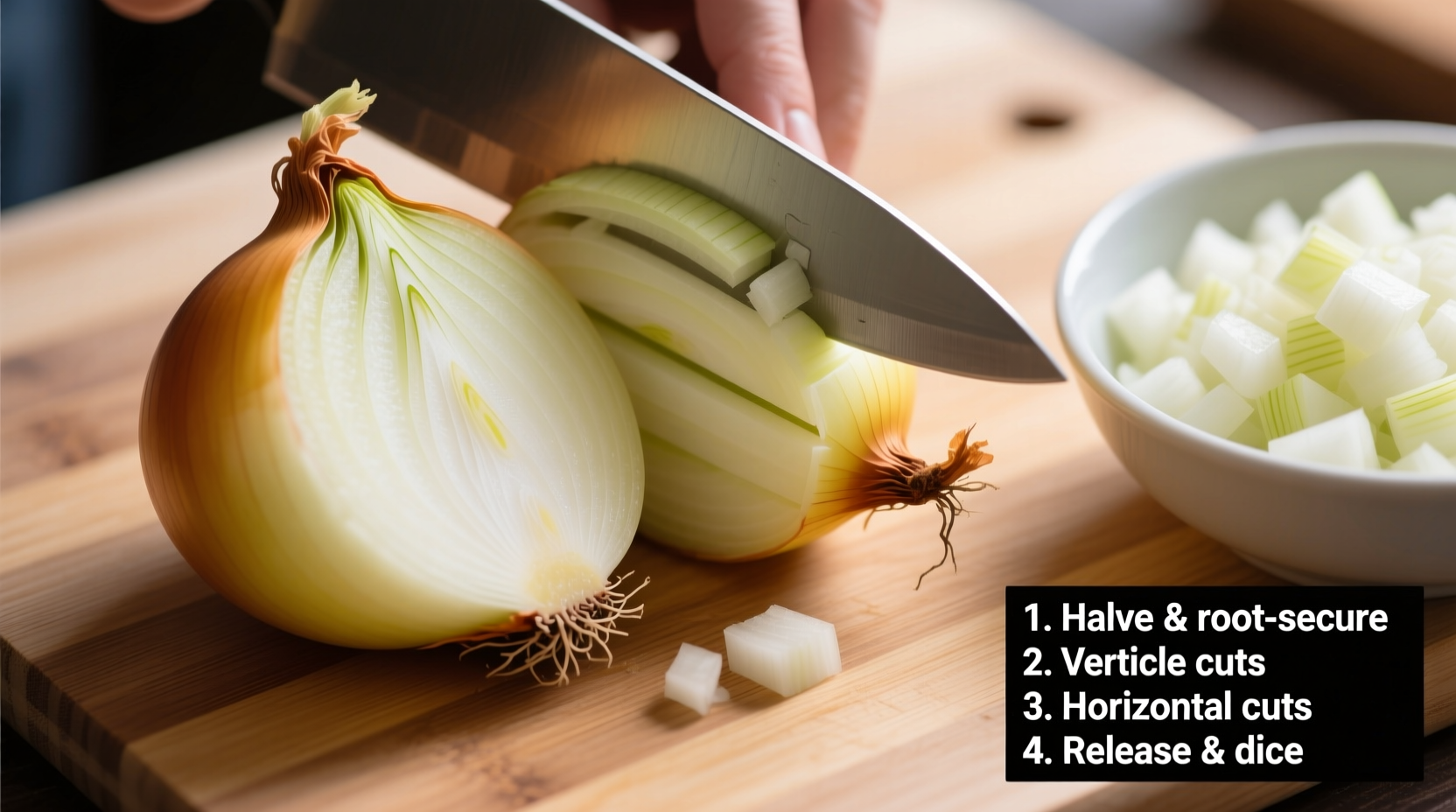
An onion (Allium cepa) is a bulbous vegetable belonging to the Allium genus, which includes garlic, leeks, and shallots. It consists of layered, fleshy scales enclosed in a papery skin, typically ranging in color from white to yellow to red. Onions are used globally as a flavor base in savory cooking due to their pungency when raw and sweet depth when cooked. The act of chopping refers to cutting the onion into small, uniform pieces—usually dice or mince—depending on the recipe’s requirements.
The method of chopping influences how the onion behaves during cooking. For example, finely minced onions dissolve into sauces, while larger dice retain structure in salads or relishes. Understanding the anatomy of the onion and its chemical response to cutting is essential for minimizing irritation and maximizing culinary performance.
Key Characteristics of Onions
Before learning how to chop an onion, it's important to understand what happens during the process. When cells are ruptured through cutting, enzymes react with sulfur-containing compounds, releasing volatile gases—specifically syn-propanethial-S-oxide—that irritate the eyes and cause tearing. This reaction varies slightly between onion types.
| Characteristic | Description |
|---|---|
| Flavor Profile | Sharp, pungent, and sulfurous when raw; transforms into sweet, caramelized notes when cooked. |
| Aroma | Pronounced and sharp upon cutting; mellows significantly with heat. |
| Color/Form | Spherical bulb with concentric layers; outer skin dry and papery, inner flesh translucent. |
| Common Varieties | Yellow, white, red (purple), and sweet onions (e.g., Vidalia, Walla Walla). |
| Culinary Function | Aromatics base (mirepoix, sofrito); adds depth, sweetness, texture, and complexity. |
| Shelf Life (Uncut) | 3–4 weeks at room temperature in a cool, dry, dark place. |
| Shelf Life (Chopped) | 3–5 days refrigerated in an airtight container. |
Practical Usage: How to Use Chopped Onions in Cooking
Uniformly chopped onions integrate seamlessly into dishes. In French cuisine, they form part of the mirepoix—a trio of diced onions, carrots, and celery sautéed in butter to build flavor. In Latin American kitchens, raw chopped white onions appear in pico de gallo or garnish tacos. Indian curries often begin with onions browned slowly until golden, forming a rich foundation.
The size of the chop determines function:
- Fine mince: Ideal for meatloaf, burger blends, or sauces where smooth integration is desired.
- Medium dice (¼–½ inch): Perfect for soups, stews, and sautés—cooks evenly without disappearing.
- Rough chop: Used when onions will be strained out (e.g., stocks) or pureed later.
- Thin slices: Common in sandwiches, grilled applications, or French onion soup.
For best results, always use freshly chopped onions unless a recipe specifically allows for frozen or pre-chopped alternatives, which tend to be waterlogged and lack structural integrity.
Pro Tip: To reduce moisture release in dishes like stir-fries or omelets, sprinkle salt over chopped onions and let them sit for 5 minutes. Rinse and pat dry if necessary—this draws out excess liquid and prevents sogginess.
Step-by-Step Guide: How to Properly Chop an Onion
Follow these precise steps to achieve clean, consistent cuts and minimize risk of injury. This method applies primarily to round bulbs such as yellow, white, or red onions.
- Prepare Your Tools
Select a sharp chef’s knife (8–10 inches recommended). A dull blade requires more pressure and increases slipping risk. Use a stable cutting board—preferably non-slip or damp towel-lined. - Trim the Ends
Place the onion on the board. Slice off the stem end (top), about ¼ inch down—do not remove the root end (bottom). Keeping the root intact helps hold layers together during slicing, reducing scattering and improving control. - Peel the Onion
Remove the papery outer skin and first dry layer. Rinse briefly if needed to remove dirt, then dry thoroughly to avoid slippery handling. - Cut in Half from Pole to Pole
Lay the onion on its side and slice vertically through the equator, passing through the root and stem ends. You now have two halves with exposed layers radiating from the center. - Make Vertical Cuts (Toward Root)
Take one half and place it flat-side down, root end facing away. Make vertical cuts from the top toward the root—do not cut through the root. Spacing depends on desired dice:- Close cuts (~⅛ inch) = fine dice
- Wider cuts (~¼ inch) = medium dice
- Cross-Cut Horizontally
Still keeping the root intact, make one or two horizontal cuts parallel to the board—again, stopping short of severing the root. These create internal segments that will separate once final cuts are made. - Dice Toward the Root
Finally, slice perpendicular to your vertical cuts, moving from the opposite end toward the root. As you cut, uniform cubes will fall away cleanly. Discard the root after dicing. - Repeat with Second Half
Apply the same sequence to the other half for consistency across the batch.
Knife Safety Reminder: Curl your guiding hand into a claw, tucking fingertips inward, and use knuckles to guide the blade. Never flatten your fingers beneath the knife path.
Variants & Types of Onions and Their Best Uses
Not all onions are interchangeable. Each type has distinct sugar, water, and pyruvate (pungency) levels, affecting how they should be chopped and used.
| Type | Texture/Appearance | Flavor | Best Chopping Use |
|---|---|---|---|
| Yellow Onion | Brown-gold skin, pale yellow flesh | Strong, pungent raw; sweetens dramatically when cooked | Standard for sautéing, roasting, soups, sauces—medium dice ideal |
| White Onion | Thin white skin, crisp white flesh | Sharper bite, less sweetness than yellow | Raw applications: salsas, ceviche, Mexican dishes—fine chop preferred |
| Red Onion | Purple-red skin and flesh | Mild, slightly sweet, vibrant color | Salads, sandwiches, pickling—thin slices or medium dice preserve color |
| Sweet Onions (Vidalia, Maui, Walla Walla) | Large, pale, high moisture | Very low pungency, naturally sugary | Grilling, raw eating, onion rings—handle gently; prone to mushiness |
| Shallot | Elongated, coppery skin, garlic-like clusters | Delicate, garlicky-sweet | Fine mince for vinaigrettes, reductions, fines herbes |
When substituting one type for another, consider whether the dish benefits more from boldness (yellow) or brightness (red/white). Sweet onions caramelize faster but break down quicker under heat.
Comparison with Similar Ingredients
Onions are often confused with related alliums. While similar in structure, their uses differ significantly.
| Ingredient | Similarity to Onion | Key Differences | Substitution Advice |
|---|---|---|---|
| Garlic | Same family, aromatic function | More intense, spicy-hot when raw; used in smaller quantities | Not interchangeable; garlic complements onions but doesn’t replace them |
| Leek | Mild onion flavor, layered structure | Long green stalks; requires thorough washing; milder taste | Can substitute in soups/stews; chop white/light green parts only |
| Green Onion (Scallion) | Young onion with hollow green tops | Much milder; both bulb and greens edible; no layering | Use raw as garnish; cannot provide same depth when cooked |
| Chives | Grass-like, onion-flavored herb | Fragile texture; strictly raw use; subtle flavor | Add at end of cooking; never a base substitute |
Understanding these distinctions prevents overuse or misapplication. For instance, replacing a diced yellow onion with chives would fail to deliver foundational flavor.
Practical Tips & FAQs
Why do onions make me cry, and how can I stop it?
The sulfuric gas released when cutting disrupts tear glands. Reduce exposure by chilling the onion for 30 minutes before chopping—cold slows enzyme activity. Alternatively, chop near running water (like under a vent hood) or wear goggles. Cutting under water is impractical and unsafe with knives.
Should I wash onions after chopping?
No, unless using immediately in a raw preparation where reduced pungency is desired (e.g., quick-pickled red onions). Washing dilutes flavor and accelerates spoilage.
Can I freeze chopped onions?
Yes, though texture changes. Frozen onions become soft and are best used in cooked dishes like soups, stews, or sauces. Spread fresh-chopped pieces on a tray, freeze individually, then store in a sealed bag for up to 6 months.
How do I store leftover chopped onions?
Place in an airtight container and refrigerate. Use within 3–5 days. Exposure to air causes oxidation and off-flavors.
Is there a way to chop onions faster without losing accuracy?
Practice consistent knife rhythm. Rock the blade using the tip as a pivot point. Avoid lifting the knife completely between cuts. With repetition, muscle memory develops, increasing speed and precision simultaneously.
Are pre-chopped onions worth buying?
Convenient but costly and less fresh. Pre-cut onions oxidize quickly, losing sweetness and developing bitterness. They also contain more free moisture, leading to poor searing. Reserve for emergencies or long-term freezing needs.
What knife is best for chopping onions?
A forged stainless steel chef’s knife between 8–10 inches offers balance, weight, and edge retention. Japanese-style gyutos provide precision; German-style chefs (e.g., Wüsthof) offer heft for rocking motion. Keep it sharpened—every 2–3 months with regular home use.
Expert Insight: \"The way you cut an onion reveals your respect for ingredients. Uniformity isn't just visual—it's thermal. Even pieces cook at the same rate, preventing some bits from burning while others remain raw.\" — Chef Elena Torres, Culinary Instructor, San Francisco Cooking School
Summary & Key Takeaways
Chopping an onion properly is more than a basic skill—it’s a cornerstone of effective cooking. Precision ensures even cooking, balanced flavor development, and professional results. Using a sharp knife, maintaining the root end for stability, and applying structured vertical and horizontal cuts lead to consistent, safe outcomes.
- Always start with a sharp knife and stable cutting surface.
- Preserve the root end until the final cut to maintain control.
- Adjust chop size based on recipe: fine for blending, medium for structure.
- Choose the right onion variety—yellow for cooking, red for color, sweet for raw eating.
- Store chopped onions in airtight containers and use within five days.
- Minimize tears by chilling onions or improving ventilation.
- Never substitute delicate alliums like chives or scallions for mature bulb onions in foundational roles.
Mastering this fundamental technique empowers better control over every meal. Once perfected, chopping an onion becomes second nature—quick, efficient, and integral to building flavor with confidence. Practice regularly, refine your motion, and soon you’ll move through prep work with the ease of a seasoned cook.
Now that you know how to chop an onion like a pro, try applying the technique in a classic French onion soup or homemade salsa—and notice the difference precision makes.




 浙公网安备
33010002000092号
浙公网安备
33010002000092号 浙B2-20120091-4
Comments
No comments yet. Why don't you start the discussion?