
Chopping an onion seems simple—until the tears start, the pieces turn uneven, or the texture ruins a delicate dish. Yet, onions are foundational in global cuisine, forming the aromatic base of countless soups, stews, sauces, and sautés. Mastering how to chop an onion properly is not just about efficiency; it’s about control, consistency, and culinary precision. A well-chopped onion ensures even cooking, balanced flavor distribution, and professional-quality results, whether you're preparing a weeknight stir-fry or a slow-simmered French onion soup. This guide breaks down the science, technique, and nuances behind proper onion chopping, offering actionable steps, safety considerations, and expert-backed methods that elevate everyday cooking.
Definition & Overview
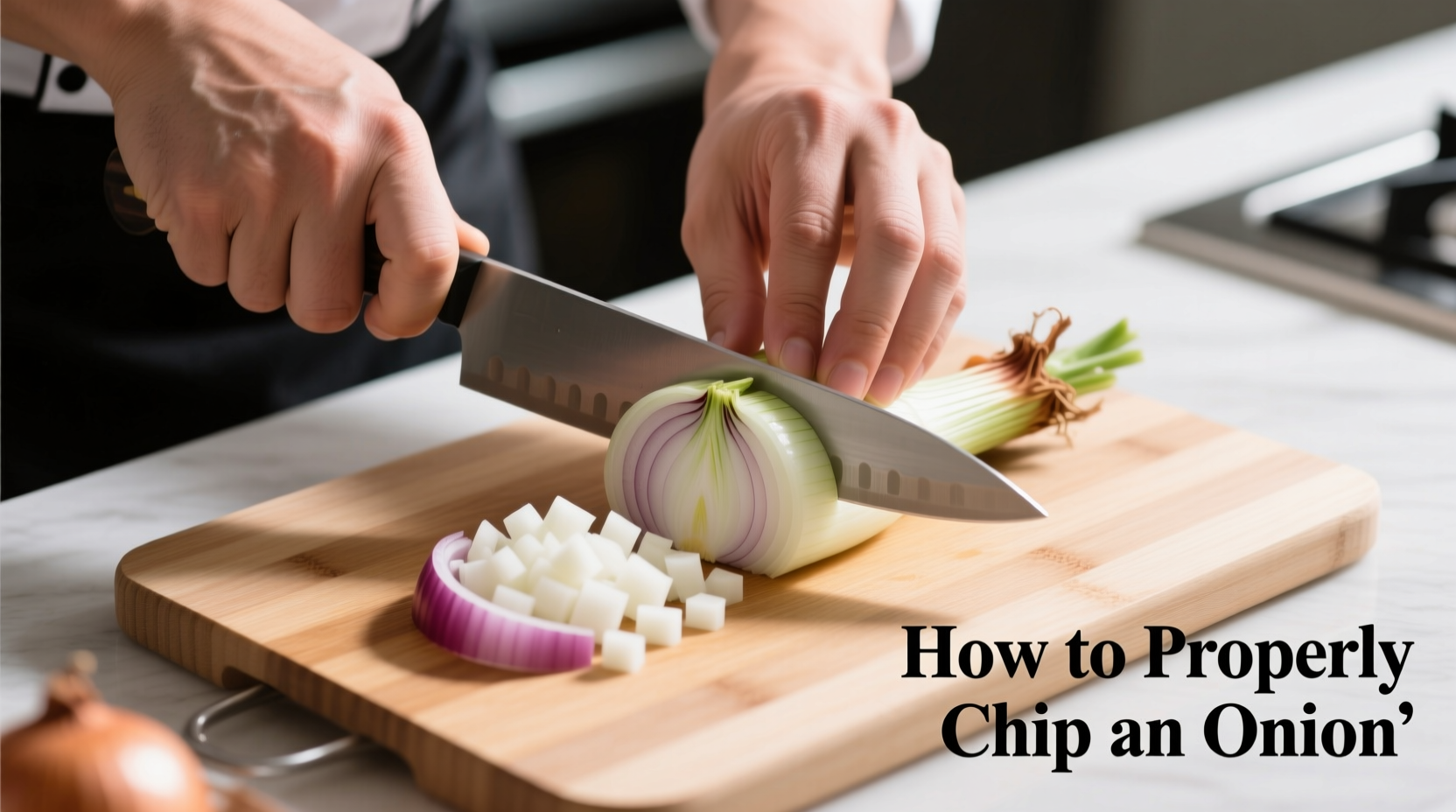
An onion (Allium cepa) is a bulbous vegetable belonging to the Alliaceae family, which includes garlic, leeks, and shallots. It consists of layered, fleshy scales enclosed in a papery outer skin, typically ranging in color from white and yellow to red and purple. Onions are cultivated worldwide and have been used in cooking for over 5,000 years, originating in Central Asia before spreading across Europe, Africa, and the Americas.
In culinary terms, onions serve as a flavor foundation—often part of a \"mirepoix\" (with carrots and celery) in French cuisine or a \"sofrito\" in Latin American and Mediterranean cooking. When chopped and cooked, they release sulfur compounds that transform into sweet, savory, and umami-rich notes. The way an onion is cut—whether finely minced, coarsely diced, or sliced—directly affects its chemical behavior during cooking, influencing both taste and texture.
Key Characteristics
| Characteristic | Description |
|---|---|
| Flavor Profile | Sharp, pungent when raw; becomes sweet and mellow when cooked. Yellow onions are most balanced; red onions are slightly fruitier; white onions are crisp and sharp. |
| Aroma | Pronounced sulfurous scent when cut, caused by volatile compounds like syn-propanethial-S-oxide, which also triggers eye irritation. |
| Color & Form | Round bulbs with concentric layers. Outer skin is dry and papery; inner flesh ranges from white to pale yellow (yellow onion), deep purple (red onion), or bright white (white onion). |
| Culinary Function | Aromatics base, thickener (when caramelized), textural component (in salsas or salads), flavor enhancer. |
| Shelf Life | Whole: 2–3 months in cool, dark, dry storage. Cut: up to 7 days refrigerated in a sealed container. |
Why Technique Matters: The Science Behind Chopping
When an onion is cut, its cells rupture, releasing enzymes that convert sulfoxides into sulfenic acid. This compound is then transformed by the enzyme lachrymator factor synthase into syn-propanethial-S-oxide—a volatile gas that diffuses through the air and reacts with moisture in the eyes to form sulfuric acid, causing the familiar burning sensation and tears.
The extent of this reaction depends on how much cellular damage occurs. Rough chopping or crushing releases more gas than clean, precise cuts. Moreover, the size and uniformity of the dice affect cooking time: uneven pieces result in some parts burning while others remain undercooked. Professional kitchens prioritize consistency not just for appearance but for thermal predictability—each piece must caramelize or sweat at the same rate.
Step-by-Step: How to Properly Chop an Onion
- Select a firm, heavy onion – Avoid soft spots, sprouting, or mold. The onion should feel dense for its size, indicating high water content and freshness.
- Gather tools – Use a sharp chef’s knife (8–10 inches), a stable cutting board (preferably non-slip), and a bowl for the chopped pieces.
- Trim the ends – Place the onion on the board. Slice off the root end (do not remove completely—leaving it intact helps hold layers together during initial cuts). Remove the stem end (top) flush with the onion.
- Peel the onion – Remove the papery outer skin and any dry outer layer. Rinse briefly if needed to remove dirt, but dry thoroughly to maintain knife grip.
- Cut in half from pole to pole – Slice vertically through the root and stem axis. This preserves the grain structure, making controlled slicing easier.
- Lay flat and make vertical cuts – Place one half flat-side down. Make vertical slices from the top toward the root, spacing them according to desired dice size (e.g., ¼ inch apart for medium dice). Do not cut through the root—it acts as a hinge.
- Cross-cut horizontally – Angle your knife to make one or two horizontal cuts beneath the surface, still avoiding the root. This loosens the layers for even dicing.
- Slice across for dice – Rotate the onion 90 degrees and slice straight down across the previous cuts. The pieces will fall away in uniform cubes.
- Repeat – Finish the second half identically.
Pro Tip: For mincing, reduce the spacing between vertical and cross-cuts to 1/8 inch or less. For julienne strips (used in stir-fries or garnishes), skip the final cross-dice and simply slice thinly along the length after making close vertical cuts.
Variants & Types of Onion Cuts
Different dishes require different cuts. Understanding these variations improves both functionality and presentation.
- Fine Dice (Brunoise) – 1/8-inch cubes. Ideal for salsas, relishes, or finishing sauces where texture should be subtle.
- Medium Dice – ¼-inch cubes. Standard for soups, stews, and sautés. Balances surface area and structural integrity.
- Large Dice – ½-inch or larger. Used in hearty braises or roasts where long cooking would dissolve smaller pieces.
- Slices – Thin or thick rounds, often separated into rings. Common in burgers, sandwiches, or French onion soup.
- Julienned Strips – Matchstick-sized pieces. Useful in Asian stir-fries or quick-pickled applications.
- Chopped (Rough) – Irregular, coarse pieces. Acceptable for stocks or blended soups where texture doesn’t matter.
| Cut Type | Best Used In | Knife Skill Level |
|---|---|---|
| Fine Dice | Salsas, mayonnaise-based salads, refined sauces | Intermediate |
| Medium Dice | Curries, risottos, tomato sauces | Beginner+ |
| Slices | Caramelized onions, grilling, sandwich toppings | Beginner |
| Julienned | Stir-fries, slaws, garnishes | Intermediate |
| Rough Chop | Stocks, broths, pureed soups | Beginner |
Onion Varieties and Their Best Uses
Not all onions are interchangeable. Choosing the right type enhances the final dish.
- Yellow Onions – Most versatile. High sulfur content gives strong flavor when raw, but transforms into deep sweetness when cooked. Use in almost any cooked application.
- White Onions – Crisper and sharper, with a cleaner bite. Common in Mexican cuisine (pico de gallo, guacamole). Cook quickly to preserve brightness.
- Red Onions – Mildly sweet with vibrant color. Excellent raw in salads, sandwiches, or pickled. Can be grilled or roasted but may bleed color.
- Shallots – Botanically distinct but related. More delicate, with garlicky undertones. Preferred in vinaigrettes and fine sauces.
- Sweet Onions (Vidalia, Walla Walla, Maui) – Lower sulfur, higher water content. Exceptionally mild—best eaten raw or lightly grilled. Not ideal for long cooking due to rapid breakdown.
Storage Note: Store whole onions in a cool, dry, ventilated area—never in plastic bags or near potatoes, which emit moisture and ethylene gas, accelerating spoilage. Cut onions must be refrigerated in airtight containers.
Comparison with Similar Ingredients
Onions are often confused with other alliums. Knowing the differences prevents recipe missteps.
| Ingredient | Key Differences | When to Substitute |
|---|---|---|
| Garlic | More pungent, smaller cloves, stronger aroma. Used in smaller quantities. | Never a direct substitute. Complements onions but overwhelms if swapped 1:1. |
| Leeks | Milder, sweeter, with layered stalks instead of bulbs. Require thorough cleaning. | Good in soups or braises where subtlety is desired. Use 1:1 volume, but cook longer. |
| Green Onions (Scallions) | No developed bulb; both green and white parts edible. Much milder. | Use raw or lightly cooked. Replace only in garnishes or light applications—not for mirepoix. |
| Shallots | Smoother, more complex flavor with hint of garlic. Less fibrous. | Excellent 1:1 swap in dressings or pan sauces. Use ¾ quantity when replacing onions in cooked dishes. |
Practical Tips & FAQs
How can I chop onions without crying?
Cool the onion first by refrigerating for 30 minutes or freezing for 10–15 minutes. Cold temperatures slow enzyme activity and gas release. Alternatively, chop near running water or under a vent hood to draw vapors away. Some chefs wear kitchen-safe goggles—effective and increasingly common in home kitchens.
Does knife sharpness really matter?
Yes. A sharp knife makes cleaner cuts with less cell rupture, reducing gas release. Dull knives crush tissue, increasing tear-inducing compounds and requiring more force, which raises injury risk.
Can I use a food processor?
You can, but with caveats. Processors tend to over-process, turning onions into mush—especially problematic for dishes requiring distinct texture. If using, pulse in short bursts and monitor closely. Never process sweet onions for long—they liquefy quickly.
What’s the best way to store chopped onions?
Place in an airtight container and refrigerate. They last 5–7 days. For longer storage, freeze in single-layer sheets on a tray, then transfer to freezer bags. Frozen onions work well in cooked dishes but lose crispness for raw applications.
Are there cultural differences in onion preparation?
Yes. In French cuisine, onions are finely diced for mirepoix and often sweated slowly in butter. In Indian cooking, onions are frequently ground into pastes for curries. In Japanese ramen, onions are simmered until nearly dissolved to build broth depth. Each tradition adapts the cut to its flavor goals.
Can I prep onions ahead of time?
Absolutely. Pre-chop onions for weekday meals and store refrigerated. To prevent odor transfer, place a damp paper towel in the container or store with a slice of bread, which absorbs excess moisture and smell.
“The way you treat an onion at the cutting board echoes through the entire dish. A haphazard chop leads to uneven cooking, masking the balance a skilled cook seeks.” — Chef Elena Martinez, Culinary Instructor, San Francisco Cooking School
Advanced Techniques for Home Cooks
Once basic dicing is mastered, consider these refinements:
- Layered Control – After halving, peel only the outermost layer before cutting. This minimizes oxidation and preserves freshness in the remaining half.
- Root Retention Method – Keep the root intact until the final dice. It stabilizes the onion, allowing safer, more precise cuts. Trim it off only after dicing is complete.
- One-Handed Rock-Cut – Use your non-knife hand in a claw grip to guide the blade while rocking the knife tip against the board. This increases speed and safety.
- Bilateral Consistency – Practice on both halves so each yields identical results. This is crucial when doubling recipes or cooking for guests.
Common Mistakes to Avoid
- Removing the root too early – Causes layers to separate, making controlled cuts difficult.
- Using a serrated knife – Tears rather than slices, increasing juice loss and irritation.
- Overcrowding the pan after chopping – Leads to steaming instead of browning. Sauté onions in batches if necessary.
- Ignoring grain direction – Cutting against the grain (from pole to pole) yields cleaner, more uniform pieces.
- Washing after cutting – Dilutes flavor and increases spoilage risk. Wash only before peeling.
Summary & Key Takeaways
Chopping an onion properly is a fundamental skill that impacts every stage of cooking—from aroma development to final texture. Using a sharp knife, maintaining the root end for stability, and cutting with precision ensures uniform pieces that cook evenly and release flavor optimally. Choose the onion variety and cut based on the dish: yellow onions for cooking, red for raw applications, and sweet types for grilling or salads.
Minimize tears by chilling the onion, improving ventilation, or wearing protective eyewear. Store pre-chopped onions correctly to maintain quality and reduce waste. Understand that small adjustments—like dice size or cut direction—can significantly influence outcomes in both home and advanced cooking.
Ultimately, mastery begins with repetition. Practice the vertical-horizontal method until it becomes instinctive. Over time, the act of chopping an onion transforms from a chore into a meditative, efficient ritual—one that lays the groundwork for exceptional food.
Ready to improve your knife skills? Try chopping three onions using different techniques—fine dice, medium dice, and slices—and compare how each behaves when sautéed for 5 minutes. Notice differences in browning, texture, and flavor release.




 浙公网安备
33010002000092号
浙公网安备
33010002000092号 浙B2-20120091-4
Comments
No comments yet. Why don't you start the discussion?