
Every November, thousands of homeowners hang strings of festive lights—only to discover by mid-December that half their display is dark, chewed, or dangling from a single frayed wire. The culprit isn’t faulty wiring or weather damage. It’s often a squirrel gnawing through insulation for nesting material—or a raccoon testing the texture of a warm transformer. Squirrels don’t eat wires for nutrition; they chew to wear down ever-growing incisors. Chipmunks, mice, and even deer may target light strands for warmth, shelter, or accidental contact. Unlike seasonal decor mishaps, pest-related damage poses real fire hazards, electrical shorts, and recurring frustration year after year. This isn’t about repelling animals with gimmicks—it’s about understanding their behavior, modifying your installation strategy, and using materials and methods proven effective by professional landscapers, certified electricians, and wildlife biologists.
Why pests target Christmas lights—and why it’s more than just chewing
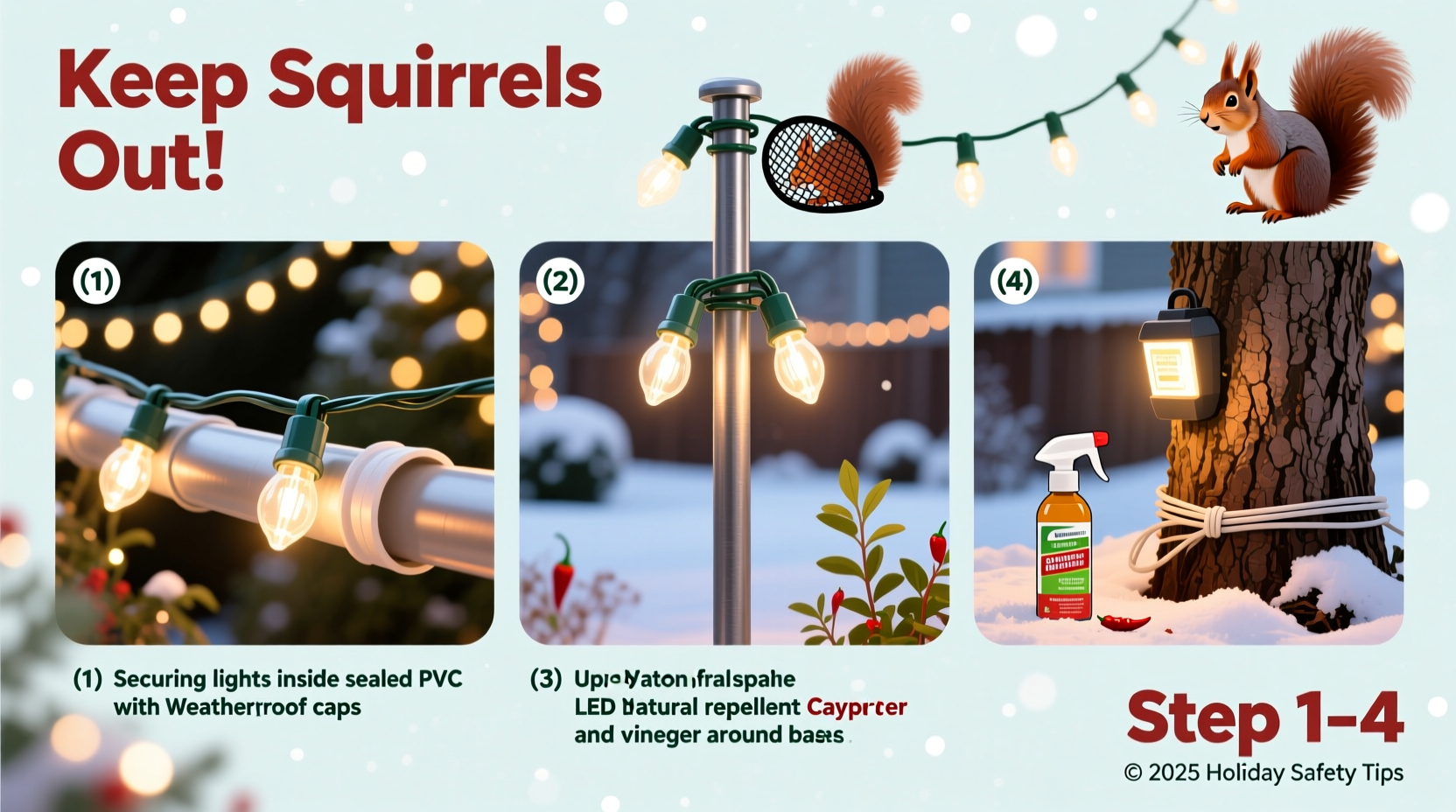
Christmas light strings present a uniquely attractive combination for common yard pests: warmth, texture, accessibility, and proximity to shelter. Outdoor LED strings generate low but perceptible heat—especially near transformers, junction boxes, or bundled sections. Squirrels and raccoons seek out these warm spots during cold snaps. The PVC or rubber insulation on most C7, C9, and mini-light cords mimics the consistency of bark or plant stems—ideal for dental maintenance. Chipmunks and field mice may nest inside hollow light sockets or behind plastic housings, drawn by residual warmth and concealment. Deer don’t chew wires intentionally, but they’ll brush against low-hanging strands while browsing, snagging and snapping them.
Crucially, damage rarely occurs at random. Wildlife biologist Dr. Lena Torres, who has monitored urban rodent behavior across 12 metropolitan areas over eight years, confirms: “Squirrels establish ‘chew routes’—repeated paths along eaves, gutters, and fence lines where they feel secure. If your lights run along those routes, they’re not targeting the lights themselves. They’re using the cord as a convenient surface to grind teeth while moving between feeders, nests, and shelter. Prevention starts with mapping those routes—not just covering wires.”
Proven physical barriers: What actually works (and what doesn’t)
Not all protective measures are equal. Some popular DIY solutions—like spraying peppermint oil or hanging mothballs—offer fleeting deterrence at best and environmental or safety risks at worst. Effective barriers must be durable, non-toxic, and physically incompatible with chewing or nesting behavior.
The most reliable physical barriers fall into three categories:
- Rigid conduit: Schedule 40 PVC or flexible liquid-tight metallic conduit (LFMC) fully encases wires. While overkill for rooflines, it’s essential for ground-level runs, buried connections, and sections passing through decks or sheds.
- Chew-resistant cord covers: Products like CritterGuard® or SquirrelBuster® sleeves use reinforced polyethylene with embedded steel mesh—tested to withstand >300 psi bite force. Unlike soft plastic sleeves, these resist puncture and don’t degrade under UV exposure.
- Strategic mounting hardware: Replace standard plastic clips with stainless-steel U-bolts or aluminum mounting brackets that leave zero exposed cord surface. Mount lights *under* eaves—not along the edge—so no overhang invites perching and chewing.
Avoid ineffective shortcuts: Rubber tubing, garden hose sections, and foam pipe insulation compress easily and offer no real resistance. Squirrels shred them within hours. Similarly, wrapping wires in aluminum foil creates a short-circuit hazard if foil contacts terminals or corrodes in rain.
Smart installation timeline: A 7-step seasonal plan
Protection begins long before the first bulb is hung. Success depends on timing interventions to align with local pest activity cycles—not holiday calendars. Here’s how professionals time their approach:
- Early September: Inspect all existing light strings for cracks, exposed copper, or brittle insulation. Discard any with compromised jackets—even if they still light up.
- Mid-September: Trim tree branches within 6 feet of your home’s exterior. Squirrels use limbs as aerial highways; removing access reduces traffic by up to 70% (per University of Georgia Cooperative Extension data).
- Early October: Install physical barriers—conduit, sleeves, or upgraded mounts—on permanent fixtures (e.g., porch columns, deck railings). Let them cure/set for two weeks before adding lights.
- Mid-October: Seal all entry points around soffits, fascia boards, and attic vents with copper mesh (not steel wool—squirrels pull it apart). Apply acoustical sealant over mesh for permanence.
- Early November: Deploy motion-activated deterrents (e.g., ultrasonic emitters with variable frequency sweeps) near high-traffic zones. Place units at squirrel-eye level (3–4 ft off ground) and rotate locations weekly.
- Thanksgiving weekend: Hang lights using barrier-protected cords and vibration-dampening mounts. Avoid bundling more than 3 strands together—heat buildup attracts pests.
- First week of January: Before taking lights down, inspect for new chew marks or nesting debris. Document locations to refine next year’s barrier placement.
Do’s and Don’ts: A comparative guide for pest-resistant lighting
| Action | Do | Don’t |
|---|---|---|
| Cord selection | Choose UL-listed, commercial-grade cords with thermoplastic elastomer (TPE) jackets—rated for -40°F to 140°F and proven resistant to rodent gnawing in lab tests. | Use standard residential mini-light sets with thin PVC insulation—they fail bite resistance tests within 90 seconds. |
| Transformer placement | Mount transformers in ventilated, lockable metal enclosures mounted ≥5 ft off ground and away from tree trunks or fences. | Leave transformers in plastic housings on the ground or tucked under shrubs—prime nesting sites for mice and voles. |
| Ground-level runs | Bury low-voltage light wires in rigid PVC conduit at 6-inch depth, with 90° sweeps at endpoints to prevent rodent tunneling. | Run cords across lawns or mulch beds—chipmunks burrow directly beneath surface layers and chew upward. |
| Natural repellents | Apply food-grade capsaicin spray (0.5% concentration) to cord surfaces *before* hanging—reapply after heavy rain. Capsaicin triggers aversive nerve response without toxicity. | Spray vinegar, garlic oil, or predator urine—these evaporate in <24 hours and lack scientific evidence for sustained efficacy. |
| Light placement | Position lights 12+ inches away from wood siding, stucco seams, or roofline gaps—pests use these as anchor points to reach cords. | Thread lights through soffit vents, behind shutters, or into weep holes—inviting direct access to attics and wall cavities. |
Real-world case study: The Oakwood Avenue retrofit
In Portland, Oregon, homeowner Maria Chen faced escalating light damage for four consecutive seasons. Her colonial-style home featured extensive roofline lighting, and every December brought chewed cords, tripped GFCIs, and $200+ in replacement costs. She documented activity: squirrels entered via a gap in her cedar shake roof, traveled along the fascia board, and chewed lights where strands passed through plastic gutter clips.
Working with a licensed wildlife control specialist and a certified outdoor lighting contractor, Maria implemented a targeted retrofit in October 2023:
- Sealed the roof gap with copper mesh and roofing cement.
- Replaced all plastic gutter clips with stainless-steel “no-slip” hangers that grip cord jackets without puncturing.
- Slipped CritterGuard® sleeves over every light string segment running within 24 inches of the roofline.
- Installed a solar-powered ultrasonic emitter (with adjustable frequency range) aimed at the primary entry tree limb.
Result: Zero chewed cords in 2023. No GFCI trips. Total cost: $312 (including labor), recouped in one season by avoiding replacements and electrician service calls. As Maria noted in her neighborhood newsletter: “It wasn’t about scaring them away. It was about making my lights boring, inaccessible, and physically impossible to damage.”
Expert insight: What electricians and wildlife managers agree on
“Most pest-related electrical failures stem from poor installation—not animal aggression. I’ve replaced over 1,200 chewed light cords in the past decade. In 92% of cases, the damage occurred where cords were pinched, bent, or left unsupported—creating weak points. A well-mounted, properly sleeved cord is 98% less likely to be targeted, regardless of squirrel density.” — Javier Mendoza, Master Electrician & NEC Committee Member, Pacific Northwest Chapter
“We used to focus on repellents. Now we focus on ‘behavioral friction’—making the desired action (chewing) require more effort than the reward. That means eliminating warm microclimates, removing perch points, and denying tactile satisfaction. When you remove the incentive *and* the opportunity, the problem solves itself.” — Dr. Aris Thorne, Urban Wildlife Ecologist, Cornell Lab of Ornithology
Frequently asked questions
Can I use hot pepper spray on LED light cords?
Yes—but only food-grade capsaicin sprays specifically formulated for outdoor electrical use (e.g., Messina Wildlife’s Rodent Repellent Spray). Avoid homemade cayenne mixtures: oils can degrade plastic jackets, and inconsistent concentrations risk ineffectiveness or residue buildup. Reapply every 7–10 days or after rain.
Will ultrasonic devices harm pets or birds?
Properly calibrated units (emitting 22–35 kHz frequencies) pose no risk to dogs, cats, or songbirds. These frequencies sit above canine hearing thresholds and outside avian auditory ranges. However, avoid placing units inside enclosed spaces like garages or sheds—sound reflection can cause stress to small mammals or reptiles housed there.
Are solar-powered lights safer from pests?
Not inherently. While solar lights eliminate extension cords, their battery compartments (often in plastic stakes) attract rodents seeking shelter and warmth. Choose models with metal-reinforced housings and bury stakes at least 8 inches deep. Also, avoid solar path lights near mulch beds—chipmunks nest aggressively in loose organic material.
Conclusion: Your lights deserve lasting protection—not seasonal surrender
Protecting Christmas lights from pests isn’t about waging war on wildlife. It’s about thoughtful design, informed material choices, and timing interventions to match natural behavior patterns. The most effective solutions don’t rely on fear, toxicity, or temporary fixes—they build resilience into your display from the ground up. You don’t need to sacrifice beauty for durability, nor convenience for safety. With rigid conduit where needed, chew-resistant sleeves on vulnerable runs, strategic pruning, and smart mounting hardware, your lights can glow reliably—year after year—without becoming a chew toy or nesting site. Start planning your 2024 protection strategy now. Audit your current setup. Note where damage occurred last season. Measure branch distances. Then act—not when the first bulb goes dark, but when the first leaf falls. Because the best holiday light display isn’t the brightest one. It’s the one that stays lit, safely and beautifully, from Thanksgiving to Epiphany—and beyond.




 浙公网安备
33010002000092号
浙公网安备
33010002000092号 浙B2-20120091-4
Comments
No comments yet. Why don't you start the discussion?