
Spending a day at the beach should be relaxing, not stressful. But one of the most common worries for smartphone users is what happens when sand finds its way into their device. Tiny grains can infiltrate charging ports, speakers, and buttons, causing malfunctions or permanent damage. While waterproof cases are ideal, not everyone carries one. The good news? You don’t need specialized equipment to safeguard your phone. With a few smart strategies and common household items, you can significantly reduce the risk of sand-related damage—even in the middle of a sandy shoreline.
Why Sand Is a Smartphone’s Worst Enemy
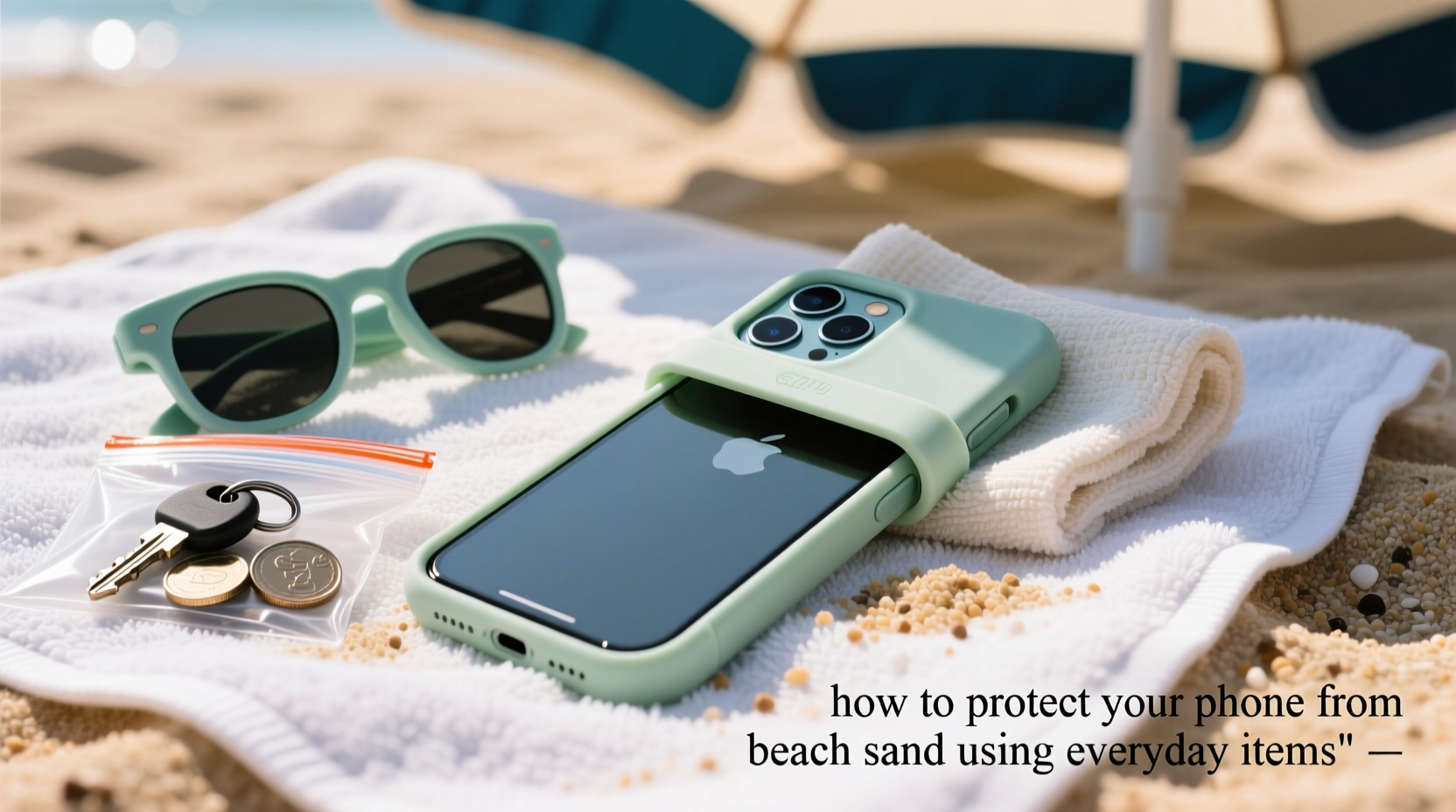
Sand may look harmless, but under a microscope, its particles are jagged and abrasive. When these micro-grains enter your phone’s openings, they can scratch internal components, block airflow, interfere with touch sensitivity, or even cause short circuits when combined with moisture. Unlike water, which often evaporates or drains, sand tends to stay put—lodging deep inside crevices where it’s difficult to remove.
According to Dr. Lena Patel, materials engineer at the Mobile Device Integrity Lab, “Silica-based sand acts like microscopic sandpaper. Repeated exposure wears down delicate connectors and seals over time. Even if your phone seems fine after a sandy encounter, residual grit can accelerate wear.”
“Even fine sand can compromise electrical contacts and speaker diaphragms. Prevention is far more effective than cleanup.” — Dr. Lena Patel, Materials Engineer
Everyday Items That Can Shield Your Phone
You likely already own several items capable of protecting your phone from sand. These aren’t gimmicks—they’re practical solutions grounded in accessibility and physics. The key principles are: sealing openings, creating physical barriers, and minimizing direct contact with sand.
Ziplock Bags: The Ultimate Emergency Shield
A standard resealable plastic bag—commonly known as a Ziplock—is one of the most effective, widely available tools for protecting electronics at the beach. Choose a sandwich-sized or quart-sized bag depending on your phone model.
To use it effectively:
- Ensure the bag is clean and dry before inserting the phone.
- Press out excess air before sealing to minimize bulk.
- For touchscreen access, gently press through the thin plastic. Most modern screens respond well to light taps through a single layer.
While camera quality may slightly degrade due to the plastic lens effect, taking photos through the bag is entirely feasible. Just wipe the outside with a damp cloth before shooting to avoid blurry images.
Plastic Water Bottles: A Rigid Protective Case
If you’ve finished a bottle of water, don’t toss it. Cut the top third off a standard PET plastic bottle (like those used for soda or spring water) to create a clear, rigid cover that fits snugly around your phone.
This method works best for phones without curved edges. Place the phone inside the cut cylinder so that the screen faces the open end. The plastic walls act as a barrier against flying sand while allowing full visibility and touch access. Tape the bottom opening shut with duct tape or packing tape if needed.
Sunglasses Case: Compact and Sturdy Storage
Many sunglasses come in hard-shell cases that perfectly accommodate smartphones. These cases provide excellent protection from sand and drops. However, they render the phone unusable while stored.
Best practice: Use the case only when your phone isn’t in active use—such as during swimming, building sandcastles, or playing beach volleyball. Pair this with periodic check-ins rather than constant usage to maintain both safety and connectivity.
Step-by-Step Guide: Preparing Your Phone for Beach Exposure
Protection starts before you even leave home. Follow this timeline to ensure your phone stays safe throughout your beach outing.
- Before Leaving Home (15 minutes): Charge your phone fully. Download offline maps, music, or podcasts to reduce the need for frequent unlocks.
- Pack Smart: Include a Ziplock bag, a small microfiber cloth, and a spare hair tie or rubber band.
- At the Beach (Setup Phase): Designate a high, clean spot away from the sand—like a towel-covered cooler or picnic table—for phone placement.
- During Use: Keep the phone in a sealed bag unless actively using it. Wipe the surface every 10–15 minutes if exposed.
- After Swimming or Active Play: Store the phone in the sunglasses case or bottle shield until hands are rinsed and dry.
- End of Day: Inspect ports with a flashlight. Gently tap the phone upside-down to dislodge loose particles before powering back on (if powered off).
Do’s and Don’ts: Sand Protection Table
| Do | Don’t |
|---|---|
| Use a Ziplock bag as a transparent shield | Place your phone directly on sandy surfaces |
| Store in a hard container when not in use | Blow into ports to remove sand (can push debris deeper) |
| Wipe down with a dry microfiber cloth frequently | Shake or hit the phone aggressively |
| Turn off the phone before sealing in plastic | Use compressed air unless specifically designed for electronics |
| Check ports with a flashlight post-exposure | Leave the phone unattended near tidal zones |
Real-World Example: A Family Beach Trip Saved by a Snack Bag
During a weekend trip to Ocean City, New Jersey, Sarah Thompson brought her kids to the shore without realizing she’d left her waterproof case at home. Midway through the day, her 8-year-old accidentally buried her phone under a pile of wet sand while digging a moat.
She retrieved it quickly, but noticed sand stuck in the headphone jack and along the side buttons. Remembering a half-empty snack bag in her beach tote, she wiped the phone with a damp towel, dried it with her shirt, and sealed it inside the resealable pouch. For the rest of the afternoon, she used it through the plastic—answering calls, snapping photos, and navigating back to the rental house.
That night, she inspected the device again. Not a single grain had entered the ports. “I was shocked,” she said later. “The snack bag wasn’t even meant for this, but it worked better than I expected.”
DIY Cleaning Methods If Sand Gets Inside
Despite precautions, sand sometimes sneaks in. Immediate action reduces long-term harm.
Never use water, vacuum cleaners, or sharp objects. Instead, try these safe techniques:
- Gravity Shake: Hold the phone with the port facing downward and gently tap the back. Let gravity do the work.
- Soft Brush Method: Use a clean makeup brush or soft toothbrush to lightly sweep around ports and edges.
- Tape Lift: Roll a small piece of adhesive tape (packing or masking) into a cylinder, sticky side out. Dab it gently around openings to pick up surface grains.
- Cool Compressed Air: Only if available—use short bursts from a distance of at least 2 inches. Avoid canned air that contains propellants.
If your phone exhibits muffled sound, unresponsive buttons, or charging issues days later, seek professional cleaning. Internal residue may require disassembly by a certified technician.
Checklist: Beach-Ready Phone Protection Kit
Before heading out, pack these everyday items to keep your phone sand-free:
- ✅ One resealable plastic bag (quart size recommended)
- ✅ Microfiber or cotton cloth (for wiping)
- ✅ Empty plastic water bottle (cut for shielding)
- ✅ Sunglasses case or rigid container
- ✅ Hair tie or rubber band (to secure bags)
- ✅ Flashlight or use another device to inspect ports later
- ✅ Offline essentials downloaded (maps, music, notes)
Frequently Asked Questions
Can I still use my touchscreen through a plastic bag?
Yes, most capacitive touchscreens respond well to input through thin plastic. Avoid pressing too hard. For best results, keep the bag free of moisture and fingerprints on the outer surface.
Is rice effective for removing sand from my phone?
No. Rice is a myth when it comes to sand or moisture absorption. Worse, cooked or dusty rice grains can introduce organic debris into your device. Stick to brushing, tapping, and gentle adhesion methods instead.
What if my phone gets wet and sandy?
Immediate drying is critical. First, power it off. Remove the case and SIM tray if possible. Wipe externally with a dry cloth. Then place it in a sealed bag with silica gel packets (often found in shoeboxes or pill bottles). Do not use heat sources like ovens or hairdryers. Allow 24–48 hours of drying time before attempting to turn it on.
Final Thoughts: Simple Habits, Lasting Protection
You don’t need expensive gear to protect your phone from beach sand. What matters most is awareness and preparation. By leveraging simple items you already carry—plastic bags, bottles, containers—you gain powerful defense against one of the most pervasive beach hazards.
The habits that make the biggest difference are also the easiest: elevate your phone, limit exposure, seal it when inactive, and inspect regularly. Over time, these actions become second nature, preserving not just functionality but the lifespan of your device.




 浙公网安备
33010002000092号
浙公网安备
33010002000092号 浙B2-20120091-4
Comments
No comments yet. Why don't you start the discussion?