
Navigating the U.S. education system when your child has a disability can be overwhelming, especially when seeking support that ensures equal access to learning. One of the most effective tools available is the 504 plan, named after Section 504 of the Rehabilitation Act of 1973. Unlike an IEP (Individualized Education Program), a 504 plan does not provide specialized instruction but guarantees accommodations that allow students with disabilities to participate fully in the general education environment. Understanding how to qualify—and how to advocate effectively—is essential for parents, caregivers, and educators.
Understanding Section 504 and Who It Protects
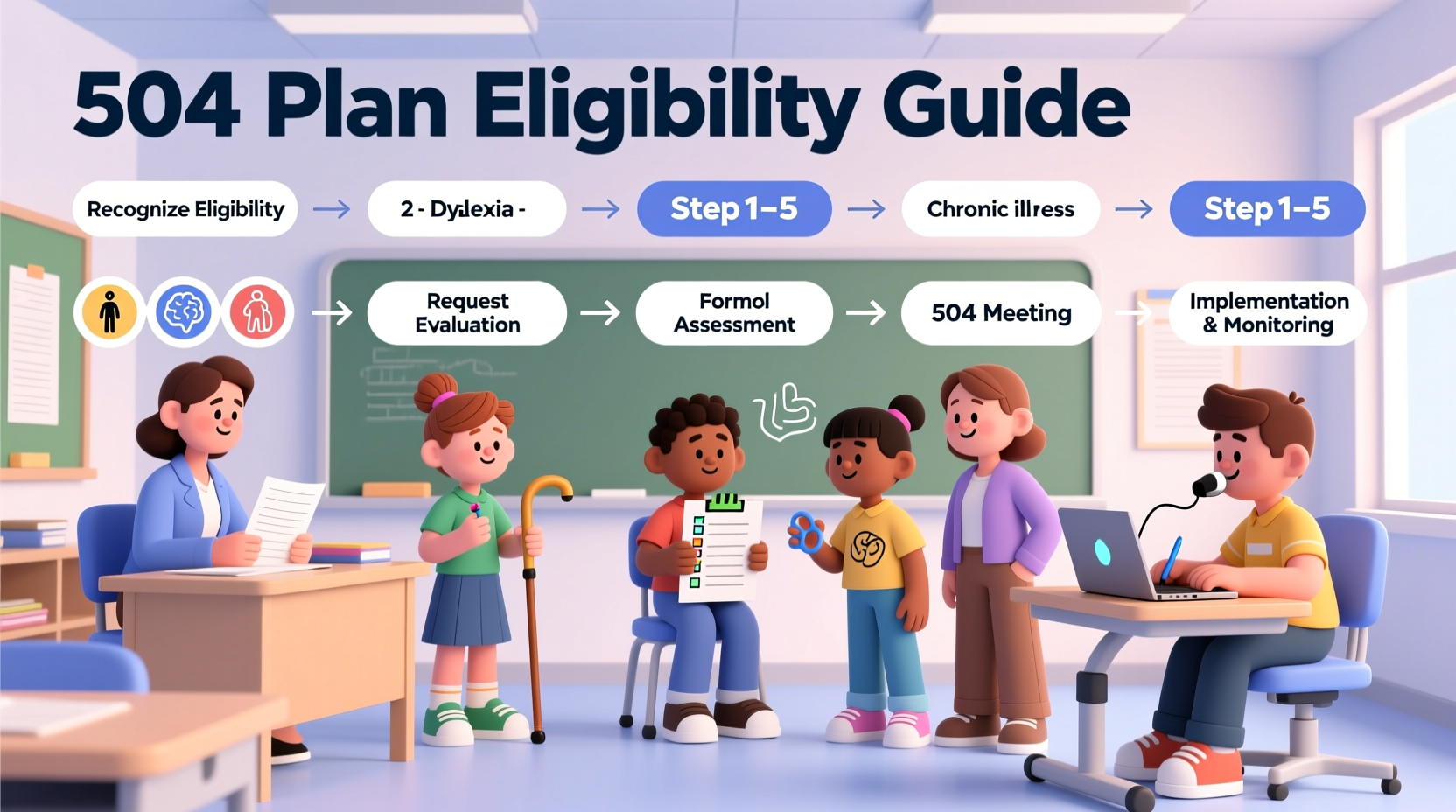
Section 504 is a civil rights law that prohibits discrimination against individuals with disabilities in programs receiving federal financial assistance—this includes nearly all public schools. A student qualifies for protection under Section 504 if they have a physical or mental impairment that substantially limits one or more major life activities. These activities include learning, reading, concentrating, thinking, communicating, walking, seeing, hearing, and caring for oneself.
It’s important to note that the definition of “disability” under Section 504 is broader than under the Individuals with Disabilities Education Act (IDEA). Conditions such as ADHD, diabetes, asthma, anxiety disorders, depression, and even temporary impairments like a broken limb may qualify if they significantly impact daily functioning at school.
“Section 504 ensures that students with disabilities are not excluded from participation, denied benefits, or subjected to discrimination.” — U.S. Department of Education, Office for Civil Rights
Step-by-Step Guide to Qualifying for a 504 Plan
Securing a 504 plan involves a structured process designed to assess eligibility and determine appropriate accommodations. Below is a clear, actionable sequence to follow:
- Recognize the Need: Observe consistent difficulties in academic performance, behavior, attention, or physical access at school. Document patterns over time.
- Request an Evaluation in Writing: Submit a formal written request to the school’s 504 coordinator or principal. Include specific concerns and any supporting documentation (e.g., doctor’s notes, therapist reports).
- School Conducts an Evaluation: The school must gather information from multiple sources: teachers, parents, medical professionals, and assessments. This phase typically takes 30–60 days.
- Determine Eligibility: A 504 team (including parents) reviews the data. If the student has a diagnosed condition that substantially limits a major life activity, they qualify.
- Develop the 504 Plan: The team outlines specific accommodations, services, and supports tailored to the student’s needs.
- Implement and Monitor: The plan goes into effect, and progress is reviewed annually—or more often if needed.
Common Accommodations in a 504 Plan
Accommodations vary widely depending on the student’s needs. They are not meant to give an unfair advantage but to level the playing field. Examples include extended time on tests, preferential seating, breaks during class, modified assignments, use of assistive technology, or access to a nurse for medication management.
| Disability Type | Example Accommodations |
|---|---|
| ADHD | Extended time, frequent breaks, reduced distractions, checklists for assignments |
| Anxiety Disorder | Alternative testing location, excused absences for therapy, gradual re-entry after leave |
| Diabetes | Permission to check blood sugar, carry snacks, visit nurse as needed |
| Dyslexia | Audio books, speech-to-text software, extra time on reading tasks |
| Mobility Impairment | Elevators, accessible desks, modified PE activities |
Checklist: Preparing for Your 504 Meeting
Being well-prepared increases the likelihood of a successful outcome. Use this checklist before attending a 504 eligibility or review meeting:
- Collect medical records, psychological evaluations, or therapy summaries
- Gather report cards, teacher emails, or behavioral logs showing challenges
- List specific accommodations you believe would help your child
- Write down questions for the 504 team (e.g., how will this be implemented?)
- Bring a support person if you feel overwhelmed (advocate, relative, friend)
- Review your state’s 504 policies and district guidelines
Real Example: How a 504 Plan Transformed a Student’s Experience
Eight-year-old Maya struggled with focus and completing assignments despite her intelligence. Her parents noticed she was anxious about school and often stayed up late finishing work. After a pediatrician diagnosed her with ADHD, they requested a 504 evaluation. The school gathered input from teachers and reviewed her medical records. The 504 team determined that her ability to concentrate and complete tasks was substantially limited.
Maya’s resulting 504 plan included 25% extended time on tests, a quiet space for assessments, daily check-ins with a guidance counselor, and the use of a visual schedule. Within two months, her grades improved, and her confidence grew. Her teacher reported fewer incomplete assignments and increased class participation. The accommodations didn’t change what she learned—just how she accessed it.
Do’s and Don’ts When Pursuing a 504 Plan
| Do’s | Don’ts |
|---|---|
| Communicate regularly with teachers and the 504 coordinator | Assume the school will initiate the process without your request |
| Keep detailed records of all communications and evaluations | Rely solely on verbal promises—always get agreements in writing |
| Ask for a copy of your school district’s 504 policy | Wait until problems escalate; act early when concerns arise |
| Request annual reviews or revisions if needs change | Expect immediate changes; implementation takes coordination |
Frequently Asked Questions
Can a student with good grades qualify for a 504 plan?
Yes. Academic performance alone does not determine eligibility. A student may maintain high grades while expending disproportionate effort due to their disability. The key factor is whether a major life activity is substantially limited.
How is a 504 plan different from an IEP?
A 504 plan provides accommodations within the general education setting but does not include specialized instruction. An IEP, governed by IDEA, offers individualized special education services and is typically more comprehensive. Students with more significant needs may qualify for an IEP instead of or in addition to a 504 plan.
Does a 504 plan follow a student to college?
Not in the same form. K–12 504 plans do not transfer to higher education. However, students in college are still protected under Section 504 and the ADA. They must self-identify and request accommodations through the institution’s disability services office, providing updated documentation.
Taking Action: Your Role in Advocacy
Qualifying for a 504 plan begins with awareness and ends with consistent follow-through. Parents and guardians are the most powerful advocates in ensuring their child receives equitable access to education. While schools are legally obligated to evaluate and accommodate eligible students, they often rely on families to initiate the process. Being informed, organized, and persistent makes all the difference.
Start by documenting concerns, reaching out to the right personnel, and preparing thoroughly for meetings. Remember, a 504 plan is not a label—it’s a tool. When used effectively, it removes barriers, fosters independence, and empowers students to succeed on their own terms.




 浙公网安备
33010002000092号
浙公网安备
33010002000092号 浙B2-20120091-4
Comments
No comments yet. Why don't you start the discussion?